


Small Volume Parenteral (SVP) products are widely used in modern healthcare. They include injections supplied in ampoules, vials, and prefilled syringes. Although each container holds a small amount of liquid, the quality requirements for SVP injection are extremely high.
Unlike oral medicines, injectable products enter the body without passing through the digestive system. This makes water quality, microbial control, and equipment hygiene essential parts of SVP injection manufacturing.
For SVP injection production, water is not simply a utility. It can be a direct ingredient in the final formulation and is also used during equipment cleaning. The water generation system, storage tank, and distribution loop must work together to maintain the required quality.
This article explains how pharmaceutical purified water systems and sanitary process tanks support SVP injection manufacturing, what engineers should consider during equipment selection, and why integrated system design matters.
What Makes SVP Injection Manufacturing Different?
Small Volume Parenterals are injectable products supplied in relatively small containers. In common pharmaceutical classifications, they generally refer to products with a container volume of 100 mL or less.
Typical SVP injection products include liquid injections in glass ampoules, injectable solutions or suspensions in vials, lyophilized products in vials, and ready-to-use products in prefilled syringes. All of them must meet strict requirements for sterility, particulate control, chemical quality, and endotoxin levels.
Not all SVP injection products use the same sterilization process. Products that can withstand heat may undergo terminal sterilization after filling and sealing. Heat-sensitive formulations may require sterile filtration followed by aseptic filling.
In both cases, controlling water quality is essential for SVP injection. Water used as an ingredient must meet the appropriate pharmaceutical grade, while water used for equipment cleaning must be suitable for its specific process stage.
For parenteral formulations, Water for Injection (WFI) is generally required when water is used as the formulation vehicle. Purified Water (PW) has different applications and may be used for suitable upstream processes and cleaning steps where permitted. Understanding this difference is the first step in designing a suitable water system for SVP injection.

The Role of Pharmaceutical Purified Water Systems
A pharmaceutical purified water system is an integrated process rather than a single treatment machine. Its purpose is to remove unwanted substances from incoming water and deliver water that consistently meets the required quality specifications for SVP injection.
A typical system may include several treatment stages. Pretreatment protects downstream equipment and may include multimedia filtration, activated carbon filtration, and water softening. These processes help remove suspended solids, residual chlorine, and hardness minerals.
Reverse osmosis (RO) uses a semi-permeable membrane to reduce dissolved salts, organic substances, and other impurities. It is widely used in pharmaceutical water treatment because it provides an effective purification stage and reduces the load on downstream equipment.
Electrodeionization (EDI) uses ion-exchange materials, selective membranes, and an electric field to remove remaining ions. It is commonly used after RO to produce high-purity water. The complete configuration should be selected according to the required water grade, source water quality, and applicable regulatory requirements.
Water quality must remain stable after treatment. A properly designed storage tank and distribution loop help prevent secondary contamination during storage and delivery. The system should support continuous circulation where required, suitable sanitization, and regular monitoring at important sampling and points-of-use locations.
Why Distribution Loop Design Matters
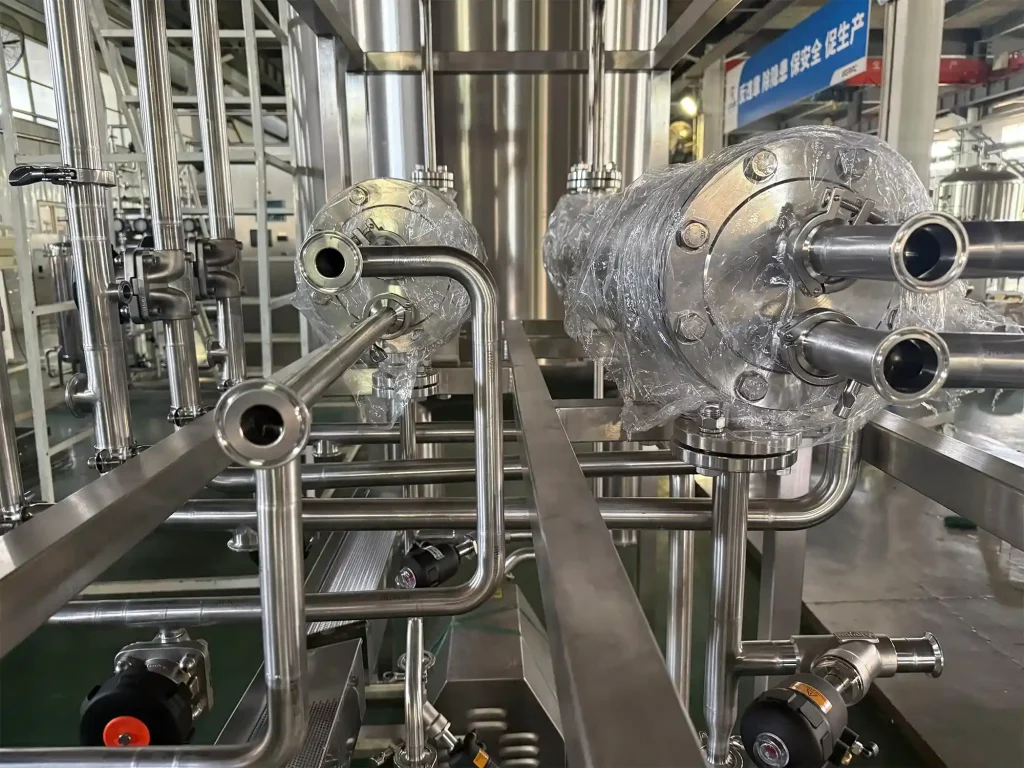
The distribution loop is one of the most important parts of a pharmaceutical water system. Even if the water leaving the purification unit meets specifications, poor piping design can introduce microbial contamination later.
Several design factors deserve attention. Continuous circulation helps reduce stagnant areas and microbial attachment to pipe walls. Water flow should remain turbulent as required by applicable GMP guidance, and flow rates should be established during qualification and monitored during operation.
Dead-leg control is equally important. Unused pipe branches and poorly designed connections can create areas where water remains stagnant. These areas should be minimized through hygienic design. Pipe slopes and low-point connections should support effective drainage during sanitization and maintenance.
Conductivity, Total Organic Carbon (TOC), temperature, and microbial quality should be monitored according to the system design and applicable specifications. Turbulent flow alone cannot prevent biofilm formation. Effective sanitization, hygienic piping design, and ongoing monitoring are also necessary.
Why Sanitary Process Tanks Matter
A sanitary process tank is more than a stainless steel container. In pharmaceutical manufacturing, it is an important part of the water storage and process control system. Poor tank design can create contamination risks even when the water treatment equipment performs correctly.
Material and surface finish. 316L stainless steel is widely used for pharmaceutical water storage tanks because of its corrosion resistance and suitability for hygienic applications. The internal surface should be smooth, free from pits and cracks, and suitable for the selected cleaning methods. Surface roughness is often specified in the project URS. For high-purity applications, Ra values of 0.4–0.6 μm or better may be selected.
Hygienic internal structure. Tank internals must be designed to minimize areas where water or cleaning solutions can remain trapped. Important components include spray devices for internal cleaning, properly designed inlet and outlet connections, hygienic sensor ports, drainable tank bottoms, and smooth internal welds. Threaded connections should be avoided in product-contact areas.
Vent filtration. A pharmaceutical water tank needs to exchange air as water enters and leaves the vessel. Without suitable protection, airborne particles and microorganisms may enter through the vent. Hydrophobic bacteria-retentive vent filters help reduce this risk, and their integrity should be tested before installation and after use.
Temperature control and CIP/SIP. The storage temperature depends on the water grade and the validated microbial control strategy. WFI systems may use continuous hot circulation, commonly above 70°C. Other systems may use ambient-temperature storage with validated sanitization methods. Clean-in-place (CIP) and steam-in-place (SIP) capabilities are important considerations, and spray devices must be positioned to achieve effective coverage of tank walls and the top head.
Key Design Requirements at a Glance
| Requirement | Water Generation and Distribution System | Sanitary Process Tank |
|---|---|---|
| Material | Suitable sanitary piping and compatible materials | Typically 316L stainless steel |
| Surface quality | Smooth, cleanable internal pipe surfaces | Specified internal finish and smooth welds |
| Flow design | Qualified circulation and suitable flow conditions | Inlet and outlet designed to minimize stagnation |
| Dead-leg control | Minimize stagnant branches and unused connections | Hygienic ports and drainable internal structure |
| Microbial control | Validated sanitization and monitoring | Vent filtration and suitable temperature control |
| Cleaning | Validated system cleaning and sanitization | CIP and SIP where required |
| Monitoring | Conductivity, TOC, temperature, and microbial testing | Level, temperature, and pressure monitoring |
| Documentation | Qualification, validation, and operating records | Material certificates, weld records, and surface inspection records |
These requirements for SVP injection water systems should be confirmed during the project design stage rather than treated as a checklist applied after equipment manufacturing.
Common Mistakes in System Design
One common mistake is selecting a purification unit first and choosing the storage tank later. This approach can create problems with tank capacity, circulation flow, pump selection, and distribution pressure. A tank that is too small may not provide enough water during peak demand, while an oversized tank may increase water residence time and create additional microbial control challenges. Water generation capacity, tank volume, and distribution flow should therefore be calculated together.
Another mistake is assuming that PW and WFI can be used interchangeably. They have different quality requirements and intended applications. For SVP injection production, WFI is generally required for preparing parenteral formulations when water is used as the vehicle. Using the wrong water grade can create compliance and product-quality risks.
A third mistake is focusing only on equipment specifications. A high-quality RO unit or stainless steel tank does not automatically create a compliant water system. The complete installation must be evaluated, including piping layout, instruments, sampling points, drainage, sanitization, and operating procedures. Qualification and validation should demonstrate that the integrated system can consistently maintain the required water quality under actual SVP injection operating conditions.
How to Select Water Systems and Tanks
When building a new SVP injection facility or upgrading an existing line, manufacturers should consider three main factors.
Production capacity. Water demand depends on batch size, production schedules, cleaning requirements, and peak consumption. The water generation unit, storage tank, and distribution pump should be sized according to actual demand rather than nominal production capacity alone.
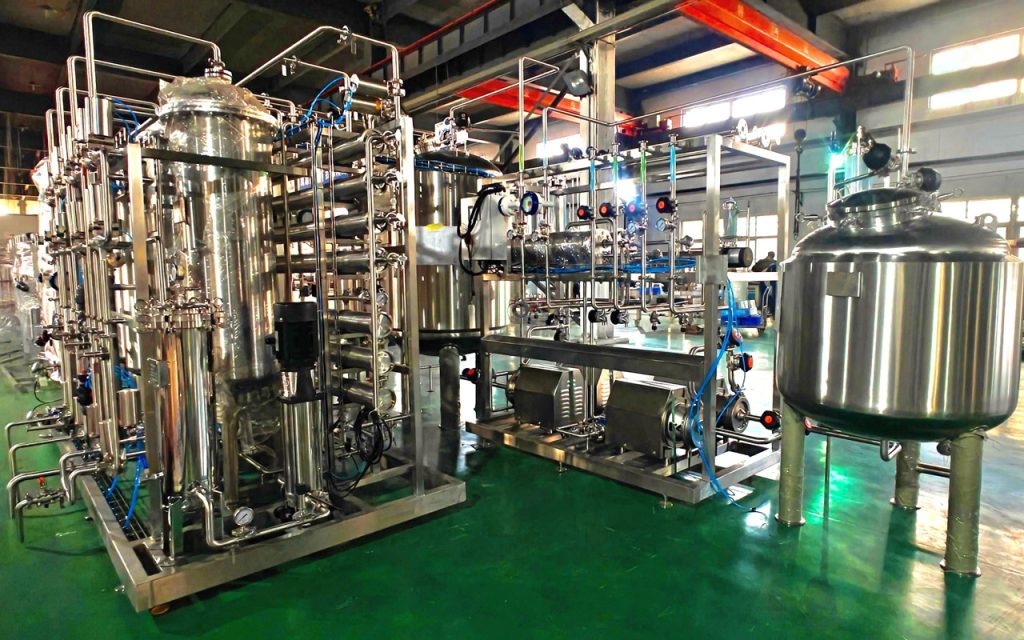
System integration. The water generation unit, storage tank, distribution loop, and process equipment should be designed as a coordinated system. Important considerations include pipe connections, operating pressure, temperature control, sanitization methods, and access for maintenance.
Validation and documentation. Equipment selection should include material certificates, welding records, surface finish reports, instrument calibration, and relevant design documentation. For international projects, the design should take account of applicable pharmacopoeia and GMP requirements, such as USP, Ph. Eur., ChP, and relevant sterile manufacturing guidelines.
Frequently Asked Questions
Q1: Is Purified Water suitable for SVP injection formulation?
Generally, no. Water used as the vehicle in parenteral formulations must meet WFI requirements under the applicable pharmaceutical standards. PW may be used for suitable cleaning and other process applications where permitted.
Q2: What is the difference between PW and WFI?
PW and WFI are different pharmaceutical water grades. WFI has additional requirements, particularly for bacterial endotoxins, and is used for parenteral preparations. The exact specifications depend on the applicable pharmacopoeia.
Q3: Can one sanitary tank be used for both PW and WFI?
A tank may be technically suitable for different water grades if its materials, design, cleaning, sanitization, and operating conditions meet the requirements of each application. However, shared use requires a documented risk assessment and appropriate qualification.
Q4: How often should pharmaceutical water systems be sanitized?
There is no universal schedule for every system. Sanitization frequency should be established through risk assessment, system qualification, validation, and ongoing microbial monitoring.
Q5: Why is a hydrophobic vent filter needed on a pharmaceutical water tank?
The filter helps prevent airborne microorganisms from entering the tank while allowing air to move in and out during filling and water delivery. Its integrity and condensation control are important parts of tank operation.
Q6: What should manufacturers consider when selecting a tank supplier?
Manufacturers should evaluate material quality, internal surface finish, welding standards, hygienic design, CIP/SIP requirements, documentation, and the supplier’s ability to coordinate the tank with the complete water system.
Conclusion
SVP injection manufacturing requires more than a reliable formulation process. Water quality, storage conditions, equipment hygiene, and microbial control all contribute to the safety and consistency of the final product.
A well-designed pharmaceutical purified water system must maintain the required water quality from generation to the point of use. At the same time, sanitary process tanks must provide suitable storage conditions and support effective cleaning, sanitization, and monitoring.
For pharmaceutical manufacturers planning a new SVP injection facility or upgrading an existing line, the best approach is to evaluate water generation, storage, and distribution as one integrated system.
As a pharmaceutical water equipment manufacturer, SKE&EAGLE provides pharmaceutical water treatment systems and sanitary process tank solutions for industrial pharmaceutical applications. By considering process requirements, water quality targets, and equipment integration during the design stage, manufacturers can build more reliable water systems for long-term SVP injection production.
Looking for a pharmaceutical water system or sanitary process tank for your SVP injection production facility? Contact SKE&EAGLE to discuss your project requirements.
Contact Email: info@ske-eagle.com
Follow us on Facebook for the latest industry insights: SKE & Eagle Facebook
Business Inquiries: Visit our official website and submit the contact form at the bottom.