
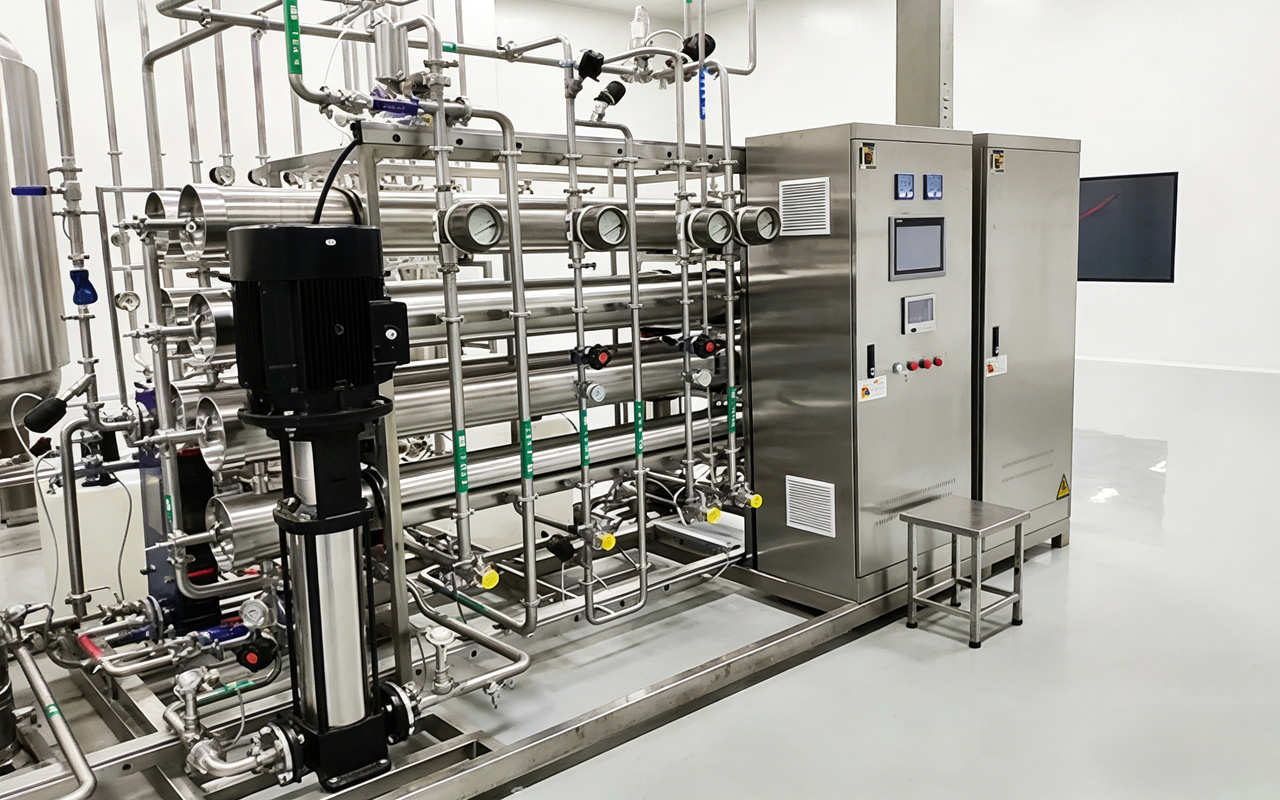
In pharmaceutical manufacturing, reverse osmosis pure water is more than a utility. It can be used as a process water source and may contact equipment, ingredients, or products, so its quality must remain controlled throughout operation. An RO system can provide high rejection of dissolved salts and measurable reduction of microorganisms, but stable performance depends on more than the membrane itself.
Two areas are especially important: RO pretreatment and sanitary system design. Pretreatment protects the membrane from particles, chlorine, hardness, and other contaminants. Sanitary design helps prevent microbial growth after the water has passed through the treatment stages.
For pharmaceutical water equipment manufacturers such as SKE&EAGLE, the goal is not simply to produce compliant reverse osmosis pure water at commissioning. The system should also remain cleanable, drainable, monitorable, and stable during daily operation.
Why Is RO Pretreatment Important for Reverse Osmosis Pure Water Quality?
The RO membrane is one of the most important barriers in a reverse osmosis pure water system, but it cannot perform effectively without suitable pretreatment.
A typical pharmaceutical RO pretreatment train may include multimedia filtration, activated carbon, water softening, and cartridge filtration. Each stage has a specific purpose.
Multimedia filters reduce suspended solids and turbidity before the water reaches downstream equipment. Activated carbon can remove residual chlorine and certain organic compounds. This is particularly important for polyamide RO membranes because excessive chlorine exposure can damage the membrane and reduce its rejection performance.
Water softeners reduce calcium and magnesium hardness when hardness control is required by the system design. Without adequate control, mineral scaling can develop on the membrane surface and reduce permeate flow.
Cartridge filtration provides a final particle barrier before the RO skid. If cartridge filters become blocked quickly, the problem should not simply be solved by installing a finer filter. Frequent blockage may indicate that upstream pretreatment is not performing correctly.
Pretreatment therefore acts as the first protection layer for the RO membrane. Its performance should be monitored rather than treated as a set-and-forget process.
RO Pretreatment Parameters to Monitor
Important parameters depend on the feed water and system configuration, but operators commonly monitor the items in the table below.
| Parameter | Suggested Frequency | Why It Matters |
|---|---|---|
| Residual chlorine after carbon | Every shift or online monitor | Protects polyamide membrane from oxidation damage |
| Hardness after softener | Daily | Prevents mineral scaling on membrane surface |
| Cartridge filter differential pressure | Daily | Early sign of pretreatment breakthrough |
| Feed water turbidity | Daily | Indicates filtration performance |
| RO feed conductivity | Daily | Tracks feed quality changes |
| Normalized permeate flow | Weekly | Shows fouling trend over time |
| Normalized salt passage | Weekly | Detects loss of membrane rejection |
| Stage differential pressure | Weekly | Locates which stage is fouling |
A change in these parameters can provide an early warning before the quality of reverse osmosis pure water is affected. The key is to compare trends, not single readings.
How Do You Know When an RO Membrane Needs Cleaning?
RO membrane performance naturally changes with operating time. Fouling, scaling, and concentration polarization can reduce permeate flow or increase salt passage.
For this reason, operators should evaluate normalized performance data instead of relying only on absolute flow or conductivity. Normalized permeate flow helps compensate for changes in feed temperature and operating conditions. Normalized salt passage indicates whether membrane rejection is deteriorating. Differential pressure across the membrane stages can also help identify increasing fouling.
A significant and sustained change from the system’s established baseline can indicate that cleaning or further investigation is required. The exact cleaning trigger should be established according to membrane manufacturer recommendations, system design, and validated operating procedures rather than applying one universal percentage to every RO system.
Cleaning chemistry should also match the type of fouling. Alkaline cleaning is commonly used for organic and biological fouling, while acidic cleaning may be used for mineral scaling. The membrane manufacturer’s chemical compatibility limits must always be considered.
After cleaning, the system should be thoroughly flushed before returning to normal operation. In pharmaceutical applications, cleaning and return-to-service procedures should be controlled and documented as part of the site’s operating and quality procedures. If a sanitary reverse osmosis water system requires cleaning more often than every three to four months, the pretreatment or operating conditions should be reviewed.

What Does Sanitary Design Mean in a Reverse Osmosis Water System?
A sanitary reverse osmosis water system is designed not only to treat water but also to minimize conditions that can support contamination or microbial growth. For pharmaceutical use, sanitary design is a practical requirement, not a marketing label.
The sanitary design should cover the complete water path, including pretreatment, RO membrane housings, piping, storage, instrumentation, sampling points, and distribution.
Important design considerations include:
-
Smooth and cleanable product-contact surfaces
-
Proper pipe slope and drainability
-
Minimized dead legs and stagnant areas
-
Hygienic valves and fittings
-
Properly designed sampling points
-
Suitable storage tank design
-
Appropriate vent filtration
-
Effective sanitization capability
-
Continuous or controlled circulation where required
The storage tank is another important part of the system. A properly selected vent filter helps protect the tank from airborne contamination while allowing pressure balance during filling and withdrawal.
The distribution loop also deserves special attention. Water that leaves the RO skid in good condition can deteriorate if the downstream piping creates stagnant zones or cannot be effectively sanitized. This is why a sanitary reverse osmosis water system should be evaluated as a complete system rather than as an RO skid alone.
Membrane Fouling Types and What They Indicate
Different fouling patterns can provide clues about problems in pretreatment or RO operation. The table below summarizes common patterns.
| Fouling Type | Typical Indication | Possible Cause |
|---|---|---|
| Organic / biological | Flow decline, increasing pressure drop | Poor microbial control; exhausted carbon bed |
| Colloidal | Increasing differential pressure | Inadequate particle or turbidity removal |
| Mineral scale | Reduced flow, increased salt passage | Hardness breakthrough; low antiscalant dose |
| Metal oxide | Colored or dark deposits | Upstream pipe corrosion; feed-water contamination |
Organic and biological fouling can be associated with inadequate pretreatment or microbial control. Colloidal fouling often indicates that suspended or fine particles are reaching the membrane. Mineral scaling is more likely when dissolved minerals become concentrated on the membrane surface. The exact cause may involve feed-water chemistry, recovery, temperature, hardness control, or antiscalant use where applicable.
The purpose of identifying the fouling type is not simply to choose a cleaning chemical. It is to find the upstream condition that caused the problem and protect the long-term stability of reverse osmosis pure water production.

Common RO Problems and Practical Responses
These problems affect the continued supply of compliant reverse osmosis pure water. Each one has a cause that can usually be traced upstream.
Product Conductivity Rises
A sudden increase in permeate conductivity should be investigated before assuming complete membrane failure. Operators should check feed conductivity, pretreatment conditions, valve positions, membrane performance, instrument calibration, and recent operating changes. A persistent increase may require membrane inspection or additional testing.
For pharmaceutical systems, conductivity is only one part of water quality control. The investigation should consider the complete monitoring strategy defined for the system.
Permeate Flow Gradually Declines
A gradual flow decline may indicate membrane fouling or scaling. Reviewing normalized permeate flow and differential pressure can help identify the trend. If the change is concentrated in the first stage, colloidal, organic, or biological fouling may be involved. If the later stage shows stronger pressure or performance changes, mineral scaling may need to be investigated. The correct response is to identify the cause and then select the appropriate cleaning or pretreatment adjustment.
Cartridge Filters Clog Too Quickly
Frequent cartridge filter blockage usually means that too many particles are reaching the final filtration stage. Instead of repeatedly replacing cartridges, operators should check multimedia filtration, activated carbon performance, feed-water conditions, and upstream piping. This approach reduces operating costs and provides better protection for the RO membrane.
How Does SKE&EAGLE Design Pharmaceutical Reverse Osmosis Pure Water Systems?
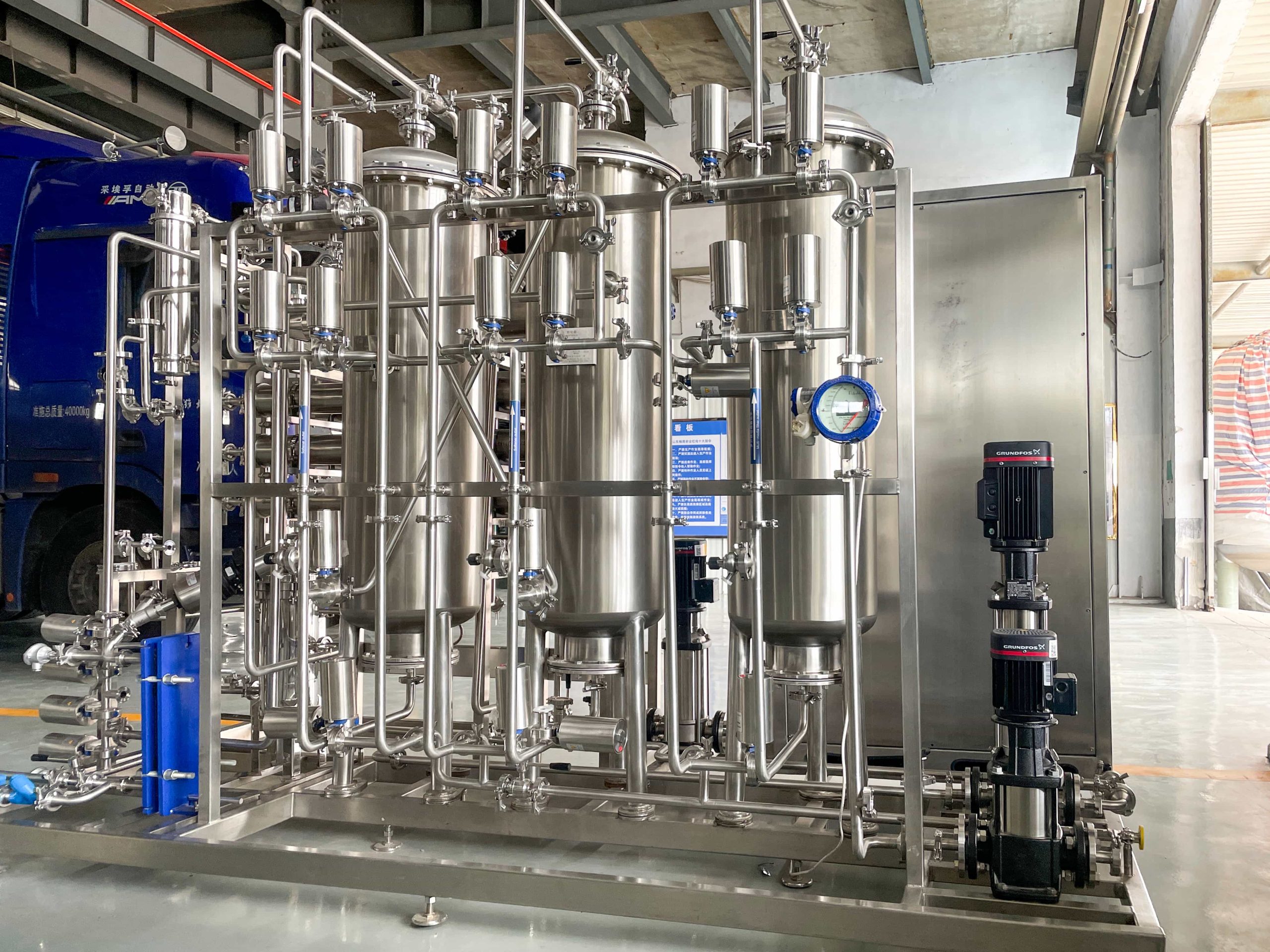
SKE&EAGLE approaches pharmaceutical RO systems as complete water-treatment solutions rather than isolated membrane skids. The design process considers pretreatment, RO membrane selection, instrumentation, sanitary piping, storage, distribution, sanitization, and monitoring requirements together.
For reverse osmosis pure water, this approach helps create a system that can be operated, cleaned, monitored, and maintained over its service life. A sanitary reverse osmosis water system from SKE&EAGLE is engineered so that every wetted part supports both water quality and cleanability.
The right design also depends on the source-water quality, required capacity, water specifications, downstream process, sanitization method, and applicable pharmacopoeial and GMP requirements. A system should therefore be engineered around the actual production process rather than built from a fixed equipment package.
FAQ:Reverse Osmosis Pure Water
1.How long can an RO membrane last in a pharmaceutical water system?
Membrane service life depends on feed-water quality, pretreatment performance, cleaning frequency, and operating discipline. With good pretreatment and timely cleaning, three to five years is a reasonable expectation. If cleaning frequency keeps rising and performance does not recover after cleaning, replacement should be planned. Replacing only the most fouled stage first can reduce cost.
2.Can a sanitary RO system use the same cleaning chemicals as an industrial system?
The active chemicals may be similar, but the grade and residue requirements are different. Pharmaceutical systems require cleaning agents that are fully rinsable and documented for compatibility with the membrane and system materials. The cleaning procedure itself should also be controlled and documented. Chemical choice must always stay within the membrane manufacturer’s compatibility limits.
3.What pretreatment parameters should be checked daily?
Residual chlorine after carbon filtration and hardness after softening are the two most critical daily checks. Chlorine causes irreversible membrane damage, and hardness leads to scaling. Cartridge filter differential pressure and feed turbidity should also be checked daily. Online monitors with alarms are strongly recommended for chlorine. If only manual testing is available, it should be performed at least once per shift.
4.How does SKE&EAGLE support validation and documentation for reverse osmosis pure water systems?
SKE&EAGLE provides design documentation, material certificates, instrument lists, and operating manuals that support qualification and validation activities. We work with each customer’s validation team to align documentation with the site’s quality procedures. The exact scope of documentation is agreed at the project stage so that it matches the intended use of the reverse osmosis pure water system.
Conclusion
Stable reverse osmosis pure water depends on pretreatment discipline and sanitary design working together. The RO membrane is important, but it is protected by RO pretreatment and supported by the sanitary features of the entire sanitary reverse osmosis water system. When operators track normalized data, recognize fouling patterns, and respond to early signals, water quality stays stable and unplanned downtime decreases.
SKE&EAGLE engineers pharmaceutical water systems around source water, process requirements, and validation needs. Whether you are planning a new production line or improving an existing system, share your feed water analysis and capacity target with our team. We can help evaluate a configuration that supports reliable reverse osmosis pure water for your process.
Contact Email: info@ske-eagle.com
Follow us on Facebook for the latest industry insights: SKE & Eagle Facebook
Business Inquiries: Visit our official website and submit the contact form at the bottom.