

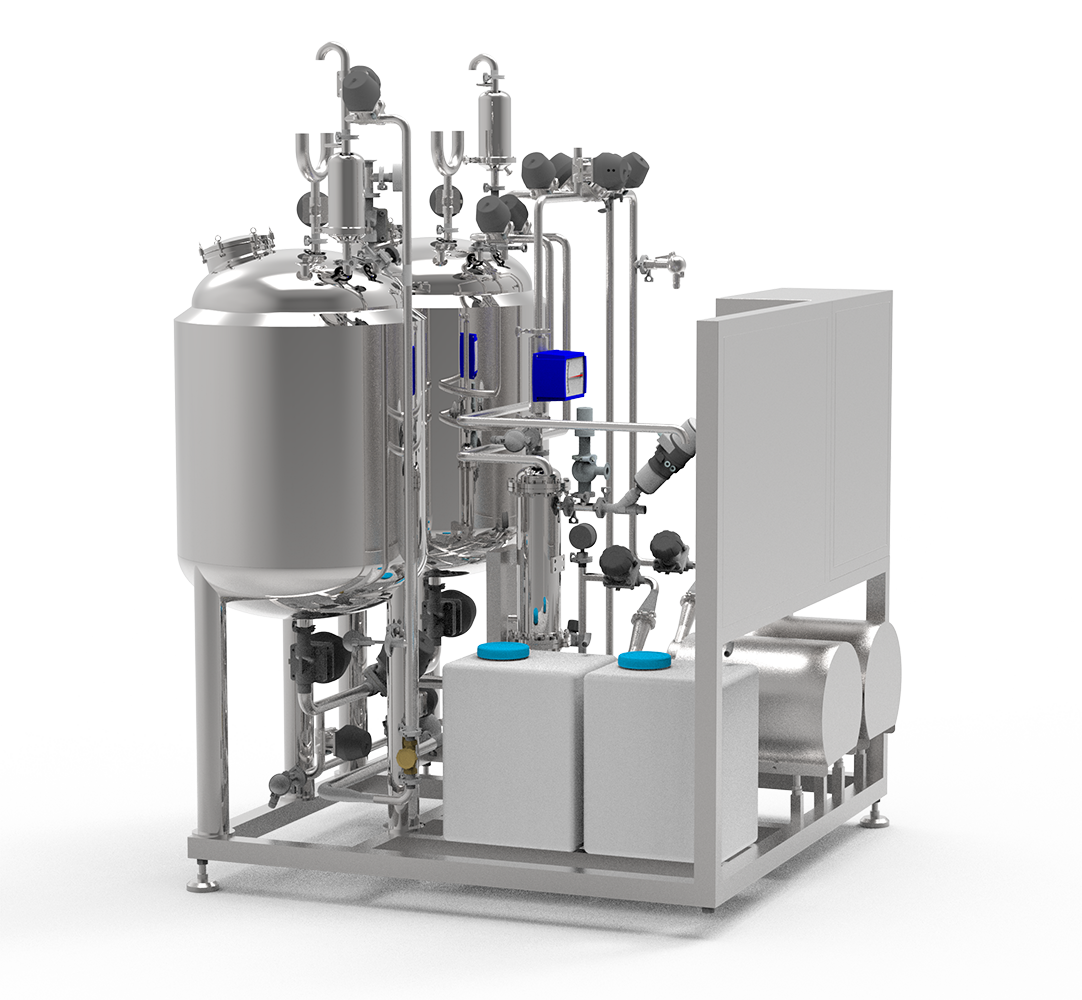
What Is a SIP Control Panel?
A SIP control panel is the central control unit that manages Steam-in-Place (SIP) processes in pharmaceutical equipment and water systems. It controls steam supply, monitors temperature and pressure, manages valves, and records each sterilization cycle.
In pharmaceutical manufacturing, equipment and water distribution systems must maintain strict microbial control. Bacteria can grow in storage tanks, pipelines, valves, and other areas that come into contact with purified water or Water for Injection (WFI). If microbial growth is not properly controlled, it can affect water quality and create risks for pharmaceutical production.
Steam sterilization provides an effective way to sterilize compatible equipment without taking it apart. Saturated steam enters the system and transfers heat to internal surfaces. A properly designed SIP control panel manages the process to ensure that the required temperature and exposure time are achieved at critical locations.
Most modern SIP control panels use a PLC (Programmable Logic Controller) and an HMI (Human-Machine Interface). Operators can select operating procedures, monitor process conditions, view alarms, and review cycle records through the touchscreen interface.
For pharmaceutical manufacturers, a SIP control panel does more than operate valves. It helps make sterilization processes repeatable, controllable, and suitable for qualification and validation.
How Steam Sterilization Works in Pharmaceutical Water Systems
Steam sterilization uses saturated steam to transfer heat to equipment surfaces and destroy microorganisms. It is widely used for compatible pharmaceutical tanks, pipelines, valves, and filtration assemblies.
In a pharmaceutical water system, SIP may be applied to storage tanks, distribution loops, and other components designed to withstand the required steam conditions.
The process depends on three main parameters:
- Temperature: The temperature must reach the specified level at critical locations.
- Pressure: Steam pressure must support the required saturated steam conditions.
- Exposure Time: The equipment must remain at the required temperature for a validated period.
A common reference condition for saturated steam sterilization is 121°C for at least 15 minutes. However, this is not a universal requirement for every pharmaceutical water system. The actual SIP cycle must be established and validated according to equipment design, heat distribution, cold spots, and the required microbial reduction.
Why Steam Distribution Matters
Steam must reach all surfaces that require sterilization. Simply introducing steam into a tank or pipeline does not guarantee that every area receives sufficient heat.
Several design factors affect steam distribution:
- Pipe layout and connection points
- Equipment geometry and internal surfaces
- Valve positions and dead legs
- Temperature sensor locations
- Condensate drainage arrangements
- Air removal and vent positions
Air trapped inside a pipeline can prevent steam from contacting equipment surfaces effectively. Condensate can also collect at low points and create local cold spots.
For this reason, pharmaceutical SIP systems require suitable steam distribution, air removal, and condensate drainage. The SIP control panel coordinates these operations according to the validated process sequence.
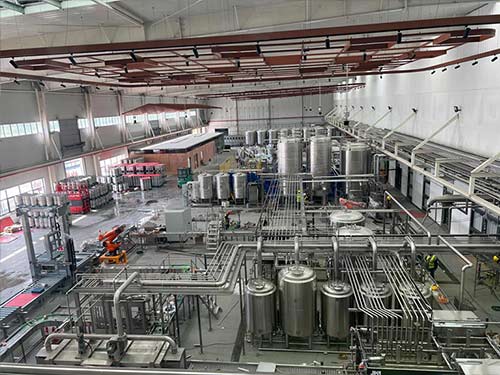
Key Components of a SIP Control Panel
A reliable SIP control panel combines several control and monitoring components. Each component has a specific role in maintaining stable operating conditions throughout the sterilization cycle.
| Component | Main Function |
|---|---|
| PLC Controller | Executes the programmed sterilization sequence |
| HMI Touchscreen | Allows operators to control and monitor the process |
| Temperature Sensors | Monitor temperatures at critical locations |
| Pressure Transmitters | Monitor steam pressure and system conditions |
| Control Valves | Regulate steam supply, venting, and other process flows |
| Alarm System | Identifies abnormal operating conditions |
| Data Recording System | Stores cycle parameters and process records |
The PLC is the main control unit. It receives signals from temperature sensors, pressure transmitters, and other instruments. Based on the programmed logic, it controls valves and manages each stage of the sterilization cycle.
The HMI provides a clear operating interface. Operators can check the current cycle stage, review process values, and identify alarms without manually checking every instrument.
Temperature monitoring is especially important. A single temperature sensor may not represent the conditions throughout a large tank or complex pipeline. Multiple monitoring points may be required based on system design and validation results.
Together, these components help the SIP control panel maintain process consistency and provide reliable information for quality management.
The Main Stages of a SIP Sterilization Cycle
A pharmaceutical SIP sterilization cycle normally follows a defined sequence. The exact steps depend on the equipment and validated process, but most systems include preparation, air removal, heating, exposure, and cooling.
1. System Preparation and Air Removal
Before steam enters the equipment, the system must be prepared for sterilization. Any required cleaning and draining operations should be completed.
Steam then enters through designated supply points and displaces air through appropriate vents. Air removal is essential because trapped air can reduce heat transfer and prevent steam from reaching certain surfaces.
The SIP control panel controls the relevant valves and monitors process conditions during this stage.
2. Heating and Temperature Stabilization
After air removal, steam continues to enter the system. The temperature gradually rises until the required conditions are reached at the designated monitoring points.
The control panel monitors temperature and pressure throughout the heating stage. If the system does not reach the specified conditions within the allowed time, an alarm can alert the operator.
This stage is important because different parts of a tank or pipeline may heat up at different speeds.
3. Sterilization Holding Period
Once the required temperature conditions are achieved, the sterilization holding period begins according to the validated cycle.
The PLC controls the holding timer and monitors temperature at critical locations. If a monitored temperature falls below the approved limit, the system responds according to the programmed cycle logic.
Depending on the validated procedure, this may involve pausing or restarting the holding period and generating an alarm.
The holding stage is the main part of the cycle for achieving the required microbial reduction.
4. Cooling and System Recovery
After the holding period is completed, the steam supply stops and the system enters the cooling stage.
Cooling methods depend on the equipment design. Filtered compressed air, sterile gas, or other qualified methods may be used where appropriate. Condensate must also be removed through suitable drainage arrangements.
The SIP control panel monitors the cooling process and checks whether the system has reached the specified conditions for the next operating stage.
The system should only return to service after the required process conditions and release checks have been satisfied.

How SIP Control Supports GMP Compliance
For pharmaceutical manufacturers, successful sterilization is not only about reaching a target temperature. The process must also be documented, controlled, and supported by validation evidence.
A well-designed SIP control panel supports GMP requirements in several ways.
1. Process Monitoring
The control system continuously monitors important parameters, including temperature, pressure, and cycle time. This helps operators identify abnormal conditions during sterilization.
2. Automatic Cycle Control
PLC-based control reduces the need for manual valve operation and timing. Programmed sequences help ensure that each sterilization cycle follows the approved operating procedure.
3. Alarm and Interlock Management
The control panel can generate alarms when process conditions move outside approved limits. Interlocks can also prevent certain operations from starting when required conditions have not been met.
4. Data Recording and Traceability
Cycle records can include temperature trends, pressure values, start and end times, alarm events, and cycle status.
These records support process review, deviation investigation, and qualification activities. Where electronic records are used, the system should be designed with appropriate access control, audit trail, data protection, and record retention features according to applicable regulatory requirements.
5. Support for Process Validation
SIP validation requires evidence that the sterilization process consistently achieves the intended result. This may include temperature mapping, heat distribution studies, biological indicators where appropriate, and verification of critical process parameters.
The SIP control panel provides process data to support these activities, but automatic recording alone does not establish that a sterilization cycle is validated.
SIP and CIP: What Is the Difference?
CIP (Clean-in-Place) and SIP (Steam-in-Place) are two important processes used in pharmaceutical equipment and water systems.
Although they are often integrated into the same automated system, they have different purposes.
| Comparison | CIP | SIP |
|---|---|---|
| Full Name | Clean-in-Place | Steam-in-Place |
| Main Purpose | Remove dirt and process residues | Destroy microorganisms through heat |
| Main Medium | Water and cleaning agents | Saturated steam |
| Key Parameters | Concentration, temperature, flow, and time | Temperature, pressure, and exposure time |
| Main Result | Clean equipment surfaces | Sterilized compatible equipment surfaces |
CIP usually takes place before SIP when both processes are required. Cleaning removes residues that could affect sterilization effectiveness. SIP then provides the required microbial control.
The two processes should be designed as part of an integrated equipment cleaning and sterilization strategy.
Choosing the Right SIP Control Panel for a Pharmaceutical Water System
Selecting a SIP control panel requires more than choosing a PLC or touchscreen. The control system must match the actual equipment, process requirements, and facility layout.
Pharmaceutical manufacturers should consider several factors before selecting a solution.
System Compatibility: The panel must be compatible with the storage tanks, distribution pipelines, valves, and other equipment included in the SIP process.
Control Point Design: Temperature and pressure sensors should be positioned according to the system design and validation requirements. Critical locations must be identified rather than relying on a single monitoring point.
Process Flexibility: Different equipment configurations may require different sterilization recipes. The control system should support approved process settings without allowing unauthorized changes.
Data Management: Cycle records should be easy to review and retrieve. Electronic data management features should match the facility’s GMP documentation and data integrity requirements.
Future Expansion: For new pharmaceutical facilities or system upgrades, the control panel should allow reasonable expansion and integration with the wider automation architecture.
At SKE&EAGLE, pharmaceutical water equipment solutions cover purified water generation, WFI preparation, storage, and distribution. SIP control can be integrated into the overall system design according to equipment configuration and customer process requirements.

FAQ
1. What does SIP stand for in pharmaceutical manufacturing?
SIP stands for Steam-in-Place. It is a sterilization method that uses steam to sterilize compatible equipment and internal surfaces without disassembling the system.
2. What temperature is commonly used for SIP sterilization?
A common reference condition is 121°C for at least 15 minutes. However, actual SIP temperature and exposure time depend on equipment design and the validated sterilization procedure.
3. What is the function of a SIP control panel?
A SIP control panel manages the sterilization sequence. It controls steam supply, monitors temperature and pressure, operates valves, manages alarms, and records process data.
4. What is the difference between SIP and CIP?
CIP removes dirt, residues, and other contaminants from equipment surfaces using cleaning solutions. SIP uses steam to destroy microorganisms. They perform different functions and may be used together.
5. Does every pharmaceutical water system require SIP?
No. The required microbial control method depends on the water grade, system design, intended application, and regulatory requirements. Some systems use thermal sanitization, ozone sanitization, or other validated approaches instead of SIP.
6. Why is data recording important during a SIP cycle?
Temperature, pressure, time, and alarm records provide evidence of how the sterilization cycle performed. These records support validation, process review, deviation investigation, and GMP documentation.
Build a Reliable Pharmaceutical Water System with SKE&EAGLE
A SIP control panel plays an important role in pharmaceutical sterilization. It coordinates steam supply, monitors critical process parameters, manages the sterilization sequence, and records operating data.
However, reliable SIP performance also depends on proper equipment design, steam distribution, condensate drainage, sensor placement, and process validation. The control panel and the mechanical system must work together to achieve consistent results.
SKE&EAGLE specializes in pharmaceutical water treatment and process equipment, including purified water systems, WFI generation systems, storage tanks, and distribution systems. We focus on integrating equipment design and control requirements to meet the needs of pharmaceutical manufacturing facilities.
Whether you are planning a new pharmaceutical water system or upgrading an existing installation, SKE&EAGLE can help you evaluate the appropriate SIP control configuration for your project.
Contact SKE&EAGLE to discuss your pharmaceutical water system and SIP control requirements.
Contact Email: info@ske-eagle.com
Follow us on Facebook for the latest industry insights: SKE & Eagle Facebook
Business Inquiries: Visit our official website and submit the contact form at the bottom.