

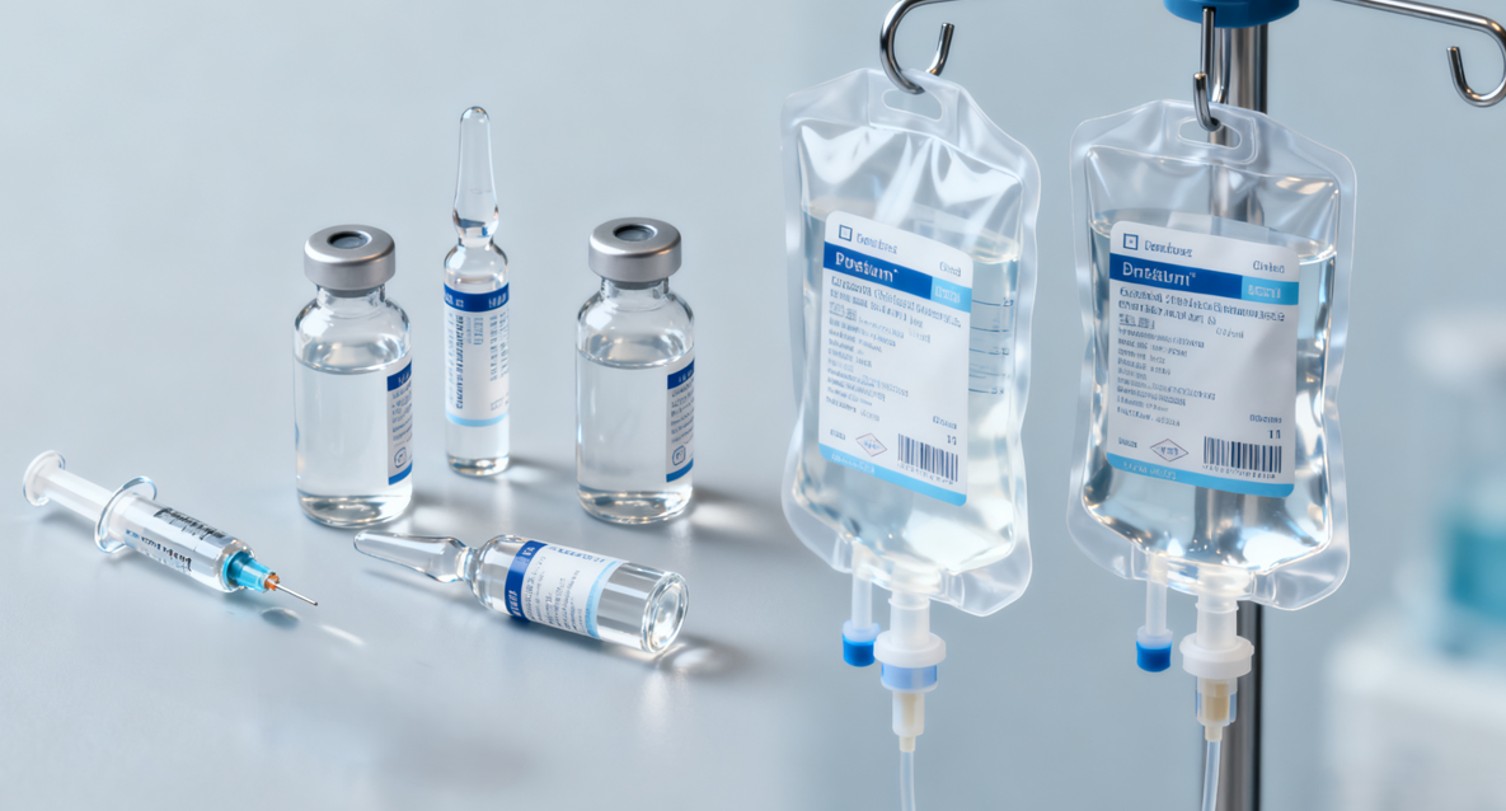
In pharmaceutical manufacturing, distilled water is not simply a utility. It is a regulated product with defined quality attributes. Every batch of distilled water used in production must be traceable, reproducible, and compliant with pharmacopoeial requirements.
This is where validation comes in. Validation provides documented evidence that a distilled water system consistently produces water meeting its predetermined specifications. It is not a one-time event. It is a lifecycle activity that begins with design and continues through routine operation.
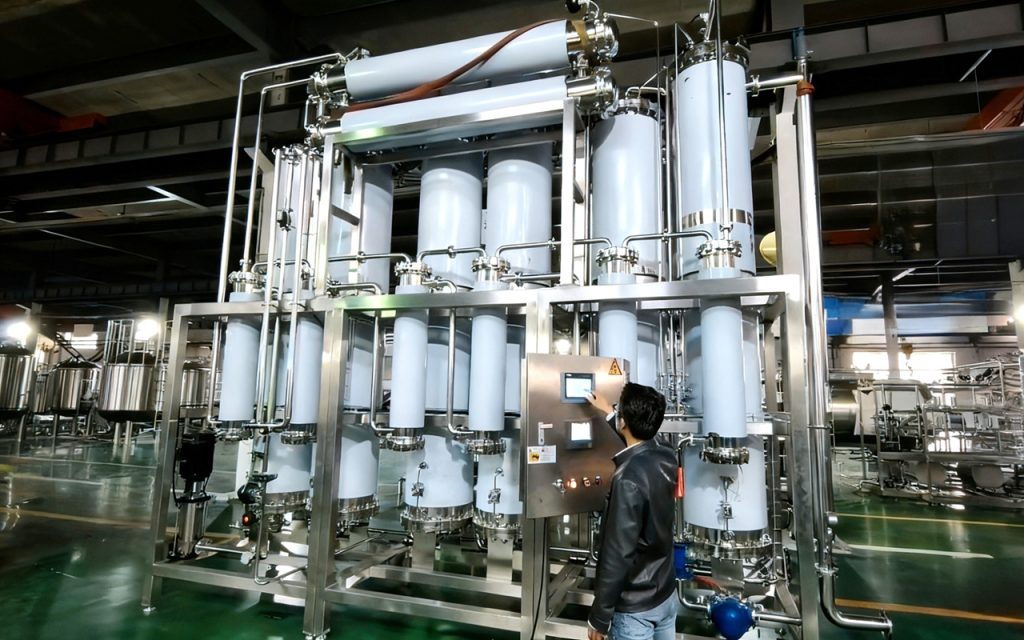
For manufacturers operating a multi-effect water distiller, understanding validation requirements is essential. This guide covers the qualification phases, documentation expectations, and practical considerations for stainless steel water distiller systems in regulated environments.
Why Validation Matters for Distilled Water Systems
Regulatory authorities worldwide require pharmaceutical water systems to be validated. The principle is straightforward: if you cannot demonstrate control, you cannot claim compliance.
A multi-effect water distiller introduces several critical parameters. Feed water quality, steam pressure, evaporation temperature, and condenser performance all affect the final distilled water. Each parameter must be defined, monitored, and proven capable of consistent performance.
Validation also connects to patient safety. Distilled water used in formulation or cleaning carries direct product contact risk. If the system fails, the impact is not limited to equipment downtime. It extends to batch rejection, recall exposure, and regulatory action.
The validation lifecycle follows a logical sequence. Design qualification confirms the system is built correctly. Installation and operational qualification confirm it works as intended. Performance qualification confirms it works consistently over time. Each phase builds on the previous one.

A Note on Terminology: Distilled Water vs. Compendial Grades
Before discussing design qualification, one terminology point deserves clarification. In USP and Ph. Eur., “distilled water” is not a standalone monograph title. The official water grades are Purified Water and Water for Injection. USP defines Water for Injection as water purified by distillation or a purification process equivalent or superior to distillation.
In practice, a multi-effect water distiller produces distilled water that is intended to meet either Purified Water or WFI specifications, depending on system design and controls. Throughout this guide, “distilled water” refers to the process output of a distillation system, not a separate pharmacopoeial grade. Validation protocols should always reference the intended compendial grade, not the production method alone.
Design Qualification: Getting the Foundation Right
Design qualification, or DQ, is where validation begins. It confirms that the proposed system design meets user requirements and regulatory expectations before equipment is built or purchased.
For a multi-effect water distiller, DQ focuses on several elements. The intended distilled water grade must be defined first. Is the system producing Purified Water or Water for Injection? The answer determines the required quality attributes and the acceptable production methods.
DQ documentation should address material selection for wetted surfaces. Stainless steel grade, surface finish, and welding quality must suit the intended application and cleaning conditions. For a stainless steel water distiller, DQ should confirm that the selected grade and fabrication methods meet the site’s requirements for cleanability and corrosion resistance.
The design review also examines access for inspection, sampling points, and instrument placement. A system that is difficult to inspect is difficult to qualify. DQ is the stage to catch these issues before they become expensive field modifications.
ISPE’s good practice guidance emphasizes that DQ should integrate with the overall project execution plan, not be treated as a standalone document produced after equipment selection.
Installation Qualification: Confirming Physical Readiness
Installation qualification, or IQ, provides documented evidence that the system has been installed according to design specifications and manufacturer recommendations.
For a multi-effect water distiller, IQ activities include verifying piping connections, utility supplies, and instrumentation installation. Steam supply pressure and quality must be confirmed. Feed water pretreatment must be operational and meeting specifications. Drainage and venting must be correctly configured.
IQ also covers documentation review. Equipment manuals, component certificates, material certificates, and calibration certificates should be collected and verified. For a stainless steel water distiller, material traceability is particularly important. The grade of stainless steel used for wetted surfaces should be documented and traceable to mill certificates.
Instrument calibration status is another IQ checkpoint. Conductivity sensors, temperature probes, pressure gauges, and flow meters must be calibrated against traceable standards before operational qualification begins. An uncalibrated instrument undermines every qualification activity that follows.
The IQ report should identify any deviations from design specifications and document their resolution. Minor deviations may be acceptable with justification. Significant deviations may require design changes or re-qualification.

Operational Qualification: Testing System Function
Operational qualification, or OQ, tests the system under defined operating conditions. It confirms that the multi-effect water distiller functions as designed across its intended operating range.
OQ activities for a distillation system typically include testing at minimum, normal, and maximum operating parameters. Steam pressure variations, feed water flow rates, and production capacity should be challenged. Alarm functions and interlock systems must be verified. Safety systems should be tested.
Distilled water quality testing during OQ focuses on demonstrating that the system can produce distilled water meeting specification under controlled conditions. Conductivity and total organic carbon are standard chemical tests for both Purified Water and WFI under USP. Endotoxin testing is relevant when the system produces Water for Injection, which must contain less than 0.25 USP Endotoxin Unit per mL.
Sampling strategy during OQ deserves careful planning. Sampling points should represent the system at its most challenging locations. The outlet of the multi-effect water distiller is a critical point. Downstream storage and distribution points may also require sampling depending on system configuration.
OQ also verifies that operating procedures are adequate. Operators should be trained on the system before OQ begins. If operators cannot run the equipment correctly, OQ results will not reflect true system capability.
Performance Qualification: Proving Consistency Over Time
Performance qualification, or PQ, is the longest and most data-intensive phase. It demonstrates that the system consistently produces distilled water meeting specification over extended operation.
The ISPE three-phase approach remains the industry-standard framework. Phase 1 involves intensive sampling over two to four weeks at all monitoring points, including feed water, post-pretreatment, post-distillation, storage tank, distribution loop return, and use points. No water may be released for production until Phase 1 is satisfactorily completed. Phase 2 continues daily sampling for approximately four to eight weeks, transitioning toward routine frequency and finalizing alert and action limits. Phase 3 extends through one full year of operation to capture seasonal variation.
For a multi-effect water distiller, PQ testing includes physical, chemical, and microbiological parameters. USP requires conductivity and TOC testing for both Purified Water and WFI. The USP conductivity test follows a three-stage approach: in-line measurement against a temperature-dependent limit, off-line confirmation at 2.1 μS/cm or less if Stage 1 fails, and pH-adjusted testing if Stage 2 fails. TOC limit is 500 ppb for both grades.
PQ data must be trended and reviewed. A system that passes individual tests but shows an upward conductivity trend is not truly in control. Statistical review of the data provides early warning of drifting performance.
The Qualification Table: Summary of Phases
| Phase | Purpose | Key Activities | Documentation |
|---|---|---|---|
| DQ | Confirm design meets requirements | User requirements review, material selection, regulatory alignment | Design review report, URS traceability |
| IQ | Confirm correct installation | Piping verification, utility checks, calibration review, material certificates | Installation checklist, calibration certificates |
| OQ | Confirm function across operating range | Challenge testing, alarm verification, distilled water quality testing | Test protocols, results reports |
| PQ | Confirm consistency over time | Three-phase sampling per ISPE, trend analysis, seasonal coverage | PQ report, trend summaries |
Documentation and Change Control
Validation is only as strong as its documentation. Every phase must produce a written record that can withstand regulatory scrutiny. Protocols should be approved before execution. Deviations should be documented as they occur, not reconstructed later.
The validation package for a stainless steel water distiller should include design drawings, material certificates, calibration records, test protocols, raw data, and final reports. The package should be organized so that an auditor can trace any conclusion back to its supporting evidence.
Change control is equally important. After validation is complete, any change to the system requires assessment. Replacing a sensor, modifying piping, or changing operating parameters may affect validated performance. ISPE guidance addresses change management during operation, including considerations for system validation status and the scope of re-qualification.
A minor instrument replacement may require only calibration verification. A major modification to the evaporation chamber may require partial or full re-qualification. The key is to document the assessment and justify the decision.
How SKE&EAGLE Supports Validation
SKE&EAGLE understands that validation is a shared responsibility between equipment manufacturer and end user. Our role begins with clear documentation of system design, materials, and performance capabilities.
For multi-effect water distiller projects, we provide design documentation, material certificates, and factory acceptance test reports that support IQ and OQ activities. Our technical team works with customer validation groups to align equipment documentation with site protocols.
We also recognize that validation requirements vary by market. A distilled water system intended for US pharmaceutical production must address USP requirements. A system for European markets may need alignment with Ph. Eur. monographs. Our project approach begins with clarifying the intended regulatory framework.
FAQ
1.What is the difference between OQ and PQ for a water distiller?
OQ tests whether the system functions across its intended operating range under controlled conditions. PQ demonstrates that the system consistently produces compliant distilled water over extended operation, following the ISPE three-phase sampling approach.
2.How long does PQ take for a distilled water system?
The ISPE framework spans approximately one year. Phase 1 runs two to four weeks, Phase 2 runs four to eight weeks, and Phase 3 continues through one full year to cover seasonal variation.
3.Is “distilled water” a pharmacopoeial grade?
No. USP and Ph. Eur. do not have a standalone monograph for “distilled water.” The compendial grades are Purified Water and Water for Injection. A multi-effect water distiller produces distilled water that must meet the specification of the intended grade.
4.Can a multi-effect water distiller be used for both Purified Water and WFI?
Yes, depending on system design and quality controls. WFI requires endotoxin control to less than 0.25 EU/mL, which Purified Water does not. The validation protocol must reflect the intended distilled water grade.
5.What happens if a validated system is modified?
Change control assessment determines re-qualification scope. Minor changes may require calibration verification only. Major modifications may require partial or full OQ and PQ repetition.
6.Is annual revalidation required?
Routine revalidation is not typically required if the system remains unchanged and monitoring data demonstrates control. ISPE guidance addresses periodic performance evaluation rather than automatic full re-execution.
Contact SKE & Eagle for Advanced Solutions
For customized system engineering solutions or integration of high-performance water treatment technologies, please contact SKE & Eagle. Our professional team collaborates closely with industrial partners to design, implement, and maintain solutions tailored to your operational needs.
Contact Email: info@ske-eagle.com
Follow us on Facebook for the latest industry insights: SKE & Eagle Facebook
Business Inquiries: Visit our official website and submit the contact form at the bottom.