


Water quality is a critical factor in pharmaceutical fermenter performance. From antibiotics to recombinant proteins, many processes depend on stable fermentation conditions. Poor water quality can affect culture media, raise contamination risks, and reduce batch consistency.
Inside a pharmaceutical fermenter, water prepares culture media, dissolves nutrients, and supports cell growth. Changes in minerals, organic matter, or microbes may affect the process. A suitable purified water system helps control these variables.
This guide explains how water quality affects a pharmaceutical fermenter, how to choose the right water grade, and how a pharmaceutical water system supports production.

1. Why Water Quality Matters
Water is usually the main part of fermentation media. Media contain carbon sources, nitrogen sources, minerals, and trace elements. Water quality can therefore affect the final medium.
Drinking water may contain calcium, magnesium, chloride, carbonate, and organic matter. Levels depend on the source. Uncontrolled changes may affect fermentation results. For example, calcium and phosphate can form precipitates and reduce nutrient availability.
A reliable pharmaceutical water system uses reverse osmosis (RO), deionization, and electrodeionization (EDI) to reduce dissolved ions. Extra treatment may control organics and microorganisms.
The goal is not only low conductivity. Water must meet defined chemical and microbiological specifications and stay consistent in every pharmaceutical fermenter.
2. Microbial Contamination
Microbial contamination is a major concern. Unwanted microorganisms may compete for nutrients or affect product quality.
A pharmaceutical fermenter can still face contamination even when the vessel is well designed. The water system, storage tank, distribution loop, and operating procedures must work together.
Bacteriophages are another risk in bacterial fermentation. Water is only one possible route. Raw materials, people, and equipment may also introduce contaminants.
A well-designed purified water system controls microbial risks through purification, hygienic storage, distribution, and sanitization. UV treatment or ultrafiltration may be used where appropriate.
Storage tanks and pipes need careful design. Stagnant water and poor sanitization can support biofilm. Regular monitoring and a documented sanitization program help maintain quality.
3. pH Control and Water Composition
Many fermentations need close pH control. The target range depends on the organism, product, and process. There is no single pH range for all applications.
Water composition affects the medium. Minerals may influence buffering, and some ions react with ingredients. Calcium and phosphate may precipitate depending on concentration, temperature, and pH.
For a large pharmaceutical fermenter, consistent water quality reduces one source of variation. Teams can then study nutrients, metabolic activity, and pH-adjusting agents more effectively.
Water treatment cannot replace process control. However, a stable supply makes preparation more repeatable and helps investigations.

4. Oxygen Transfer and Foam
Oxygen transfer matters in aerobic fermentation. Agitation, aeration, vessel geometry, and medium composition all influence it.
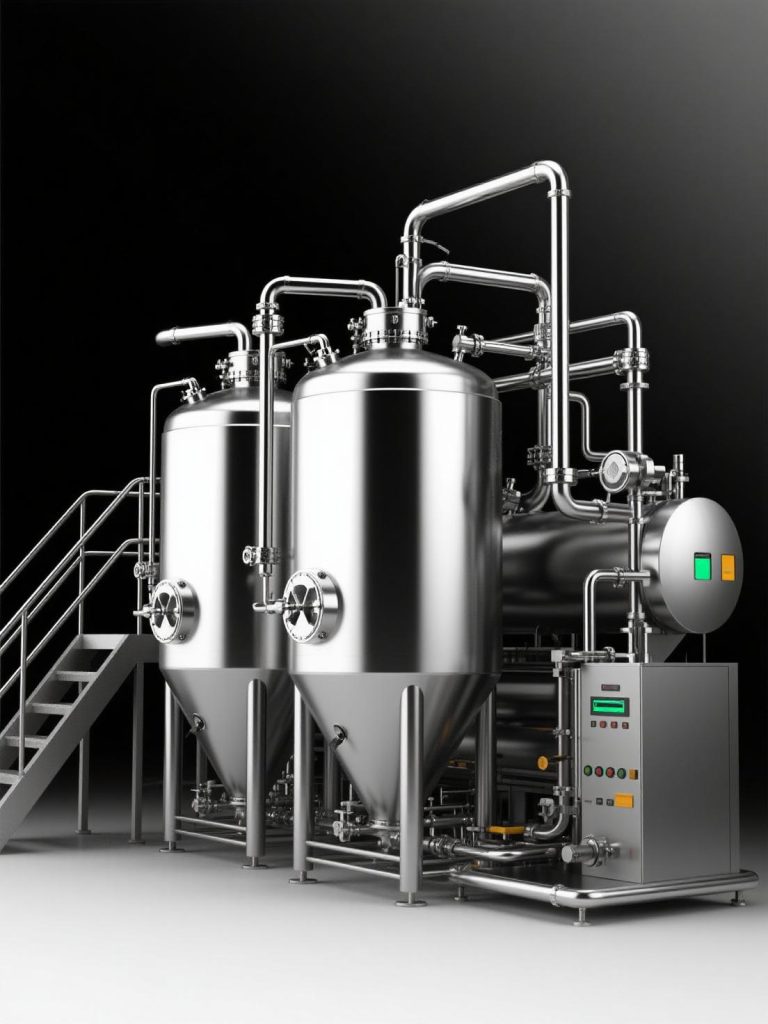
Inside a pharmaceutical fermenter, medium changes may affect foam and gas-liquid behavior. Too much foam reduces usable volume and can wet exhaust filters.
Organic substances in water may change foam behavior. Minerals may also affect the medium, depending on process conditions. Antifoam can control foam but may affect downstream filtration.
A stable pharmaceutical water system provides controlled water for media. Monitoring conductivity and total organic carbon (TOC) helps detect changes. Review these data with dissolved oxygen, foam, and batch records.
5. Choosing the Right Water Grade
Different products and stages need different water quality. The grade should follow regulations, pharmacopoeial requirements, and risk assessment.
The table below gives examples from European Medicines Agency (EMA) guidance. It is not a universal specification.
| Application | Example of water quality under EMA guidance | Main considerations |
|---|---|---|
| Fermentation for certain chemical active substances, including antibiotics | Potable water may be acceptable when conditions are met | Product requirements, minerals, consistency |
| Fermentation for certain biological active substances other than vaccines and ATMPs | Potable water may be acceptable under guideline conditions | Microbial control, process risks |
| Fermentation and cell culture media for vaccines | Purified Water | Media consistency, microbial quality |
| Certain ATMP processes with later sterilization | Purified Water | Regulatory requirements, process controls |
| ATMP processes without later sterilization | WFI | Specific product requirements |
Reference: EMA, Guideline on the quality of water for pharmaceutical use, EMA/CHMP/CVMP/QWP/496873/2018.
The minimum grade is not always the best choice. A manufacturer may set stricter internal limits based on risk assessment. Water for media may also differ from water for final purification. Confirm each step before selecting equipment.
6. Designing a Pharmaceutical Water System
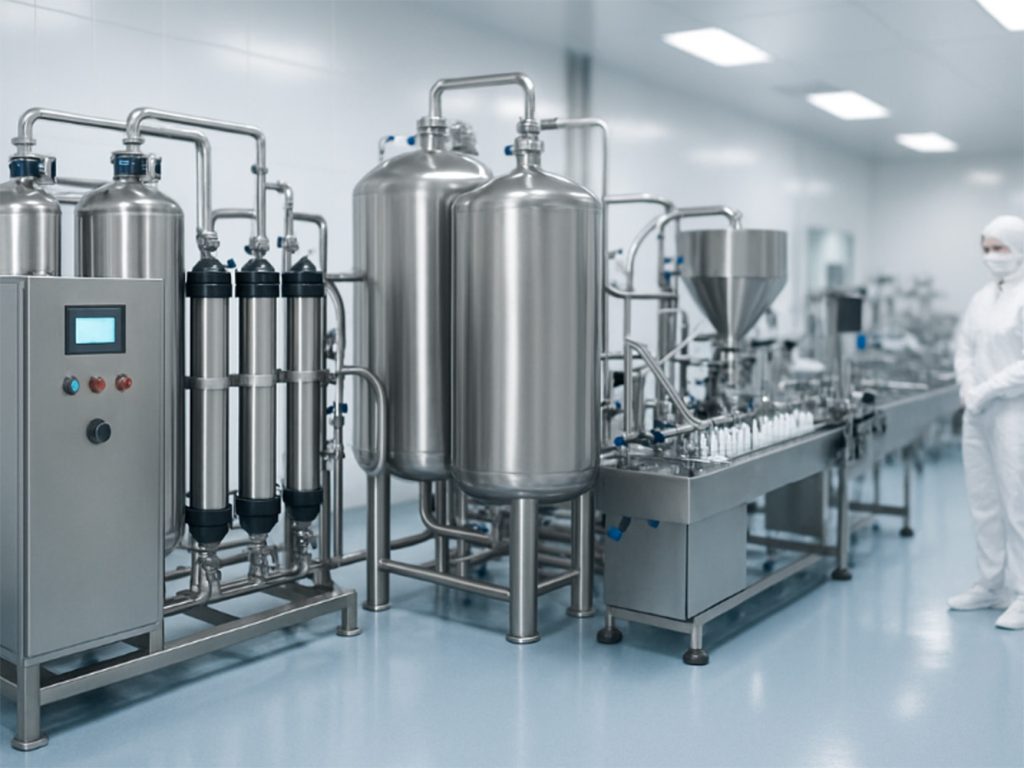
A pharmaceutical water system should match capacity, target quality, and facility needs. Key factors are below.
Capacity and Reliability
The system must supply enough water for media, cleaning, and production. Consider peak demand, recovery rate, storage, and distribution flow. Redundancy helps when a pharmaceutical fermenter runs on a tight schedule.
Hygienic Storage and Distribution
Purification alone cannot guarantee point-of-use quality. Tanks and loops should limit stagnation and support sanitization. Avoid dead legs and poorly drained sections. Circulation helps, but hygienic design, sanitization, and monitoring must work together.
Sanitization and Maintenance
Define a sanitization method, such as hot water or chemicals. It must suit the materials and validated conditions. Set frequency and acceptance criteria in the quality system. Maintenance keeps performance stable during shutdowns.
Monitoring and Data
Online conductivity and TOC help detect changes. Microbial testing adds contamination information. When a pharmaceutical fermenter batch changes unexpectedly, compare water trends with batch records. Conductivity and TOC alone cannot confirm all microbiological requirements.
Qualification and Control
A pharmaceutical water system needs qualification, procedures, maintenance, and ongoing monitoring. Changes to equipment or piping should go through change control.
At SKE&EAGLE, we provide pharmaceutical water equipment for different capacity and quality needs. Selection should consider use, standards, facility conditions, and demand.
7. Common Water-Related Problems
Unexpected yield loss. For a pharmaceutical fermenter, a sudden drop may justify reviewing water records after a source or system change. Check conductivity, TOC, and microbial data, plus raw materials and conditions.
Media precipitation. Cloudy media may indicate mineral interactions. Calcium phosphate is one cause. Review formulation, water composition, pH, and sterilization.
Repeated contamination. Investigate the water system, tank, loop, raw materials, and cleaning. Sanitization and sampling records help find corrective actions.
Foam or oxygen changes. These may link to medium, aeration, or agitation. Water trends support the investigation but do not confirm the root cause alone.
Frequently Asked Questions
Q1: Can I use tap water for pharmaceutical fermentation?
In some processes, potable water may meet the minimum requirement. This depends on the substance, product, and stage. Assess water quality first. A purified water system may be better when tighter control is needed.
Q2: What is the difference between Purified Water and WFI?
WFI has stricter endotoxin requirements and is used where standards require it. The correct grade depends on product, stage, and regulations. WFI is not automatic for every injectable drug process.
Q3: How can a water system help control biofilm?
Use hygienic design, suitable circulation, effective sanitization, and regular monitoring. Tank design, pipe layout, and materials also matter. No single step guarantees zero biofilm.
Q4: Can water quality affect fermentation yield?
Yes. Minerals, organics, or microbial quality may add variability. Yield changes can also come from raw materials, conditions, or equipment. Review water trends with batch records.
Q5: How often should water be monitored for a pharmaceutical fermenter?
Frequency depends on grade, design, risk, and specifications. Conductivity and TOC may be online; microbes follow a sampling plan. Add testing after changes or deviations.
Q6: Does SKE&EAGLE provide systems for pilot plants?
Yes. SKE&EAGLE offers pharmaceutical water equipment for different needs. Capacity and configuration depend on demand, quality, facility, and standards. Pilot and full-scale sites should be assessed separately.
Conclusion
Water quality is an important part of fermentation control. Changes in composition and microbial quality can affect media, consistency, and contamination risk.
A well-managed pharmaceutical fermenter depends on more than vessel design. Suitable treatment, hygienic storage, controlled distribution, sanitization, and monitoring all support reliable production.
SKE&EAGLE provides pharmaceutical water equipment to help manufacturers assess needs and select suitable configurations for new and existing facilities.
Contact Email: info@ske-eagle.com
Follow us on Facebook for the latest industry insights: SKE & Eagle Facebook
Business Inquiries: Visit our official website and submit the contact form at the bottom.