
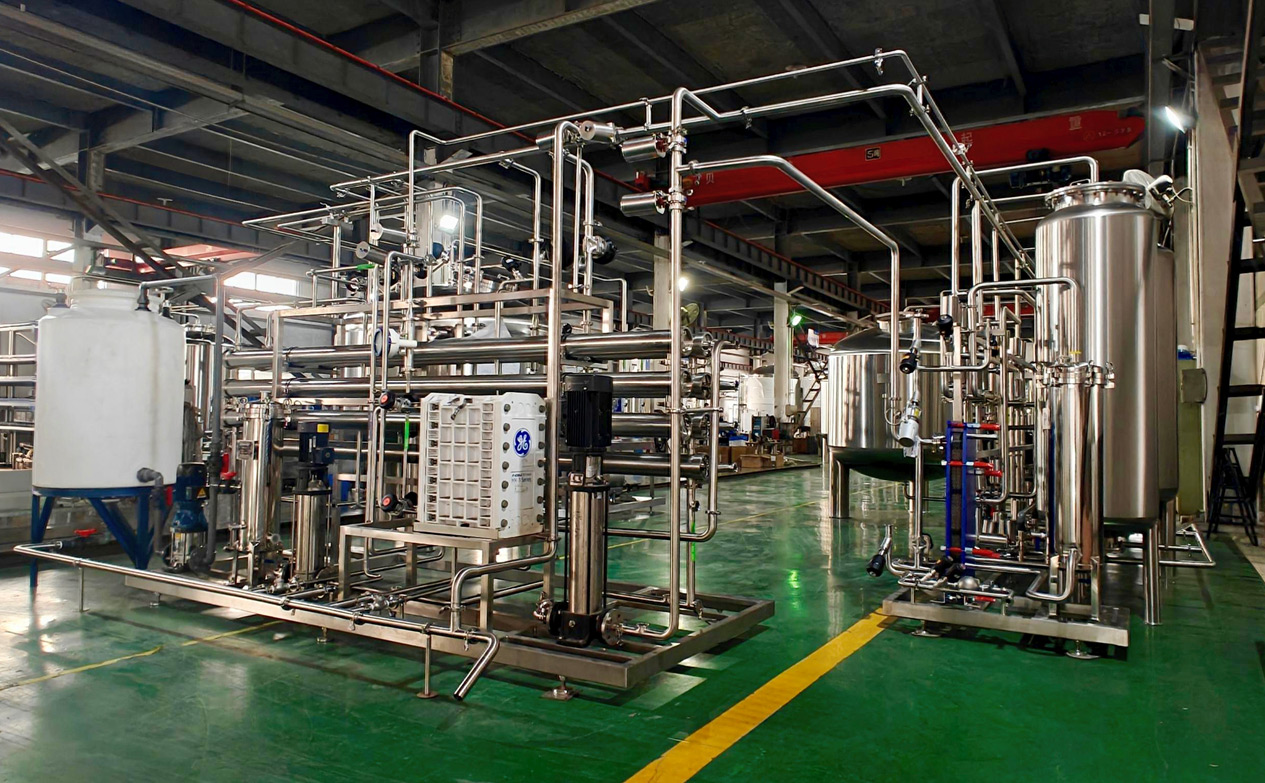
Pharmaceutical water is more than a production utility. It is an important raw material used in drug manufacturing, equipment cleaning, and pharmaceutical processes. Its quality directly affects product safety, manufacturing consistency, and regulatory compliance.
Unlike ordinary commercial water treatment, water treatment solutions for pharmaceutical facilities must meet strict chemical and microbiological requirements. They must also maintain stable water quality during production, storage, and distribution.
A complete pharmaceutical water treatment system includes three main stages: water filtration, water purification, and water disinfection. Each stage has a different function, but all three must work together to produce reliable pharmaceutical-grade water.
This guide explains the main technologies, system design requirements, and key factors to consider when selecting pharmaceutical water equipment and evaluating suitable water treatment solutions.
What Are Pharmaceutical Water Treatment Solutions?
Pharmaceutical water treatment solutions are integrated processes designed to produce water that meets the requirements of pharmaceutical manufacturing.
The two most common water grades are Purified Water (PW) and Water for Injection (WFI).
-
Purified Water (PW): Used in pharmaceutical manufacturing, equipment cleaning, and processes that do not require WFI.
-
Water for Injection (WFI): Used in applications with stricter requirements for chemical quality and bacterial endotoxin control, especially in parenteral product manufacturing.
A suitable system must control chemical impurities, microorganisms, endotoxins where applicable, and water quality during storage and distribution.
Its design should follow the applicable pharmacopoeia, such as USP or EP, and relevant GMP requirements. Source-water quality and the intended application must also be considered when finalizing your water treatment solutions.

1. Water Filtration System: Preparing Water for Purification
A water filtration system is the first stage of pharmaceutical water treatment. It removes impurities that could damage downstream equipment, especially reverse osmosis (RO) membranes.
Filtration does not produce pharmaceutical-grade water by itself. It prepares the water so that the purification stage can work efficiently. In other words, the quality of the filtration stage directly affects how well the rest of the water treatment solutions perform.
A typical pretreatment process includes four components.
Multimedia Filter
A multimedia filter removes suspended solids, sand, silt, and other particles. Different layers of filter media trap particles and reduce water turbidity.
Activated Carbon Filter
An activated carbon filter removes free chlorine and certain organic compounds. Chlorine can oxidize and damage the polyamide membranes used in many RO systems.
Proper carbon maintenance is important because exhausted or poorly sanitized media may become a source of microbial contamination.
Water Softener
A water softener removes calcium and magnesium ions through ion exchange. These minerals cause hardness and can form scale on RO membrane surfaces, reducing performance and increasing maintenance costs.
Cartridge Filter
A cartridge filter captures fine particles that remain after earlier treatment stages. It provides a final physical barrier before the RO high-pressure pump and membrane assembly.
Table 1. Main Components of a Pharmaceutical Water Filtration System
| Component | Main Function | Risk if Poorly Controlled |
|---|---|---|
| Multimedia Filter | Removes suspended solids | Membrane fouling |
| Activated Carbon Filter | Removes free chlorine | Membrane oxidation |
| Water Softener | Reduces water hardness | Membrane scaling |
| Cartridge Filter | Captures fine particles | Downstream particle fouling |
Engineers should also consider source-water changes, turbidity, hardness, residual chlorine, feed pressure, and the Silt Density Index (SDI). These parameters help determine whether pretreatment is suitable for the selected RO membranes and overall water treatment solutions.
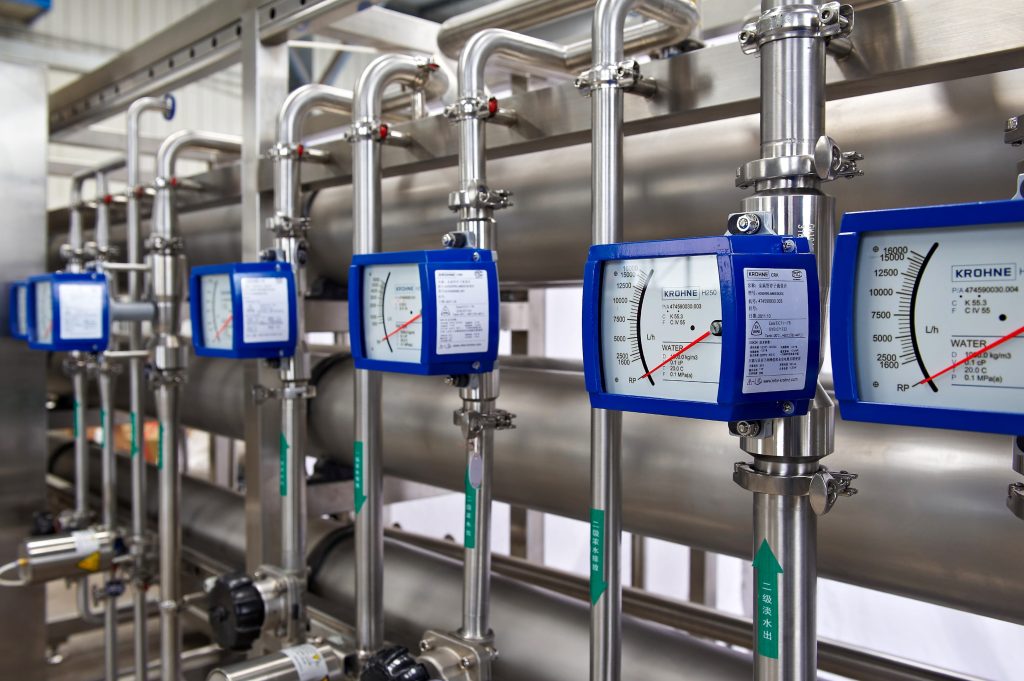
2. Water Purification System: RO and EDI
After pretreatment, water enters the main purification stage.
For many pharmaceutical Purified Water applications, reverse osmosis combined with electrodeionization is a common configuration.
Reverse Osmosis (RO)
RO uses pressure to move water through a semi-permeable membrane. The membrane allows water molecules to pass while rejecting a large proportion of dissolved salts, organic compounds, particles, and microorganisms.
RO performance depends on feed-water quality, operating pressure, temperature, membrane condition, and recovery rate.
Single-pass RO removes most dissolved salts under suitable conditions. Double-pass RO adds another purification stage and can improve water quality stability.
The correct configuration depends on the required water grade and actual operating conditions. A well-designed water treatment solution should choose the RO setup based on real demand, not on the assumption that more stages are always better.
Electrodeionization (EDI)
EDI is commonly installed after RO to further reduce dissolved ions.
It combines ion-exchange materials, selective membranes, and direct electrical current to remove residual ions. Unlike conventional ion exchange, EDI operates continuously without routine acid or caustic regeneration.
Its main advantages include:
-
Continuous ion removal
-
Reduced chemical regeneration requirements
-
Stable operation with properly controlled feed water
-
Easy integration with automated RO systems
RO and EDI provide an effective purification process for many PW applications. However, they cannot guarantee compliance by themselves. TOC monitoring, microbial control, sanitization, and distribution design are also essential.
Variable frequency drive (VFD) pumps can adjust motor speed according to water demand, helping control pressure and flow while reducing unnecessary energy consumption. This is one reason why modern water treatment solutions pay close attention to the whole system, not just the membrane.
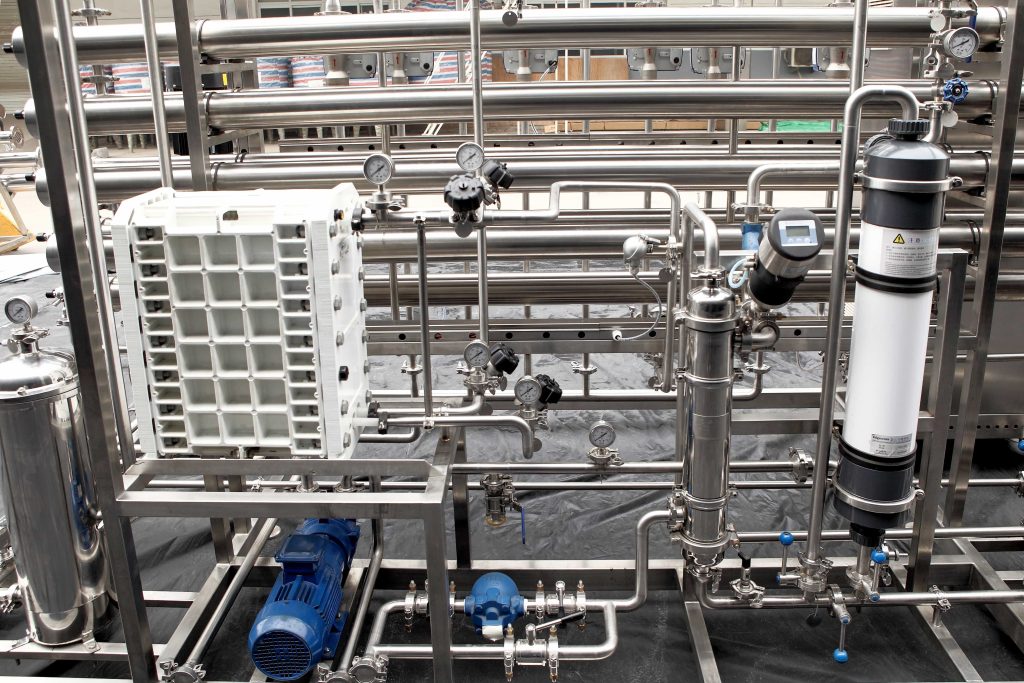
3. Water Disinfection System: Controlling Microbial Risks
Microorganisms can enter or grow in storage tanks, pipelines, valves, and points of use. A water disinfection system helps control these risks throughout the production process.
Three common methods are UV treatment, ozone sanitization, and heat sanitization.
UV Disinfection
UV light at approximately 254 nm damages microbial DNA and reduces the ability of microorganisms to reproduce.
Special UV systems operating around 185 nm can support TOC reduction through photo-oxidation.
UV treatment offers continuous operation without adding chemical disinfectants. However, its performance depends on lamp intensity, water transmittance, flow rate, and maintenance. It also does not provide residual disinfection throughout the distribution loop.
Ozone Sanitization
Ozone is a strong oxidizing agent used for periodic sanitization in some pharmaceutical water systems.
It helps control microorganisms and biofilms in storage tanks and distribution pipelines, including areas that UV light cannot reach directly.
Residual ozone must be monitored and reduced before water is used in production. System design should also consider ozone generation, injection, material compatibility, and removal.
Heat Sanitization
Heat sanitization uses hot water or clean steam, depending on the system design, to control microbial contamination.
Its effectiveness depends on temperature, exposure time, circulation, and proper drainage. All pipes, valves, pumps, and instruments must be suitable for the selected sanitization conditions.
Sanitary 316L stainless steel is commonly used for product-contact equipment and piping when its material properties and surface condition meet project requirements.
Table 2. Comparison of Pharmaceutical Water Disinfection Methods
| Method | Main Function | Key Consideration |
|---|---|---|
| UV (254 nm) | Microbial inactivation | Lamp intensity |
| UV (185 nm) | Supports TOC oxidation | By-product control |
| Ozone | Periodic loop sanitization | Residual ozone removal |
| Heat | Thermal sanitization | Temperature distribution |
The most suitable method depends on water grade, system materials, operating conditions, and the microbial control strategy. Some facilities combine different methods for better long-term control. Choosing the right disinfection method is a key part of building complete water treatment solutions for pharmaceutical production.
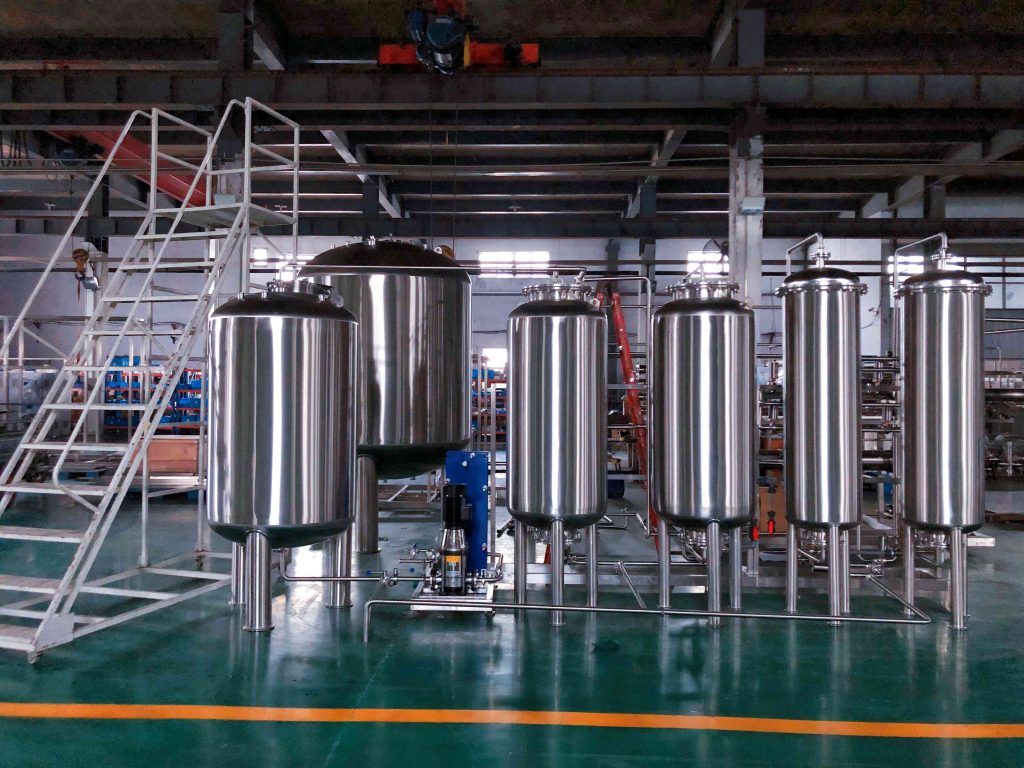
4. Storage and Distribution: Maintaining Water Quality
A pharmaceutical water treatment system does not end when water leaves the purification equipment. Storage and distribution are equally important because treated water can become contaminated if the system is poorly designed.
A reliable system should include:
-
Sanitary storage tanks: Suitable product-contact materials, hygienic construction, proper vent filtration, and effective drainage.
-
Continuous circulation: Helps prevent stagnant water and supports microbial control.
-
Proper pipeline design: Minimizes dead legs, low-flow areas, and unnecessary connections.
-
Suitable sanitization: Supports the selected heat, ozone, or other validated sanitization method.
-
Monitoring points: Provides representative information about water quality.
Conductivity, TOC, temperature, flow, and pressure are important monitoring parameters. Microbiological and endotoxin testing should follow the water grade and the site’s quality-control strategy.
The goal is to maintain the required water quality at both the generator outlet and the actual points of use. This is why storage and distribution must be treated as a full part of water treatment solutions, not as a separate add-on.
5. Pharmaceutical Water Quality and GMP Compliance
Water quality requirements depend on the final water grade and applicable pharmacopoeia.
Important quality attributes include:
Table 3. Key Pharmaceutical Water Quality Attributes
| Parameter | What It Indicates | Control Method |
|---|---|---|
| Conductivity | Dissolved ionic impurities | Online or laboratory testing |
| TOC | Organic contamination | Online or laboratory testing |
| Microbial Count | Microbiological condition | Sampling and testing |
| Bacterial Endotoxins | Pyrogen-related contamination | Endotoxin testing where applicable |
These are key quality attributes, not universal numerical specifications. Actual limits and monitoring plans must follow the applicable pharmacopoeia and validated system requirements.
For example, USP conductivity testing follows General Chapter <645>, while TOC testing follows General Chapter <643>.
WFI requires additional control of bacterial endotoxins. Its production method must comply with the applicable pharmacopoeia. Qualified non-distillation methods are accepted under defined conditions in relevant regulatory frameworks.
6. How to Choose the Right Pharmaceutical Water Treatment System
Selecting pharmaceutical water treatment solutions requires more than comparing equipment specifications. Manufacturers should consider five factors:
1. Required Water Grade
Determine whether the facility needs PW or WFI. Different applications require different treatment and control strategies.
2. Source Water Quality
Analyze hardness, turbidity, conductivity, chlorine, organic matter, and other relevant impurities. These results determine the pretreatment design.
3. Production Capacity
Calculate average and peak water demand. The system should provide sufficient capacity without unnecessary equipment oversizing.
4. Validation and Documentation
The manufacturer should provide suitable engineering and quality documents, including process flow diagrams, material certificates, welding records where applicable, pressure test reports, and instrument calibration records.
These documents support system qualification, including IQ, OQ, and PQ, according to the project’s validation plan.
5. Long-Term Operation
Consider energy consumption, membrane replacement, filter maintenance, sanitization, spare parts, and technical support.
A well-designed system should be easy to operate, maintain, monitor, and upgrade.

FAQ: Pharmaceutical Water Treatment Solutions
Q1: What are the main stages of pharmaceutical water treatment?
The main stages are pretreatment, purification, disinfection, storage, and distribution. Pretreatment removes suspended solids, chlorine, and hardness. RO and EDI reduce dissolved impurities, while disinfection and sanitary distribution help maintain water quality.
Q2: What is the difference between water filtration and water purification?
Filtration removes suspended particles, chlorine, and hardness minerals before the main purification process. Purification uses technologies such as RO and EDI to remove dissolved impurities. Both stages are necessary for many pharmaceutical applications.
Q3: Is RO + EDI enough to produce pharmaceutical PW?
RO + EDI is a common purification configuration, but it does not guarantee compliance by itself. The complete system must also control TOC, microorganisms, storage, distribution, and sanitization.
Q4: What is the difference between PW and WFI?
PW is used in many pharmaceutical manufacturing and cleaning processes. WFI has stricter requirements, especially for bacterial endotoxins, and is used in applications such as parenteral product manufacturing.
Q5: How often should a pharmaceutical water system be sanitized?
There is no single schedule for every system. Frequency should depend on system design, validation results, microbial monitoring, and water quality trends.
Q6: What should manufacturers consider when purchasing pharmaceutical water equipment?
Important factors include water grade, source-water quality, production capacity, treatment technology, material compatibility, automation, validation documents, maintenance, and technical support.
Reliable pharmaceutical water treatment solutions should maintain consistent water quality throughout the entire operating life of a system, not only during initial commissioning. Choosing an experienced equipment manufacturer and system design partner is an important step toward stable production and long-term GMP compliance.
Contact Us
For customized water treatment solutions or integration of high-performance water treatment technologies, please contact SKE & Eagle. Our professional team collaborates closely with industrial partners to design, implement, and maintain reliable water treatment solutions tailored to your operational needs.
Official Website: https://www.ske-eagle.com/
Contact Email: info@ske-eagle.com
Follow us on Facebook for the latest industry insights: SKE & Eagle Facebook
Business Inquiries: Visit our official website and submit the contact form at the bottom.