

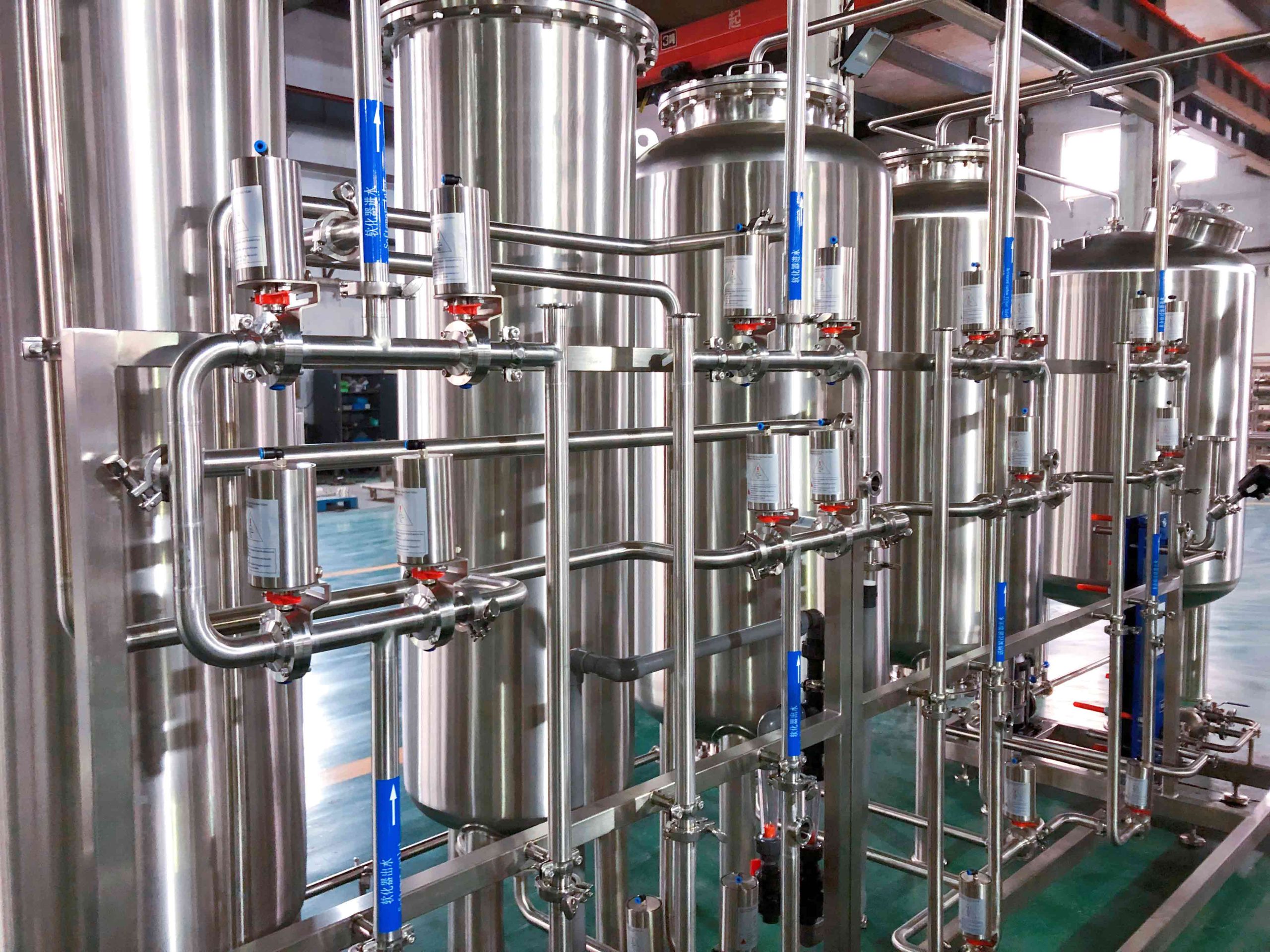
In a pharmaceutical water system, every filtration stage has a clear purpose. Pretreatment removes particles and other unwanted substances before water reaches more sensitive equipment. Among these components, the cartridge filter plays an important role in protecting reverse osmosis (RO) membranes and helping the system run reliably.
However, a cartridge filter is not a complete water purification solution. Its performance depends on the incoming water quality, the filter material, the micron rating, and the design of the whole system. Choosing the wrong filter can lead to frequent replacement, higher operating costs, and unnecessary pressure on downstream equipment.
For pharmaceutical manufacturers, the goal is not simply to remove visible particles. It is to build a reliable pretreatment process that supports consistent water quality and stable operation.
What Does a Cartridge Filter Do?
A cartridge filter removes suspended particles from water as it passes through a filter element. Depending on the design and rating, the element can capture particles such as rust, fine sediment, and material released by upstream equipment.
In many pharmaceutical water purification systems, cartridge filters are installed before RO membranes. RO membranes have fine separation layers that can be damaged or blocked by unsuitable feed water. A properly selected cartridge filter helps reduce the particle load entering the RO unit.
Cartridge filters are available in different materials, structures, and micron ratings. Some use wound fibers, while others use pleated or melt-blown media. Each design has different dirt-holding capacity, flow characteristics, and filtration performance.
The micron rating is an important selection factor, but it should not be the only one. A filter’s performance also depends on whether its rating is nominal or absolute, the operating flow rate, the pressure drop, and the quality of the incoming water.
It is also important to understand the limits of cartridge filtration. A standard cartridge filter does not automatically remove dissolved salts, all microorganisms, or endotoxins. These require other treatment steps where necessary. The filter should therefore be selected as part of the complete pharmaceutical water pretreatment system, rather than as a stand-alone solution.

How Cartridge Filters Work with Other Pretreatment Equipment
A cartridge filter usually works alongside other treatment equipment. Its role becomes clearer when we look at how it differs from multimedia filters and activated carbon filters.
A multimedia filter removes suspended solids through layers of filter media. It can reduce the particle load before water reaches finer filtration stages. This helps lower the risk of rapid cartridge filter blockage.
An activated carbon filter has a different purpose. Under suitable operating conditions, activated carbon can reduce chlorine, chloramine, and certain organic compounds. This can be important when the incoming water contains disinfectants that may damage RO membranes. However, carbon filtration must be designed and maintained carefully because carbon beds can support microbial growth.
The cartridge filter provides a final particle-removal step before the next treatment stage. It can capture particles that remain after upstream treatment, helping protect downstream equipment.
| Equipment | Main function | Important limitation |
|---|---|---|
| Multimedia filter | Reduces suspended solids and larger particles | Does not remove dissolved salts |
| Activated carbon filter | Reduces chlorine, chloramine, and certain organic compounds under suitable conditions | Requires careful control and maintenance to manage microbial risks |
| Cartridge filter | Captures remaining particles before downstream equipment, often RO membranes | Does not automatically remove dissolved contaminants, bacteria, or endotoxins |
These filters are not interchangeable. Each addresses a different water quality concern, and the correct combination depends on the feed water and the system design.
For example, a cartridge filter installed after an effective multimedia filtration stage may last longer because it receives a lower particle load. If activated carbon is used to protect RO membranes from chlorine, the system design must also consider how to manage microbial risks and monitor the quality of the water leaving the carbon filter.
How to Choose the Right Cartridge Filter
The right cartridge filter for RO pretreatment depends on several factors. A filter with a very fine rating is not always the best choice. If the upstream water quality is poor, a fine filter may block quickly and require frequent replacement.
Start with the incoming water quality. Review the water source and the performance of the upstream treatment equipment. If the feed water contains high levels of suspended solids, improving the upstream filtration stage may be more effective than repeatedly replacing the cartridge filter.
Select a suitable micron rating. The required rating depends on the RO membrane manufacturer’s recommendations, the system design, and the quality of the feed water. A 5-micron cartridge filter is used in some RO pretreatment systems, but it is only an example, not a universal requirement. Always confirm the specification for the actual application.
Check flow rate and pressure drop. The filter must support the required flow without creating an excessive pressure drop. A rising differential pressure across the filter often indicates that particles are accumulating. Monitoring this change helps operators decide when inspection or replacement is needed.
Confirm material compatibility. The filter media, support materials, seals, and housing should be suitable for the water quality, temperature, pressure, and cleaning conditions. Compatibility is particularly important when the system uses chemicals during cleaning or sanitization.
Review documentation and maintenance needs. Pharmaceutical manufacturers may need traceable component specifications, material information, and other documents required by their quality system. The exact documentation depends on the application and project requirements. A supplier should clearly state what it can provide instead of implying that every cartridge filter is automatically suitable for pharmaceutical use.
A practical selection process should consider all these factors together. The objective is to protect downstream equipment while maintaining stable flow, reasonable replacement intervals, and consistent system performance.
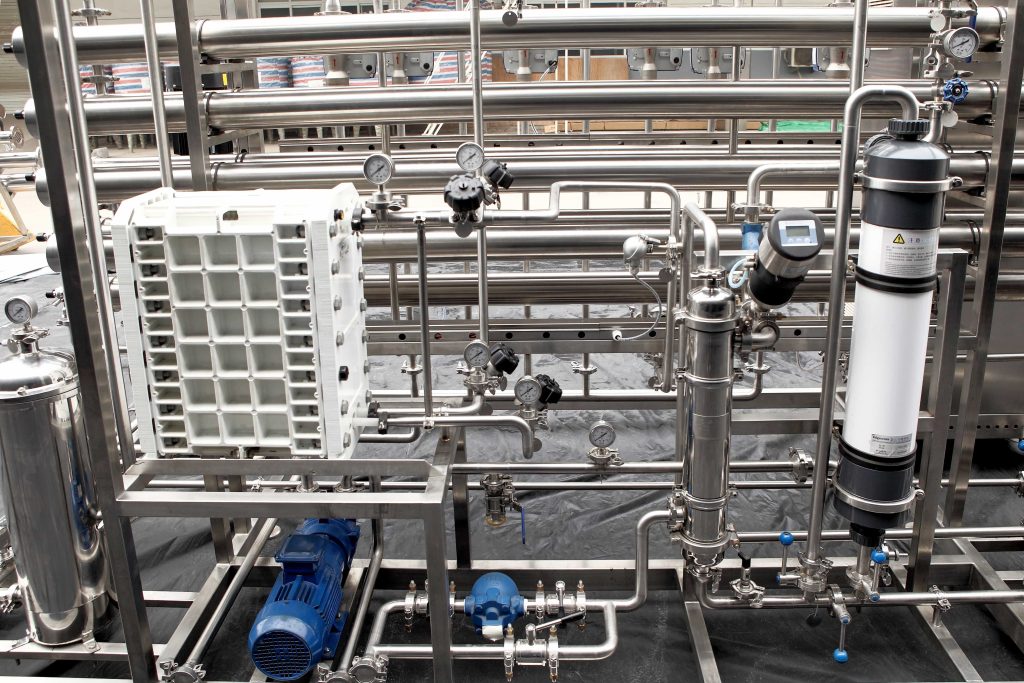
Maintenance: When Should a Cartridge Filter Be Replaced?
Cartridge filter replacement should follow the equipment manufacturer’s recommendations and the actual operating conditions. There is no single replacement interval that fits every pharmaceutical water system.
One useful indicator is the differential pressure across the filter. As the filter captures particles, resistance to flow may increase. If the pressure drop reaches the limit set by the system or filter manufacturer, the element should be inspected and replaced as required.
Operators should also investigate filters that clog much faster than expected. Possible causes include changes in feed water quality, poor upstream filtration, damaged filter media, or an incorrect filter selection. Replacing the element without checking the cause may solve the immediate problem but leave the underlying issue unchanged.
Maintenance records can help identify these patterns. Recording replacement dates, differential pressure, flow rate, and any changes in feed water quality makes it easier to plan maintenance and identify recurring problems.
During replacement, operators should follow the approved procedure for the specific equipment. The housing should be handled correctly, and the new element should be installed according to the manufacturer’s instructions. Where required by the system design and quality procedures, the team should also verify the system’s condition before returning it to operation.
Good maintenance does more than extend filter life. It helps protect RO membranes, reduce unexpected downtime, and keep pretreatment performance consistent.
Frequently Asked Questions
1. What is the purpose of a cartridge filter in a pharmaceutical water system?
Its main purpose is to remove suspended particles from water. In many systems, it protects RO membranes and other downstream equipment from particles that remain after upstream pretreatment.
2. What micron rating should I choose for an RO pre-filter?
There is no universal rating. The choice depends on feed water quality, upstream filtration, RO membrane requirements, and the expected operating conditions. A 5-micron filter is one possible option, but the final specification should be confirmed for the actual system.
3. How do I know when a cartridge filter needs replacement?
A rising differential pressure is a common indicator that the filter is collecting particles. Follow the filter manufacturer’s limits and the site’s maintenance procedures. Frequent blockage should also trigger a review of the upstream treatment process.
4. Can a cartridge filter remove bacteria and endotoxins?
A standard cartridge filter should not be assumed to provide reliable bacterial or endotoxin removal. If microbial or endotoxin control is required, the system needs appropriate treatment stages and a validated control strategy for the intended application.
5. Is a cartridge filter enough to protect an RO membrane?
Not in every case. It can reduce suspended particles, but it does not remove all contaminants that may affect an RO membrane. Pretreatment may also need to address chlorine, hardness, organic matter, and other risks according to the feed water and membrane requirements.
Conclusion
Cartridge filters are a small but important part of pharmaceutical water pretreatment. When selected and maintained correctly, they help reduce particle loading, protect RO membranes, and support reliable system operation.
The best result comes from treating cartridge filtration as part of a complete water purification process. Multimedia filtration, activated carbon treatment, cartridge filtration, and RO should each have a clear purpose based on the incoming water quality and the needs of the plant.
SKE&EAGLE provides pharmaceutical water treatment equipment and system solutions for industrial pharmaceutical applications. When planning a new system or upgrading existing equipment, manufacturers should evaluate the full pretreatment process, operating conditions, maintenance needs, and project-specific quality requirements before choosing individual filter components.
Contact SKE & Eagle for Advanced Solutions
For customized system engineering solutions or integration of high-performance water treatment technologies, please contact SKE & Eagle. Our professional team collaborates closely with industrial partners to design, implement, and maintain solutions tailored to your operational needs.
Official Website: https://www.ske-eagle.com/
Contact Email: info@ske-eagle.com
Follow us on Facebook for the latest industry insights: SKE & Eagle Facebook
Business Inquiries: Visit our official website and submit the contact form at the bottom.