

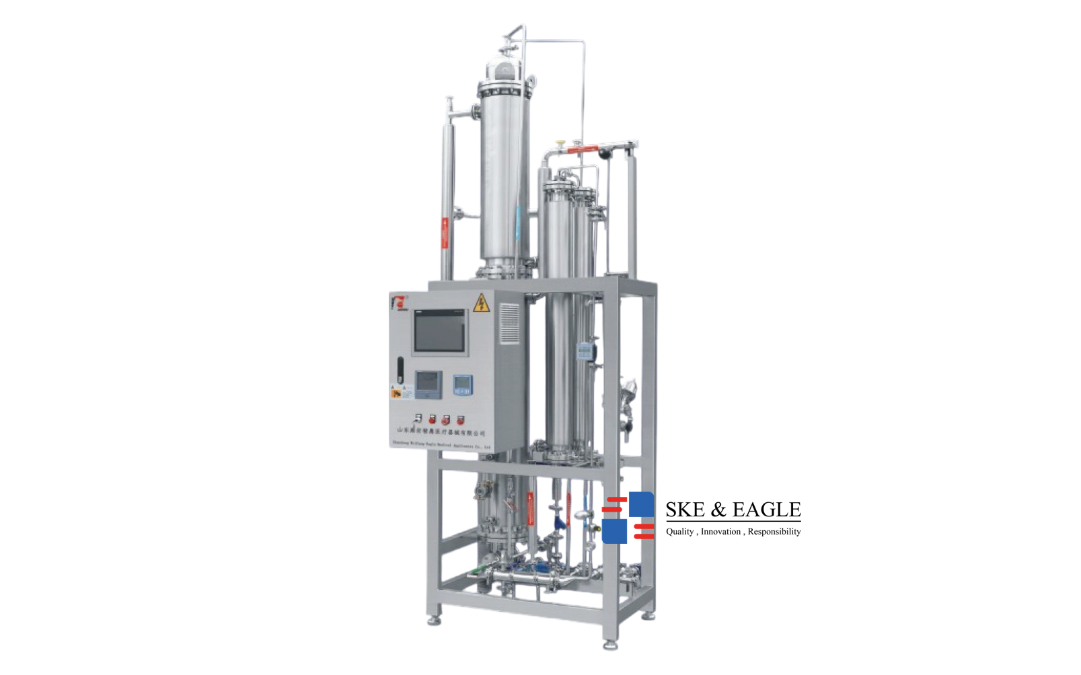
When pharmaceutical manufacturers evaluate steam quality, they often focus on condensate conductivity, total organic carbon (TOC), and bacterial endotoxins. These parameters are important, but they do not tell the whole story.
Another critical factor is often overlooked: non-condensable gases (NCGs).
A Pure Steam Generation System must produce steam that meets chemical purity requirements and provides effective heat transfer during sterilization. If too much air or other non-condensable gas is present, it can reduce heat transfer and prevent steam from reaching some surfaces properly.
This article explains what non-condensable gases are, how they affect Sterilization-in-Place (SIP), and how a well-designed Pure Steam Generation System helps control them.
What Makes Pharmaceutical Pure Steam Different?
Pure steam, also called clean steam in many pharmaceutical applications, is generated from treated feed water without unsuitable volatile boiler additives. Its quality is commonly assessed through the properties of its condensate and its physical performance.
For direct sterilization applications, pure steam condensate should meet the relevant Water for Injection (WFI) chemical and endotoxin requirements. Microbiological testing of steam condensate is generally not required in the same way as testing liquid WFI.
However, chemical purity alone does not guarantee effective sterilization.
A Pure Steam Generation System must also support the production of dry saturated steam with controlled levels of non-condensable gases and superheat.
Pure steam from a Pure Steam Generation System is commonly used for:
-
Sterilization-in-Place (SIP) of tanks and process pipelines
-
Sterilization of product-contact equipment
-
Sterilization of filters and associated housings
-
Pharmaceutical production equipment requiring direct steam contact
In these applications, steam must reach the required surfaces and release latent heat through condensation. This is why both chemical and physical steam quality matter when evaluating a Pure Steam Generation System.

What Are Non-Condensable Gases and Why Do They Matter?
Non-condensable gases are gases that remain in the gas phase under the temperature and pressure conditions used for steam sterilization. Air is a common example. Nitrogen and other gases may also be present, depending on the water source and system conditions.
These gases can enter a Pure Steam Generation System through dissolved gases in feed water, air entering through leaks, or other sources within the system.
The main problem is their effect on heat transfer.
When saturated steam contacts a cooler surface, it condenses and releases latent heat. This heat is essential for achieving the required sterilization temperature.
Non-condensable gases do not condense in the same way. They can collect around equipment surfaces and form a gas layer that reduces direct steam contact.
This creates several risks:
-
Reduced heat transfer: Gas layers slow down the transfer of heat to equipment surfaces.
-
Cold spots: Some areas may not reach the required sterilization temperature.
-
Poor steam penetration: Air and other gases can affect steam penetration into porous materials and filter assemblies.
-
Unreliable SIP cycles: The temperature and sterilization conditions may become less consistent.
For pharmaceutical manufacturers, these problems can affect process reliability and increase the risk of failed sterilization cycles.
The risk is especially important in systems with complex piping, filter housings, and equipment containing difficult-to-drain areas. A Pure Steam Generation System with poor gas control cannot compensate for these downstream conditions.
How a Pure Steam Generation System Controls NCGs
Controlling non-condensable gases requires more than installing a simple vent. A Pure Steam Generation System must manage dissolved gases, evaporation, steam separation, and gas removal as part of an integrated process.
1. Feed Water Preheating and Degassing
Water can hold more dissolved gas at lower temperatures. When feed water is heated, some dissolved gases are released.
A suitable preheating or thermal degassing arrangement helps remove these gases before or during the evaporation process.
This reduces the amount of dissolved air carried into the steam generation stage of the Pure Steam Generation System.
The effectiveness of this process depends on feed water conditions, heating performance, system pressure, and the design of the degassing arrangement.
2. Controlled Evaporation
Inside the evaporator, treated feed water is heated to produce steam.
Stable operating conditions help maintain consistent evaporation and reduce the risk of excessive liquid carryover.
The Pure Steam Generation System design should also consider pressure control, heating capacity, and the operating range required by the pharmaceutical process.
3. Vapor-Liquid Separation
During evaporation, small water droplets may become entrained in the rising steam.
A properly designed vapor-liquid separation section helps remove these droplets before steam leaves the Pure Steam Generation System.
This is important because carried-over droplets can affect steam dryness and may transport impurities into the distribution system.
Effective separation also supports more stable steam quality during changing operating conditions.
4. Gas Venting and Removal
Non-condensable gases must have a suitable path out of the system.
Depending on the Pure Steam Generation System design, gas removal may take place through dedicated venting or separation arrangements.
The location and operation of these components matter. Poor venting can allow gases to remain in the system even when the evaporation process is operating normally.
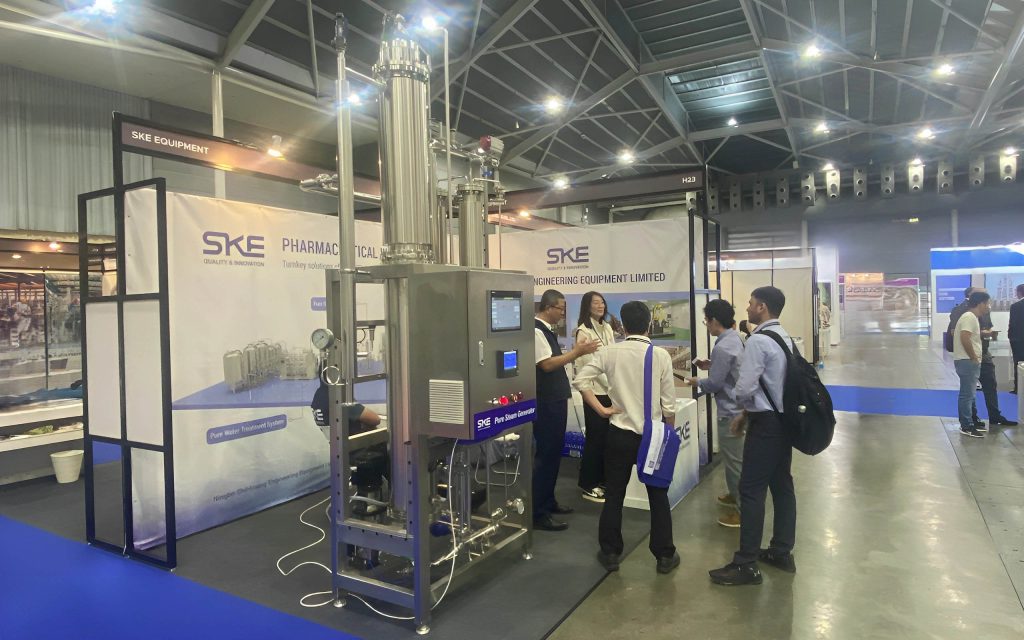
At SKE&EAGLE, Pure Steam Generation System solutions are designed with attention to feed water conditions, evaporation, vapor separation, and steam quality control. The final configuration should be selected according to the required steam capacity, operating pressure, and pharmaceutical application.
Key Parameters for Pure Steam Quality
Steam quality used for sterilization is not measured by a single parameter. Three important physical indicators are non-condensable gases, dryness value, and superheat.
The following values are commonly referenced for steam supplied to large sterilizers under EN 285 testing methods. They apply to steam produced by any Pure Steam Generation System intended for this use.
| Parameter | Typical Acceptance Criterion | Why It Matters |
|---|---|---|
| Non-condensable gases | ≤ 3.5 mL per 100 mL of condensate | Helps limit gas-related heat transfer problems |
| Dryness value | ≥ 0.95 | Supports effective heat transfer through condensation |
| Superheat | ≤ 25 K after expansion to atmospheric pressure | Helps ensure suitable saturated steam behavior |
These values should be applied in the context of the relevant standard, test method, sterilizer type, and intended application. They should not automatically be treated as universal acceptance limits for every Pure Steam Generation System.
Understanding the Three Parameters
Non-condensable gases are measured by collecting the gases that remain after a steam sample has been condensed. Excessive gas content can reduce direct contact between steam and the surfaces being sterilized.
Dryness value describes the mass fraction of water vapor in wet saturated steam. A value of 0.95 means that 95% of the steam-water mixture by mass is vapor and 5% is liquid water. A low dryness value means excessive moisture is carried with the steam, which can affect heat transfer and load dryness.
Superheat occurs when steam temperature is above the saturation temperature at the same pressure. Superheated steam must first lose its excess sensible heat before it can condense. This can delay the release of latent heat needed for effective sterilization.
These three parameters should be evaluated together when assessing steam quality from a Pure Steam Generation System.
How to Test and Verify Non-Condensable Gases
Even a well-designed Pure Steam Generation System requires regular testing. Equipment design alone cannot prove that the steam reaching the point of use meets the required quality.
For sterilization applications, non-condensable gas testing is commonly performed using the method described in EN 285.
In principle, the procedure involves the following steps:
-
A representative steam sample is passed through a condenser.
-
The steam condenses and the resulting water is collected.
-
Gases that do not condense are separated and collected in a measuring device.
-
The gas volume is compared with the collected condensate volume.
Under the EN 285 method, the acceptance criterion is no more than 3.5 mL of collected non-condensable gas per 100 mL of condensate.
There is an important limitation: this test result should not be interpreted as an exact measurement of the gas concentration during every moment of normal sterilizer operation. Sampling conditions and measurement procedures can affect the result. Repeated measurements help provide a more reliable picture of steam quality.
For pharmaceutical facilities, testing should be included in the qualification and periodic monitoring plan. Testing at representative points of use is important because the distribution system, pressure changes, condensate removal, and operating conditions can affect the steam delivered to equipment.
Steam quality testing should also be considered alongside temperature distribution studies, equipment qualification, and sterilization cycle validation.

Frequently Asked Questions
1. What causes non-condensable gases in pure steam?
The main sources include dissolved gases in feed water, air entering through leaks, and gases released during heating and evaporation. Proper feed water treatment, degassing, and Pure Steam Generation System design help control them.
2. Why are non-condensable gases a problem during SIP?
They can form insulating layers around equipment surfaces and reduce direct steam contact. This may slow heat transfer and create areas that do not reach the required sterilization conditions.
3. What is the EN 285 limit for non-condensable gases?
The EN 285 test criterion for steam supplied to large sterilizers is no more than 3.5 mL of collected non-condensable gases per 100 mL of condensate. The result must be interpreted according to the standard’s sampling and test procedure.
4. Is pure steam the same as WFI?
No. WFI is a pharmaceutical water grade, while pure steam is a steam utility produced by a Pure Steam Generation System from appropriately treated feed water. For direct sterilization applications, pure steam condensate should meet relevant WFI chemical and endotoxin requirements.
5. How often should pure steam quality be tested?
Testing frequency should be defined through risk assessment, qualification, applicable standards, and the facility’s monitoring program. Testing is particularly important during initial qualification, after significant changes to the Pure Steam Generation System, and when a decline in steam quality is suspected.
6. Can a Pure Steam Generation System alone guarantee successful SIP sterilization?
No. The Pure Steam Generation System is only one part of the system. Distribution piping, pressure control, condensate removal, equipment drainage, air removal, and sterilization cycle validation also affect the final result.
Conclusion
Non-condensable gases are easy to overlook because they cannot be seen during normal operation. However, their effect on heat transfer can directly influence the reliability of pharmaceutical sterilization.
A reliable Pure Steam Generation System must control feed water conditions, support stable evaporation, separate liquid droplets, and provide effective gas removal. These design features should work together with proper distribution, routine testing, and SIP validation.
For pharmaceutical manufacturers, understanding NCG control is an important step toward selecting a Pure Steam Generation System that supports consistent steam quality and reliable sterilization performance.
SKE&EAGLE provides Pure Steam Generation System solutions for different production requirements. System configuration should be based on the customer’s process conditions, required steam quality, capacity, and applicable GMP expectations. Our team can help you match the right configuration to your application.
Contact Email: info@ske-eagle.com
Follow us on Facebook for the latest industry insights: SKE & Eagle Facebook
Business Inquiries: Visit our official website and submit the contact form at the bottom.