


When you look for a pure water reverse osmosis system, you see many options. Some look similar. But they are not the same. The biggest difference is often the material used to build them.
For pharmaceutical companies, this choice is critical. You need a system that is safe and easy to clean. You also need one that lasts a long time. A well-built system made from the right materials helps you meet strict quality rules.
At SKE&EAGLE, we build systems for pharmaceutical water. We know that the material affects your water quality. This article will help you understand why material choice matters. We will also explain why a stainless steel reverse osmosis system is the best choice for many applications.
Key Takeaways
- 316L stainless steel is the standard material for pharmaceutical-grade RO systems because it resists corrosion and supports the smooth, crevice-free surfaces that hygienic design standards require.
- Surface finish matters as much as the base material. ASME BPE recognizes finishes down to 15 µ-in Ra (electropolished), which limits the surface area where bacteria can attach and form biofilm.
- Plastic (PVC/PP) systems cost less upfront but cannot be sanitized with hot water and are harder to validate for pharmaceutical use, which raises long-term cost and risk.
- Sanitary design details like dead-leg elimination and full-penetration welds follow the geometry and weld-quality requirements set out in 3-A Sanitary Standards.
What Is a Pure Water Reverse Osmosis System?
Pure water reverse osmosis is a process that cleans water. It uses pressure to push water through a special membrane. This membrane has very small holes. Only water molecules can pass through.
Larger things like salts, bacteria, and viruses stay behind. This is how the system removes contaminants. The clean water that comes out is called permeate. The waste water is called concentrate.
The full system is more than just the membrane. It includes pumps, pipes, tanks, and controls. All these parts work together to produce high-quality water.
In pharmaceutical production, this water is used in many ways. It can be used to clean equipment. It can be an ingredient in medicines. It can also be used for final rinsing. This is why the water must be very pure.

Where Does RO Fit in the Water Treatment Process?
A pharmaceutical water treatment system usually has several steps. RO is often the main cleaning step, but it does not work alone. A typical process flow looks like this:
Raw Water → Pretreatment → Reverse Osmosis → Polishing → Storage → Distribution
Pretreatment is very important. It removes things that can damage the RO membrane. This may include sand, chlorine, and hardness.
After RO, the water may go through extra polishing steps. This can include EDI or UV light. These steps remove any remaining ions or bacteria.
Finally, the clean water goes into a storage tank. From there, it moves through a distribution loop. This loop sends water to the points where it is needed.
Why Material Selection Is So Important
You might think that all water systems are the same. But the materials used to build them make a big difference. This is especially true for pharmaceutical applications.
The wrong material can cause many problems. It can corrode over time. Corrosion adds particles to your water. It can also create rough surfaces. Bacteria can hide in these rough areas.
Here are four reasons why material choice matters:
1. Corrosion Resistance
Water systems run for many years. They are also exposed to heat and chemicals during cleaning. The material must resist corrosion. If it does not, the system will fail early. You will need to replace parts often.
2. Cleanability
Pharmaceutical systems must be kept very clean. The internal surfaces should be smooth. Smooth surfaces are easier to clean. Rough surfaces trap dirt and bacteria. They make sanitization more difficult.
3. Microbial Control
Bacteria can grow in water systems. They grow in areas where water sits still. They also grow on rough surfaces. The right material helps reduce these risks. It works together with good system design.
4. Long-Term Reliability
A water system is a big investment. You want it to work for many years. The right materials reduce maintenance problems. They also reduce the risk of unexpected breakdowns.
Why Choose a Stainless Steel Reverse Osmosis System?
A stainless steel reverse osmosis system is the preferred choice for pharmaceutical applications. The most common grade is 316L stainless steel.
What does 316L mean? The “L” means low carbon. This makes it easier to weld. The material also contains molybdenum. This chemical gives it extra corrosion resistance.
Surface finish is part of the material spec, not a separate detail. The ASME BPE (Bioprocessing Equipment) standard defines several acceptable finishes, with the most common ranging from 20 Ra (mechanically polished) down to 15 µ-in Ra for electropolished surfaces. A finer finish leaves less surface area for bacteria to attach to.
Here are the key benefits of 316L stainless steel:
-
It resists corrosion very well.
-
It has a smooth surface.
-
It is strong and durable.
-
It can handle high temperatures.
-
It is easy to clean.
-
It works with many sanitization methods.
-
It lasts a long time.
These benefits make it ideal for pharmaceutical water systems. It helps you meet strict quality standards. It also protects your product quality.
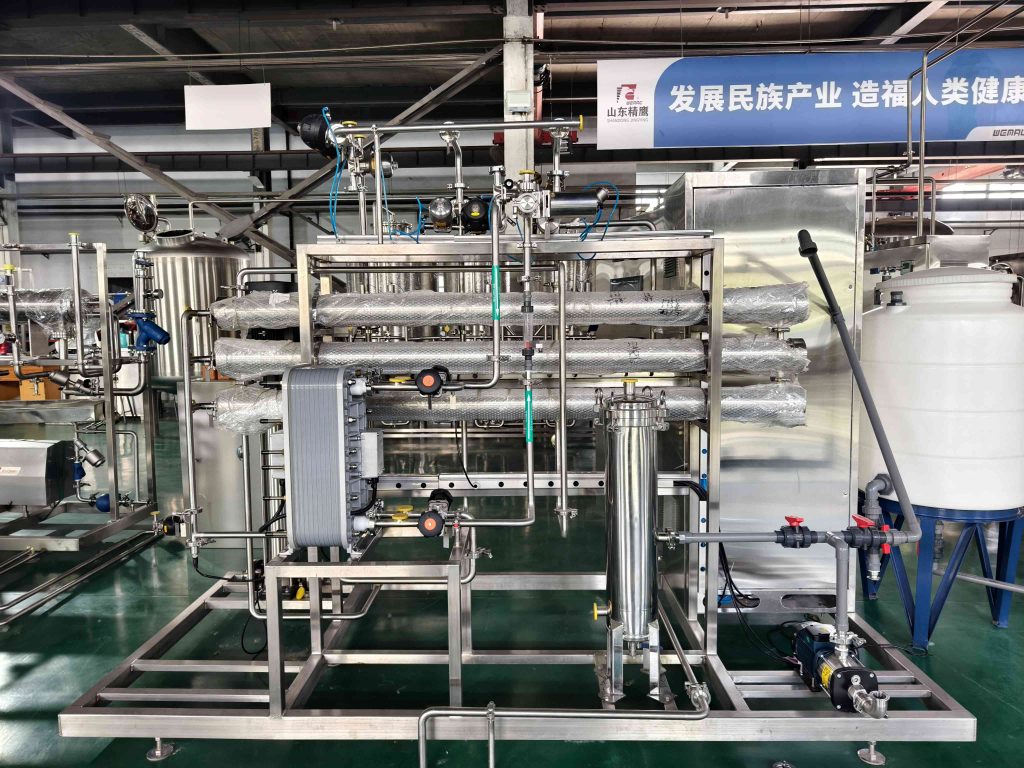
Surface Finish: A Critical Detail
Many people think that choosing stainless steel is enough. But the surface finish is also very important. A smooth surface is better than a rough one.
A rough surface has tiny cracks and holes. Bacteria can hide in these places. They can form a biofilm. A biofilm is a layer of bacteria that is hard to remove. This can cause your water to fail quality tests.
A smooth surface does not have these hiding places. Bacteria cannot attach easily. This makes cleaning and sanitization more effective.
At SKE&EAGLE, we pay close attention to surface finish. We polish the internal surfaces of our systems. This creates a mirror-like finish. This finish is a key part of a sanitary design.
Comparing Materials: Stainless Steel vs. Plastic
Sometimes, you have a choice between stainless steel and plastic. Plastic is cheaper upfront. But it has limitations. The table below compares the two materials.
| Feature | Plastic (PVC/PP) | Stainless Steel (316L) |
|---|---|---|
| Surface texture | Porous and rough | Smooth and non-porous |
| Bacteria growth | Easy for bacteria to attach | Difficult for bacteria to attach |
| Heat resistance | Low (cannot use hot water) | High (works with hot water) |
| Chemical resistance | Can degrade over time | Very good |
| Sanitization | Limited to chemicals | Works with heat and chemicals |
| Lifespan | Shorter (needs replacement) | Long (many years with proper maintenance) |
| Pharmaceutical use | Difficult to validate | Meets pharma requirements |
As you can see, stainless steel is the better choice for critical applications. It costs more at first. But it saves money over time because it lasts longer.
Sanitary Design: More Than Just Material
A pure water reverse osmosis system needs more than just stainless steel. It also needs good design. This is called sanitary design.
Sanitary design means the system is built to be clean. It prevents areas where bacteria can grow. Here are some important design features: These practices follow the geometry and weld-quality requirements set out in 3-A Sanitary Standards, which call for full-penetration welds free of porosity and surfaces free of dead zones that trap water.
Hygienic Piping
The pipes should be designed to drain completely. Water should not pool in low spots. Stagnant water allows bacteria to grow.
Dead-Leg Control
A dead-leg is a section of pipe where water does not flow. These areas are risky. They can become breeding grounds for bacteria. Good design minimizes dead-legs.
High-Quality Welding
Welds must be smooth. Rough welds create hiding places for bacteria. High-quality welding and inspection are essential.
Proper Valves and Fittings
Valves and fittings must also be sanitary. They should be easy to clean. They should not have hidden areas where bacteria can collect.
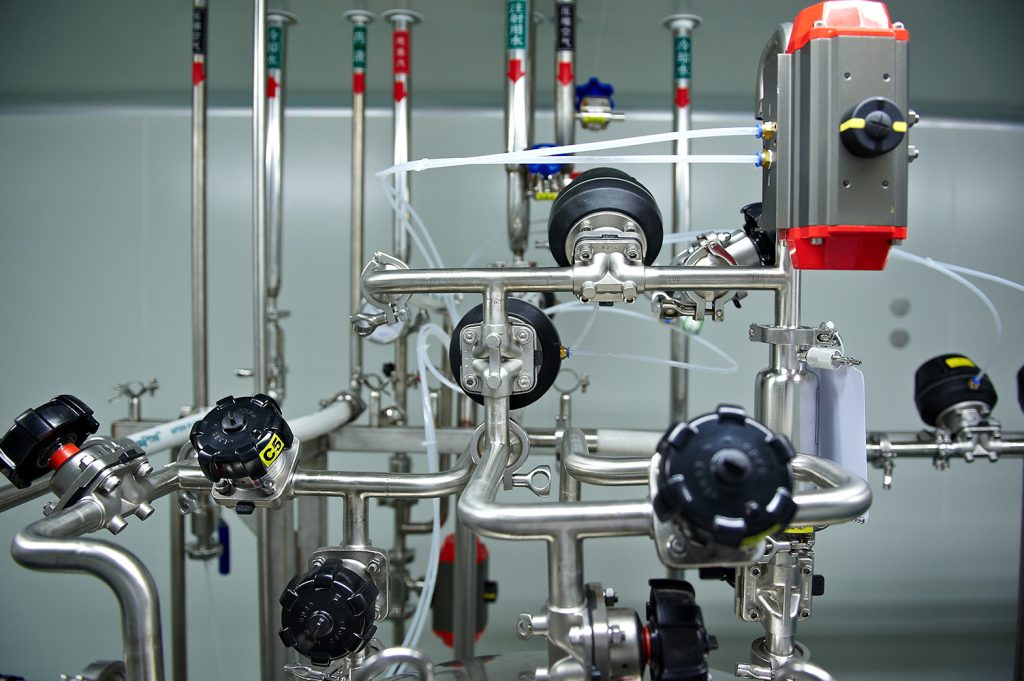
Key Components of a Reverse Osmosis Water Treatment Machine
Such a system has several parts, and each part must be made from the right material. The main components are outlined below.
1. Pretreatment System
This protects the RO membrane. It includes filters and softeners. The pretreatment removes dirt, chlorine, and hardness.
2. High-Pressure Pump
This pump pushes water through the RO membrane. It must be reliable and efficient. It must also be compatible with the water chemistry.
3. RO Membrane
This is the heart of the system. It removes most of the contaminants. The membranes are made from special polymers.
4. Post-Treatment (Polishing)
This step improves water quality further. It may include EDI or UV. These technologies remove any remaining ions or bacteria.
5. Storage and Distribution
Clean water must be stored safely. The storage tank is often made from 316L stainless steel. The distribution loop sends water to the points of use.
How to Choose the Right System for Your Needs
Choosing the right system can feel difficult, but you can make a good decision by asking the right questions. Consider these factors:
1. Raw Water Quality
Test your source water. Know what is in it. This includes hardness, chlorine, and total dissolved solids. This information helps design the right pretreatment.
2. Required Water Quality
Define your water quality target. Do you need Purified Water (PW)? Or do you need Water for Injection (WFI)? Different applications need different purity levels.
3. Production Capacity
How much water do you need per day? Plan for future growth too. A system that is too small will cause problems. A system that is too large wastes money.
4. Material and Design
Ask the manufacturer about materials. For pharmaceutical use, 316L stainless steel is preferred. Also ask about surface finish and welding quality.
5. Sanitization Method
How will you sanitize the system? Hot water is very effective. But it requires a system that can handle heat. Chemical sanitization is another option.
6. Automation and Monitoring
Modern systems have automatic controls. They monitor water quality continuously. This helps you catch problems early.

Written by Mandy, Marketing Specialist at SKE&EAGLE with two years of experience covering the company’s pharmaceutical water and steam equipment. Technical details in this guide were reviewed by SKE&EAGLE’s engineering team before publication.
SKE&EAGLE: Your Partner in Pure Water Production
At SKE&EAGLE, we specialize in pharmaceutical water systems. We understand the strict requirements of this industry. Our systems are designed to meet the highest quality standards.
We use 316L stainless steel for all critical wetted parts. We polish the internal surfaces for a mirror finish. We pay attention to every detail, from welding to piping design.
Our stainless steel reverse osmosis system can be customized to your needs. We can also integrate other technologies like EDI and UV. This gives you a complete solution.
We do not just sell you a machine. We support you from design to installation. We can also help with qualification and validation. Our goal is to help you produce safe, high-quality water every day.
Conclusion: Invest in Quality Materials
Choosing a pure water reverse osmosis system is an important decision. The materials used to build the system affect its performance and lifespan.
For pharmaceutical applications, a stainless steel reverse osmosis system is the best choice. It offers corrosion resistance, cleanability, and long-term reliability. It also helps you meet strict regulatory requirements.
Plastic systems may be cheaper at first. But they have many limitations. They are harder to clean. They do not last as long. They also carry higher microbial risks.
At SKE&EAGLE, we believe in quality. We build systems that you can rely on for years. Contact us today to learn more about our solutions.
Frequently Asked Questions (FAQ)
Q: What is pure water reverse osmosis?
A: It is a process that uses pressure to push water through a membrane. The membrane removes salts, bacteria, and other contaminants. The result is clean, high-purity water.
Q: Why is 316L stainless steel used for pharmaceutical water systems?
A: 316L stainless steel resists corrosion well. It has a smooth surface that is easy to clean. It also withstands high temperatures. These properties make it ideal for pharmaceutical use.
Q: Can a plastic RO system be used for pharmaceutical water?
A: It is generally not recommended. Plastic is porous and harder to clean. It also cannot handle hot water sanitization. This increases the risk of bacterial growth.
Q: What is the difference between 304 and 316L stainless steel?
A: 316L contains molybdenum. This makes it more resistant to corrosion. For pharmaceutical systems, 316L is the preferred grade.
Q: What does sanitary design mean?
A: Sanitary design means the system is built to be clean. It has smooth surfaces and no dead-legs. It drains completely. It is easy to sanitize.
Q: How often should a pure water reverse osmosis system be sanitized?
A: The frequency depends on your system, risk assessment, and application — it should be set by your validated SOP rather than a fixed rule. Weekly to monthly is common in practice, but always follow your own validated procedures.
Q: How do I maintain a stainless steel reverse osmosis system?
A: Regular maintenance includes monitoring water quality, replacing filters, and performing sanitization. It is also important to inspect the system for any signs of corrosion or damage.
Contact SKE & Eagle for Advanced Solutions
For customized system engineering solutions or integration of high-performance water treatment technologies, please contact SKE & Eagle. Our professional team collaborates closely with industrial partners to design, implement, and maintain solutions tailored to your operational needs.
Official Website: https://www.ske-eagle.com/
Contact Email: info@ske-eagle.com
Follow us on Facebook for the latest industry insights: SKE & Eagle Facebook
Business Inquiries: Visit our official website and submit the contact form at the bottom.