


A commercial water purification system combines pretreatment, reverse osmosis (RO), EDI, and sanitary storage/distribution to deliver consistent, high-purity water for pharmaceutical, biotech, food, and cosmetics manufacturing at industrial volumes.
By the SKE&EAGLE Water Treatment Engineering Team — SKE&EAGLE designs and manufactures pharmaceutical-grade water treatment systems and has supplied RO/EDI trains for GMP-regulated production plants. Learn more about our engineering background.
Key Takeaways
- A commercial water purification system removes particles, dissolved salts, bacteria, organic matter, and heavy metals through staged treatment: pretreatment, RO, EDI, and sanitary storage/distribution.
- Unlike household filters, commercial systems run continuously at higher capacity and must be designed to meet regulatory water grades such as Purified Water (PW) and Water for Injection (WFI), as defined in USP <1231> and WHO GMP Annex 3.
- 316L stainless steel construction and continuous circulation loops are standard practice for pharmaceutical-grade distribution, per ISPE’s Water and Steam Systems Baseline Guide.
- Sizing, technology selection (RO vs. RO+EDI), and supplier experience are the three factors that most affect total cost of ownership.
What Is a Commercial Water Purification System?
A water purification system built for commercial use is an industrial tool for removing unwanted substances from raw water.
Raw water may contain:
- Small particles
- Dissolved salts
- Bacteria
- Organic matter
- Heavy metals
The system uses several treatment stages to produce water that meets different industry needs. Compared with small household filters, commercial systems offer:
| Feature | Commercial System | Household System |
|---|---|---|
| Capacity | High-volume output | Limited supply |
| Operation | Runs continuously | Used occasionally |
| Control | Automatic monitoring | Basic manual control |
| Application | Industrial production | Daily drinking water |
Commercial systems are built for reliability and long-term service.

Why Industries Need a Professional Pure Water System
Different industries need reliable water quality. A professional pure water system helps solve several common problems.
1. Stable Water Quality
Production processes need consistent water. Changes in conductivity, bacteria levels, or organic content can hurt product quality. A well-designed system keeps water quality stable at all times.
2. Lower Production Risk
Poor water can cause equipment damage, product failures, and production delays. A reliable system helps avoid these costly issues.
3. Meet Industry Rules
Industries like pharmaceuticals must follow strict water standards. For pharmaceutical customers specifically, that means designing to recognized frameworks such as USP <1231>, the EMA’s water-quality guideline, and WFI-specific compliance requirements rather than a generic “clean water” spec.
How Does a Purified Water Treatment System Work?
A modern purified water treatment system uses several stages. Each stage has a specific job.
Stage 1: Pre-treatment
The first step protects the main equipment. Common pre-treatment devices include:
- Multi-Media Filter – Removes sand and large particles.
- Activated Carbon Filter – Removes chlorine and organic substances.
- Water Softener – Reduces hardness and stops scale buildup.
Stage 2: Reverse Osmosis (RO)
RO is a key part of any commercial water treatment system. The RO membrane pushes water through a very fine filter. Most impurities are left behind. A dedicated look at RO design and sizing is in our purified water RO systems guide.
RO can remove:
- Dissolved salts
- Minerals
- Organic materials
- Most bacteria
Benefits: High efficiency, stable operation, and low chemical use.
Stage 3: EDI Purification
After RO, the water is clean but still has small amounts of ions. EDI uses electricity to remove these last impurities. Compared with older chemical methods, EDI offers:
- Continuous operation
- Cleaner process
- Lower chemical costs
Stage 4: Storage and Distribution
After cleaning, the water must stay clean. A complete system includes:
- Stainless steel storage tank
- Sanitary piping
- Circulation loop
- Monitoring instruments
316L stainless steel is the common material choice for pharmaceutical-grade loops — ISPE’s Water and Steam Systems Baseline Guide covers the design rationale in detail. It resists corrosion, holds up under repeated sanitization, and is easy to keep clean.
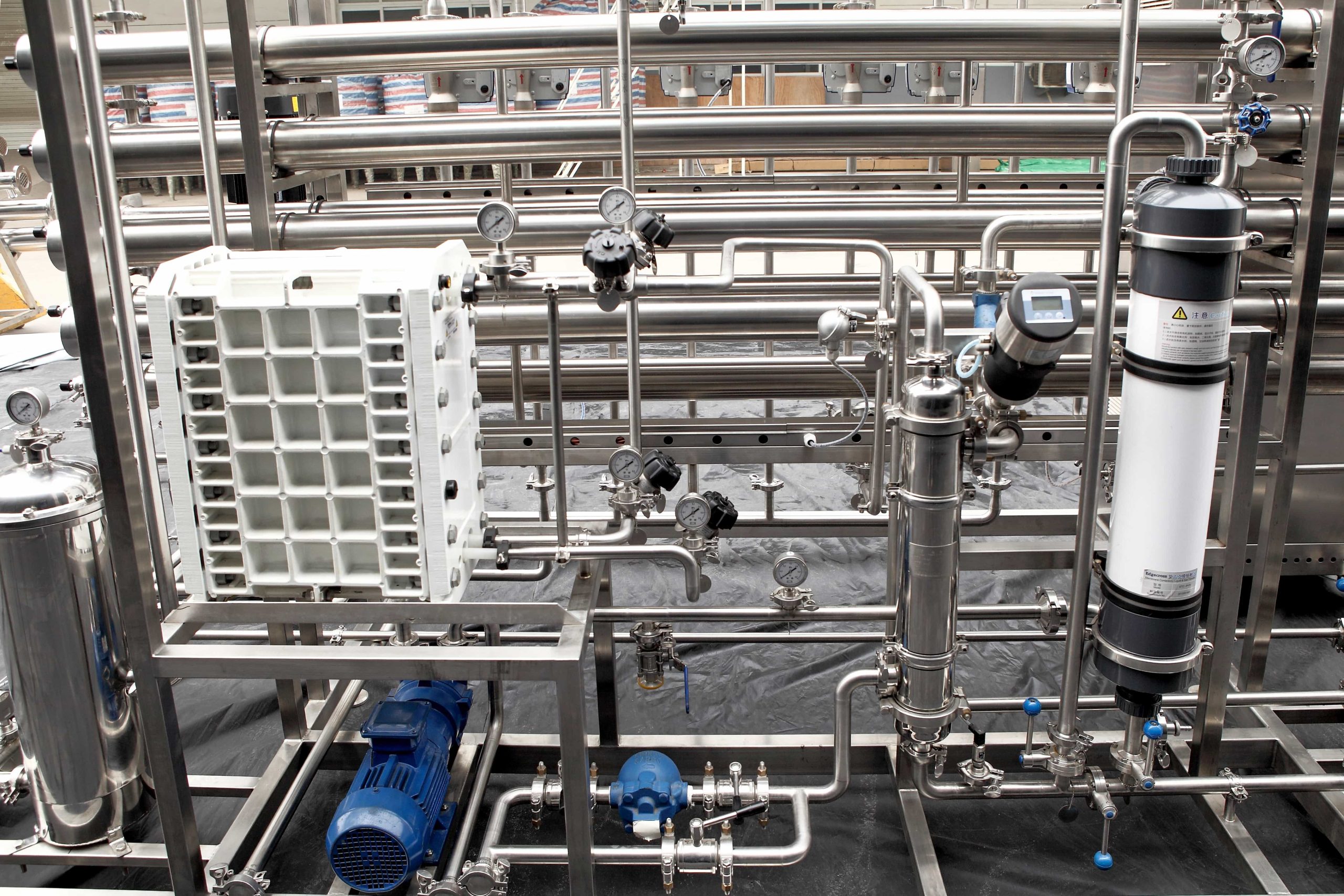
Main Components of a Commercial Water Purification System
A complete system has several parts. Each part helps ensure stable water quality.
| Component | Function |
|---|---|
| Raw Water Tank | Stores incoming water for treatment |
| Multi-Media Filter | Removes suspended solids and particles |
| Activated Carbon Filter | Removes chlorine and organic matter |
| Water Softener | Reduces hardness and prevents scale |
| RO Unit | Removes most dissolved salts and impurities |
| EDI Module | Removes remaining ions for higher purity |
| UV Sterilizer | Controls bacteria and microbes |
| Pure Water Storage Tank | Stores clean water safely |
| Distribution Loop | Delivers water to production points |
For pharmaceutical use, sanitary design is very important. High-quality materials like 316L stainless steel provide good corrosion resistance, smooth surfaces, easy cleaning, and a long service life. A good system not only produces clean water but also keeps it clean during storage and delivery.
Applications of Water Purification Systems by Industry
A commercial water purification system is used in many industries. Water quality directly affects production results.
Pharmaceutical Industry
Pharmaceuticals have very strict water requirements, typically distinguishing between Purified Water and Water for Injection grades. A reliable system is used for:
- Drug manufacturing
- Equipment cleaning (see our CIP validation guide for how cleaning water quality is verified)
- Laboratory testing
- Process preparation
Stable water helps companies improve product quality and meet regulations.
Biotechnology Industry
Biotech processes often need high-purity water. A professional system provides low conductivity, low microbial risk, and consistent process conditions.
Food and Beverage Industry
Water is a key ingredient in many foods and drinks. Commercial systems help manufacturers improve product consistency, control water quality, and reduce unwanted impurities.
Cosmetics Industry
Many cosmetic products contain a large amount of water. A reliable pure water system helps manufacturers achieve better product quality.
How to Choose the Right Commercial Water Purification System
Choosing the right system requires careful thought. You need to consider your production needs and future plans.
1. Define Your Water Quality Needs
Different applications need different water standards. Before buying, confirm required purity level, production use, industry regulations, and daily water volume. For pharmaceutical companies, common grades include Purified Water (PW) and Water for Injection (WFI).
2. Select the Right Treatment Technology
Different projects need different solutions. Common choices include:
- RO System – Good for removing most dissolved impurities.
- RO + EDI System – Better for higher purity and continuous operation.
- Complete System – Includes pretreatment, RO, EDI, UV, storage, and distribution.
3. Consider System Capacity
The system size must match your production needs. Think about daily water use, peak demand times, future expansion, and available space. A system that is too big wastes money. A system that is too small can stop production.
4. Evaluate the Supplier’s Experience
Choosing a supplier is as important as choosing the equipment. A good manufacturer should provide system design, equipment manufacturing, technical documents, installation support, and after-sales service. An experienced supplier helps reduce risks and improve long-term reliability.
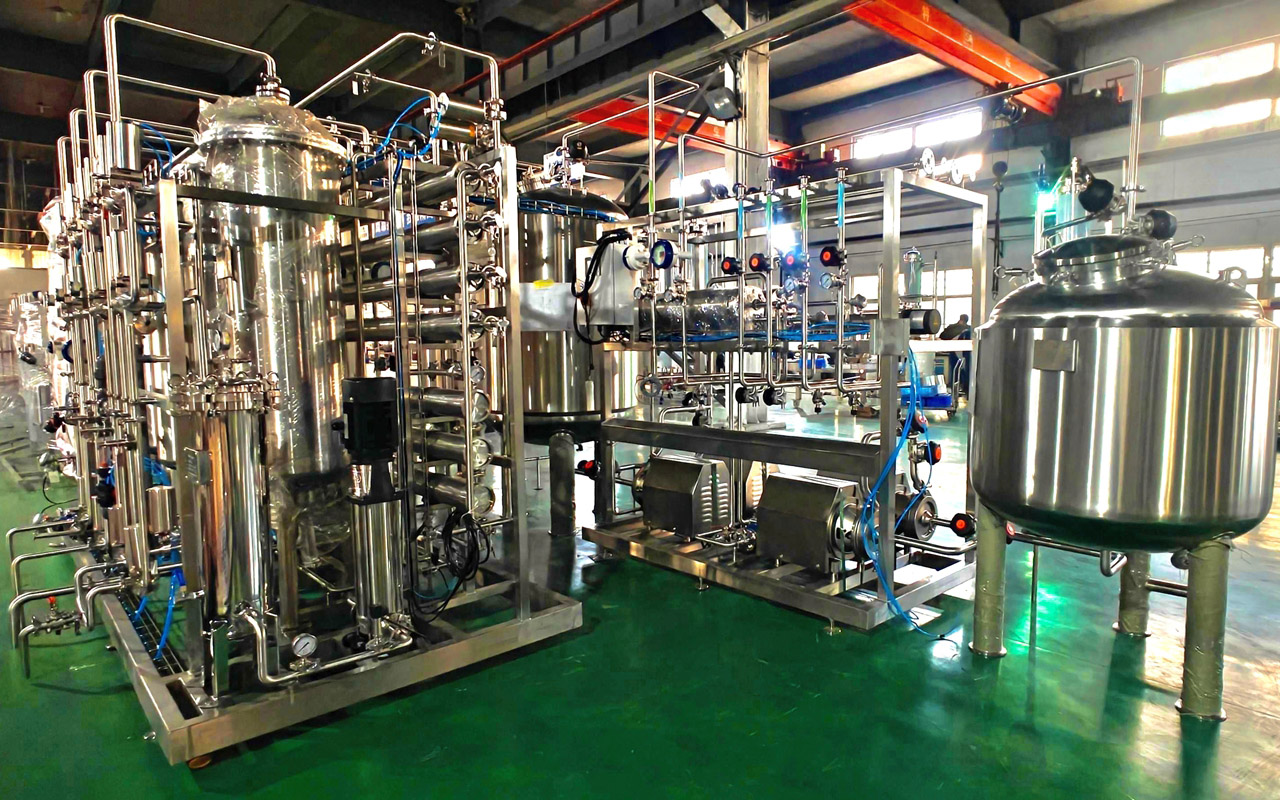
Why Choose SKE&EAGLE Water Purification Solutions?
For industrial and pharmaceutical customers, a water treatment supplier must offer more than standard equipment. SKE&EAGLE designs custom commercial water purification solutions for different production needs.
Customized System Design
Every project is different. SKE&EAGLE designs based on required water quality, production capacity, factory layout, and industry standards. This ensures the system fits your actual needs.
Complete Purified Water Treatment System
SKE&EAGLE provides integrated solutions, including pretreatment systems, RO units, EDI systems, storage tanks, and distribution systems. You get a complete solution from design to operation.
Reliable Construction and Sanitary Design
Industrial systems need stable performance and long life. SKE&EAGLE uses quality materials and professional engineering for safe operation, easy maintenance, stable water quality, and long-term performance.
Technical Support Throughout the Project
A successful project needs professional support. SKE&EAGLE assists with technical consultation, system design, manufacturing, testing, and project support.
Cost Factors of a Commercial Water Purification System
The cost of a commercial water purification system depends on many factors.
| Factor | Description |
|---|---|
| System Capacity | Larger output needs larger equipment |
| Water Quality Requirement | Higher purity needs more treatment stages |
| System Configuration | RO, EDI, UV, and automation affect cost |
| Material Selection | 316L stainless steel costs more but lasts longer |
| Documentation Needs | Pharmaceutical projects need more documents |
Companies should look at the total cost over time, not just the purchase price. A well-designed system can reduce maintenance costs, production stops, water waste, and energy use.

FAQ: Commercial Water Purification Systems
Q1: What is a commercial water purification system?
It is an industrial water treatment solution. It removes impurities and produces high-quality water for manufacturing. It is used in pharmaceuticals, biotech, food, and laboratories.
Q2: What is the difference between a pure water system and a normal filter?
A normal filter removes basic impurities. A professional pure water system uses multiple technologies like RO, EDI, and UV. It achieves much higher water quality.
Q3: Why is RO + EDI used in pharmaceutical water systems?
RO removes most dissolved impurities. EDI removes the remaining ions. Together, they provide continuous high-purity water with less chemical use.
Q4: How does a purified water treatment system keep water clean?
The system uses multi-stage purification, sanitary design, UV disinfection, and continuous circulation. Regular sanitization also helps.
Q5: Can a commercial water purification system be customized?
Yes. Commercial systems are usually custom-designed based on water quality needs, capacity, factory conditions, and industry standards.
Q6: What materials are used in pharmaceutical water systems?
Pharmaceutical systems often use 316L stainless steel. It resists corrosion, supports hygienic operation, and lasts a long time.
Conclusion: Build a Reliable Water Purification Solution with SKE&EAGLE
Water quality is a key factor in many industrial processes. A commercial water purification system is not just a filter — it is a complete engineering solution that helps companies achieve stable water quality, improve production reliability, and meet industry rules.
Whether you need a pharmaceutical purified water treatment system, an industrial pure water system, or a custom solution, choosing an experienced manufacturer matters as much as the equipment itself.
With professional engineering and custom solutions, SKE&EAGLE helps customers around the world build reliable water treatment systems. Contact SKE&EAGLE today to discuss your water purification project.
Official Website: https://www.ske-eagle.com/
Contact Email: info@ske-eagle.com
Follow us on Facebook for the latest industry insights: SKE & Eagle Facebook