


In pharmaceutical manufacturing, purified water quality depends on more than the RO membrane. Before water reaches the RO system, it must pass through several treatment stages. These stages remove suspended solids, residual chlorine, hardness minerals, and other impurities. They protect the membrane and help keep water production stable.
A well-designed water filtration system is therefore an essential part of pharmaceutical water treatment. It prepares the feed water for reverse osmosis. It reduces membrane fouling and supports consistent system performance.
Poor pretreatment can lead to membrane damage, frequent cleaning, higher operating costs, and unstable water quality. This article explains how a pharmaceutical water filtration system and reverse osmosis work together, what equipment is needed before RO, and how to choose a suitable setup.
What Does a Pharmaceutical Water Filtration System Do Before RO?
A pharmaceutical water filtration system prepares raw water before it enters the reverse osmosis unit. Its main purpose is to reduce impurities that can damage RO membranes or affect their performance.
The exact process depends on the source water. A typical water filtration system may include multi-media filtration, activated carbon filtration, water softening, and cartridge filtration.
1. Multi-Media Filter: Removing Suspended Solids
Raw water may contain sand, rust, silt, and other particles. If these enter the RO system, they can build up on the membrane surface and cause fouling.
A multi-media filter uses different layers of filter materials to remove suspended solids and reduce turbidity. It lowers the particle load on cartridge filters and RO membranes and supports stable operation of the whole pretreatment system.
Regular backwashing is necessary to remove trapped solids and restore filtration performance. The backwash frequency should be based on feed water quality, filter design, and differential pressure.
2. Activated Carbon Filter: Removing Residual Chlorine
Municipal water often uses chlorine to control microbial growth. However, free chlorine can oxidize thin-film composite polyamide RO membranes. Long-term exposure may damage the membrane and reduce its salt rejection performance.
An activated carbon filter uses porous carbon materials to adsorb free chlorine and certain organic compounds. It protects chlorine-sensitive RO membranes and improves the quality of water entering the RO unit.
Carbon beds can become places for microbial growth if they are not properly operated and sanitized. The water filtration system should include suitable monitoring, sanitation procedures, and a clear maintenance or carbon replacement plan.
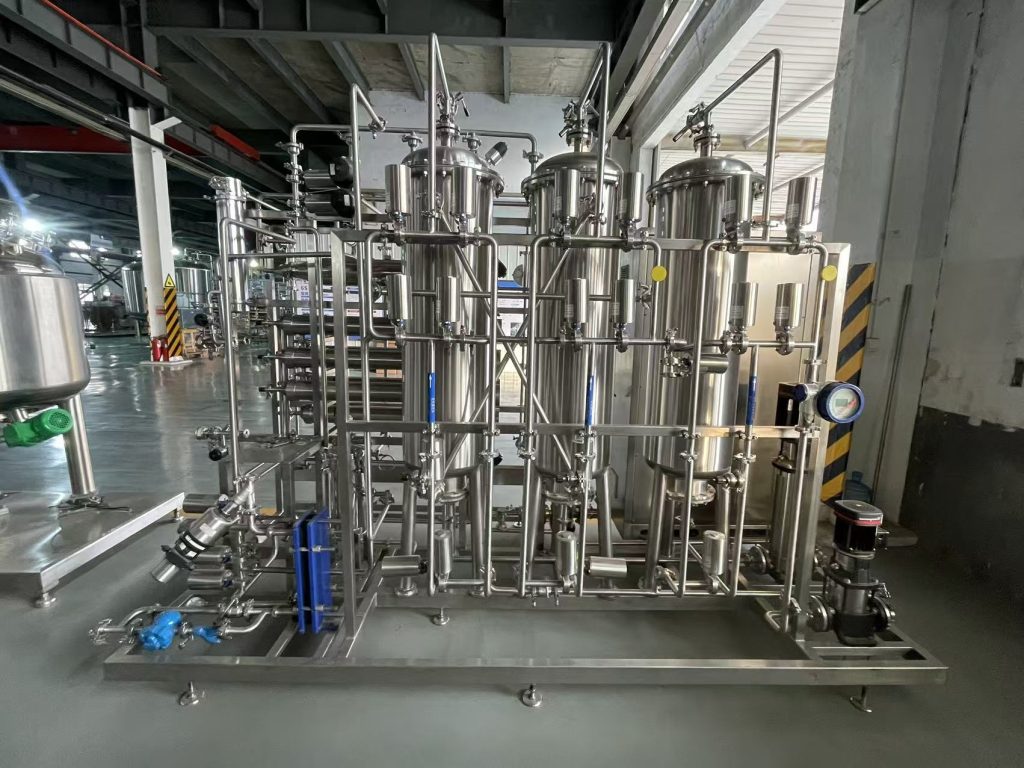
3. Water Softener: Preventing Membrane Scaling
Raw water often contains calcium and magnesium ions. These minerals cause water hardness and may form scale on RO membrane surfaces. Scaling reduces water flow, increases operating pressure, and makes membrane cleaning more frequent.
A water softener uses ion exchange resin to replace calcium and magnesium ions with sodium ions. It lowers the risk of scale formation and protects RO membrane performance over long production periods.
The softener needs regular regeneration using a salt solution. Operators should monitor outlet hardness and regeneration conditions to confirm that the unit is working correctly.
4. Cartridge Filter: Providing Final Particle Protection
Before water enters the RO high-pressure pump and membrane assembly, it usually passes through a cartridge filter. This filter removes fine particles that may remain after upstream pretreatment.
Cartridge filtration provides an additional physical barrier against particles and helps reduce the risk of membrane fouling. Differential pressure should be monitored to decide when cartridge replacement is necessary.
Together, these four stages prepare water for reverse osmosis. However, not every project needs the same setup. A water filtration system should always be designed according to the actual feed water analysis.
Why Does a Reverse Osmosis System Need Proper Pretreatment?
Reverse osmosis uses pressure to force water through a semi-permeable membrane. The membrane allows water molecules to pass while rejecting a large proportion of dissolved salts and other impurities. A properly designed RO system can achieve high salt rejection, often exceeding 95% under suitable conditions.
However, RO membranes are sensitive to several types of contamination.
Membrane fouling: Suspended solids, colloids, and organic matter can build up on the membrane surface. This may increase differential pressure and reduce permeate flow.
Membrane scaling: Calcium, magnesium, and other scale-forming substances can precipitate when their concentration becomes too high. Proper softening and recovery control help reduce this risk.
Chlorine oxidation: Free chlorine can damage polyamide membranes. Effective dechlorination is essential when chlorine-sensitive membranes are used.
Biological fouling: Microorganisms can grow on membrane surfaces and form biofilms. Poor pretreatment and inadequate sanitation can increase this risk.
These problems may lead to higher energy consumption, more frequent cleaning, shorter membrane life, and unstable water quality. This is why a pharmaceutical RO system should never be designed without a proper water filtration system.
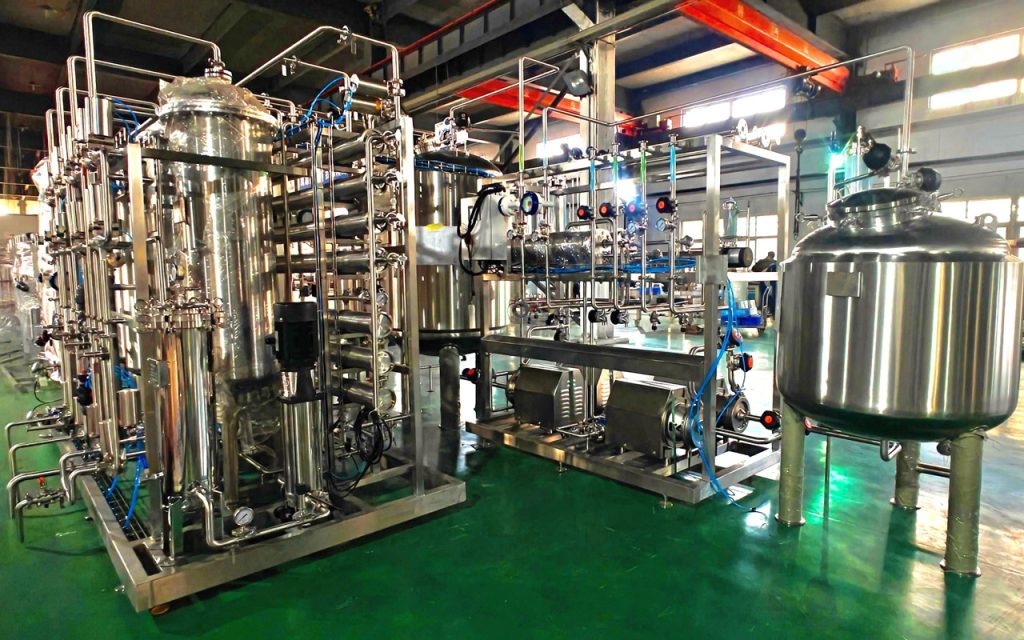
How to Monitor Pretreatment Performance Before RO
Installing filtration equipment is only the first step. Operators also need to confirm that every stage is working as expected. Monitoring key parameters helps detect problems before they affect the RO membranes.
| Treatment Stage | Important Parameters | Monitoring Purpose |
|---|---|---|
| Multi-media filter | Differential pressure, turbidity | Detect filter loading and filtration problems |
| Activated carbon filter | Residual chlorine, differential pressure | Confirm dechlorination performance |
| Water softener | Outlet hardness, regeneration status | Prevent hardness breakthrough |
| Cartridge filter | Differential pressure | Identify cartridge blockage |
| RO system | Feed pressure, permeate flow, conductivity | Evaluate membrane performance |
For example, residual chlorine should be checked after the activated carbon filter. Hardness should be monitored after the softener. RO permeate conductivity and flow should also be recorded to identify performance changes.
A well-designed monitoring system makes troubleshooting easier and helps manufacturers maintain reliable water production.
Comparing RO Configurations for Pharmaceutical Water Production
After pretreatment, water enters the reverse osmosis unit. Depending on raw water quality and final water requirements, systems can use different RO configurations.
Single-Pass RO
In a single-pass RO system, water passes through one RO membrane stage. This setup is simple and has lower initial costs. However, its performance depends strongly on feed water quality and operating conditions. Additional treatment may be needed to achieve the required pharmaceutical purified water quality.
Two-Pass RO
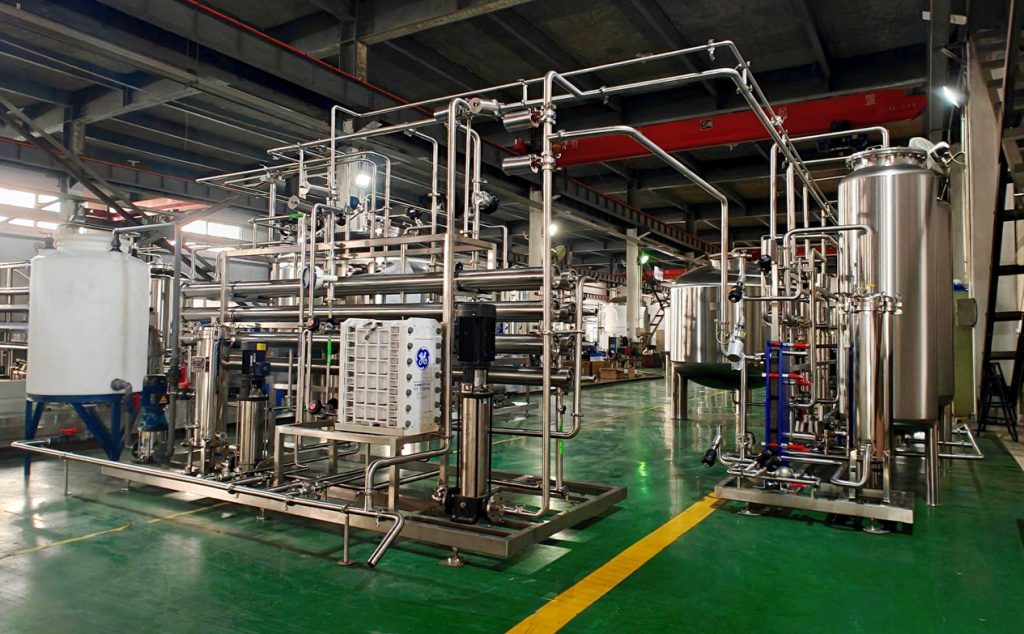
A two-pass RO system sends the permeate from the first pass through a second RO pass. The second pass provides additional salt rejection and helps reduce the conductivity of the product water. This setup is useful when feed water quality varies or when the project requires more stable ionic removal. However, two-pass RO does not remove the need for microbial control, sanitation, and proper water storage and distribution design.
FAQ
Q1: Why does a water filtration system matter before RO?
A: A water filtration system removes particles, chlorine, and hardness before water reaches the RO membrane. This protects the membrane and keeps performance stable.
Q2: What happens if pretreatment is poor?
A: Poor pretreatment can cause membrane fouling, scaling, and damage. This leads to more cleaning, higher costs, and unstable water quality.
Q3: Does every pharmaceutical RO system need the same pretreatment?
A: No. A water filtration system should be designed based on the actual feed water analysis. Not every project needs the same setup.
Q4: How often should pretreatment stages be monitored?
A: Key parameters like residual chlorine, hardness, and differential pressure should be checked regularly. The exact frequency depends on the system design and quality system.
Q5: Can two-pass RO replace proper pretreatment?
A: No. Two-pass RO improves salt rejection, but it does not remove the need for microbial control, sanitation, or proper water storage and distribution design.
Contact SKE & Eagle for Advanced Solutions
For customized system engineering solutions or integration of high-performance water treatment technologies, please contact SKE & Eagle. Our professional team collaborates closely with industrial partners to design, implement, and maintain solutions tailored to your operational needs.
Contact Email: info@ske-eagle.com
Follow us on Facebook for the latest industry insights: SKE & Eagle Facebook
Business Inquiries: Visit our official website and submit the contact form at the bottom.