

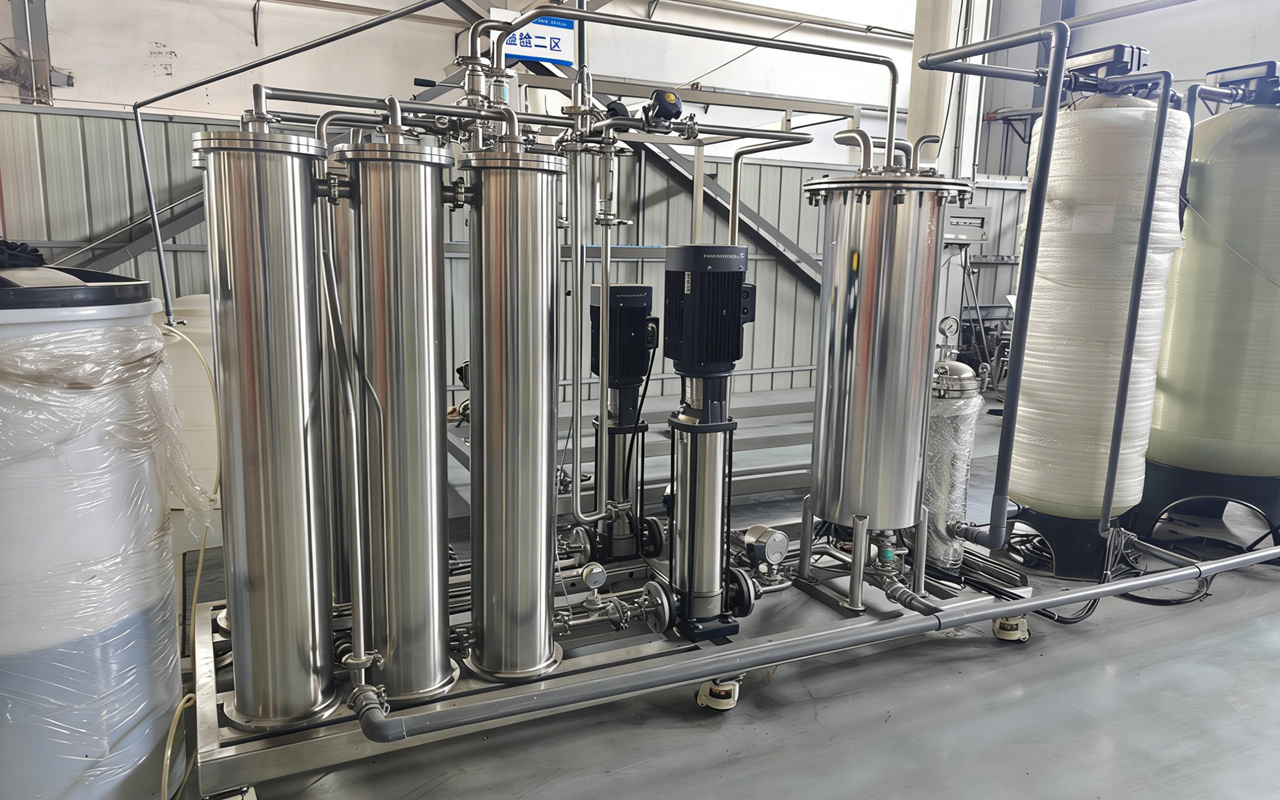
In the highly regulated and quality-driven pharmaceutical industry, water is not merely a solvent or a cleaning agent—it is a critical raw material. The purity of water directly impacts drug safety, efficacy, and regulatory compliance. An ultrapure water purification system stands as the gold standard for producing water of unparalleled purity, essential for everything from parenteral drug formulation to high-precision analytical testing. This comprehensive guide explores the science, technology, and applications of ultra pure water systems, ultra pure water purification systems, and ultra high purity water, with a focus on how SKE&EAGLE’s engineered solutions meet the most stringent global pharmaceutical standards.
What is Ultrapure Water (UPW)?
Ultrapure water, often referred to as ultra high purity water, is water purified to the highest achievable standards, approaching the theoretical limit of H₂O molecules. It is defined by near-complete removal of all contaminants, including dissolved ions, organic compounds, microorganisms, particulates, and pyrogens (endotoxins).
A defining metric of ultra pure water is its resistivity, which at 25°C reaches 18.2 MΩ·cm (equivalent to a conductivity of 0.055 µS/cm). This is the theoretical maximum for pure water, as it contains only a balanced concentration of H⁺ and OH⁻ ions from water autoionization. Beyond resistivity, true ultrapure water for pharma must meet strict limits for Total Organic Carbon (TOC, typically <10 ppb), bacteria (<10 CFU/100mL), and endotoxins (<0.25 EU/mL).
This extreme purity differentiates ultra pure water from purified water (PW) and even high-purity water. While purified water may have a resistivity of 0.5–1 MΩ·cm, ultra pure water is a distinct grade (Type 1 water) reserved for the most sensitive applications where even trace contaminants can cause product failure or regulatory non-compliance.
The Critical Role of Ultrapure Water in Pharmaceuticals
The pharmaceutical sector is one of the largest and most demanding consumers of ultra pure water systems. The use of impure water poses catastrophic risks:
- Microbial Contamination: Bacteria, fungi, or viruses can lead to life-threatening infections in patients, resulting in product recalls and severe regulatory penalties.
- Endotoxin (Pyrogen) Presence: Even minute levels of endotoxins from Gram-negative bacteria can cause severe febrile reactions.
- Chemical Impurities: Ions, heavy metals, or organic compounds can react with active pharmaceutical ingredients (APIs), altering their chemical structure and reducing efficacy or causing toxicity.
- Equipment Fouling: Impurities can scale or corrode sensitive manufacturing equipment, leading to downtime and increased maintenance costs.
Ultrapure water purification systems are indispensable for:
- Manufacturing Injectable Drugs (WFI): Water for Injection (WFI), the highest grade of pharmaceutical water, is typically produced from ultra pure water and must be endotoxin-free.
- Formulating Biologics & Vaccines: Cell culture media, buffer solutions, and final product dilution require ultra high purity water to maintain cell viability and product stability.
- Cleaning & Sanitization: Rinsing of production equipment, storage tanks, and piping systems to prevent cross-contamination between batches.
- Analytical Laboratories: High-performance liquid chromatography (HPLC), mass spectrometry (LC-MS), and PCR testing rely on ultra pure water to avoid background interference and ensure accurate results.
Core Technologies of an Ultrapure Water Purification System
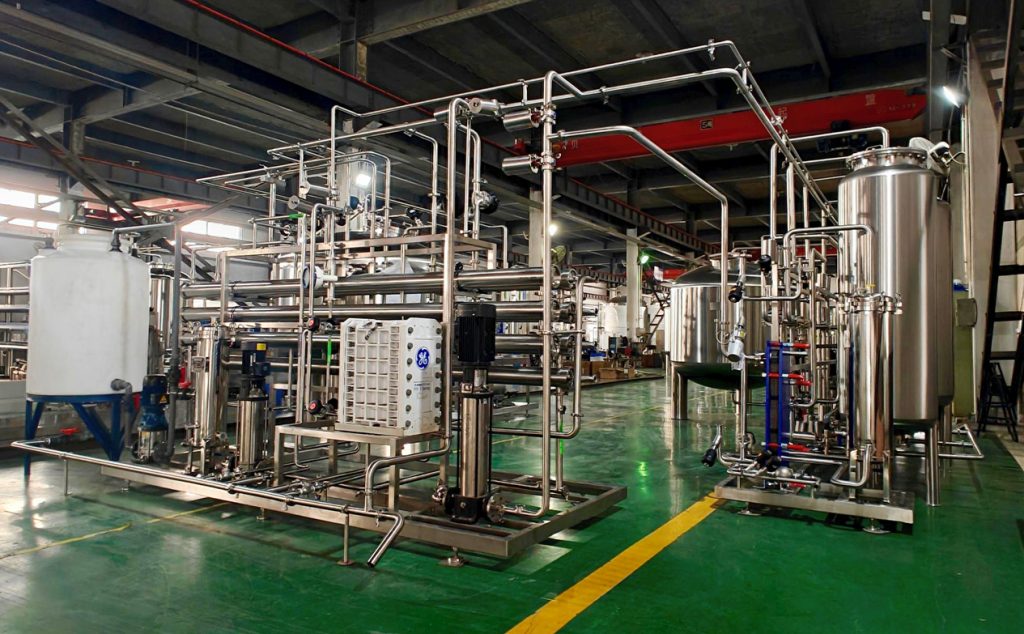
Producing ultra pure water is a multi-stage, synergistic process. A robust ultra pure water purification system integrates several advanced technologies, each designed to target specific contaminants. Below is a breakdown of the key stages, as employed in SKE&EAGLE’s systems.
1. Pretreatment: Protecting the Core
The first line of defense conditions the raw feed water (usually municipal tap water or purified groundwater) to protect downstream, more expensive membranes and resins.
- Multi-Media Filtration: Removes suspended solids, silt, and turbidity, reducing the Silt Density Index (SDI) to protect RO membranes.
- Activated Carbon Filtration: Adsorbs chlorine, chloramines, and organic compounds, preventing oxidation of RO membranes and reducing TOC precursors.
- Water Softening: Exchanges calcium and magnesium ions with sodium to prevent scale formation on heat exchangers and membranes.
- 5μm Micron Filtration: A final polish to capture any remaining particulate matter before the high-pressure RO stage.
2. Reverse Osmosis (RO): The Primary Purification Workhorse
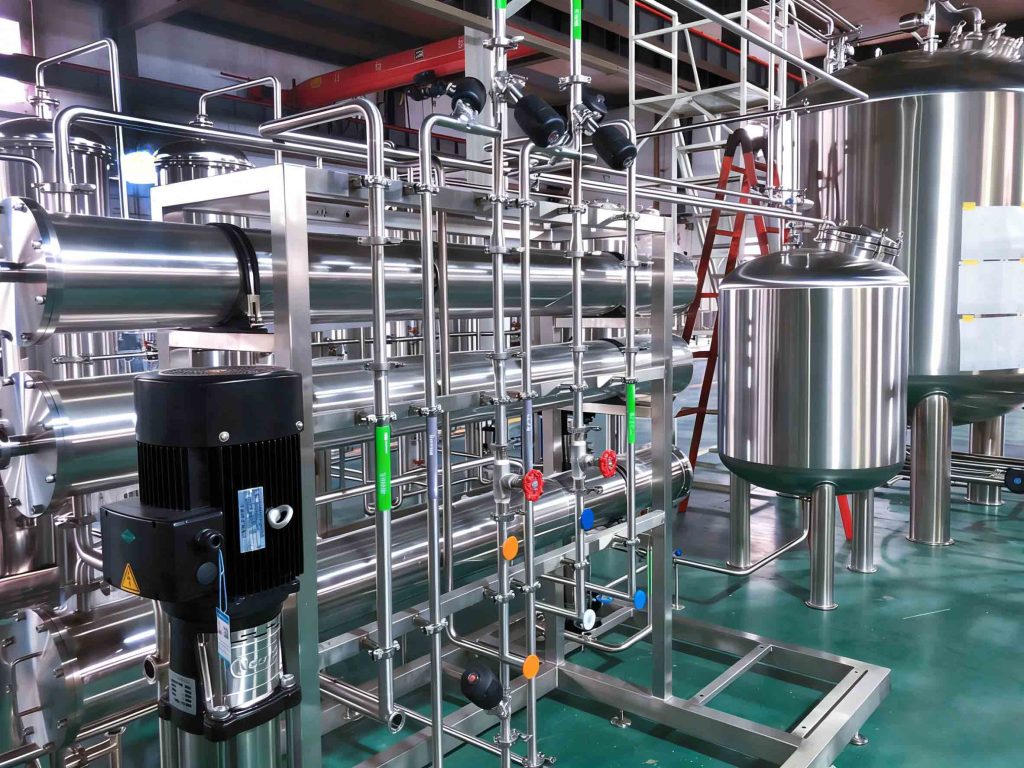
Reverse Osmosis is the heart of most ultra pure water systems. It uses a semi-permeable membrane under high pressure to reject 98–99% of dissolved salts, ions, bacteria, viruses, and large organic molecules.
- Single-Pass RO: Produces high-purity water with resistivity typically >1 MΩ·cm.
- Double-Pass RO (2RO): For pharmaceutical applications, a second RO stage is used. By adjusting the pH (often with NaOH), it further reduces dissolved CO₂ and TOC, producing water with resistivity >5 MΩ·cm, a critical feed for EDI.
3. Continuous Electrodeionization (CEDI/EDI): Chemical-Free Deionization
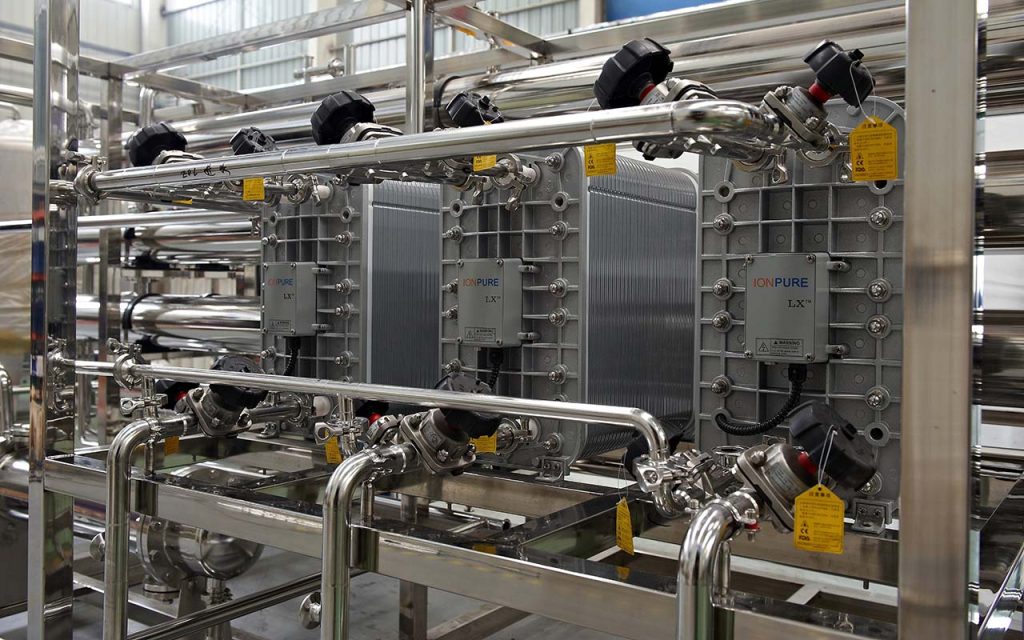
Continuous Electrodeionization is a game-changing technology that replaces traditional, chemically regenerated mixed-bed ion exchange. It combines ion-exchange resins, membranes, and a low-voltage DC current to continuously remove ionized contaminants without the use of harsh chemicals like acid or caustic soda.
- How it Works: The electric field drives ions through selective membranes, continuously regenerating the resin beads.
- Output: Produces water with resistivity >18 MΩ·cm, consistently meeting ultra high purity water standards.
- Advantages: Continuous operation, low energy consumption, minimal waste, and ideal for GMP environments due to the absence of chemical handling.
4. Ultraviolet (UV) Oxidation & Disinfection
UV technology serves two vital purposes in an ultrapure water purification system:
- 254 nm UV: Germicidal wavelength that destroys the DNA of bacteria, viruses, and other microorganisms, preventing their reproduction.
- 185 nm UV (TOC Reduction): This wavelength photo-oxidizes trace organic compounds, breaking them down into CO₂ and water, effectively reducing TOC to <10 ppb levels.
5. Polishing & Final Filtration
The final stage ensures the water meets the strictest ultra pure water specifications and prevents recontamination during distribution.
- Mixed-Bed Polisher: A final ion-exchange step to “polish” the water, achieving the 18.2 MΩ·cm resistivity target.
- Ultrafiltration (UF): A tight membrane (typically 0.01–0.05 μm) that removes any remaining bacteria, endotoxins, and colloidal silica.
- 0.2 μm Microfiltration: The ultimate barrier to capture any particulate matter or microbial breakout, ensuring the water is “sterile-grade” before entering the use point.
SKE&EAGLE’s Ultrapure Water Purification System: Design & Specifications
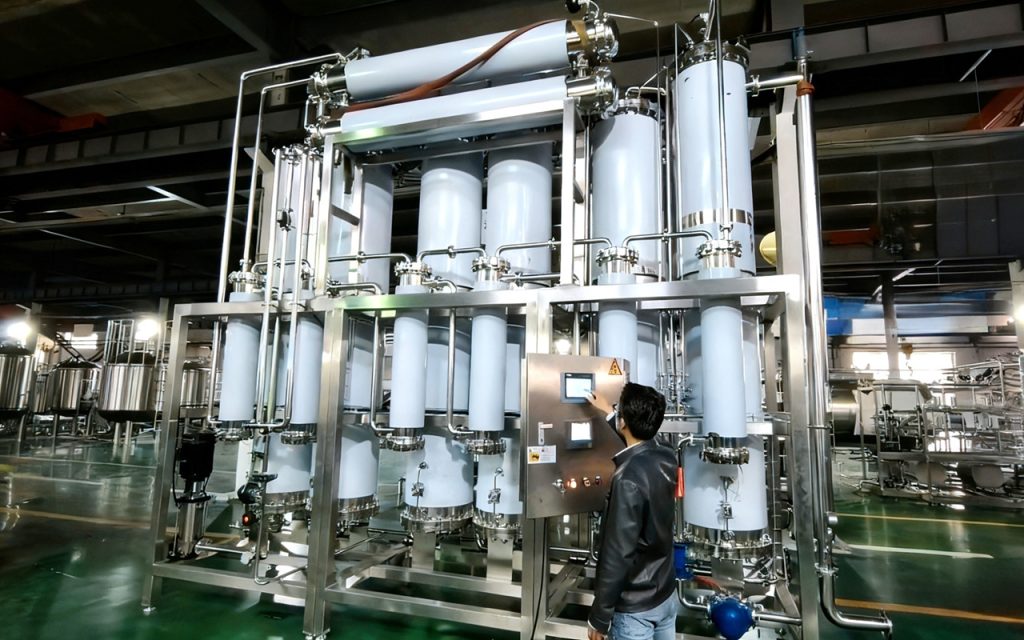
At SKE&EAGLE, we engineer ultra pure water systems that are purpose-built for the pharmaceutical industry, adhering to cGMP, USP, EP, and Chinese Pharmacopoeia standards. Our systems are designed for Quality by Design (QbD), ensuring reliability, compliance, and ease of validation.
System Flow Diagram (Simplified)
Raw Water → Pretreatment (MMF + AC + Softener + 5μm Filter) → Double-Pass RO → CEDI → UV (185/254 nm) → Polishing Mixed-Bed → UF → 0.2μm Filter → Ultrapure Water Storage & Distribution Loop
Key Performance Specifications
| Parameter | SKE&EAGLE UPW System Standard | Pharmaceutical Requirement (USP/EP) |
|---|---|---|
| Resistivity (25°C) | ≥ 18.2 MΩ·cm | ≥ 18.0 MΩ·cm (for UPW/WFI feed) |
| Conductivity (25°C) | ≤ 0.055 µS/cm | ≤ 1.3 µS/cm (WFI) |
| Total Organic Carbon (TOC) | ≤ 5 ppb | ≤ 500 ppb (USP/EP) |
| Microbial Count | < 1 CFU/100mL | < 10 CFU/100mL |
| Endotoxin (Pyrogen) | < 0.03 EU/mL | < 0.25 EU/mL (WFI) |
| Particulates | < 1 particle/mL (>0.2μm) | NMT (Not More Than) detectable levels |
| Heavy Metals | < 0.1 ppb | < 0.1 ppm |
Design Features for Pharmaceutical Excellence
- Hygienic Design: All wetted parts are constructed from 316L stainless steel with electro-polished surfaces (Ra ≤ 0.8 μm) to prevent biofilm formation and ensure easy cleanability.
- Sanitary Connections: Use of tri-clamp fittings and orbital welding eliminates dead legs, a critical GMP requirement.
- Hot Water Sanitization (HWS): Systems are designed for periodic sanitization with hot water (80–85°C), a highly effective method for controlling microbial growth without chemicals.
- Full Automation & Validation: PLC-based control systems with SCADA for real-time monitoring of all critical parameters (resistivity, TOC, conductivity, temperature, flow). Supports full IQ/OQ/PQ validation protocols.
- Continuous Loop Distribution: Water is circulated in a closed loop at a velocity >1.5 m/s to maintain turbulence and prevent stagnation, a key factor in controlling biofilm.
Ultra Pure Water System vs. Purified Water System: A Critical Distinction
It is vital to understand the difference between a purified water system and an ultra pure water purification system, as they serve vastly different purposes in a pharmaceutical plant.
| Feature | Purified Water (PW) System | Ultra Pure Water (UPW) System |
|---|---|---|
| Primary Goal | Produce water for general pharmaceutical use | Produce water for critical, high-purity applications |
| Typical Resistivity | 0.5 – 1.0 MΩ·cm | 15.0 – 18.2 MΩ·cm |
| TOC Level | ≤ 500 ppb | ≤ 10 ppb |
| Microbial Control | < 100 CFU/mL | < 10 CFU/100mL |
| Endotoxin Limit | Not typically required | < 0.25 EU/mL |
| Core Technologies | RO, Ion Exchange | 2RO, CEDI, UV Oxidation, Polishing, UF |
| Primary Applications | Equipment cleaning, non-parenteral formulations | WFI production, cell culture, HPLC, injectables |
| Regulatory Focus | Meets PW standards | Meets UPW/WFI standards |
This table clearly illustrates why investing in a dedicated ultra pure water system from SKE&EAGLE is non-negotiable for manufacturers producing sterile or highly sensitive pharmaceutical products.
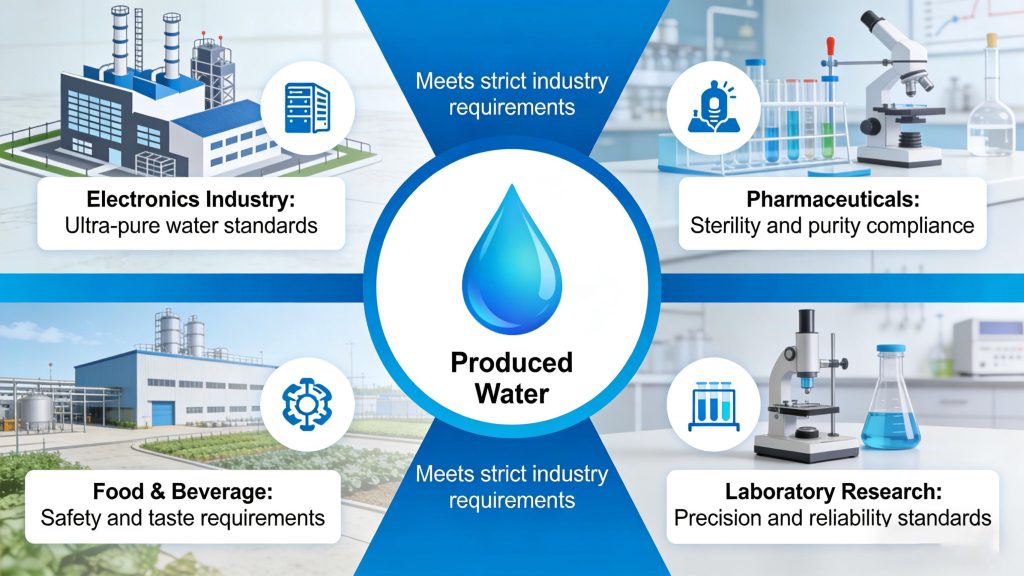
Applications of Ultra High Purity Water Across Pharmaceutical Manufacturing
The versatility of ultra pure water extends throughout the entire drug development and manufacturing lifecycle.
1. Parenteral & Injectable Drug Production
This is the most critical application. Ultrapure water is the feedstock for producing Water for Injection (WFI), which is used to formulate intravenous solutions, vaccines, and other injectable therapies. The absence of endotoxins and microbes is paramount to patient safety.
2. Biopharmaceutical Manufacturing
The production of monoclonal antibodies, recombinant proteins, and cell therapies relies on ultra high purity water for:
- Preparing cell culture media and buffers.
- Washing and harvesting cell cultures.
- Formulating final drug products.
Impurities here can lead to cell death, low product yields, or contaminated biologics.
3. Laboratory & Quality Control (QC)
Pharmaceutical QC labs are heavy users of ultra pure water systems. Analytical techniques such as:
- High-Performance Liquid Chromatography (HPLC)
- Liquid Chromatography-Mass Spectrometry (LC-MS)
- Inductively Coupled Plasma (ICP) analysis
- PCR and Nucleic Acid Testing
all demand ultra pure water to ensure the accuracy and reliability of test results. Contaminants in the water can appear as false peaks or interfere with the assay.
4. Equipment & Facility Cleaning
Ultrapure water is used for the final rinse of all production equipment, including mixing tanks, transfer lines, filling machines, and component parts. This ensures no residual detergent, chemical, or particulate is left behind that could contaminate the next batch.
5. Research & Development (R&D)
Pharmaceutical R&D labs use ultra pure water for a wide range of experiments, from solubility studies and stability testing to pre-formulation work. The consistency and purity of the water are essential for generating reproducible data.
Maintaining an Ultrapure Water Purification System: Best Practices
A high-performance ultra pure water system is only as good as its maintenance and monitoring program. SKE&EAGLE provides comprehensive support to ensure your system operates at peak efficiency and remains in compliance.
1. Routine Monitoring & Testing
- Online Sensors: Continuous monitoring of resistivity, conductivity, TOC, temperature, and pressure at critical points.
- Daily Testing: Offline microbial testing (CFU counts) and endotoxin testing of water samples.
- Periodic Analysis: Regular TOC and heavy metal analysis to verify long-term performance.
2. Preventive Maintenance
- Membrane Replacement: RO and UF membranes have a lifespan (typically 2–5 years) and must be replaced before performance degrades.
- UV Lamp Replacement: UV lamps lose intensity over time and should be replaced annually.
- Sanitization: Regular hot water sanitization of the entire loop and storage tank to control biofilm.
- Resin Replacement: CEDI resin and polishing mixed-bed resins will degrade and require replacement based on performance data.
3. Validation & Compliance
- Change Control: Any modification to the system must undergo a formal change control process and requalification.
- Calibration: Regular calibration of all instrumentation to ensure measurement accuracy.
- Documentation: Maintaining comprehensive logs for all operations, maintenance, and testing is a cornerstone of GMP compliance.
Frequently Asked Questions (FAQ)
Q1: What is the difference between Ultrapure Water, Deionized Water, and Distilled Water?
A:
- Distilled Water: Produced by evaporation and condensation. It removes most ions and microbes but can still contain volatile organic compounds (VOCs) and has a resistivity of ~1 MΩ·cm.
- Deionized (DI) Water: Produced by ion exchange, removing nearly all ions. Resistivity is typically 1–15 MΩ·cm but may still contain organics, microbes, or particulates.
- Ultrapure Water (UPW): The highest purity grade, produced by a combination of RO, EDI, UV, and filtration. It has 18.2 MΩ·cm resistivity, near-zero TOC, and is sterile/endotoxin-free.
Q2: How long does an Ultrapure Water Purification System last?
A: With proper maintenance and SKE&EAGLE’s service support, the core components of an ultra pure water system can last 15–20 years. Consumables like membranes, UV lamps, and resins have shorter lifespans (1–5 years) and are replaced periodically.
Q3: Can an Ultrapure Water System be used to produce Water for Injection (WFI)?
A: Yes. Ultrapure water is the ideal feed water for WFI generation. While traditional WFI is produced by distillation, modern pharmaceutical plants often use a double-pass RO + CEDI + UV + UF ultra pure water purification system to produce water that meets or exceeds WFI quality standards, offering a more energy-efficient alternative.
Q4: What is the most common contaminant in Ultrapure Water systems?
A: Biofilm formation is the most persistent challenge. Microorganisms can attach to pipe walls and form a protective slime layer, releasing contaminants into the water. SKE&EAGLE’s hygienic design, high-velocity loops, and hot water sanitization protocols are specifically engineered to mitigate this risk.
Q5: Why choose SKE&EAGLE for my Ultrapure Water needs?
A: SKE&EAGLE specializes in pharmaceutical-grade water treatment. Our ultra pure water systems are custom-engineered, fully cGMP compliant, and supported by a team of experts with decades of experience in the pharma industry. We provide end-to-end solutions, from design and manufacturing to installation, validation, and lifetime service, ensuring your water quality is never compromised.
Conclusion: The Future of Pharmaceutical Water is Ultrapure
As pharmaceutical regulations become increasingly stringent and the demand for complex, high-purity drugs rises, the importance of a reliable ultrapure water purification system cannot be overstated. Ultra pure water systems are not just equipment—they are a critical investment in product quality, patient safety, and regulatory peace of mind.
SKE&EAGLE stands at the forefront of ultra pure water technology, delivering innovative, sustainable, and compliant solutions tailored to the unique challenges of the pharmaceutical industry. By choosing SKE&EAGLE, you are partnering with a manufacturer that understands the science of purity and the rigor of pharma manufacturing.
For customized system engineering solutions or integration of high-performance water treatment technologies, please contact SKE & Eagle. Our professional team collaborates closely with industrial partners to design, implement, and maintain solutions tailored to your operational needs.
Official Website: https://www.ske-eagle.com/
Contact Email: info@ske-eagle.com
Follow us on Facebook for the latest industry insights: SKE & Eagle Facebook
Business Inquiries: Visit our official website and submit the contact form at the bottom.