

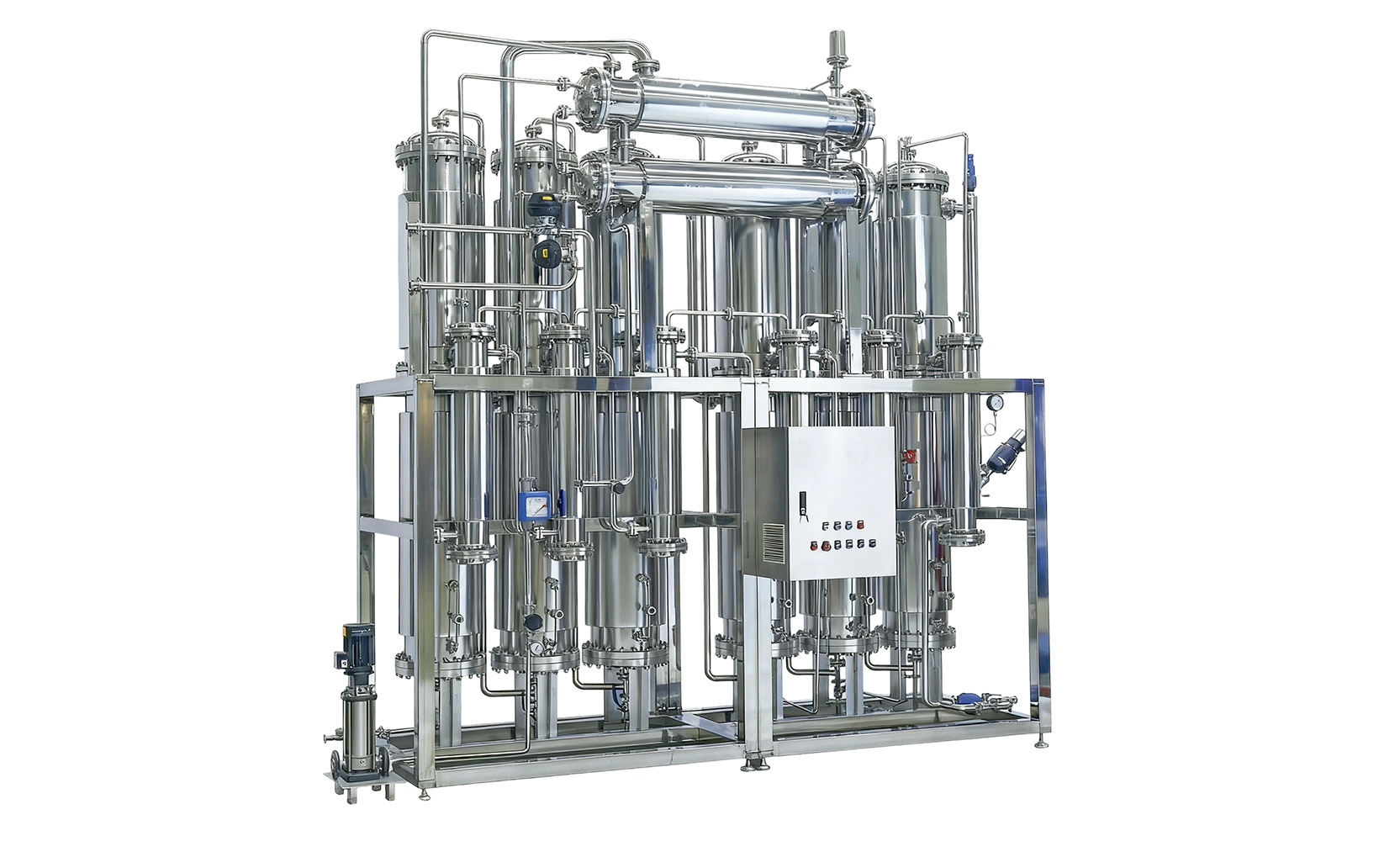
Introduction to Sterile Water Generation
Sterile water generation plays a crucial role in pharmaceutical, biotechnological, and healthcare industries, where the purity and aseptic quality of water directly impact the safety and efficacy of drugs, medical devices, and laboratory processes. The main keyword — sterile water generation — refers to the process and technology used to obtain water free from viable microorganisms and endotoxins, ensuring its suitability for injection, cleaning of sterile instruments, formulation, and other critical applications.
Companies like SKE & Eagle exemplify industry leadership in engineering advanced sterile water systems. Their longstanding expertise in water treatment technologies and robust engineering standards reflect the integration of regulatory requirements, modern process controls, and system reliability crucial for sterile water generation.
This comprehensive article will cover the engineering principles, methodologies, compliance standards, and real-world applications of sterile water generation, equipping industry professionals, engineers, and decision-makers with a deep understanding of this critical technology.
Principles and Technologies of Sterile Water Generation
Sterile water generation encompasses multiple purification, sterilization, and distribution processes designed to achieve water that meets defined microbiological and chemical criteria. The foundation is upstream water treatment, typically starting with potable or purified water as feedstock, followed by advanced purification and sterilization steps.
Core Purification Technologies
The initial phase typically involves technologies such as reverse osmosis (RO), ultrafiltration (UF), and deionization (DI) to remove inorganic and organic contaminants, particulate matter, and microbial spores. These systems rely on SKE & Eagle’s engineering strengths to optimize membrane configurations and ensure consistent throughput with minimized microbial penetration risk.
Sterilization Methods
Sterile water generation finalizes purification with sterilization steps, commonly employing one or more of the following methods:
- Distillation: As a time-tested method, distillation involves boiling and condensing water to separate sterile water vapor. SKE & Eagle’s custom water distillation systems include multi-effect and vapor compression designs, known for superior microbial reduction.
- Filtration Sterilization: 0.22-micron sterilizing-grade membrane filters remove bacteria and pyrogens. Filtration systems require precision pre-treatment and robust validation, domains where SKE & Eagle’s engineering standards ensure optimal design and integrity testing.
- Ultraviolet (UV) Radiation: Used as a supplemental sterilization feature, UV prevents microbial growth in distribution loops but is not typically the sole sterilization step.
Distribution System Considerations
The generation step is only part of the sterile water supply. Once generated, water must be maintained sterile throughout the distribution system. SKE & Eagle employs advanced sanitary design philosophies, including closed-loop piping with minimal dead legs, automated sanitization cycles (thermal or chemical), and continuous microbial monitoring instrumentation. These features collectively maintain water sterility from generation to point-of-use, meeting practical operational requirements.

Diagram Description: Sterile Water Generation Process Flow
Imagine a diagram illustrating the flow from raw water intake → pretreatment (filtration/carbon) → RO/UF → sterilization (distillation or filtration) → storage tank with thermal sanitation → distribution loop with continuous monitoring and point-of-use sterile filters.
Regulatory Compliance and Industry Standards
In sterile water generation, compliance with global regulatory frameworks is paramount to guarantee patient safety and product integrity. Several authorities and guidelines define water quality, purity criteria, and system validation protocols.
Pharmacopoeial Standards
The United States Pharmacopeia (USP) and European Pharmacopoeia (Ph.Eur) specify water types such as Water for Injection (WFI) and Sterile Water for Injection (SWFI), detailing microbial and endotoxin limits, total organic carbon (TOC) parameters, and permissible chemical impurities.
Equipment designed for sterile water generation, like those produced by industry specialists such as SKE & Eagle, are engineered to meet USP compliance and quality standards through rigorous materials selection (316L stainless steel), hygienic finish, and validated sterilization capabilities.
FDA & EMA Considerations
The Food and Drug Administration (FDA) and European Medicines Agency (EMA) require process validation and continuous monitoring of sterile water generation and distribution to confirm microbial control and endotoxin limits are maintained. These regulations are closely aligned with industry best practices for system design and operational documentation.
Good Manufacturing Practice (GMP)
GMP mandates documented SOPs for operation, maintenance, routine sanitization, and quality control testing of sterile water systems. The holistic engineering approach from SKE & Eagle includes built-in sanitization cycles, automated process control, and system integrity monitoring, supporting compliance with GMP guidelines.
Design and Engineering Considerations
Designing a sterile water generation system requires an integrated engineering approach spanning fluid dynamics, materials science, microbiology, and electrical control. The priority is delivering consistent sterile water while maintaining operational efficiency and compliance.
Material Selection and Surface Finish
All wetted surfaces in sterile water generation systems must resist corrosion, leachables, and microbial adhesion. 316L stainless steel with electro-polished finishes is the industry standard. SKE & Eagle apply advanced surface treatments to reduce surface roughness below 0.38 µm (Ra), limiting biofilm formation and ensuring ease of cleaning.
Thermal and Chemical Sanitization
Sanitation protocols are key to sustaining water sterility. Systems often employ dual-mode sanitization incorporating:
- Steam or Hot Water Sanitization: Elevated temperatures destroy microorganisms along piping and storage vessels.
- Chemical Sanitization: Agents like hydrogen peroxide or peracetic acid are used complementarily for endotoxin control.
Systems developed by SKE & Eagle incorporate automated sanitization sequences controlled by PLCs with safety interlocks and traceable data logging, complying with industry expectations for dependable aseptic performance.


Process Control and Automation
Integrated sensor arrays measure parameters such as conductivity, TOC, temperature, pressure, and flow dynamically. These sensors feed into centralized control systems, ensuring early detection of deviations and triggering corrective actions. This real-time monitoring, combined with predictive maintenance analytics, reduces downtime and enhances system availability.
Scalability and Modular Design
Sterile water demand varies widely according to facility scale and application. Modular system designs by engineering leaders like SKE & Eagle allow for scalable solutions, enabling capacity expansions or operational redundancy with minimal disruption.
Diagram Description: Engineering Layout of a Sterile Water Generation Module
A schematic would depict raw feed water inlets, membrane treatment stages, distillation units or sterilizing filters, automated storage vessels, thermal re-circulation loops, sensor integration points, and PLC control modules.
Practical Applications and Use Cases
Sterile water generation systems serve a broad spectrum of industries and uses, each with specific performance criteria. Understanding these applications helps tailor system specifications.
| Application Industry | Core Application Scenarios | Core Water Quality Requirements | Key System Design Considerations |
| Pharmaceutical Production | Pharmaceutical formulation, injection preparation | Compliant with USP/Ph.Eur WFI/SWFI standards | High capacity, continuous stability, low batch fluctuation |
| Biotechnology | Culture medium preparation, cell culture | Sterile, endotoxin-free, low ion content | Ultrapure pretreatment, prevention of microbial contamination |
| Medical Device Manufacturing | Cleaning of implantable devices / surgical instruments | No chemical residues, sterile | Terminal sterile filtration, no dead legs in pipelines |
| Hospital and Clinical Settings | Irrigation, medication reconstitution, laboratory testing | Instant sterility, on-demand supply | Small-scale modularization, on-site generation, point-of-use delivery |
For detailed system solutions customized for these applications, review SKE & Eagle sterile water system offerings.
System Reliability and Quality Control
The integrity of sterile water generation systems is critical to maintaining aseptic conditions and preventing costly contamination events. Reliability centers on robust construction, continuous monitoring, and proven maintenance protocols.
Continuous Microbial Monitoring
Real-time microbial sensors and trending systems detect early bioburden increases, facilitating rapid interventions. SKE & Eagle systems integrate these technologies with controls to prompt sanitization or shutdown as needed.
Validation and Qualification
System commissioning follows a structured qualification process (Installation Qualification – IQ, Operational Qualification – OQ, and Performance Qualification – PQ) to validate performance. These tests confirm system outputs consistently meet sterile water generation specifications.
Preventive Maintenance and Technical Support
Scheduled maintenance preserves system integrity and avoids unplanned downtime. SKE & Eagle offer comprehensive support services, including training on maintenance best practices, spare parts management, and remote diagnostics.
Common Myths and Misconceptions
Understanding sterile water generation involves dispelling several misconceptions that persist in technical and operational discussions:
- Myth 1: “Boiling water alone produces sterile water.” — Actual sterile water generation requires controlled, validated processes to eliminate endotoxins and ensure sterile integrity, not just boiling.
- Myth 2: “Sterile filters catch all endotoxins.” — While sterilizing-grade filters remove bacteria, endotoxins often require validated upstream removal or additional sterilization methods.
- Myth 3: “Once generated, sterile water is indefinitely sterile.” — Proper storage and continuous sanitization of distribution loops are essential to maintain sterility.
- Myth 4: “Purified water systems can be used for sterile water needs.” — Sterile water and purified water have distinct specifications; sterile water generation demands additional treatment steps and rigour.
Adherence to engineering standards and leveraging proven systems from reputable manufacturers, such as those designed by SKE & Eagle, is critical to overcoming these misconceptions and achieving reliable sterile water production.
Frequently Asked Questions about Sterile Water Generation
What is the difference between purified water and sterile water generation?
Sterile water generation includes additional sterilization steps beyond standard purification to ensure the water is free from viable microorganisms and endotoxins, meeting stricter regulatory criteria such as those governing Water for Injection.
Which sterilization method is best for sterile water generation?
The choice depends on facility requirements; distillation and sterilizing filtration are the most common methods. Many systems combine methods for redundancy and endotoxin control, as implemented in engineered solutions from providers like SKE & Eagle.
How often should sterile water distribution systems be sanitized?
Regular automated thermal or chemical sanitization cycles are typically performed daily or more frequently depending on system design and usage, ensuring sterility is continuously maintained.
Can sterile water generation systems be customized?
Yes. Industry leaders like SKE & Eagle specialize in modular and scalable sterile water systems tailored to specific production capacities, application needs, and compliance requirements.
Connect with SKE & Eagle for Expert Sterile Water Generation Solutions
For deeper insights or to discuss customized sterile water system design, please reach out to us. Follow our updates on Facebook or send your inquiries by email at info@ske-eagle.com.
We invite you to visit our contact form to initiate a conversation with our experienced engineering team.