


Introduction to Stainless Steel Tanks in Pharmaceutical Industry
In the pharmaceutical industry, process integrity, contamination prevention, and robust equipment performance are vital to ensuring both safety and efficacy. Stainless steel tanks pharmaceutical represent a cornerstone technology in the sector, providing reliable storage, mixing, and processing vessels for sensitive raw materials, intermediates, and finished products.
Pharmaceutical stainless steel tanks combine advanced metallurgy and precision engineering to meet the stringent hygiene and performance requirements defined by regulatory agencies like the FDA, EMA, and WHO. These vessels must ensure aseptic conditions, prevent contamination, and streamline cleanability to facilitate Good Manufacturing Practices (GMP).
Within this technical guide, we delve into the material science, design principles, manufacturing intricacies, and operational facets that make stainless steel tanks ideal for pharmaceutical applications. Supported by the engineering rigor and manufacturing expertise of SKE & Eagle, this resource guides engineers, QA specialists, and procurement professionals in optimizing tank selection and usage for pharma manufacturing excellence.
The importance of stainless steel tanks goes beyond mere storage; they influence the product’s safety profile, shelf life, and process yield. SKE & Eagle’s commitment to quality standards and system reliability ensures their tanks uphold operational continuity and compliance in critical pharmaceutical processes.
In the sections ahead, technical readers will gain a comprehensive understanding of stainless steel grades suited for pharmaceutical tanks, engineering design considerations, manufacturing best practices, and practical application use cases that embody industry-leading performance and hygiene.

Materials and Stainless Steel Grades for Pharma Tanks
The selection of the proper stainless steel grade is foundational to the performance and compliance of pharmaceutical tanks. In pharma applications, material must resist corrosion, withstand rigorous CIP/SIP (Clean-In-Place/Sterilize-In-Place) cycles, and maintain surface integrity to prevent microbial adherence.
Austenitic stainless steels, particularly the 300 series, dominate pharmaceutical tank construction due to their superior corrosion resistance and hygienic surface finish capabilities. The most prevalent grades are:
- 304 Stainless Steel: Widely used for non-critical tanks with moderate chemical exposure; offers good corrosion resistance and surface finish but is less resistant to chlorides.
- 316L Stainless Steel: The industry gold standard, offering molybdenum addition for enhanced corrosion resistance especially against chlorides and aggressive chemicals. Its low carbon content minimizes carbide precipitation risks, ensuring long-term durability and compliance with FDA 21 CFR Part 11 surface finish requirements.
The surface finish of pharmaceutical tanks is also critical. A smooth, polished surface with a Ra (roughness average) below 0.4 µm is typical, preventing microscopic crevices where bacteria could thrive. Electropolishing processes enhance corrosion resistance and reduce biofilm formation, further improving aseptic conditions.
SKE & Eagle’s stringent material protocols ensure traceability of stainless steel supply, complemented with certification to ASTM, SMS, and EN standards. This guarantees pharmaceutical tanks’ material suitability across various drug production types, including biologics and sterile injectables.
Another pivotal material consideration is weld quality and filler material compatibility. Using matching stainless steel welding consumables and TIG welding techniques help maintain corrosion resistance and reduce contamination risks. Passivation treatments post-weld restore chromium oxide layers essential to stainless steel’s protective barrier.
In summary, material science integration in stainless steel tanks pharmaceutical applications is geared towards optimizing chemical resistance, hygienic maintenance, and longevity under exacting operating conditions. These factors are instrumental when designing systems that comply with cGMP and pharmacopeia standards.
Design and Engineering Standards for Pharmaceutical Storage Tanks
Designing stainless steel tanks for pharmaceutical use requires deep interdisciplinary engineering expertise, combining mechanical design, fluid dynamics, and hygienic principles. Each vessel must not only meet mechanical integrity but also support process sterility, efficient cleaning, and regulatory compliance.
Key considerations in tank design include:
- Pressure and Vacuum Ratings: Pharma tanks often operate under controlled pressure/vacuum to assist filling and emptying while preventing contamination ingress. Engineering according to ASME Section VIII or PED directives ensures structural safety.
- Surface Finish and Internal Geometry: Avoiding dead legs and crevices that may harbor contaminants is critical. Tank interiors usually employ smooth curved welds, with rounded corners and limited fittings to enhance cleanability.
- Mixing and Agitation: For formulations requiring homogeneity, in-tank agitators or mixing systems are integrated. These components must be designed for aseptic connections and CIP capability.
- Thermal Control: Jackets or coils embedded in tank walls facilitate heating or cooling to maintain product stability and meet process temperature profiles.
The design process incorporates rigorous engineering simulations, such as Computational Fluid Dynamics (CFD), to optimize mixing uniformity and minimize regions of stagnation. Finite Element Analysis (FEA) verifies mechanical durability under operating loads and thermal stresses.
Moreover, hygienic design standards such as those defined by the 3-A Sanitary Standards and EHEDG provide guidelines on weld smoothness, port designs, and surface finishes. SKE & Eagle’s engineers rigorously apply these standards to all pharmaceutical tank solutions to ensure contamination control and ease of maintenance.
Another design dimension is scalability and modularity. Pharmaceutical production often requires flexible tank setups to accommodate batch sizes from a few liters to several thousand liters. Modular designs with sanitary tri-clamp fittings, CIP spray balls, and sight glasses enhance adaptability without compromising sterility.
Finally, automated instrumentation integration—like level sensors, temperature probes, and pressure transmitters— enables real-time process monitoring and control, aligning with Industry 4.0 standards for smart pharma manufacturing.
Manufacturing Processes and Quality Controls
The manufacturing of stainless steel tanks pharmaceutical demands precision craftsmanship supported by rigorous quality assurance, to deliver vessels that correspond exactly to engineered specifications and regulatory mandates.
Fabrication typically follows these steps:
- Material Procurement and Inspection: Raw stainless steel plates and tubing are subjected to chemical and mechanical tests prior to production, ensuring grade authenticity.
- Cutting and Shaping: CNC plasma cutting and rolling machines form tank shells, bottoms, and domes with dimensional accuracy.
- Welding: High-quality TIG and orbital welding methods create joints with full penetration and minimal heat affected zones. Welders are certified per ASME and AWS standards.
- Surface Treatments: Tanks undergo grinding, polishing, and electropolishing processes to obtain hygienic finishes.
- Passivation: Chemical passivation removes free iron contamination, restoring chromium oxide protective layers.
- Pressure Testing: Hydrostatic and pneumatic tests verify tank integrity under defined operating pressures.
- Final Inspection: Dimensional checks, surface roughness tests, and documentation audits confirm compliance.

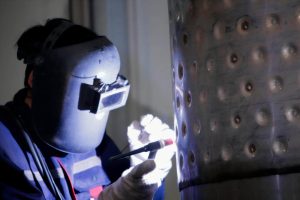
SKE & Eagle’s manufacturing is integrated with ISO 9001 and ISO 13485 quality management systems, addressing general quality and specific medical device requirements often relevant for pharmaceutical tanks.
A significant focus is placed on traceability with full batch documentation from raw material certificates through manufacturing reports. This documentation supports validation and audit readiness for clients operating strict quality assurance processes.
Innovative manufacturing technologies such as robotic welding and automated polishing increase repeatability and reduce human-induced variability, yielding superior product consistency.
The adherence to international standards—like FDA’s CFR Title 21 parts on equipment and GMP guidelines—during fabrication cements SKE & Eagle’s reputation as a reliable partner for pharma tank solutions.
Pharmaceutical Applications and Practical Use Cases
Stainless steel tanks serve a multitude of critical functions in pharmaceutical manufacturing, tailored to the production process requirements of different dosage forms and substances.
Common use cases include:
- Raw Material Storage: Tanks store active pharmaceutical ingredients (APIs) or excipients under inert atmospheres or controlled temperature to prevent degradation.
- Mixing and Blending: Formulation tanks equipped with mixers ensure uniform dispersion of APIs and excipients, critical for dosage consistency.
- Intermediate Process Tanks: Used between synthesis steps for holding or conditioning intermediate compounds under sterile conditions.
- Finished Product Holding: Aseptic tanks maintain sterility before filling operations, often integrated with CIP/SIP systems.
- Buffer and Water Treatment: Fueled by SKE & Eagle’s advanced water treatment solutions, these tanks hold pharmacopeia-grade water such as WFI and purified water, essential for injectable drug manufacturing.


Pharmaceutical companies rely on tanks engineered to minimize contamination risk, facilitate fast turnaround times between batches, and support regulatory compliance documentation.
For example, a biotech firm producing monoclonal antibodies utilizes 316L stainless steel bioreactor tanks with precise thermal controls and aseptic sealing to safeguard cell culture integrity. Meanwhile, oral solid dose manufacturers use large-scale blend tanks designed for ease of cleaning and scalability.
SKE & Eagle’s tailored approach offers customization in tank sizes, instrumentation, and ancillary systems to perfectly align with each client’s production line. Their expertise ensures integration with process analytical technology (PAT) systems to optimize batch quality and efficiency.
The broad spectrum of pharmaceutical processes—from sterile injectables to vaccines and finished oral dosage—benefits from these robust tank designs that set industry performance benchmarks.
Maintenance, Cleaning, and Regulatory Compliance
Maintaining the cleanliness and operational integrity of pharmaceutical stainless steel tanks is paramount for GMP compliance and patient safety.
Typical maintenance practices include:
- CIP (Clean-In-Place): Automated cleaning systems circulate cleaning agents and sanitizers through tanks without disassembly, ensuring effective biofilm and residue removal.
- SIP (Sterilize-In-Place): Steam sterilization protocols eliminate microbial contamination following cleaning cycles.
- Scheduled Inspections: Routine checks for corrosion, weld integrity, and surface finish condition ensure ongoing compliance.
- Documentation: Batch logs and maintenance records serve as evidence for inspections and regulatory audits.
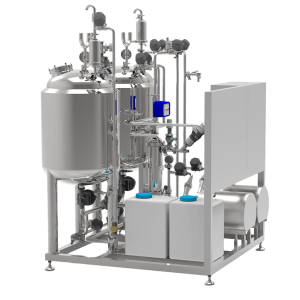
Regulatory frameworks demand pharmaceutical tanks maintain defined surface roughness, material traceability, and validated cleaning protocols. For example, FDA 21 CFR Part 11 and Annex 1 of the EU GMP guide contain explicit guidelines relevant to tank hygiene and documentation.
SKE & Eagle supports compliance through engineering tanks optimized for CIP/SIP compatibility and supplying comprehensive technical documentation for validation.
Efficient maintenance reduces downtime and extends tank lifespan, creating cost savings while safeguarding product quality. Innovations such as real-time corrosion monitoring and automated cleaning verification are emerging trends enhancing tank reliability.
FAQ on Stainless Steel Tanks Pharmaceutical
What stainless steel grade is preferred for pharmaceutical tanks?
The preferred grade is 316L stainless steel due to its superior corrosion resistance, low carbon content, and compatibility with pharmaceutical cleaning and sterilization processes.
How do pharmaceutical stainless steel tanks ensure aseptic conditions?
They feature smooth, electropolished surfaces with minimal weld crevices, support CIP and SIP for sterilization, and integrate sealed ports and sanitary fittings to prevent contamination ingress.
What design standards apply to stainless steel tanks pharmaceutical?
Standards such as 3-A Sanitary Standards, FDA guidelines (21 CFR), ASME Section VIII, and EHEDG hygienic design principles typically govern pharmaceutical tank design to ensure regulatory compliance and process safety.
Can stainless steel tanks be customized for specific pharmaceutical applications?
Yes, tanks can be tailored in size, configuration, surface finish, and instrumentation to meet the unique requirements of various pharmaceutical processes, from raw material storage to aseptic formulation.
How does SKE & Eagle ensure quality and reliability in pharmaceutical stainless steel tanks?
SKE & Eagle integrates stringent material selection, certified fabrication practices, advanced welding and surface finishing technologies, and comprehensive quality control aligned with FDA and ISO standards to uphold tank quality and operational reliability.
Reach out via email or visit our contact page to discuss your specific tank system requirements and engineering needs.
Also, follow us on Facebook for the latest insights and innovations in pharmaceutical tank technologies.