
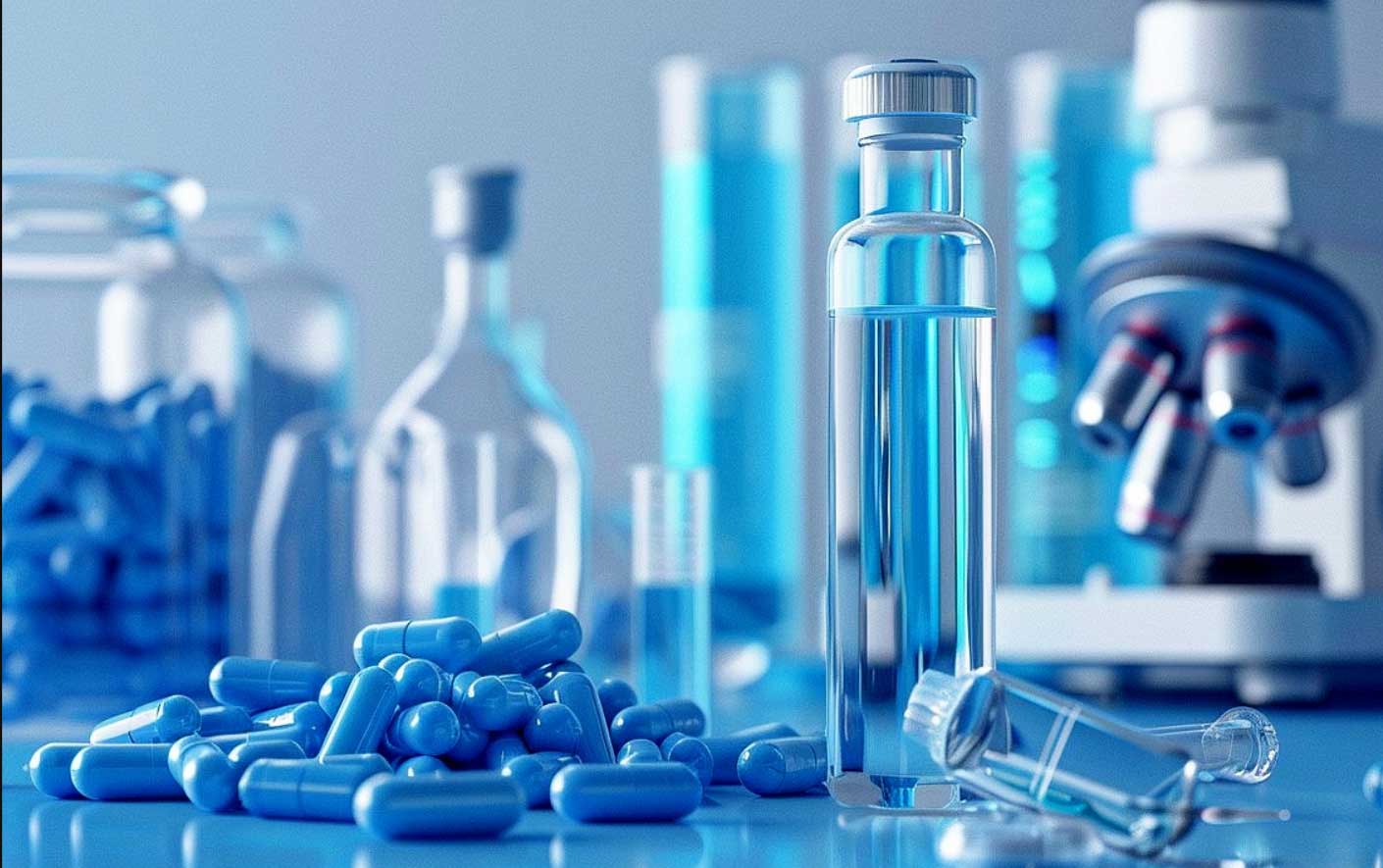
Water is very important in medicine making. It can be a raw material, an ingredient, or a cleaning agent. Because water can affect product quality, factories need good systems to make, store, and check it. This is why pharmaceutical water treatment is more than just filtering water. A good system must control chemicals, particles, and microorganisms. It must also keep water quality stable from start to finish.
This guide explains how pharmaceutical water treatment works and how a purified water system is designed. It covers reverse osmosis (RO), electrodeionization (EDI), ultrafiltration (UF), storage, distribution, sanitization, and monitoring.
What Is Pharmaceutical Water Treatment?
Pharmaceutical water treatment is the controlled process of treating source water to meet quality rules for its use in medicine. The process starts with a suitable drinking water source. The water is checked and then treated in several stages. Each stage has a special purpose. One stage may remove particles. Another may reduce hardness, chlorine, or dissolved salts.
Final water quality depends on the whole system, not one machine. So system design should consider source water quality, required water grade, capacity, storage, distribution, sanitization, and monitoring.
Two important types are Purified Water (PW) and Water for Injection (WFI). PW is widely used in medicine making and cleaning. WFI is used when higher quality is needed, including control of bacterial endotoxins. Always check the current rules for your site.
What Is a Purified Water System?
A purified water system produces, stores, distributes, and monitors Purified Water. Unlike a simple filter system, it must control the whole water path. This includes pretreatment, purification, storage, distribution, sanitization, monitoring, and maintenance.
A typical system has four main parts:
-
Pretreatment
-
Purification
-
Storage and distribution
-
Monitoring and sanitization
The equipment depends on source water, water grade, capacity, and plant needs. No single design fits every factory.
Main Stages of a Pharmaceutical Water System
1. Pretreatment
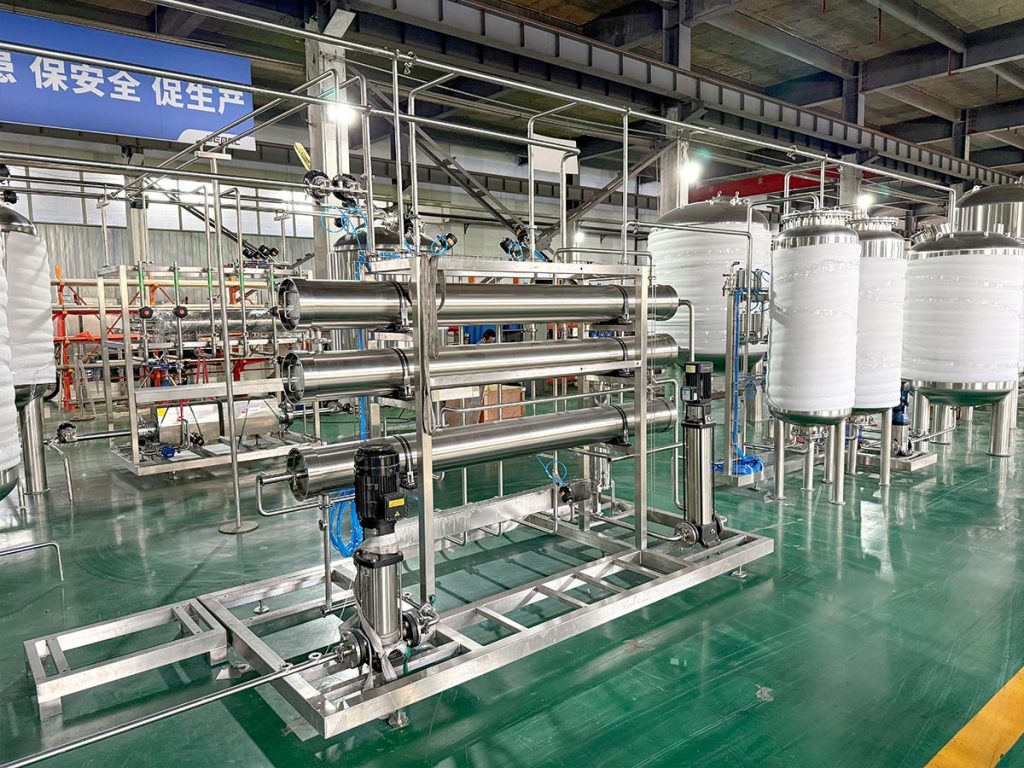
Pretreatment protects the main equipment and improves stability. Common equipment includes multimedia filters, activated carbon filters, water softeners, and cartridge filters. The setup depends on the source water. For example, activated carbon can reduce chlorine. Softening can reduce hardness that causes scaling on RO membranes. Good pretreatment is important. Poor feed water control can increase fouling, reduce performance, shorten equipment life, and raise costs.
2. Reverse Osmosis
Reverse osmosis (RO) is one of the most common technologies. An RO membrane uses pressure to separate water from dissolved salts, organics, particles, and microorganisms. It is an important step before further treatment.
RO performance depends on feed water quality, pressure, temperature, membrane condition, and system design. In pharmaceutical use, RO is usually part of a full treatment train, not the only technology. Systems may use single-pass or double-pass RO.
3. Electrodeionization
EDI is often placed after RO to further reduce dissolved ions. EDI uses ion exchange materials, special membranes, and electricity to remove ionic contaminants. Unlike traditional ion exchange, EDI does not need chemical regeneration during normal operation.
RO removes most dissolved ions. EDI provides further deionization. Together they can produce stable, high-quality water. EDI works best when RO permeate quality is good. So stable RO operation and good pretreatment are important.
4. Ultrafiltration
UF uses a membrane with much smaller pores than normal filters. It can help reduce microorganisms, particles, and large molecules. UF may be used when extra microbial or endotoxin control is needed. Its place in the process depends on water grade and system design.
UF is not a universal replacement for RO, EDI, or other technologies. It is usually one part of a full water treatment plan.
Storage and Distribution: A Critical Part
Making high-quality water is only the first step. The water must also stay under control during storage and distribution.
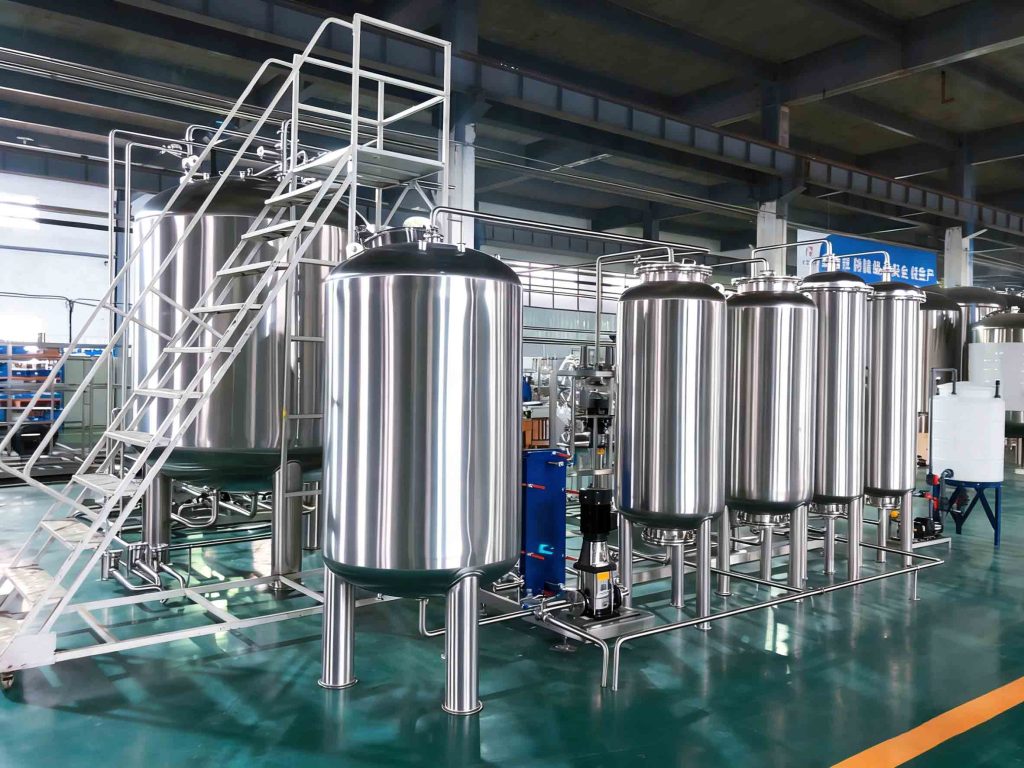
A pharmaceutical water distribution system usually includes a sanitary storage tank, circulation pump, piping loop, valves, instruments, and monitoring points. The loop should maintain suitable flow and reduce stagnant areas. Poorly designed dead legs, unsuitable fittings, low-flow areas, and hard-to-clean surfaces can increase microbial growth.
Tanks and piping should use suitable sanitary materials. Stainless steel is widely used because it is durable and cleanable. Continuous circulation is common to reduce stagnation. Thermal sanitization, ozone, UV, or other validated methods may be used for microbial control.
Sanitization and Microbial Control
Microbial control is one of the biggest challenges. Even if water starts clean, microorganisms can grow in tanks and loops if conditions are not controlled. Biofilm is a special concern. Once microorganisms attach to a surface, they form a protective layer that is hard to remove.
So a pharmaceutical water system needs an effective sanitization strategy.
| Method | Main Purpose | Typical Consideration |
|---|---|---|
| Hot water | Thermal microbial control | Needs heat-resistant equipment |
| Ozone | Chemical oxidation and microbial control | Residual ozone must be controlled |
| UV | Microbial control and ozone destruction | Needs suitable UV intensity and monitoring |
| Chemical sanitization | Periodic system cleaning | Needs chemical control and proper rinsing |
The method should fit the actual system and be supported by validation. Sanitization frequency should be based on system design, monitoring results, and approved procedures.
Monitoring Pharmaceutical Water Quality
A modern system needs regular monitoring to confirm control. Important parameters include conductivity, TOC, microbial counts, temperature, flow rate, and pressure. Online conductivity and TOC instruments give continuous information. But online monitoring does not replace sampling, lab testing, calibration, and trend analysis.
The goal is not just to test water at the end. A good monitoring strategy helps find changes before they become big problems.
Purified Water vs WFI
| Feature | Purified Water (PW) | Water for Injection (WFI) |
|---|---|---|
| Main use | Medicine making and suitable cleaning | Applications needing WFI quality |
| Quality control | Chemical and microbial quality | Tighter control, including endotoxins |
| Common technologies | RO, EDI, UF and combinations | Distillation or other permitted methods |
| System design | Depends on application and quality | Requires a higher level of control |
| Key concern | Consistent chemical and microbial quality | Chemical, microbial, and endotoxin control |
WFI rules can vary by pharmacopoeia and region. In some regions, validated non-distillation technologies may be allowed. Other markets may have different rules. Always confirm current requirements for your target market before choosing a WFI technology.
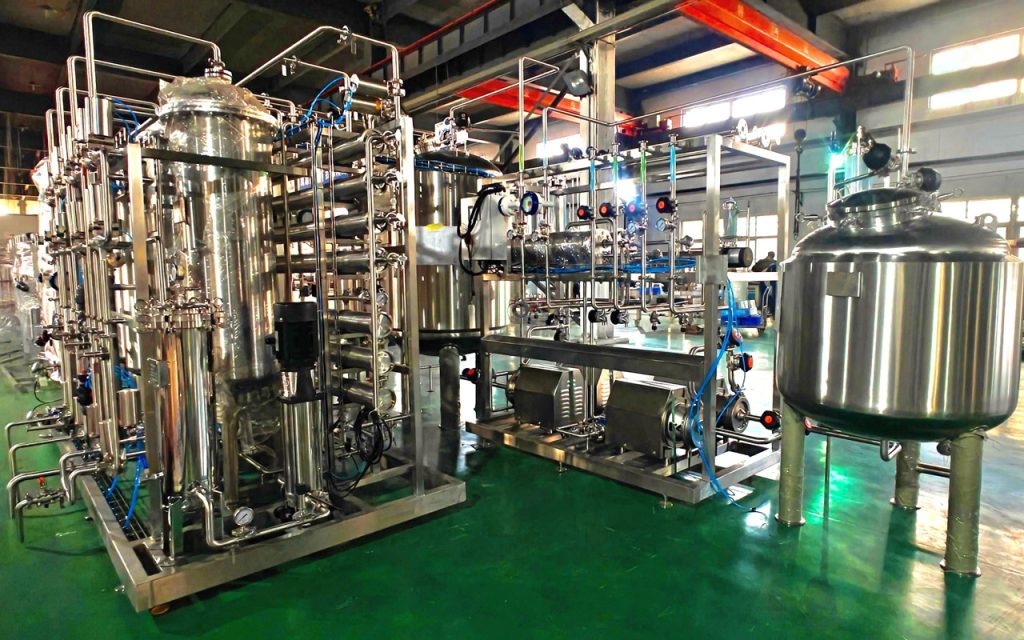
How to Choose a Pharmaceutical Water Treatment System
Start with actual production needs, not a standard package. Key factors include:
-
Source water quality
-
Required water grade
-
Required flow rate
-
Peak production demand
-
Storage and distribution needs
-
Sanitization method
-
Monitoring parameters
-
Validation and documentation needs
The system should allow future expansion where possible. A complete solution should treat purification, storage, distribution, monitoring, sanitization, maintenance, and validation as one integrated system.
SKE&EAGLE Pharmaceutical Water Solutions
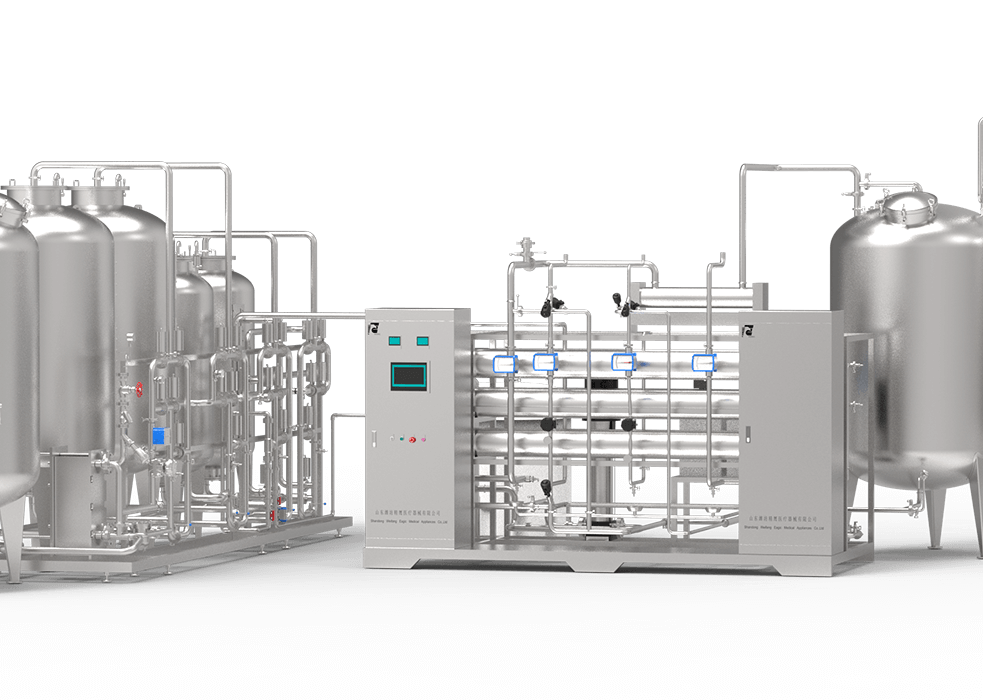
SKE&EAGLE provides pharmaceutical water treatment solutions. Systems can be configured by source water quality, water grade, capacity, plant layout, and application needs. A system may include pretreatment, RO, EDI, UF, storage tanks, distribution loops, sanitization equipment, and online monitoring instruments.
For manufacturers, equipment selection is only one part. Hygienic design, system integration, control logic, documentation, commissioning, and validation support are also important. SKE&EAGLE focuses on integrated water systems, not just single filters. Solutions can cover pretreatment, purification, storage, distribution, monitoring, and control.
FAQ
1.What is pharmaceutical water treatment?
It is the controlled process of treating source water to meet quality rules for medicine making. It may include pretreatment, RO, EDI, UF, storage, distribution, sanitization, and monitoring.
2.What is a purified water system?
It is an integrated system that produces, stores, distributes, and monitors Purified Water. It controls quality through the whole system, not only at purification.
3.Is RO enough for pharmaceutical water treatment?
RO is important, but not always enough alone. Depending on source water and water grade, EDI, UF, UV, or other technologies may be needed.
4.What is the difference between PW and WFI?
They have different quality rules and uses. WFI needs tighter control, including bacterial endotoxins. The production method should follow applicable rules.
5.How can a system control microorganisms?
Microbial control depends on hygienic design, suitable materials, circulation, effective sanitization, proper maintenance, and regular monitoring. Preventing stagnation and biofilm is also important.
6.How does SKE&EAGLE support manufacturers?
SKE&EAGLE provides integrated solutions including pretreatment, RO, EDI, UF, storage, distribution, sanitization, and monitoring. Configurations are based on source water, capacity, application, and applicable rules.
Conclusion
Reliable pharmaceutical water treatment is more than making clean water. The whole system must keep water quality controlled from source through purification, storage, distribution, monitoring, and final use.
RO, EDI, UF, sanitization, hygienic distribution, and online monitoring each play a role. The right combination depends on water grade, source water quality, capacity, and regulations. For manufacturers, choosing an experienced provider can help integrate these technologies into a reliable and maintainable system. A well-designed solution should support water production and long-term operation, monitoring, documentation, and validation.
Official Website: https://www.ske-eagle.com/
Contact Email: info@ske-eagle.com
Follow us on Facebook for the latest industry insights: SKE & Eagle Facebook
Business Inquiries: Visit our official website and submit the contact form at the bottom.