


In the world of pharmaceutical manufacturing, water is not just a utility—it is the most critical raw material. At SKE&EAGLE, we understand that the integrity of your pharmaceutical water systems is the bedrock upon which product safety and regulatory compliance are built. Whether you are formulating a life-saving injection or cleaning essential equipment, the quality of your water dictates the quality of your output. However, designing and maintaining these complex systems is fraught with challenges. A single oversight can lead to catastrophic contamination, costly batch rejections, and regulatory action.
This article explores the seven most common—and dangerous—mistakes made in the management of pharmaceutical water systems. We will delve into the science of pharmaceutical water treatment, the specific requirements for the pharmaceutical use of purified water, and how to ensure the safety of purified water used in pharmaceutical preparations. By understanding these pitfalls, you can safeguard your operations and ensure the highest standards of quality.
Mistake #1: Underestimating Source Water Variability
The foundation of any reliable system begins long before the water enters your facility. Many manufacturers make the critical error of assuming that feed water quality is consistent. It is not. Municipal drinking water supplies fluctuate seasonally and even daily. Changes in rainfall, temperature, and local industrial activity can alter the chemical and microbiological load entering your facility.
Failing to account for this variability places immense stress on your pharmaceutical water treatment equipment. A system designed for average water quality will fail during peak contamination events, leading to premature fouling of reverse osmosis (RO) membranes and breakthrough of contaminants.
The SKE&EAGLE Approach:
A robust risk assessment begins with a comprehensive analysis of your source water over a full calendar year. This data is essential for designing a pretreatment train—including multimedia filtration, softening, and dechlorination—that can handle the “worst-case” scenario, ensuring a stable and predictable feed to your primary purification steps.

Mistake #2: Confusing Different Water Grades
A surprisingly common yet dangerous mistake is the misapplication of water grades. The pharmaceutical use of purified water is distinct from that of Water for Injection (WFI) or drinking water. Using an incorrect grade can compromise product efficacy and patient safety.
Purified water is the workhorse of pharmaceutical manufacturing. It is the standard for producing non-sterile dosage forms.
-
Tablets and Capsules: Used as a granulation fluid or a solvent in coatings.
-
Topical Preparations: Used in the formulation of ointments, creams, and lotions .
-
General Manufacturing: Serves as purified water for pharmaceutical manufacturing processes, including equipment cleaning and rinsing .
Conversely, WFI is mandated for parenteral preparations (injectables). Attempting to substitute purified water in these critical applications is a critical deviation from GMP. Understanding these distinctions is vital for compliance and patient safety.
Mistake #3: Designing Systems with “Dead Legs” and Poor Flow
This is a classic engineering oversight that directly invites biofilm formation. In pharmaceutical water systems, stagnation is the enemy. “Dead legs”—areas of low or no flow in the piping—create perfect breeding grounds for bacteria. Once a biofilm establishes itself, it acts as a protective barrier for microbes, making them incredibly resistant to sanitization efforts .
Biofilms not only contaminate the purified water used in pharmaceutical preparations but also cause corrosion and degrade the overall quality of the distribution system.
Design Best Practices:
-
Turbulent Flow: Maintain a Reynolds number well above 4000 to ensure turbulent flow, which scours pipe walls and prevents microbial attachment.
-
Zero Dead-Leg Valves: Specify valves that minimize dead volume, ensuring that water does not stagnate at the point of use.
-
Continuous Recirculation: Keep water moving continuously at a controlled temperature to prevent microbial proliferation.
The table below summarizes the primary risks associated with poor system design and their control measures .
| Risk Factor | Impact on Biofilm Formation | Control Strategy |
|---|---|---|
| Dead Legs / Poor Flow | Creates stagnant zones where bacteria settle and grow. | Install zero dead-leg valves; ensure continuous high-velocity recirculation. |
| Surface Roughness | Rough surfaces provide shelter for microbes and hinder cleaning. | Use electrophished stainless steel (320 grit or higher); ensure proper passivation. |
| Ambient Temperature | Warm (20-40°C) systems are ideal for microbial growth. | Operate hot systems (65-80°C) or sanitize ambient systems frequently. |
| Nutrient Availability | High TOC levels feed bacteria, accelerating biofilm formation. | Maintain Total Organic Carbon (TOC) below 20 ppb; ensure efficient pretreatment. |
Mistake #4: Neglecting Proper Sanitization Strategies
Many operators treat sanitization as an afterthought, applying a one-size-fits-all approach. This is ineffective. The choice of sanitization method—thermal, chemical, or ozone—must be integrated into the very fabric of the pharmaceutical water systems design.
Relying solely on chemical sanitizers without proper rinsing, for example, leaves harmful residues that can leach into your product. Conversely, using thermal sanitization on a system not designed for high temperatures can damage gaskets, instruments, and membranes.
Choosing the right method depends on your system’s construction and your product’s risk profile. The following table compares the most common sanitization techniques used in the industry today .
| Sanitization Method | Primary Advantages | Key Limitations |
|---|---|---|
| Thermal (Hot Water) | Highly effective; leaves no chemical residues; penetrates biofilm well. | High energy consumption; unsuitable for systems with plastic/components not rated for 80°C+. |
| Chemical (Ozone/Peracetic) | Effective at ambient temperatures; good for complex systems with plastics. | Requires thorough and validated rinsing to remove residues; introduces handling hazards. |
| Steam | The “gold standard” for critical loops; rapid and penetrating. | Highly infrastructure-intensive; limited to materials that withstand extreme temperatures. |
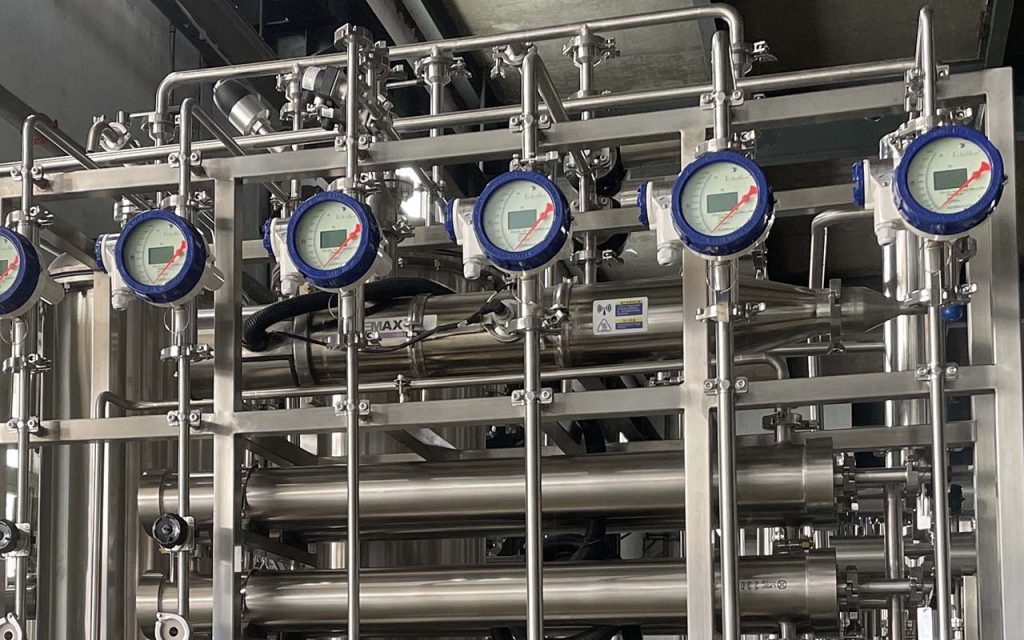
Mistake #5: Inadequate Monitoring and “Grab Sampling” Complacency
What gets measured gets managed. However, a common mistake is relying too heavily on periodic grab samples while ignoring the potential of continuous online monitoring. A grab sample provides a snapshot of the water quality at a single point in time. By the time a lab returns a result showing contamination, thousands of liters of non-conforming water may have already been used in production.
Modern pharmacopoeias, including the USP and Ph. Eur., emphasize the importance of process control. Critical parameters for purified water for pharmaceutical manufacturing like conductivity and Total Organic Carbon (TOC) should be monitored continuously online. A sudden spike in TOC is an early warning sign of system upset, allowing for immediate corrective action before product quality is impacted.
Mistake #6: Ignoring the “Last Mile” – Distribution and Storage
Even the purest water generated can be rendered useless by a poorly designed storage and distribution loop. This is where the quality of the pharmaceutical use of purified water is finally determined. Mistakes here include:
-
Non-Sanitary Pumps: Using pumps that are not designed for Clean-in-Place (CIP) or Steam-in-Place (SIP) creates niches for contamination.
-
Improper Tank Vent Filters: Heated tank vents that “wet out” or fail allow airborne microbes to enter the storage tank.
-
Incorrect Slope in Piping: Piping must be sloped to ensure complete drainage. Standing water is a microbial reservoir.
The distribution loop must maintain the chemical and microbiological integrity of the water all the way to the point of use. This requires polished internal surfaces, consistent velocity, and hygienic components.
Mistake #7: Failing to Plan for System Validation
The final critical mistake is treating validation as a bureaucratic paperwork exercise at the end of a project, rather than a guiding principle from the design phase. Validation is the documented evidence that your pharmaceutical water systems consistently perform as intended.
A poorly planned validation protocol can delay a facility’s start-up by months. Key elements often missed include:
-
User Requirement Specifications (URS): Not defining the exact quality and quantity of water needed.
-
Design Qualification (DQ): Failing to document why specific components (like pumps and valves) were chosen.
-
Installation/Operational Qualification (IQ/OQ): Not testing alarms, sanitization cycles, and control sequences under load.
A successful validation journey confirms that your pharmaceutical water treatment process is robust, reliable, and ready for regulatory scrutiny.

Frequently Asked Questions (FAQ)
Q1: What is the difference between Purified Water and Water for Injection?
A: The primary chemical purity (conductivity and TOC) is often similar, but the key difference lies in the limit for endotoxins. Purified water has no set endotoxin limit and is used for non-sterile preparations. Water for Injection (WFI) has a strict limit for endotoxins (<0.25 IU/mL) and is required for products that will be injected.
Q2: Can I use deionized water from a lab system for pharmaceutical manufacturing?
A: No. Terms like “deionized water” are not recognized by regulatory guidelines as a defined grade for pharmaceutical manufacturing. You must use compendial grades (e.g., Purified Water, Highly Purified Water, or WFI) that meet the specific monographs of the Ph. Eur. or USP .
Q3: How often should I sanitize my purified water loop?
A: The frequency depends on your system design and historical data. Hot water loops (maintained at 65-80°C) are continuously sanitized. Ambient systems may require weekly or monthly chemical or ozone sanitization. The schedule should be determined based on trending data from your monitoring program to ensure microbial counts are consistently well below action limits .
Q4: Why is TOC monitoring so important in pharmaceutical water systems?
A: Total Organic Carbon (TOC) is a critical indicator of organic contamination. It is a rapid, non-specific test that can detect a wide range of potential contaminants, including bacteria, endotoxins, and cleaning agents. A rise in TOC is often the first sign of a system problem .
Q5: What is the best material for piping in a pharmaceutical water treatment distribution system?
A: Stainless steel, specifically 316L grade, is the industry standard. It is durable, corrosion-resistant, and can withstand high-temperature sanitization. To achieve the necessary surface finish for hygiene, it must be electropolished to create a smooth, non-stick surface .
Conclusion
At SKE&EAGLE, we believe that knowledge is the first step toward excellence. By avoiding these seven critical mistakes—from understanding source water variability to embracing a holistic validation strategy—you can ensure that your pharmaceutical water systems are a source of strength, not a liability. The integrity of your purified water for pharmaceutical manufacturing directly impacts the safety and efficacy of the purified water used in pharmaceutical preparations that reach patients worldwide.
Invest in smart design, rigorous monitoring, and continuous improvement. Your patients—and your bottom line—will thank you.