

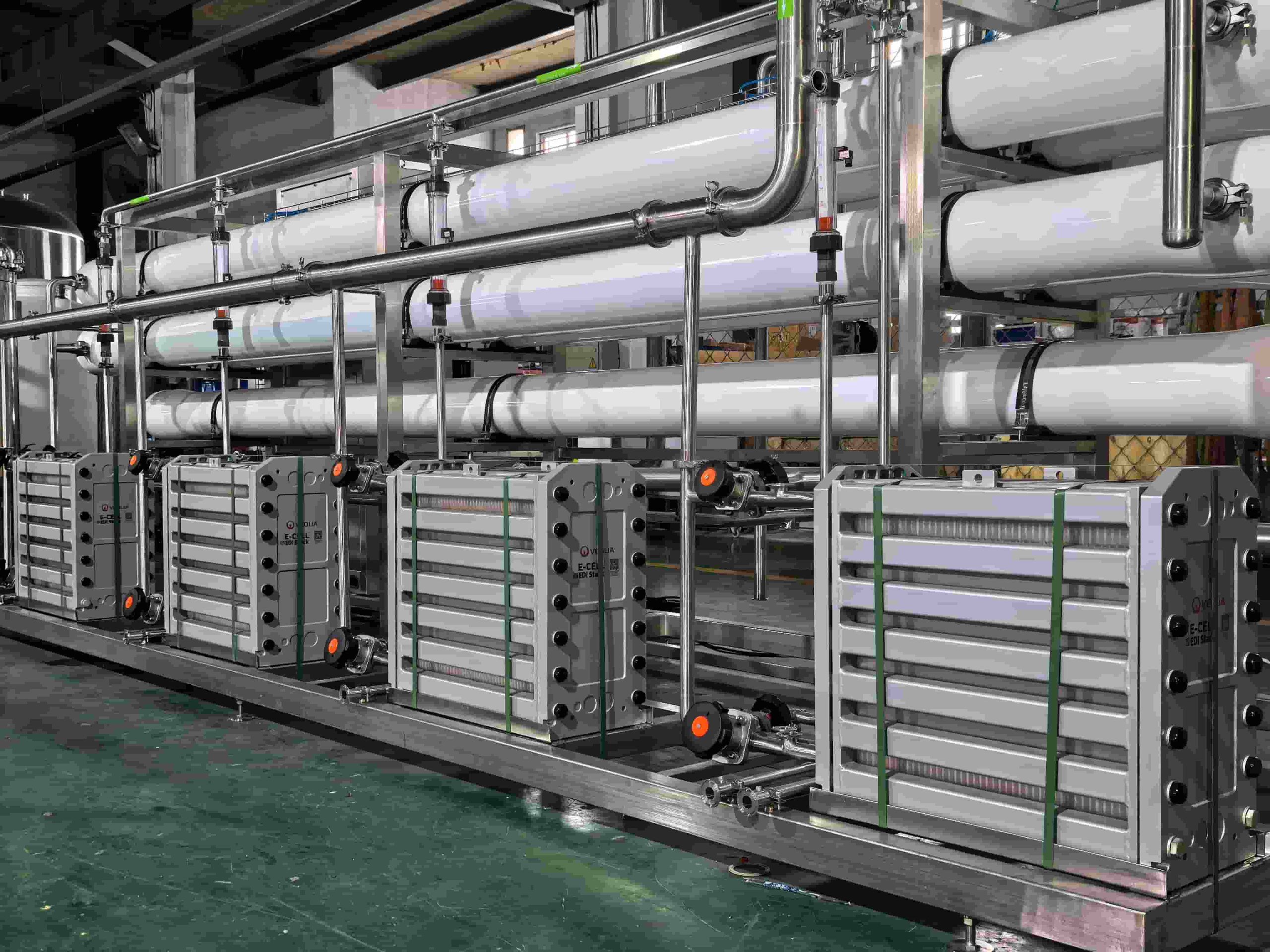
Overview of Pharmaceutical Water Equipment
Pharmaceutical water equipment constitutes the critical hardware and process solutions designed to produce, store, and distribute water that meets stringent pharmaceutical quality requirements. Water is one of the principal raw materials in pharmaceutical manufacturing, used for formulation, cleaning, and processes where high purity and regulatory compliance are mandatory.
Understanding the complexity and criticality of pharmaceutical water equipment involves knowing the types of water purity required, including Purified Water (PW), Water for Injection (WFI), and Highly Purified Water (HPW). These categories are governed by pharmacopeial standards such as the USP and EP, which define chemical, microbial, and endotoxin limits to ensure patient safety.
SKE & Eagle has built its reputation around a commitment to industrial water treatment and pharmaceutical-grade water systems that adhere to strict design philosophies emphasizing sterility, redundancy, and system integrity. Their extensive engineering expertise supports pharmaceutical manufacturers in navigating the complex requirements of water purification equipment.
Pharmaceutical water equipment generally includes components such as:
- Feed water pretreatment systems — removing chlorine, hardness, and particulates to protect downstream components.
- Purification modules — reverse osmosis (RO), ultrafiltration (UF), deionization, and distillation units to refine water purity.
- Storage and distribution systems — designed with sanitary piping, including stainless steel grade 316L and orbital welding techniques to maintain water quality through the plant.
- Cleaning and sanitization technology — automated Clean-In-Place (CIP) systems and sanitization protocols ensure hygiene without dismantling complex equipment.
The integration of such multifaceted pharmaceutical water equipment into manufacturing facilities is a complex engineering challenge. Systems must be designed for operational reliability, compliance with Good Manufacturing Practices (GMP), and validation standards prescribed by regulatory authorities.
For manufacturers seeking turnkey solutions, SKE & Eagle’s water treatment technology portfolio and custom engineering services provide robust platforms that balance compliance, system longevity, and operational efficiency. This foundational understanding leads us toward the design principles and standards essential for pharmaceutical water equipment success.
Design Principles and Industry Standards
A successful pharmaceutical water system demands an architectural approach that prioritizes purity, reliability, and regulatory compliance. Key design principles focus on ensuring contamination control, hydraulic performance, and system maintainability.
1. Compliance with Regulatory Frameworks: Pharmaceutical water equipment must comply with pharmacopeial compendia such as USP1, EP, as well as FDA guidelines, including 21 CFR Part 210/211 and Annex 1 of EU GMP. Compliance extends to design, materials, process controls, and qualification documentation.
2. Material Selection and Hygienic Design: The choice of materials like stainless steel 316L with electropolished surfaces is critical to inhibit microbial growth and ease cleaning. SKE & Eagle implements industry-leading hygienic design standards, including ASME BPE (Bioprocessing Equipment) codes, guaranteeing minimal dead legs and sanitary welds to maintain water integrity.
3. System Architecture — Redundancy and Loop vs. Branch Distribution: Typical pharmaceutical water systems utilize loop distribution to maintain continuous water circulation, minimizing stagnation risk. The design often incorporates redundant pumps and parallel purification trains to ensure uptime and enable maintenance without disruption.
4. Instrumentation and Controls: Advanced real-time monitoring of conductivity, TOC (Total Organic Carbon), microbial contamination, and temperature facilitates proactive system management. It ensures compliance with critical quality attributes (CQAs) and enables swift corrective actions with automated alarms.
5. Validation and Qualification: Pharmaceutical water equipment must undergo Installation Qualification (IQ), Operational Qualification (OQ), and Performance Qualification (PQ) to demonstrate consistent attainment of specified water quality and system functionality. SKE & Eagle supports extensive qualification protocols, leveraging digital data capture for efficient regulatory submissions.
Effective design balances capital investment, operational cost, and compliance risk. As illustrated in the design diagram below, components flow from feedwater pretreatment through ultrafiltration, reverse osmosis, continuous sanitization, and distribution loops — all monitored and controlled within the central automation system.
By integrating these design principles and adhering to benchmarks such as those found in SKE & Eagle’s engineering standards, pharmaceutical water equipment provides a trustworthy foundation for pharmaceutical manufacturing compliance and product quality assurance.
To explore how these principles translate into operational technology, the next section delves into the core technologies enabling water purification and equipment performance in pharmaceutical applications.
Core Technologies in Pharmaceutical Water Treatment
The cornerstone of pharmaceutical water equipment is its advanced purification technology. Selecting the appropriate combination of treatment technologies ensures the removal of microbial contaminants, endotoxins, organics, and particulates, consistently achieving pharmacopeial water quality requirements.
1. Reverse Osmosis (RO): RO membranes achieve high rejection rates for salts, organic compounds, and microorganisms. Single-pass or double-pass RO configurations are common, with double-pass systems used when water quality or system reliability demands are elevated. RO units are often paired with pretreatment to optimize membrane life.
2. Ultrafiltration (UF): UF membranes provide a final microbial barrier, critical for preventing bacterial ingress downstream of RO. They effectively reduce endotoxins and particulates, enhancing system robustness and final water safety.
3. Distillation: Still employed predominantly for Water for Injection generation, distillation units produce ultrapure water through phase change, eliminating pyrogens and most dissolved solids. Modern pharmaceutical water equipment includes continuous or batch distillation methods compliant with USP directives.
4. Ion Exchange and Mixed Bed Deionization (DI): DI systems remove residual ions after RO or distillation. Mixed beds dynamically exchange cations and anions, polishing water purity levels. SKE & Eagle implements DI units as optional polishing steps per application requirements.
5. Sanitization Technologies: Heat-based sanitization, frequently employed through hot water circulation, limits microbial proliferation. UV light and ozone treatment complement temperature-based sanitization, offering chemical-free germicidal effects. Automated CIP (Clean-In-Place) and SIP (Sterilize-In-Place) systems allow rapid and validated sanitation enabling high system uptime.
6. Monitoring and Automation: Modern pharmaceutical water equipment integrates PLC and SCADA systems for continuous monitoring and control. Variables such as conductivity, pH, temperature, TOC, and microbial counts are captured with trend analysis to maintain process control within tight parameters, thus ensuring product quality.
Each technology layer must be selected and engineered according to local feedwater characteristics, required water quality, user process demands, and compliance obligations. SKE & Eagle utilizes comprehensive feedwater studies and system simulations to tailor pharmaceutical water equipment optimized for reliability, efficiency, and regulatory assurance.
For a deeper understanding of technology application, including detailed system schematics and product offerings, please refer to SKE & Eagle’s expert technical resources on water treatment solutions.
With technology fundamentals established, the subsequent section examines application-focused case studies and integration strategies within pharmaceutical manufacturing environments, illustrating practical implementation of pharmaceutical water equipment.
Application Case Studies and System Integration
Pharmaceutical water equipment must flawlessly integrate with downstream processes to support drug formulation, cleaning cycles, and sterile manufacturing. Real-world applications illustrate the diversity and customization of systems to meet specific plant requirements.
Case Study 1: Biopharmaceutical API Manufacturing Facility
In this scenario, the requirement for ultrapure water for Active Pharmaceutical Ingredient (API) formulation necessitated a double-pass RO system preceded by multimedia filtration and carbon filtration to eliminate organics and chlorine. A continuous sanitizable distribution loop ensured microbial control with automated heat sanitization cycles. The system was designed in accordance with ASME BPE standards with full traceability of welding and fabrication, supporting GMP compliance and rapid IQ/OQ validation. Integration with the plant’s DCS allowed real-time monitoring and data logging for batch release validation.
Case Study 2: Injectable Drug Production with Water for Injection (WFI)
This high-purity application utilized a multi-effect distillation system combined with a looped heated distribution system engineered to maintain endotoxin-free water. Pulsation dampeners and redundant pump systems guaranteed constant flow. The system was designed with CIP/SIP capabilities for automated sanitation, minimizing manual intervention, reducing human error risks, and streamlining regulatory audits. SKE & Eagle’s engineering team optimized piping layout to reduce dead-legs and implemented orbital welding for sanitary integrity.
System Integration Strategies:
- Modular Design: Prefabricated skids encompassing full purification trains that reduce onsite construction time and ensure quality control under factory conditions.
- Instrumentation and Control Integration: Seamless interfacing with plant process control systems enables holistic management, safety interlocks, and data integrity compliance under 21 CFR Part 11.
- Data Management: Incorporation of digital water quality dashboards and automated reporting supports real-time compliance assessments and Operational Excellence.
- Custom Engineering: Tailoring system size, redundancy, and sanitization frequency to match production scale and operational rhythms, thus optimizing CAPEX and OPEX.
Experienced providers such as SKE & Eagle support complex project requirements by combining global knowledge with localized engineering to deliver pharmaceutical water equipment engineered for seamless system integration and future scalability.
Next, we will focus on the operational, maintenance, and validation best practices to maintain system performance throughout its lifecycle.
Operation, Maintenance, and Validation Best Practices
Maintaining pharmaceutical water equipment is a continuous process requiring diligence, scientific rigor, and adherence to operational protocols to guarantee persistent compliance and water quality.
Operational Best Practices:
- Monitoring: Continuous monitoring of critical parameters such as conductivity, TOC, microbiological contamination, and temperature ensures early detection of deviations.
- Sanitization Schedules: Regular hot water flushes and CIP cycles maintain microbial control and prevent biofilm formation. Automated systems reduce human error and improve reproducibility.
- Water Quality Sampling: Samples must be collected aseptically from multiple loop points to ensure representativeness and adherence to pharmacopeial limits.
Maintenance Protocols:
- Membrane and Filter Replacement: Timely replacement of RO membranes, ultrafiltration modules, and DI resins is critical to maintain system efficiency and water purity.
- Preventive Maintenance: Regular inspection of pumps, valves, sensors, and control systems reduces unplanned downtime. Cleaning procedures must be validated to avoid cross-contamination.
- Calibration: Instruments measuring conductivity, TOC, and microbial counts must be calibrated per manufacturer and regulatory standards to ensure validity.
Validation and Qualification: Pharmaceutical water equipment must undergo a rigorous qualification lifecycle:
- Installation Qualification (IQ): Verifies that equipment and components are installed properly according to design specifications.
- Operational Qualification (OQ): Demonstrates that the system operates as intended under all anticipated operating ranges.
- Performance Qualification (PQ): Confirms system generates water consistently meeting quality standards during routine manufacturing conditions.
SKE & Eagle consistently integrates qualification support services as part of its pharmaceutical water equipment delivery, providing documentation and procedural guidelines aligned with regulatory expectations.
Common Myths and Misconceptions:
- “Regular water sampling obviates the need for automation” — In reality, automation reduces human error and ensures consistent surveillance beyond intermittent manual sampling.
- “High-quality membranes last indefinitely” — Membrane performance degrades over time; proactive replacement is essential to avoid system failure.
- “Sanitization frequency can be reduced without risk” — Skipping or delaying sanitization increases biofilm formation risk, potentially compromising water quality and regulatory status.
Proper adherence to operation, maintenance, and validation guides ensures pharmaceutical water equipment fulfills its role as a reliable source of compliant water over its lifecycle, minimizing production risks and ensuring patient safety.
The next section explores future trends and innovations that are shaping pharmaceutical water equipment technology evolution.
Future Trends and Innovation in Pharmaceutical Water Equipment
The pharmaceutical industry continually evolves under regulatory updates, technology advances, and sustainability imperatives. Pharmaceutical water equipment solutions are innovating to meet these challenges while enhancing system efficiency, reliability, and environmental impact.
1. Digitalization and AI-Driven Monitoring: Emerging systems feature AI-powered analytics that predict system performance deviations before quality failures. Sensors integrated with IoT enable remote diagnostics and optimized preventive maintenance schedules.
2. Green Engineering and Sustainability: Water treatment equipment is increasingly designed for energy and water efficiency through energy recovery devices, low chemical usage sanitization methods, and zero liquid discharge (ZLD) systems — aligning with pharmaceutical green manufacturing goals.
3. Advanced Materials and Manufacturing: Innovations in antimicrobial coating for piping and tanks, next-generation membrane materials, and additive manufacturing (3D printing) for complex component fabrication improve hygiene and system reliability.
4. Modular and Prefabricated Systems: Prefabricated, skid-mounted water treatment units reduce onsite construction time, risk, and costs. Modular design increases scalability for pharma plants expanding capacity or implementing multi-site deployments.
5. Regulatory Harmonization and Data Integrity: Pharmaceutical water equipment increasingly incorporates comprehensive electronic batch records and compliance-ready reporting facilitating audits under global harmonized frameworks and data integrity enforcement.
As a leader in industrial and pharmaceutical water treatment solutions, SKE & Eagle proactively integrates these innovations with a core philosophy of robust engineering and manufacturing excellence, supporting pharmaceutical manufacturers’ future-ready water systems.
For detailed engineering insight and the latest product offerings designed for evolving pharmaceutical requirements, consider reviewing SKE & Eagle’s pharmaceutical water treatment solutions page.
Frequently Asked Questions on Pharmaceutical Water Equipment
What are the typical validation steps required for pharmaceutical water equipment?
Pharmaceutical water equipment validation comprises Installation Qualification (IQ), Operational Qualification (OQ), and Performance Qualification (PQ), verifying proper installation, operational parameters, and production of compliant pharmaceutical water quality.
How often should pharmaceutical water equipment be sanitized?
Sanitization frequency depends on system usage and water quality data trends but typically occurs at least weekly using hot water or chemical agents to control microbial growth and biofilm formation.
What technology does SKE & Eagle offer for pharmaceutical water treatment?
SKE & Eagle designs and manufactures modular RO and distillation systems, ultrafiltration units, CIP/SIP sanitation equipment, and fully integrated distribution systems engineered to meet pharmaceutical compliance standards.
Can pharmaceutical water equipment handle variable feedwater qualities?
Yes, pharmaceutical water equipment is designed with pretreatment stages, including filtration and softening, adaptable to variable feedwater compositions ensuring consistent final quality.
Contact SKE & Eagle for Expert Pharmaceutical Water Equipment Solutions
For specialized consultation or to learn more about SKE & Eagle’s advanced pharmaceutical water equipment and engineering services, please connect with our experts. We encourage you to visit our website and fill out the contact form at the bottom of the page to explore tailored solutions for your pharmaceutical water treatment needs.
Facebook: SKE & Eagle on Facebook
Email: info@ske-eagle.com