

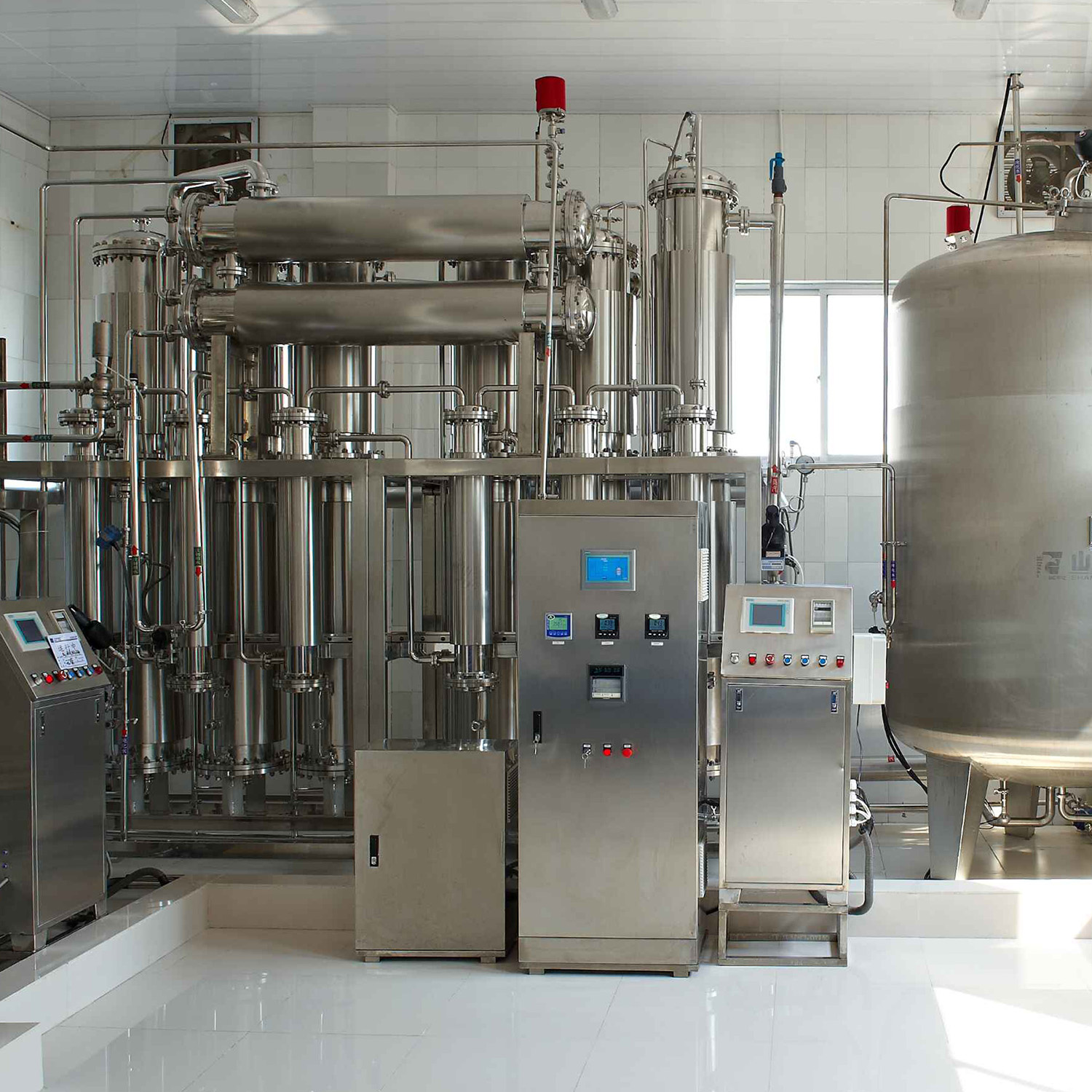
In the pharmaceutical industry, where aseptic conditions, regulatory compliance, and consistent product safety are non-negotiable, our company’s sanitary processing equipment serves as the backbone of reliable production workflows.
A defining strength of our sanitary equipment lies in its pharmaceutical-grade hygienic design, which incorporates smooth internal surfaces, crevice-free construction, and FDA/USP-compliant materials. This design philosophy ensures our systems withstand rigorous, repeated sanitization cycles while maintaining mechanical stability—critical for the high-stakes pharmaceutical environment where even minor contamination risks can lead to product recalls or regulatory non-compliance.
Sanitary Equipment Design Principles & Pharmaceutical-Specific Standards
Our pharmaceutical sanitary equipment is engineered around core principles that prioritize asepsis, durability, ease of maintenance, and compatibility with pharmaceutical process fluids (including WFI, buffers, and active pharmaceutical ingredients/APIs). These principles are rigorously aligned with global pharmaceutical standards to ensure regulatory compliance and product safety.
Core Design Principles for Pharmaceutical Applications
- Ultra-Smooth Surface Finish: Polished surfaces with a roughness average (Ra) ≤ 0.4 μm (exceeding standard industrial requirements) minimize bacterial adhesion and biofilm formation, enabling thorough cleaning and sterilization—essential for WFI systems and CIP/SIP circuits.
- Crevice-Free Construction: All welds (TIG-welded and mechanically polished) are smooth and continuous, eliminating gaps where contaminants can accumulate. This design is critical for our CIP/SIP systems and WFI storage tanks, where stagnant zones and biofilm growth are major risk factors.
- Pharmaceutical-Grade Material Selection: Exclusive use of FDA-approved AISI 316L stainless steel (and higher-grade alloys for specialized applications) for corrosion resistance, inertness, and compatibility with aggressive cleaning agents (e.g., sodium hydroxide, peracetic acid) used in our cleaning systems.
- Optimized Drainability & Self-Purging: Equipment geometries (including WFI storage tanks and CIP piping) are engineered for complete self-draining, preventing stagnant fluid residuals that could compromise asepsis.
- Seamless System Integration: Design compatibility across our product line (CIP, SIP, cleaning, WFI systems) ensures smooth material transfer and consistent hygienic performance without cross-contamination risks.
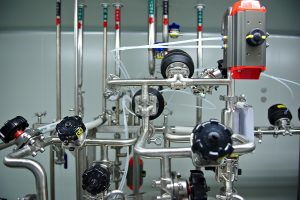
Aligned with Global Pharmaceutical Standards
All our equipment is designed and manufactured to meet or exceed rigorous pharmaceutical standards, including:
- 3-A Sanitary Standards
- EHEDG (European Hygienic Engineering & Design Group)
- ASME BPE (Bioprocessing Equipment)
- USP (United States Pharmacopeia) Chapter 1231 (for WFI systems)
- GMP (Good Manufacturing Practices) requirements worldwide
Our engineering team embeds these standards into every component—from the seals in our SIP systems to the polishing of our WFI storage tanks—ensuring that each system not only meets regulatory demands but also supports consistent, high-quality pharmaceutical production.
Key Pharmaceutical Applications
- Aseptic API & Formulation Processing: Our SIP systems enable in-line sterilization of process equipment (reactors, mixers, piping) without disassembly, maintaining aseptic conditions for API synthesis and formulation mixing. Paired with our CIP systems, they ensure thorough cleaning between batches, preventing cross-contamination.
- Water for Injection (WFI) Supply Chains: Our integrated WFI preparation (including reverse osmosis, ultrafiltration, and distillation) and storage systems deliver USP-compliant WFI—critical for injectable drug manufacturing, cleaning of sterile equipment, and as a process ingredient. Our storage tanks feature nitrogen blanketing to prevent microbial contamination and self-draining designs to maintain WFI purity.
- Sterile Filling & Packaging Lines: Our specialized cleaning systems (including high-pressure, precision nozzles) ensure thorough decontamination of filling equipment, vials, and packaging components. Combined with CIP/SIP integration, they support continuous sterile filling operations with minimal downtime.
- Biopharmaceutical Processing (Biologics, Vaccines): Our CIP/SIP systems are engineered to handle the sensitive nature of bioprocess fluids (cell cultures, fermentation broths). Gentle cleaning/sterilization cycles preserve equipment integrity while eliminating microbial contaminants, critical for biologic product safety.

Compliance & Certification Requirements: Mitigating Regulatory Risks
Pharmaceutical manufacturers face stringent global regulations, and our sanitary processing equipment is engineered to simplify compliance and mitigate regulatory risks. We ensure full traceability, documentation, and certification for all our systems, aligning with regional and international pharmaceutical standards.
Key Regulatory Frameworks & Our Compliance Commitment
We also offer validation support services—including IQ (Installation Qualification), OQ (Operational Qualification), and PQ (Performance Qualification) documentation—to ensure your equipment meets regulatory requirements from installation to ongoing operation. Our team works closely with your quality assurance team to address specific compliance needs, reducing the burden of regulatory preparation.
Maintenance, Cleaning, & Longevity Practices for Our Systems
To maximize the lifespan and performance of our sanitary processing equipment, we provide tailored maintenance and cleaning guidelines, designed to preserve hygienic integrity, ensure regulatory compliance, and minimize downtime. Our equipment is engineered for ease of maintenance, with user-friendly designs that simplify inspections and part replacements.
Maintenance Best Practices for Our Systems
- CIP/SIP Systems: Routine inspection of seals, gaskets, and spray nozzles every 3–6 months (depending on usage) to ensure leak-free operation and uniform cleaning/sterilization. We recommend replacing wear parts (e.g., gaskets) annually or as needed, and our systems are designed for quick part access without compromising hygienic integrity.
- WFI Preparation & Storage Systems: Regular monitoring of filtration components (every 2–3 months) and distillation units (annual servicing) to maintain WFI purity. Our storage tanks require quarterly inspection of nitrogen blanketing systems and pressure relief valves to prevent contamination and ensure safe operation.
- Cleaning Systems: Calibration of pressure gauges and flow meters every 6 months to ensure consistent cleaning performance. Nozzle inspection and cleaning (to remove debris) are recommended after each high-volume batch run.
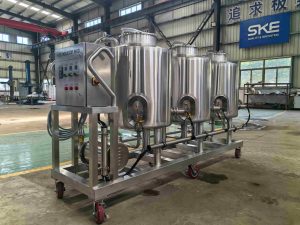
Integration of Water Treatment Solutions: WFI & Beyond
Water quality is foundational to pharmaceutical manufacturing, and our equipment is engineered to integrate seamlessly with advanced water treatment solutions—with a specific focus on WFI preparation and storage. Our systems ensure that water used in processing, cleaning, and formulation meets the highest purity standards, while minimizing waste and operational costs.
Our WFI Preparation & Storage System Integration
Our WFI systems are designed as a complete solution, integrating multiple water treatment technologies to deliver USP-compliant WFI:
- Pretreatment: Filtration and softening systems remove particulates, hardness, and organic contaminants, protecting downstream WFI components (e.g., distillation units).
- Primary Purification: Reverse osmosis (RO) and ultrafiltration (UF) systems reduce dissolved solids, bacteria, and endotoxins.
- Distillation: Multi-effect distillation or vapor compression distillation units (compliant with USP Chapter 1231) ensure final WFI purity, eliminating remaining endotoxins and contaminants.
- Storage & Distribution: Our WFI storage tanks feature closed-loop design, nitrogen blanketing, and recirculation systems to maintain WFI purity during storage and distribution. The tanks are fully compatible with our CIP systems for routine cleaning.
Synergy with CIP/SIP Systems
Our WFI systems are seamlessly integrated with our CIP/SIP systems, ensuring that cleaning and sterilization use the same high-purity water as process applications. This integration eliminates the risk of cross-contamination from low-quality cleaning water and simplifies validation by using a single, validated water source.
Additionally, our water treatment solutions include waste reduction features—such as RO permeate recycling—lowering your facility’s environmental footprint and operational costs.
Advanced Technology & Future Trends in Pharmaceutical Sanitary Equipment
We are committed to innovation, continuously integrating advanced technologies into our sanitary processing equipment to enhance performance, compliance, and operational efficiency for pharmaceutical manufacturers. Below are key advancements in our product line and emerging trends shaping the future of pharmaceutical sanitary equipment.
Our Advanced Technology Integrations
- Smart Monitoring & Automation: Our latest CIP/SIP and WFI systems feature IoT-enabled sensors that monitor key parameters (temperature, pressure, flow rate, water purity) in real time. Data is transmitted to a central control system, enabling predictive maintenance (e.g., alerting to seal wear before leaks occur) and automated adjustment of cleaning/sterilization cycles for optimal efficacy. This automation reduces human error and supports data integrity for regulatory compliance.
- Modular Design: Our systems are built with modular components, allowing for easy scale-up or reconfiguration as your production needs change (e.g., adding a second WFI storage tank or expanding CIP coverage to new processing lines). Modular design also simplifies installation and maintenance, reducing downtime.
- Biofilm-Resistant Materials: We are incorporating advanced, biofilm-resistant stainless steel alloys and coatings into our equipment (particularly WFI systems and CIP piping) to further reduce contamination risks. These materials inhibit bacterial adhesion, extending cleaning intervals and improving product safety.
Future Trends
Emerging trends in pharmaceutical sanitary equipment include:
- Continuous Manufacturing Integration: Our systems are being optimized to support continuous pharmaceutical manufacturing (CPM), with real-time cleaning and sterilization cycles that align with non-stop production workflows.
- AI-Powered Validation: Integration of artificial intelligence (AI) to automate validation of CIP/SIP cycles and WFI purity, reducing the time and resources required for regulatory compliance.
- Sustainability Enhancements: Further advancements in water and energy efficiency—such as low-energy distillation for WFI systems and biodegradable cleaning agent compatibility— to support pharmaceutical manufacturers’ sustainability goals.
Frequently Asked Questions (FAQs) About Our Pharmaceutical Sanitary Equipment
Q1: How are your CIP/SIP systems tailored for pharmaceutical vs. other industries?
Our CIP/SIP systems are specifically engineered for pharmaceutical aseptic requirements, with features such as ultra-smooth surfaces (Ra ≤ 0.4 μm), USP-compliant materials, and pre-programmed cycles that meet GMP/EMA/FDA standards. Unlike industrial-grade systems, they support validation (IQ/OQ/PQ) and are designed to handle sensitive pharmaceutical fluids (e.g., APIs, biologics) without cross-contamination.
Q2: Can your WFI preparation & storage systems be customized to our facility’s capacity needs?
Yes. We offer fully customizable WFI systems, with preparation capacities ranging from 50 L/h to 5,000 L/h and storage tank sizes from 100 L to 10,000 L. Our team assesses your production volume, peak demand, and space constraints to design a system that meets your exact needs while maintaining USP compliance.
Q3: What maintenance support do you provide for your sanitary equipment?
We offer comprehensive maintenance support, including: (1) detailed maintenance manuals tailored to each system; (2) on-site training for your team; (3) replacement parts (FDA-approved, same-day shipping for critical components); (4) routine on-site maintenance visits; and (5) remote troubleshooting via IoT sensors (for smart systems). We also provide validation support for maintenance-related changes to ensure compliance.
Q4: How do your systems ensure compliance with USP Chapter 1231 for WFI?
Our WFI systems are designed to meet all USP Chapter 1231 requirements, including bacterial endotoxin limits (≤ 0.25 EU/mL) and chemical purity standards. We use validated distillation technologies (required for WFI production), integrate in-line endotoxin and purity monitoring, and provide comprehensive validation documentation (including performance qualification reports) to demonstrate compliance. Our storage systems also feature design elements (nitrogen blanketing, recirculation) to maintain WFI purity post-production.
Q5: Can your cleaning systems handle the specific residues from our API production?
Yes. We customize our cleaning systems based on your process residues (e.g., API-specific deposits, protein films). Our team conducts a detailed analysis of your residues and recommends compatible cleaning agents, pressure settings, and cycle parameters to ensure thorough decontamination. We also validate the cleaning process to demonstrate that residues are reduced to acceptable levels (below regulatory limits).
Partner with Us for Your Pharmaceutical Sanitary Equipment Needs
At SKE&EAGLE, we understand the critical role that sanitary processing equipment plays in pharmaceutical manufacturing—where safety, compliance, and efficiency are interconnected. Our CIP/SIP systems, cleaning systems, and WFI preparation & storage systems are engineered with the pharmaceutical industry’s unique demands in mind, backed by rigorous quality control, comprehensive validation support, and responsive technical service.
Whether you’re upgrading an existing line, building a new facility, or seeking to enhance compliance and efficiency, our team of pharmaceutical sanitary equipment experts is ready to deliver tailored solutions that meet your goals.
Contact us today to:
- Schedule a consultation with our pharmaceutical process engineers
- Request a customized quote for your CIP/SIP, cleaning, or WFI system needs
- Access our library of validation documents and technical resources
Website: https://www.ske-eagle.com/