

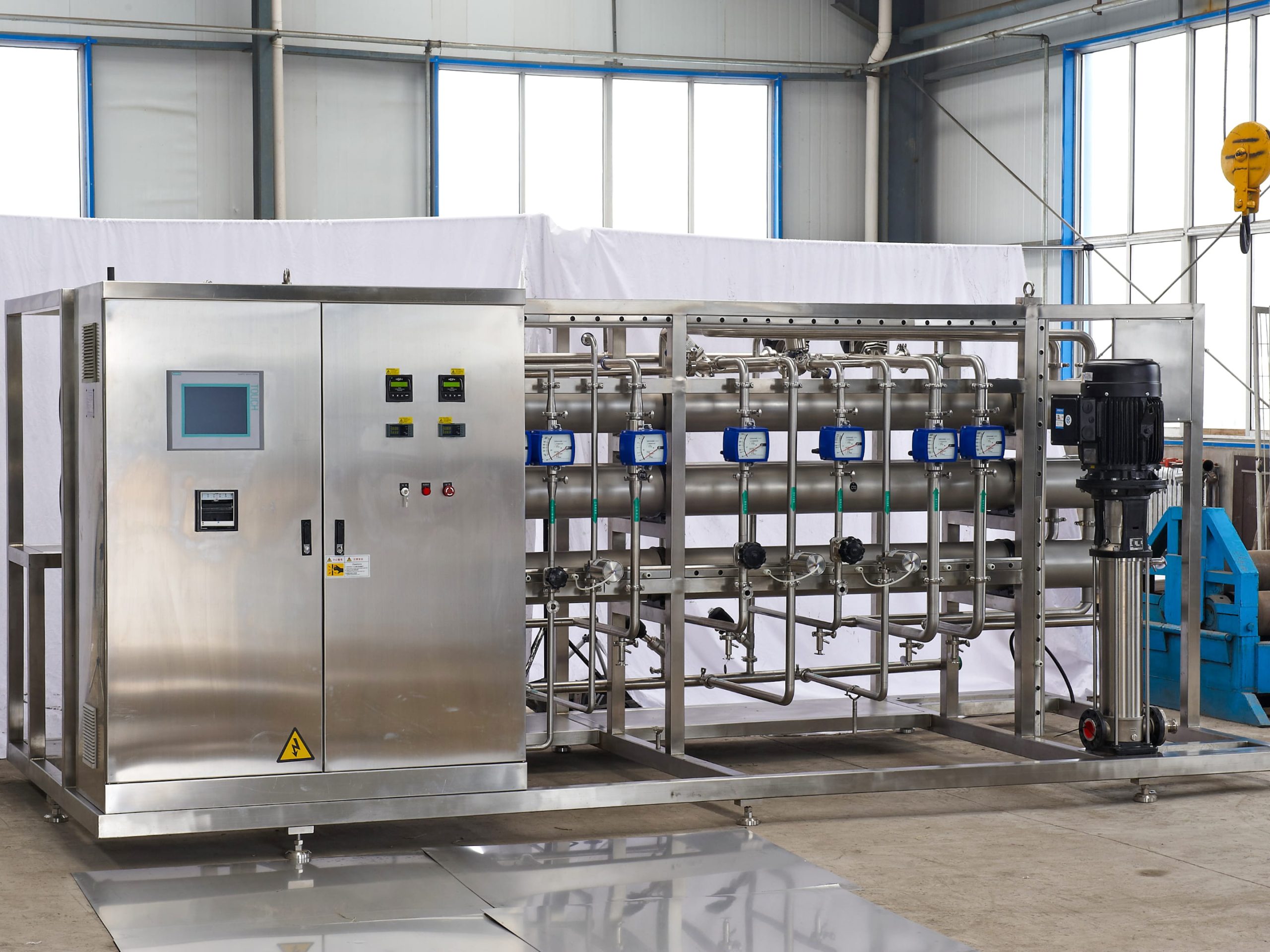
1. Overview of Pharmaceutical RO Systems
Pharmaceutical Reverse Osmosis (RO) systems are indispensable in ensuring the highest purity of water required for pharmaceutical production, laboratory applications, and quality control processes.
These systems utilize a specialized membrane technology to remove dissolved solids, microbiological contaminants, and other impurities from the feed water, achieving ultrapure water standards necessary for drug formulation, cleaning processes, and analytical standards.
The pharmaceutical industry mandates extremely stringent water quality parameters due to patient safety, product efficacy, and compliance with global regulatory frameworks such as USP (United States Pharmacopeia), EP (European Pharmacopeia), and WHO guidelines. Pharmaceutical RO systems act as a core component of purified water (PW) and water for injection (WFI) treatment trains, eliminating over 95% of contaminants via semi-permeable membranes.
Unlike conventional RO systems, pharmaceutical RO units incorporate advanced design features—such as sanitary-grade piping, FDA-compliant membranes, automated monitoring, and sanitization capability—to meet Good Manufacturing Practices (GMP).
This overview introduces the functional components and process overview integral to pharmaceutical RO, highlighting their critical role within modern pharmaceutical water treatment facilities.
The pharmaceutical RO system typically sits downstream of pre-treatment units, including multimedia filters, activated carbon beds, water softeners, and microfiltration stages. This ensures the feed water to the RO membranes meets the operational standards, extending membrane lifespan and enhancing performance.
With the capability to reject salts, bacteria, pyrogens, and organic contaminants, pharmaceutical RO membranes help produce consistent water quality metrics such as conductivity, turbidity, and endotoxin concentrations critical to pharmaceutical processes.
2. Technology and Engineering Principles of Pharmaceutical RO
Pharmaceutical RO technology employs pressure-driven membrane filtration utilizing thin-film composite membranes designed for selective permeation of water molecules while rejecting solutes. Engineered for pharma-grade purity, the membranes feature biocompatible materials resistant to fouling and chemical degradation.
The core engineering principle is reverse osmosis: applying hydraulic pressure exceeding the natural osmotic pressure, driving water from the feed side through the membrane and leaving concentrated ions and impurities behind. This physical barrier function results in water free of >98–99% of total dissolved solids (TDS), pyrogens, bacteria, and endotoxins.
Pharmaceutical RO systems utilize multi-stage membrane arrays in series or parallel to optimize capacity and recovery rates. Typically, vessels contain multiple membrane elements that are installed in sanitary-grade stainless steel housings, conforming to hygienic design requirements.
Membrane performance is continuously monitored using conductivity sensors, flow meters, differential pressure gauges, and turbidity meters to ensure water quality meets pharmacopeial specifications. SKE & Eagle’s advanced control systems integrate these data points to automate backwashing, sanitization cycles, and alert operators to deviations.
The design philosophy emphasizes modular construction allowing easy expansion or replacement of membrane modules without compromising system sterility. Additionally, to prevent biofilm formation, pharmaceutical RO systems embed sanitation protocols such as periodic hot water flushing or chemical cleaning with FDA-approved detergents.
To eliminate risks of cross-contamination, all wetted parts comply with FDA CFR Title 21, and materials used are USP Class VI certified. The membranes’ semi-permeable nature also excludes pyrogens and bacteria, critical for pharmaceutical-grade purified water systems.
Integration of engineering standards in the system architecture, such as ASME BPE for pressure vessels and hygienic piping design, ensures system robustness and compliance. SKE & Eagle leverages decades of manufacturing expertise in delivering these pharmaceutical RO systems that meet both dynamic process requirements and long-term reliability.
3. Applications and Practical Use Cases
Pharmaceutical RO systems play an essential role in providing purified water (PW) or water for injection (WFI) quality water used in multiple critical pharma applications:
- Drug Formulation: RO purified water is utilized as a solvent and diluent for manufacturing both liquid and solid dosage forms, ensuring no contaminants impact drug stability or efficacy.
- Cleaning and Sanitization: Pharmaceutical production environments require purified water for cleaning equipment to avoid contamination of batches. RO systems provide consistently pure water reducing rinse cycles and residues.
- Laboratory and Analytical Support: In quality control labs, pharmaceutical RO water ensures reagents and analytical instruments operate with minimal interference, improving accuracy.
- Intermediate Process Water: Systems use RO-treated water as feedstock for further purification steps like deionization or ultrafiltration to produce WFI or high-purity water grades.
- Medical Device Manufacturing: For sterile devices, RO water minimizes particulate and microbial levels, aligning with stringent ISO standards.
In biopharmaceutical production, pharmaceutical RO systems provide a reliable feed to downstream processes including ultrafiltration and nanofiltration units, guaranteeing integrity and minimization of endotoxins.
The pharmaceutical RO system also supports vaccine production facilities, where purity and microbial control are paramount due to injectable product routes. Combining reliable membranes with SKE & Eagle’s system design enhances process yields and quality compliance.
Many contract manufacturers and pharmaceutical API producers also integrate RO systems due to their adaptability in handling variable feed water conditions with minimal downtime, reducing operational risk.
4. Selection Criteria and System Design Considerations
Selecting the appropriate pharmaceutical RO system depends on numerous technical and operational factors aligned with facility requirements and water quality expectations. Below is a detailed consideration matrix for proper system selection:
- Feedwater Quality: Baseline analysis of source water parameters—TDS, hardness, alkalinity, microbial load, and organics—is essential to define pre-treatment stages and membrane specifications ensuring optimal performance.
- Permeate Quality Targets: The pharmaceutical RO system should be selected to reliably meet USP PW or WFI water quality metrics including conductivity <1.3 µS/cm, TOC limits, and microbial limits.
- Recovery Rate and Capacity: System size depends on water demand to maintain continuous process support and comply with production scheduling. Recovery rates typically range from 70–85%, with robust membranes to minimize fouling during high recovery operation.
- Membrane Type and Configuration: Thin film composite membranes are preferred in pharma systems due to high rejection rates and sanitary compliance. System design may include two-stage RO for enhanced recovery or redundancy.
- Sanitation Capability: Ability to integrate chemical cleaning-in-place (CIP) and automated sanitization protocols aligned with GMP.
- Material of Construction: All wetted parts should use FDA-approved materials such as 316L stainless steel piping and pharmaceutical-grade elastomers.
- Control and Monitoring: Real-time telemetry, alarms, and data logging aligned with 21 CFR Part 11 compliance for electronic records.
Consultation with manufacturers experienced in pharmaceutical systems, such as SKE & Eagle’s engineering team, can ensure customized RO system designs incorporating core manufacturing capabilities and water treatment solutions tailored for specific facility needs.
Additionally, modularity for future expansion, ease of maintenance, and footprint optimization are critical for long-term viability of pharmaceutical RO installations.
5. Regulatory Compliance and Quality Standards
Compliance with international pharmacopeia and regulatory frameworks is fundamental to pharmaceutical RO system design and operation. The systems must align with guidelines from bodies including:
- USP 1231: Water for Pharmaceutical Purposes – outlines quality requirements and system validation needs.
- EU GMP Annex 1: Manufacture of Sterile Medicinal Products emphasizing water purity and system qualification.
- FDA Guidance: particularly 21 CFR Part 11 on electronic data handling and validation standards for automated control.
- WHO Technical Report Series: specifying purified water and water for injection production processes.
Systems need qualification through Installation Qualification (IQ), Operational Qualification (OQ), and Performance Qualification (PQ) phases to verify compliance consistently. Pharmaceutical RO system validation protocols include integrity testing, microbiological challenge tests, and chemical purity verification.
The architectural design must enable hygienic cleanability and avoidance of microbiological proliferation. This includes sloping piping, no stagnant zones, and biocidal-compatible components. SKE & Eagle adheres to ASME BPE and cGMP norms to ensure the pharmaceutical RO systems are compliant and reliable.
Data integrity related to water quality measurement is key; thus advanced, calibrated sensors integrated with SCADA or PLC systems provide real-time quality assurance and trend analysis. Such exacting standards align with stringent pharma industry expectations.
6. Common Myths and Misconceptions
Despite the critical role of pharmaceutical RO systems, several misconceptions persist in industry discourse:
- Myth #1: RO water alone guarantees water for injection (WFI) quality.
Fact: Reverse osmosis alone does not meet the pyrogen limit required for WFI; additional steps like distillation or ultrafiltration are required. - Myth #2: All RO membranes are the same.
Fact: Membrane materials and configurations vary drastically. Pharmaceutical-grade membranes have specialized coatings and certifications not found in industrial RO membranes. - Myth #3: RO system maintenance is minimal.
Fact: Regular cleaning, sanitization, and monitoring are mandatory to prevent biofilm buildup and maintain consistent output quality. - Myth #4: RO systems do not need pre-treatment if source water looks clear.
Fact: Even visually clean water can contain fouling agents such as hardness ions or organics detrimental to membrane longevity.
Dispelling these myths helps pharmaceutical manufacturers optimize their water purification strategy and promote better facility performance by integrating comprehensive water treatment solutions.
7. SKE & Eagle’s Expertise in Pharmaceutical Water Treatment
With decades of engineering experience and core manufacturing capabilities, SKE & Eagle delivers pharmaceutical RO systems tailored for demanding applications. Our solutions are built on principles of system reliability, precision engineering, and adherence to international pharma standards.
Utilizing FDA CFR Title 21 compliant materials and rigorous quality control, our pharmaceutical RO units are designed to integrate seamlessly with downstream purification modules such as ultrafiltration, ion exchange, and sanitization systems. The advanced automation developed by SKE & Eagle supports proactive monitoring and easy validation procedures enhancing operational efficiency.
Our focus on hygienic design, modular system architecture, and knowledgeable support in engineering standards ensures water treatment installations that minimize downtime and provide industry-leading water purity.
For facilities interested in optimizing their water systems, SKE & Eagle’s pharmaceutical RO systems offer an engineered solution poised for reliability and quality assurance. We invite you to explore our extensive water treatment solutions catalog tailored to pharmaceutical process requirements.
8. Maintenance, Operation Practices, and System Reliability
Effective maintenance and operational strategies are required to sustain the high performance of pharmaceutical RO systems throughout their lifecycle. Given the investment in these systems and their critical role, proactive maintenance enhances water purity and mitigates costly downtime.
Core maintenance activities include regular membrane integrity testing, pressure vessel inspections, and verification of all sensors and control systems. SKE & Eagle’s systems incorporate predictive maintenance features leveraging advanced diagnostics to identify potential membrane fouling or mechanical issues early.
Operational best practices also involve rigorous sanitization schedules using hot water or compatible chemical agents ensuring microbial control. Feedwater parameters require frequent monitoring to adjust pretreatment steps and safeguard membrane health.
Experienced pharmaceutical operators often utilize the standardized SOPs provided by SKE & Eagle, including cleaning-in-place (CIP) procedures and troubleshooting guides optimizing recovery and permeate quality.
Reliability is further improved by the use of insulated and stainless steel housings, eliminating corrosion risks and preserving system longevity within GMP environments.
Adopting a comprehensive operational framework in line with SKE & Eagle engineering standards ensures pharmaceutical RO systems provide consistent high-quality water essential for regulatory compliance and process integrity.
9. FAQs on Pharmaceutical RO System
What distinguishes a pharmaceutical RO system from industrial RO systems?
Pharmaceutical RO systems use FDA-compliant membranes and sanitary materials designed to meet stringent pharmacopeial standards, integrating automated sanitization and sophisticated monitoring for water quality. Industrial RO systems typically do not meet such high purity or design for sterile environments.
Can pharmaceutical RO systems produce Water for Injection (WFI) quality?
Pharmaceutical RO systems alone cannot produce WFI quality water as RO membranes do not remove all pyrogens. However, they provide high-quality feed water to distillation or ultrafiltration units which complete the WFI purification process.
What maintenance is required to ensure pharmaceutical RO system reliability?
Regular membrane cleaning and sanitization, sensor calibration, monitoring of feedwater quality, and scheduled inspections of pressure vessels and pumps are critical. SKE & Eagle’s systems incorporate automation to support these maintenance routines for optimal performance.
How does SKE & Eagle ensure the pharmaceutical RO system meets GMP standards?
SKE & Eagle utilizes FDA CFR Title 21 compliant materials, adheres to ASME BPE design criteria, and incorporates robust automation for system validation and electronic record-keeping. These measures ensure alignment with GMP requirements.
Connect with SKE & Eagle for Pharmaceutical Water Purification Expertise
For tailored pharmaceutical RO system solutions engineered for reliability and compliance, we invite you to contact our specialists. Please fill out the contact form at the bottom of our website or reach out through our direct channels:
Email: info@ske-eagle.com
Facebook: SKE & Eagle Facebook Page
Engage with SKE & Eagle to optimize your pharmaceutical water treatment system with proven expertise and cutting-edge engineering.