


When people talk about biopharmaceutical manufacturing, the bioreactor usually gets the attention. It is the vessel where cells grow, where proteins are made, where the biology happens. But ask any experienced process engineer and they will tell you a less visible truth: the water feeding that bioreactor matters just as much as the reactor itself.
This guide looks at the pharmaceutical bioreactor from a practical angle. It explains what these systems do, how biopharmaceutical production differs from general pharmaceutical manufacturing, and why the bioprocess water system deserves careful attention from the earliest design stage.
What Is a Pharmaceutical Bioreactor?
A pharmaceutical bioreactor is a controlled environment where living cells or microorganisms produce a target substance. That substance might be an antibody, a recombinant protein, a vaccine antigen, or a gene therapy vector. The reactor maintains temperature, pH, dissolved oxygen, and mixing conditions so that the biological system can perform reliably.
The word “pharmaceutical” here is broad. It covers any bioreactor used in the making of a medicine. This includes microbial fermentation systems that produce insulin or antibiotics, and mammalian cell culture systems that make monoclonal antibodies. The common thread is control: a bioreactor is not just a tank. It is a system designed to keep biology on a defined path.
Scale varies enormously. Laboratory systems may hold less than a liter. Production bioreactors in commercial facilities can exceed 2,000 liters. The physics change with scale, which is why process development and scale-up remain active engineering challenges.

Why Biopharmaceutical Bioreactors Demand More
A biopharmaceutical bioreactor is a specific subset. It refers to reactors used in the manufacture of biological drugs: therapeutic proteins, monoclonal antibodies, vaccines, and cell therapies. These products are structurally complex and sensitive. Small changes in the production environment can alter the final molecule in ways that affect safety or efficacy.
This sensitivity shapes equipment design. Biopharmaceutical reactors often use single-use disposable bags inside a stainless-steel shell, reducing cleaning validation burden and cross-contamination risk. Sensors must be highly accurate because the process windows are narrow. Every input that touches the cells, including water, must meet a higher standard of consistency.
Consider what happens inside a fed-batch mammalian cell culture. The cells grow for days or weeks. Nutrients are added carefully. Temperature and pH are held within tight ranges. If the water used to prepare the medium carries trace contaminants or microbial byproducts, the cells may respond unpredictably. The bioreactor’s control system cannot compensate for a water quality problem it never sees.
The Role of the Bioprocess Water System
A bioprocess water system generates, stores, and distributes water of defined quality to points throughout the facility. In biopharmaceutical production, that water is not a utility in the ordinary sense. It is a raw material that contacts cells, buffers, and product-contact surfaces.
Water appears at nearly every stage. It makes up the bulk of cell culture media. It prepares chromatography buffers for purification. It feeds wash steps and cleaning cycles. It may be used in formulation and filling. A facility running multiple bioreactors consumes water continuously and in large volumes.
The quality requirements are strict. Water for Injection (WFI), the grade most relevant to biopharmaceutical processing, must meet applicable requirements for conductivity, total organic carbon, microbial quality, and bacterial endotoxins. The specific requirements depend on the applicable pharmacopoeia, regulatory framework, intended use, and approved system specifications.
The following table summarizes key water quality parameters that may be considered when evaluating a pharmaceutical water system. It describes their purpose rather than assigning universal numerical limits, because acceptance criteria and testing requirements must be confirmed against the applicable standards.
| Parameter | Why It Matters |
|---|---|
| Conductivity | Helps assess ionic impurities in the water. Applicable limits and measurement conditions depend on the relevant standard. |
| Total organic carbon (TOC) | Helps monitor organic contamination in pharmaceutical water. |
| Microbiological quality | Supports control of microbial contamination during water generation, storage, and distribution. |
| Bacterial endotoxins | Important for applications where endotoxin control is required, including relevant WFI uses. |
Note: Numerical acceptance criteria and testing requirements should be verified against the current applicable pharmacopoeia, regulatory requirements, and approved system specifications.
The design challenge goes beyond meeting numbers on a certificate. A bioprocess water system must deliver consistent quality at every use point, every day, across changing production schedules. Storage tanks need proper venting and circulation. Distribution loops must avoid stagnation. Sanitization cycles must be validated and repeatable. These are engineering problems that intersect directly with bioreactor operations.

Where Water and Bioreactor Meet
It helps to trace the connections. A bioreactor does not operate in isolation. Water flows into the process at multiple points, and each point has its own requirements.
Media preparation. Cell culture media is mostly water. The water must meet the quality requirements for the intended process, including appropriate controls for contaminants and microbial byproducts. Variability here can shift cell growth rates and product quality.
Buffer preparation. Downstream purification uses large volumes of buffer. Conductivity and pH of the water affect buffer accuracy. Trace organic carbon can interfere with chromatography resin performance over time.
Cleaning and sanitization. Clean-in-place (CIP) systems use water to circulate cleaning agents and to rinse. Residual water quality affects the final rinse and the next batch’s starting condition. For single-use bioreactors, the water connection may be simpler, but the supply water still needs to meet process contact standards where applicable.
Cooling and temperature control. While not product-contact, cooling water systems support reactor temperature control. Poor water quality in these loops can cause fouling or corrosion, leading to maintenance downtime.
Each of these connections is a potential failure point if the water system is undersized, poorly designed, or operated without adequate monitoring. The bioreactor’s performance data will show the symptoms, but the root cause may sit in the water room.

Practical Considerations for Facility Design
For teams planning a new biopharmaceutical facility or expanding an existing one, several water-related decisions deserve early attention.
Sizing should follow the production schedule, not just the reactor volume. A facility with multiple bioreactors running staggered campaigns will have different peak water demand than a single-product operation. Buffer preparation for downstream processing can create large intermittent draws. The water system must handle peaks without compromising quality.
Material selection affects long-term reliability. Stainless steel grade, surface finish, and welding quality in the distribution loop influence cleanability and corrosion resistance. Dead legs and rough surfaces create microbial harborage. These details are difficult and expensive to correct after installation.
Monitoring strategy should be risk-based. Not every use point requires the same frequency of testing. Critical points, such as media preparation, may warrant online conductivity and TOC monitoring. Less critical points can rely on periodic sampling. The goal is a monitoring plan that detects problems before they reach the bioreactor.
Validation planning starts early. A bioprocess water system requires documented evidence that it consistently produces water meeting specifications. This involves installation qualification, operational qualification, and performance qualification. Engaging with the water system supplier during design helps ensure the documentation and testing support the validation timeline.
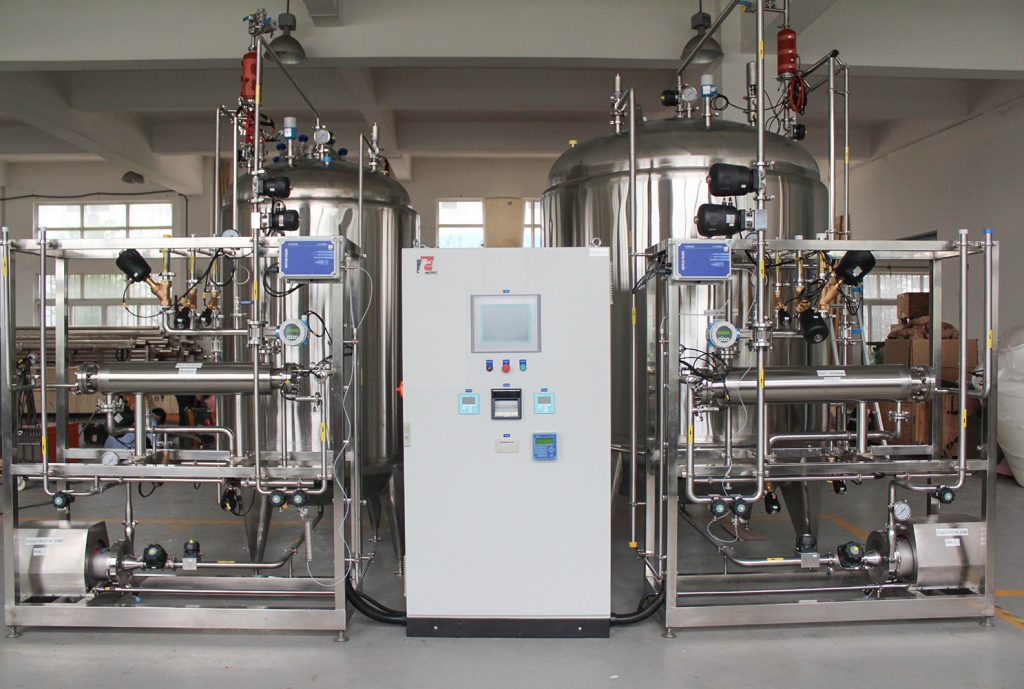
As a pharmaceutical water equipment manufacturer, SKE&EAGLE works with biopharmaceutical teams on these questions. The goal is not simply to sell a water system, but to help facilities design a supply chain for water that matches the sensitivity of their bioreactor processes.
Frequently Asked Questions
1. What is the difference between a pharmaceutical bioreactor and a biopharmaceutical bioreactor?
A pharmaceutical bioreactor is a general term for any bioreactor used in medicine production, including microbial fermentation. A biopharmaceutical bioreactor specifically refers to systems used to make biological drugs such as antibodies, vaccines, and therapeutic proteins, often using mammalian cell culture. The biopharmaceutical context usually involves stricter quality requirements and more complex process control.
2. Why does a bioreactor need a dedicated water system?
Because water contacts the cells, the product, and product-contact surfaces. Contaminants in water can affect cell growth, product quality, and cleaning effectiveness. A dedicated bioprocess water system provides water of defined and consistent quality, with monitoring and sanitization controls suited to biopharmaceutical production.
3. What quality grade of water is used in biopharmaceutical production?
Water for Injection (WFI) is used for applications that require this water grade. Some early-stage or non-product-contact steps may use Purified Water. The required grade depends on the process step, product requirements, and applicable regulatory framework.
4. Can a single-use bioreactor reduce water system requirements?
Not entirely. Single-use bioreactors reduce the need to clean the vessel itself between batches, but they still require water for media and buffer preparation upstream and downstream. The water system remains essential; the difference is in how the water is delivered and where it contacts product-contact surfaces.
5. How does SKE&EAGLE support biopharmaceutical projects?
SKE&EAGLE provides pharmaceutical water equipment and works with customers on system design, sizing, material specifications, and validation documentation. The company’s role is to help facilities build a water supply that supports their bioreactor processes reliably over the long term.
Conclusion
A pharmaceutical bioreactor is an impressive piece of engineering. But it depends on a less visible partner: the water that feeds it. For biopharmaceutical production, where product sensitivity is high and regulatory scrutiny is intense, the bioprocess water system deserves the same careful attention as the reactor itself.
Facilities that treat water as an afterthought often discover problems later, when a batch fails or a validation study stalls. Facilities that plan water alongside their bioreactor strategy build a more stable foundation for production. The two systems are connected, whether the process diagram shows it or not.
Contact SKE & Eagle for Advanced Solutions
For customized system engineering solutions or integration of high-performance water treatment technologies, please contact SKE & Eagle. Our professional team collaborates closely with industrial partners to design, implement, and maintain solutions tailored to your operational needs.
Contact Email: info@ske-eagle.com
Follow us on Facebook for the latest industry insights: SKE & Eagle Facebook
Business Inquiries: Visit our official website and submit the contact form at the bottom.