Water System in Pharma: A Comprehensive Guide to Pharma Water Treatment and Purified Water Systems
Water is the most critical raw material in the pharmaceutical industry, serving as both an ingredient in formulations and a vital cleaning agent for equipment and facilities. The water system in pharma is not just a utility—it is a cornerstone of product safety, efficacy, and regulatory compliance. Unlike ordinary tap water, water for pharma must meet stringent purity standards to eliminate contaminants that could compromise drug quality or pose health risks to patients.
The Importance of Water System in Pharma Industry
The pharmaceutical industry relies on water more than any other manufacturing sector—from API (Active Pharmaceutical Ingredient) production to final formulation, packaging, and equipment sterilization. Every stage of drug manufacturing demands water of specific purity levels, as even trace contaminants (such as heavy metals, microorganisms, or organic compounds) can alter a drug’s chemical composition, reduce its effectiveness, or cause adverse reactions in patients.
A well-designed water system in pharma ensures that water meets the required standards consistently, minimizing the risk of product recalls, regulatory non-compliance, and reputational damage. For pharmaceutical companies, investing in a high-quality purified water system in pharma is not just a regulatory obligation—it is a commitment to patient safety and product excellence. SKE&EAGLE’s systems are engineered to deliver this consistency, with robust design and advanced technology that adapts to the unique needs of each pharmaceutical facility.
water system in pharma
Key Types of Water for Pharma and Their Purity Standards
Water for pharma is classified based on its purity level, each tailored to specific manufacturing applications. The most common types include Potable Water, Purified Water (PW), Water for Injection (WFI)and Pure Steam. Each type has strict quality standards defined by global pharmacopeias, including the United States Pharmacopeia (USP), European Pharmacopeia (EP), and Chinese Pharmacopeia (ChP 2025).
Understanding these classifications is critical for designing an effective pharma water treatment system. Below is a detailed table outlining the key types of water for pharma, their purity requirements, and typical applications—standards that SKE&EAGLE’s purified water systems are engineered to meet or exceed.
Water Type
Purity Standards (Key Indicators)
Typical Applications
Relevant Pharmacopeia Requirements
Potable Water (Drinking Water)
Conforms to GB 5749 (China), EPA Standards (US); Free of visible contaminants; Low microbial count (<100 CFU/mL)
Raw water for purified water production; Initial equipment cleaning; Non-critical facility cleaning
Sterile drug formulation (injections, eye drops); Final equipment sterilization; Aseptic manufacturing processes
USP <1231>, EP 2.8.13, ChP 2025
Pure Steam
Condensate meets WFI standards; No non-condensable gases; Controlled superheat and dryness
Sterilization of equipment, pipelines, and packaging materials; Aseptic area humidification
USP <1231>, EP 2.8.14, ChP 2025
Pharma Water Treatment: Key Processes and Technologies
Pharma water treatment is a multi-stage process designed to remove contaminants from raw water (typically potable water) and produce water that meets pharmaceutical purity standards. The complexity of the treatment process depends on the desired water type—purified water requires fewer stages than WFI, for example. Below are the core processes involved in pharma water treatment, all of which are integrated into SKE&EAGLE’s purified water systems.
Pretreatment: The First Line of Defense
Pretreatment is the initial stage of pharma water treatment, designed to remove large particles, organic matter, chlorine, and hardness ions from raw water. This protects downstream equipment (such as reverse osmosis membranes and EDI modules) from fouling, scaling, and damage, ensuring long-term system efficiency. Key pretreatment processes include:
Multi-Media Filtration: Removes suspended solids (silt, debris, colloids) using layers of quartz sand, anthracite, and garnet. This prevents clogging of subsequent filters and membranes. SKE&EAGLE’s pretreatment systems use high-efficiency filters with automatic backwashing to minimize maintenance.
Activated Carbon Filtration: Adsorbs chlorine, organic compounds, and odors from raw water. Chlorine is particularly harmful to reverse osmosis membranes, so this step is critical for protecting downstream equipment. Our systems use high-quality granular activated carbon (GAC) for maximum adsorption capacity.
Softening: Removes calcium and magnesium ions (hardness) to prevent scaling on membranes and heat exchangers. This is typically done using ion exchange resins or reverse osmosis. SKE&EAGLE offers both options, tailored to the raw water quality of each facility.
Precision Filtration: A final pretreatment step that removes particles larger than 5 µm, ensuring that only clean water enters the purification stage. This protects reverse osmosis membranes from physical damage.
Purification: Core Processes for High-Purity Water
After pretreatment, raw water undergoes purification to remove dissolved solids, microorganisms, and organic contaminants. The two most common technologies used in purified water systems in pharma are Reverse Osmosis (RO) and Electrodeionization (EDI). SKE&EAGLE combines these technologies to deliver consistent, high-purity water.
• Reverse Osmosis (RO): RO is a membrane-based process that uses pressure to force water through a semi-permeable membrane, which rejects dissolved salts, organic compounds, and microorganisms. RO removes up to 99% of contaminants, making it the foundation of most purified water systems. SKE&EAGLE uses ultra-low-pressure RO membranes for energy efficiency and high performance.
• Electrodeionization (EDI): EDI is an advanced technology that combines ion exchange and electrolysis to remove residual ions from RO-treated water. Unlike traditional ion exchange, EDI does not require chemical regeneration (e.g., with acid or base), making it more environmentally friendly and cost-effective. SKE&EAGLE’s EDI modules deliver water with conductivity as low as 0.06 µS/cm, meeting the strictest PW and WFI standards.
Post-Treatment: Ensuring Sterility and Stability
For Water for Injection (WFI) and sterile applications, post-treatment is required to ensure sterility and remove pyrogens (endotoxins). Key post-treatment processes include:
Distillation: The gold standard for WFI production, distillation uses heat to vaporize water, then condenses the vapor to produce sterile, pyrogen-free water. SKE&EAGLE offers multi-effect distillers and vapor compression distillers, which are energy-efficient and meet USP/EP/ChP requirements.
UV Sterilization: Uses ultraviolet light to inactivate microorganisms (bacteria, viruses, fungi) in purified water. This is often used as a secondary sterilization step in PW systems. SKE&EAGLE’s UV systems have high-output lamps and automatic cleaning to ensure consistent performance.
Ozone Sterilization: A powerful oxidizing agent that destroys microorganisms and organic contaminants. Ozone is effective for sanitizing storage tanks and distribution pipelines, reducing the risk of microbial growth. SKE&EAGLE integrates ozone systems with automatic monitoring to ensure safe and effective sterilization.
Purified Water System in Pharma: Components and Design Considerations
A purified water system in pharma is a complex integration of pretreatment, purification, post-treatment, storage, and distribution components. Each component plays a critical role in ensuring water purity and system reliability. SKE&EAGLE designs systems with a focus on compliance, ease of maintenance, and scalability, tailored to the unique needs of each pharmaceutical facility.
Key Components of a Purified Water System
Pretreatment Modules: As discussed earlier, these include multi-media filters, activated carbon filters, softeners, and precision filters. SKE&EAGLE’s pretreatment components are made from corrosion-resistant materials (e.g., 316L stainless steel) to prevent contamination.
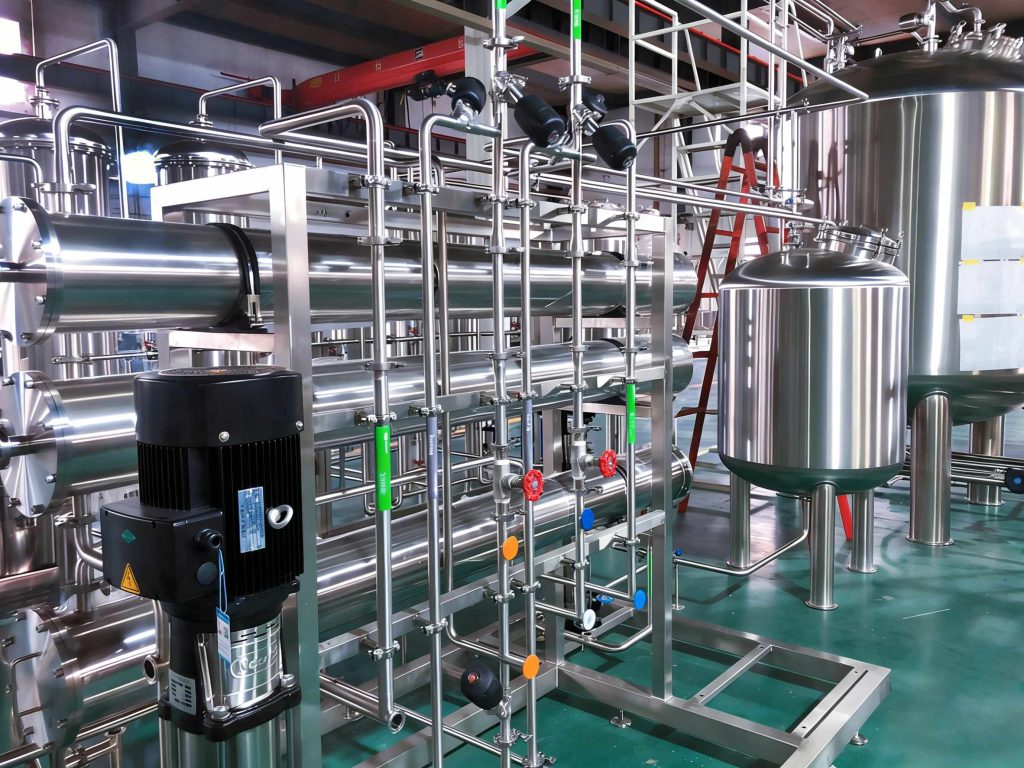
RO/EDI Systems: The core of the purification process. SKE&EAGLE’s RO systems feature high-performance membranes with automatic flushing and cleaning cycles, while our EDI modules are designed for continuous operation with minimal maintenance.
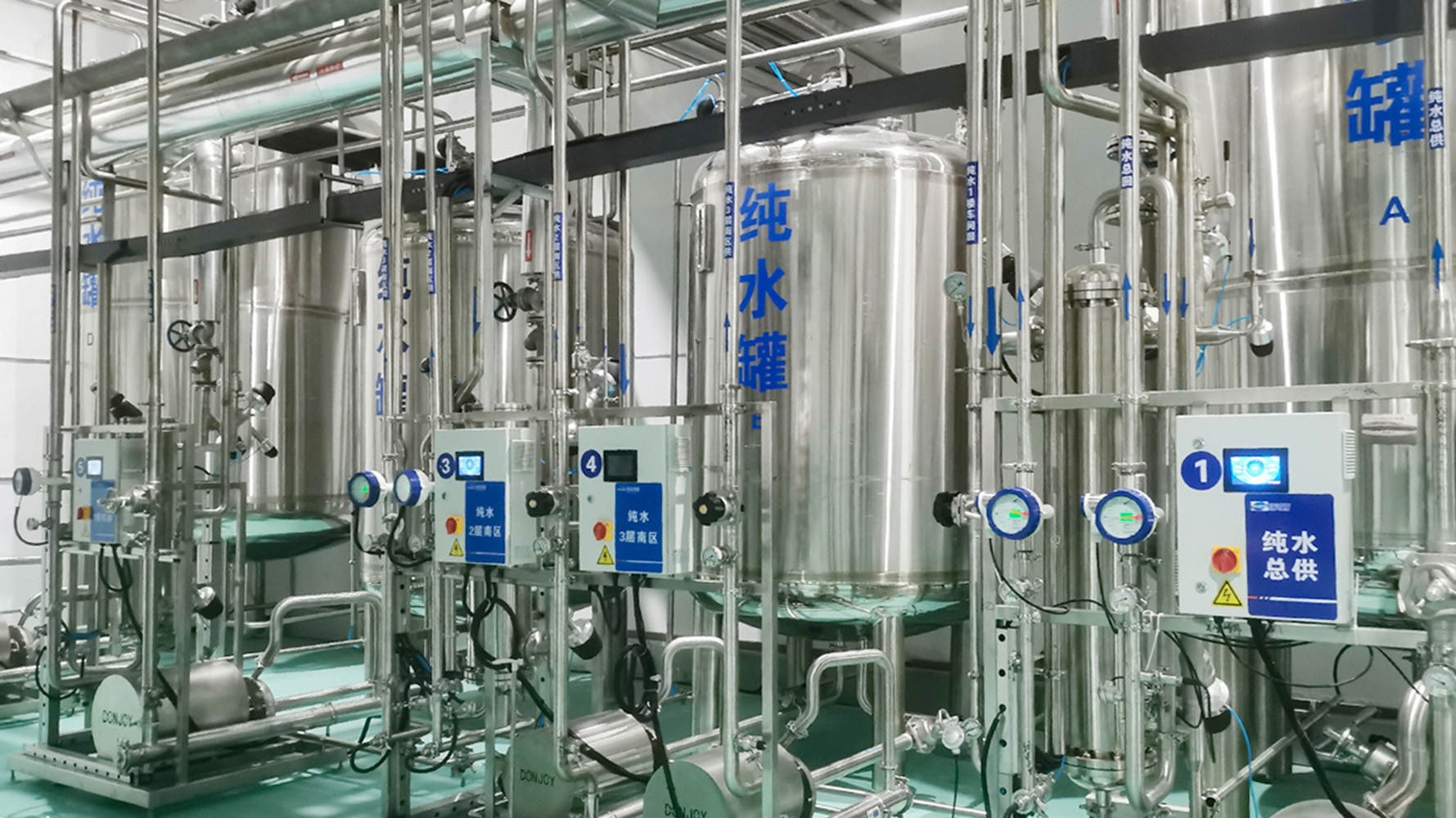
Storage Tanks: Used to store purified water and WFI, preventing pressure fluctuations and ensuring a steady supply. Tanks are made from 316L stainless steel with polished interiors to minimize microbial growth. SKE&EAGLE’s tanks include 0.22 µm hydrophobic vent filters to prevent airborne contamination and Spray device for effective sanitization.
Distribution System: A closed-loop pipeline system that delivers water to use points (e.g., formulation tanks, cleaning stations). The distribution system is designed to maintain turbulent flow (velocity ≥1.5 m/s) to prevent microbial growth. SKE&EAGLE uses seamless 316L stainless steel pipes with orbital welding to eliminate dead legs and ensure hygiene.
Monitoring and Control Systems: Real-time monitoring of key parameters (conductivity, TOC, temperature, pressure) to ensure water quality. SKE&EAGLE’s systems include PLC-based control panels with touchscreen interfaces, allowing operators to monitor and adjust system performance remotely. Alarms are triggered if parameters fall outside acceptable ranges, ensuring immediate action.
Regulatory Compliance for Water System in Pharma
Regulatory compliance is non-negotiable for water systems in the pharma industry. Pharmaceutical companies must adhere to strict guidelines set by global regulatory bodies, including the FDA (U.S. Food and Drug Administration), EMA (European Medicines Agency), and NMPA (National Medical Products Administration of China). These guidelines ensure that water for pharma is safe, pure, and consistent.
Key regulatory requirements include:
Pharmacopeia Standards: USP, EP, and ChP define the purity requirements for different types of water for pharma. SKE&EAGLE’s systems are engineered to meet these standards, with regular testing and validation to ensure compliance.
GMP (Good Manufacturing Practices): GMP requires that water systems are designed, installed, operated, and maintained in a way that ensures water purity. This includes regular cleaning, sanitization, and monitoring, as well as documentation of all processes. SKE&EAGLE provides comprehensive GMP documentation, including SOPs (Standard Operating Procedures) and validation reports.
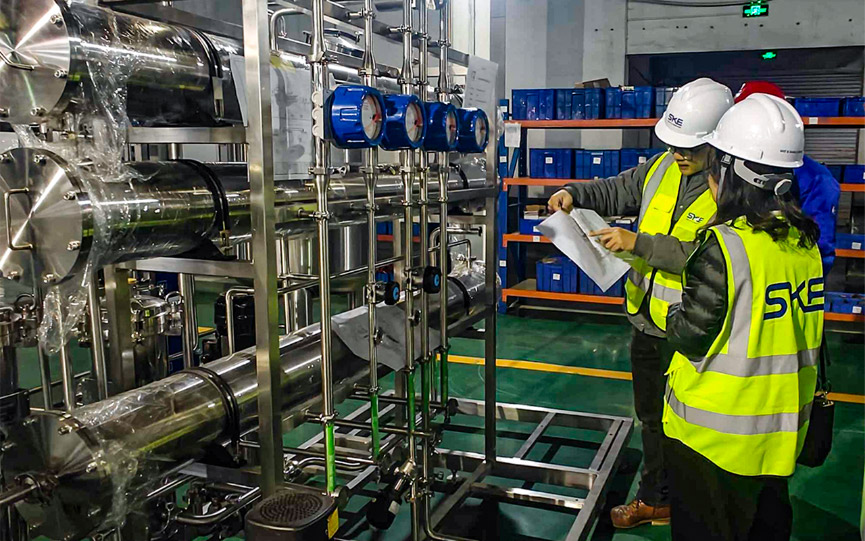
Validation: Water systems must undergo validation to demonstrate that they consistently produce water of the required purity. This includes DQ (Design Qualification), IQ (Installation Qualification), OQ (Operational Qualification), and PQ (Performance Qualification). SKE&EAGLE’s team of experts provides full validation support, ensuring that systems meet regulatory requirements.
FAQ: Water System in Pharma, Pharma Water Treatment, and Purified Water Systems
Q1: What is the difference between Purified Water (PW) and Water for Injection (WFI) in pharma?
A1: The key difference lies in their purity standards and applications. Purified Water (PW) has a lower microbial limit (≤100 CFU/mL) and does not require sterility or pyrogen (endotoxin) control. It is used for non-sterile drug formulation, equipment cleaning, and as raw water for WFI. Water for Injection (WFI) is sterile (0 CFU/mL), has an endotoxin limit of ≤0.25 EU/mL, and is used for sterile drug formulation (e.g., injections) and final equipment sterilization. SKE&EAGLE designs systems for both PW and WFI, with tailored processes to meet each standard.
Q2: What are the core technologies used in pharma water treatment?
A2: The core technologies include Reverse Osmosis (RO), Electrodeionization (EDI), distillation, and UV/ozone sterilization. RO removes dissolved solids and microorganisms, EDI polishes RO-treated water to high purity, distillation ensures sterility and pyrogen removal for WFI, and UV/ozone sterilization prevents microbial growth. SKE&EAGLE combines these technologies to create efficient, reliable treatment systems that meet global standards.
Q3: How often should a purified water system in pharma be maintained?
A3: Maintenance frequency depends on the system components and raw water quality. Typically, pretreatment filters (e.g., activated carbon, precision filters) need replacement every 3–6 months, RO membranes every 2–5 years, and EDI modules every 5–7 years. Regular sanitization (weekly or monthly) is required to prevent microbial growth. SKE&EAGLE provides a customized maintenance plan for each system, including predictive alerts and on-site support to minimize downtime.
Q4: Can SKE&EAGLE customize a purified water system for my pharmaceutical facility?
A5: Yes. SKE&EAGLE specializes in customized purified water systems in pharma, tailored to the specific needs of each facility. We conduct a detailed analysis of your raw water quality, production capacity, and regulatory requirements to design a system that meets your unique needs. Our modular design allows for easy expansion, ensuring the system grows with your facility. We also provide installation, validation, and ongoing support to ensure long-term success.
Q5: How does SKE&EAGLE ensure the reliability of its purified water systems?
A8: SKE&EAGLE uses high-quality components from trusted suppliers, rigorous testing during manufacturing, and comprehensive validation. Our systems include real-time monitoring of key parameters (conductivity, TOC, microbial count) with alarms for non-compliant conditions. We also provide ongoing maintenance and support, including training for your team to ensure proper operation. Our decades of experience in the pharmaceutical industry ensure that our systems are reliable and compliant.
Contact SKE & Eagle for Advanced Solutions
For customized system engineering solutions or integration of high-performance water treatment technologies, please contact SKE & Eagle. Our professional team collaborates closely with industrial partners to design, implement, and maintain solutions tailored to your operational needs.