


In the field of water purification and desalination, the multiple effect still (MES) stands out as a core piece of equipment, renowned for its high efficiency, energy-saving performance, and ability to produce high-purity water. This article will comprehensively elaborate on the multiple effect still, including its connection with WFI equipment and multiple effect desalination, detailed multi effect distillation working principle, step-by-step multi effect distillation process, and practical application scenarios.
What is a Multiple Effect Still (MES)?
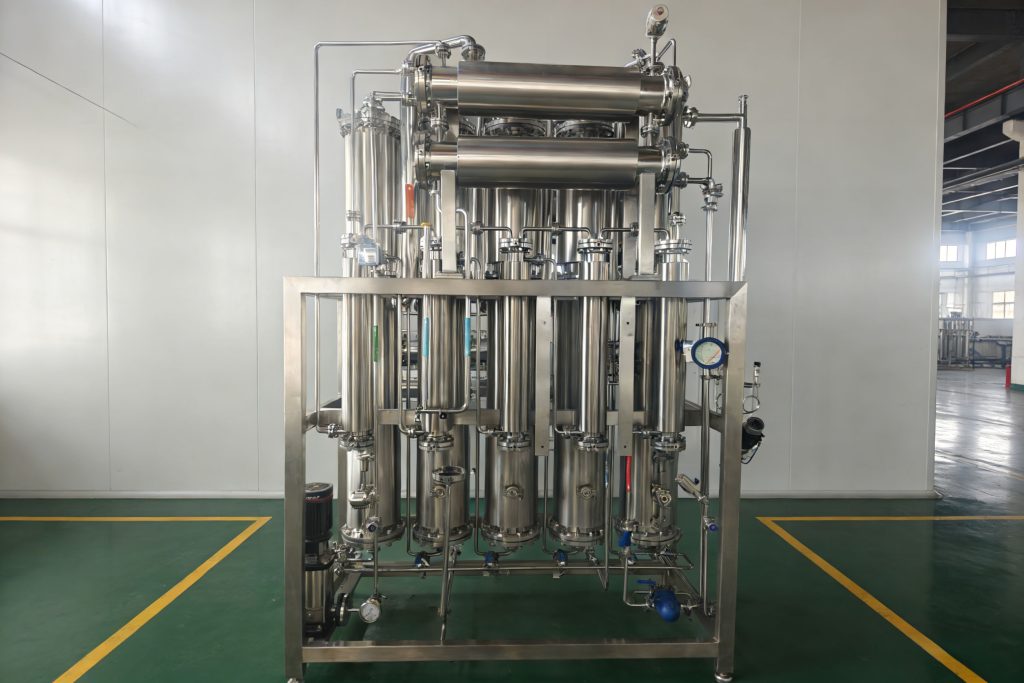
A multiple effect still is a thermal distillation equipment that uses the principle of multi-stage heat recycling to evaporate and condense water, thereby separating impurities and obtaining high-purity water. Unlike single-effect distillation equipment, which only uses heat once, the multiple effect still divides the distillation process into multiple consecutive “effects” (stages), allowing the secondary steam generated in each effect to be reused as a heat source for the next effect.
This heat recycling design greatly reduces the energy consumption of the equipment, making it an ideal choice for large-scale high-purity water production and desalination projects. SKE&EAGLE’s multiple effect still adopts advanced structural design and high-quality corrosion-resistant materials, ensuring stable operation, long service life, and compliance with international standards such as GMP and FDA.
Multiple Effect Still and WFI Equipment
WFI equipment (Water for Injection equipment) is a special type of purified water equipment used to produce water that meets the standards of injection use, which requires extremely high water purity—no impurities, bacteria, pyrogens, or other harmful substances are allowed. The multiple effect still is the core distillation unit of WFI equipment, responsible for the final purification of water.
In the WFI production process, raw water undergoes pre-treatment (such as filtration, reverse osmosis) and then enters the multiple effect still for distillation. Through multi-stage evaporation and condensation, the purity of the water is further improved to meet the requirements of injection use.
Multiple Effect Still and Multiple Effect Desalination
Multiple effect desalination is a thermal desalination technology that uses the multiple effect distillation principle to remove salt and other impurities from seawater or brackish water, producing fresh water. The multiple effect still is the core equipment of the multiple effect desalination system, and its performance directly determines the desalination efficiency, energy consumption, and fresh water quality.
Compared with other desalination technologies (such as reverse osmosis), multiple effect desalination based on multiple effect still has the advantages of strong adaptability to raw water, stable desalination effect, and no membrane fouling problem. It is widely used in coastal areas, islands, and other regions with scarce fresh water resources.
Multiple Effect Still and Multi Effect Distillation Working Principle
The operation of multiple effect still is based on the multi effect distillation working principle, which is the core of its energy-saving and high-efficiency performance. The core idea of this principle is to reuse the latent heat of vaporization of water: the primary steam (from boilers or other heat sources) heats the raw water in the first effect, making it evaporate to generate secondary steam; this secondary steam is then used as a heat source to heat the raw water in the second effect, and so on.
Each effect is designed with a lower pressure and boiling point than the previous one, so that the secondary steam generated by the previous effect can still heat the raw water in the next effect to boiling. This cycle of heat recycling not only reduces the demand for primary steam but also improves the overall energy utilization rate.
Multiple Effect Still and Multi Effect Distillation Process
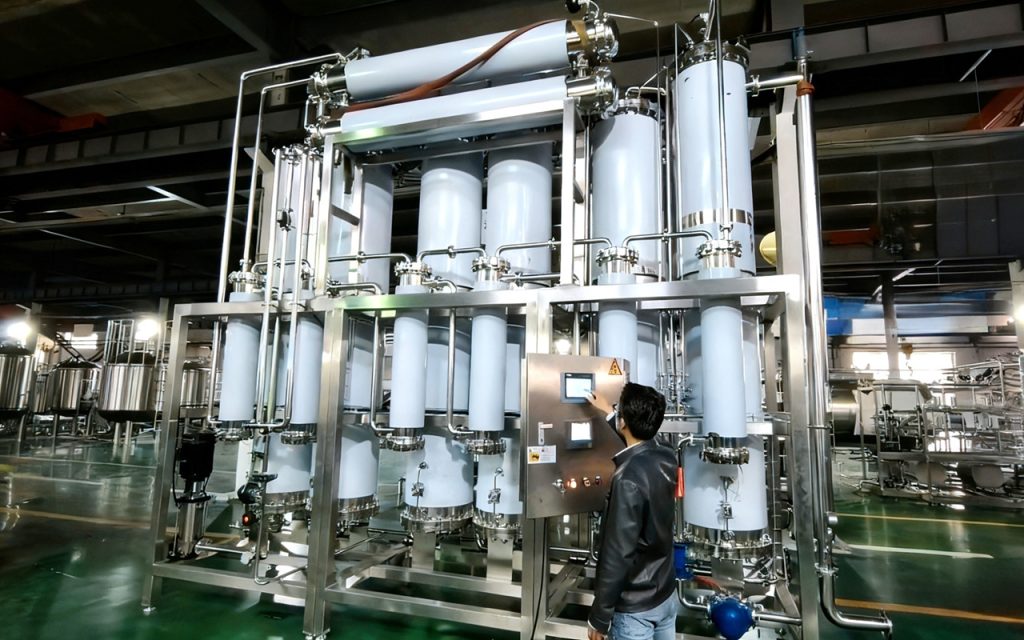
The multi effect distillation process is the specific operation flow of the multiple effect still, which is a systematic process including pre-treatment, heating, evaporation, condensation, and water collection. Each link is closely connected, and the rationality of the process directly affects the stability of equipment operation and the quality of produced water.
Multi Effect Distillation Process: Step-by-Step Analysis
The multi effect distillation process is a standardized operation flow that takes the multiple effect still as the core, including raw water pre-treatment, feeding, heating evaporation, multi-stage condensation, fresh water collection, and brine discharge. Each step has strict operating requirements to ensure the stability of the process and the quality of the produced water.
Step 1: Raw Water Pre-Treatment
Raw water (seawater, brackish water, or tap water) cannot be directly fed into the multiple effect still, because it contains a large amount of impurities (such as suspended solids, colloids, organic matter, and heavy metals), which will cause scaling, corrosion, and fouling of the equipment, affecting the service life and distillation effect.
Therefore, the first step of the multi effect distillation process is raw water pre-treatment. The specific steps include: filtration (removing suspended solids and colloids), softening (removing calcium and magnesium ions to prevent scaling), disinfection (killing bacteria and microorganisms), and reverse osmosis (removing most of the salt and organic matter). SKE&EAGLE provides a complete pre-treatment system, which can be customized according to the quality of raw water to ensure that the pre-treated water meets the feeding requirements of the multiple effect still.
Step 2: Raw Water Feeding and Preheating
The pre-treated raw water is pumped into the heat exchanger of the multiple effect distillation system through a feed pump. In the heat exchanger, the raw water is preheated by the secondary steam and condensed water generated in each effect, which not only improves the temperature of the raw water (reducing the heat required for boiling) but also recycles the waste heat of the system, further reducing energy consumption.
The preheated raw water (temperature 70-80℃) is evenly distributed into the evaporator of the first effect through the distribution device. The distribution device of SKE&EAGLE’s multiple effect still adopts a spray-type design, which makes the raw water evenly cover the surface of the tube bundle, improving the heat transfer efficiency and avoiding local overheating and scaling.
Step 3: Multi-Stage Heating and Evaporation
After the preheated raw water enters the first effect evaporator, the primary steam (from the steam generator) passes through the tube bundle of the evaporator, transferring heat to the raw water. The raw water absorbs heat and boils, generating secondary steam, while the salt and other impurities in the raw water are concentrated (forming brine) and retained in the evaporator.
The secondary steam generated by the first effect enters the evaporator of the second effect through the steam pipeline. Since the second effect is under lower pressure (controlled by the vacuum system), the boiling point of the raw water in the second effect is lower, so the secondary steam can heat the raw water in the second effect to boiling, generating new secondary steam. The secondary steam of the first effect condenses into condensed water after releasing heat, which is collected into the condensate collection system.
This heating and evaporation process is repeated in each subsequent effect. The number of effects (usually 3-8 effects) can be adjusted according to the production demand and energy consumption requirements. The more effects, the higher the energy utilization rate, but the higher the equipment cost. SKE&EAGLE will recommend the appropriate number of effects according to the user’s actual needs, balancing energy saving and cost.
Step 4: Condensation and Fresh Water Collection
The secondary steam generated by the last effect enters the condenser (heat exchanger), where it is cooled by the cooling water and condensed into fresh water. The fresh water generated in the condenser is collected into the condensate collection system together with the condensed water generated in each effect.
The condensate collection system of SKE&EAGLE’s multiple effect still is equipped with online water quality detection equipment (such as conductivity meter, TOC detector), which can real-time monitor the purity of the fresh water. If the water quality does not meet the standard, it will be automatically returned to the pre-treatment system for reprocessing; if it meets the standard, it will be pumped into the fresh water storage tank for subsequent use (such as injection, drinking, or industrial production).
Step 5: Brine Discharge and Treatment
During the multi-stage evaporation process, the salt and other impurities in the raw water are continuously concentrated in each effect evaporator, forming brine with high salt concentration. If the brine is not discharged in time, it will cause serious scaling and corrosion of the equipment, affecting the normal operation of the system.
Therefore, the last step of the multi effect distillation process is brine discharge. The brine in each effect evaporator is discharged regularly through the brine discharge valve, and then treated by the brine treatment system (such as evaporation concentration, crystallization) to reduce environmental pollution. SKE&EAGLE’s multiple effect still is equipped with an automatic brine discharge system, which can adjust the discharge frequency and amount according to the concentration of the brine, ensuring the stable operation of the equipment.
Application Scenarios of Multiple Effect Still
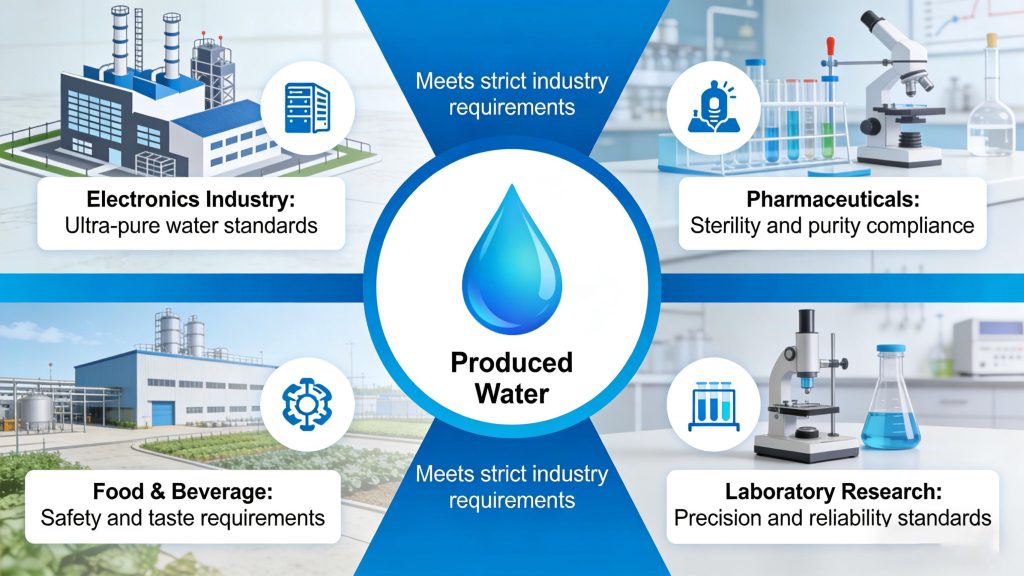
Pharmaceutical Industry: WFI Equipment
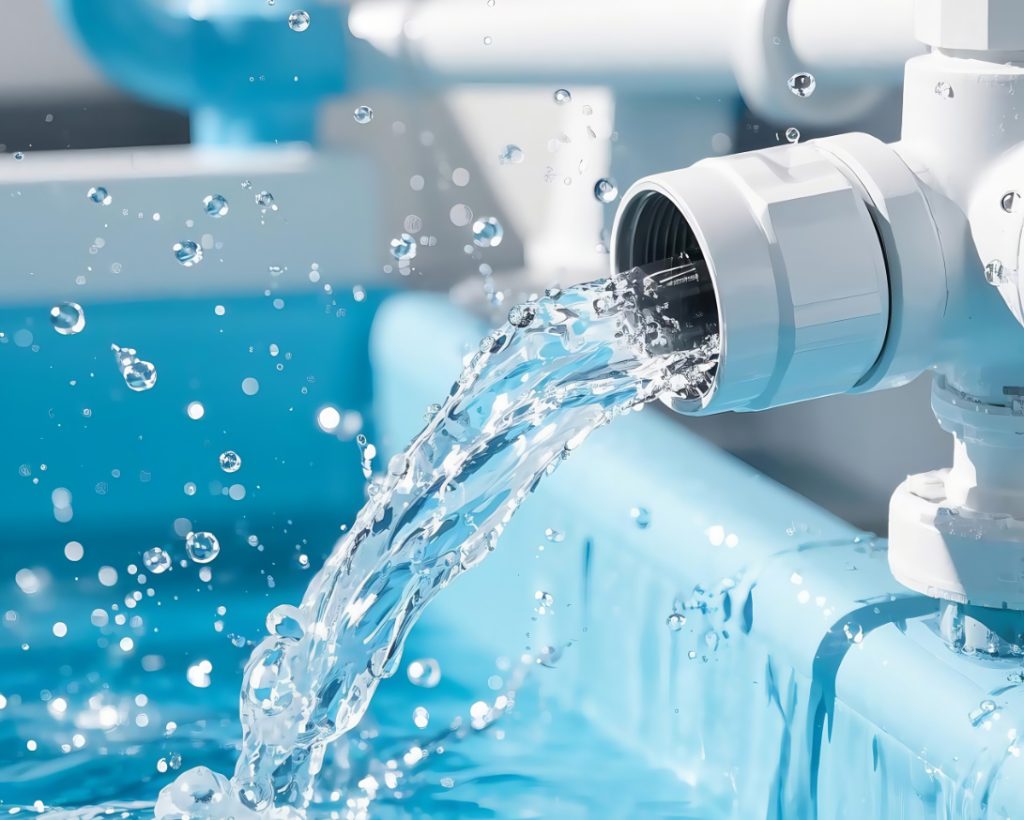
The pharmaceutical industry has extremely high requirements for water quality, especially water for injection (WFI), which must be free of impurities, bacteria, pyrogens, and other harmful substances. The multiple effect still is the core component of WFI equipment, which can realize the deep purification of water and meet the standards of the Chinese Pharmacopoeia, USP, and EP.
SKE&EAGLE’s WFI equipment, which integrates multiple effect still, is widely used in pharmaceutical factories, biopharmaceutical companies, and other institutions. The equipment adopts GMP-compliant design, with full closed-loop operation, avoiding secondary pollution. It can produce high-purity WFI stably, providing a reliable guarantee for the production of injections, biological products, and other pharmaceuticals.
Desalination Field: Multiple Effect Desalination
In coastal areas, islands, and other regions with scarce fresh water resources, multiple effect desalination based on multiple effect still is an important way to solve the fresh water problem. The multiple effect still can effectively remove salt and other impurities from seawater or brackish water, producing fresh water that meets the requirements of daily life and industrial production.
Food and Beverage Industry
The food and beverage industry requires high-purity water for production (such as beverage preparation, food processing, and cleaning). The multiple effect still can produce high-purity water without chemical additives, ensuring the safety and quality of food and beverage products.
SKE&EAGLE’s multiple effect still for the food and beverage industry adopts food-grade 316L stainless steel material, complying with food safety standards. The equipment has the advantages of stable operation, easy cleaning, and low energy consumption, which is suitable for large-scale food and beverage production enterprises.
Electronic Industry
The electronic industry requires ultra-pure water for the production of electronic components (such as semiconductors, integrated circuits), which has extremely high requirements for water purity (resistivity ≥ 18.2 MΩ·cm, TOC < 10 ppb). The multiple effect still, combined with other purification technologies (such as EDI), can produce ultra-pure water that meets the requirements of the electronic industry.
Comparison of Multiple Effect Still with Other Distillation Equipment
In the field of water purification and distillation, there are many types of distillation equipment, such as single-effect distillation still, vacuum distillation still, and mechanical vapor compression (MVC) distillation equipment. To better understand the advantages of multiple effect still, the following table compares the multiple effect still with other common distillation equipment, including energy consumption, water purity, production capacity, and application scenarios:
| Distillation Equipment Type | Energy Consumption | Water Purity | Production Capacity | Application Scenarios |
|---|---|---|---|---|
| Multiple Effect Still (MES) | Low (heat recycling, energy utilization rate 60-80%) | High (conductivity ≤ 0.1 μS/cm, no pyrogens) | Large (1-100 m³/h, scalable) | WFI equipment, multiple effect desalination, food and beverage, electronic industry |
| Single-Effect Distillation Still | High (no heat recycling, energy utilization rate 20-30%) | Medium (conductivity ≤ 1 μS/cm) | Small (0.1-1 m³/h) | Small-scale laboratory, small batch purified water production |
| Vacuum Distillation Still | Medium (vacuum operation, energy consumption higher than MES) | High (similar to MES) | Medium (0.5-10 m³/h) | Small-scale WFI production, laboratory research |
| MVC Distillation Equipment | Medium (mechanical compression, energy consumption higher than MES) | High (similar to MES) | Medium (1-20 m³/h) | Small-scale desalination, industrial purified water production |
FAQ: Common Questions About Multiple Effect Still
In the process of using and understanding the multiple effect still, users often have various questions. The following is a collection of common questions and professional answers, covering the multi effect distillation working principle, multi effect distillation process, WFI equipment, multiple effect desalination, and other aspects, to help users solve doubts quickly.
Q1: What is the difference between multiple effect still and single-effect distillation still?
A1: The core difference lies in the heat utilization method. The single-effect distillation still only uses the primary steam once, and the secondary steam generated by evaporation is directly discharged, resulting in low energy utilization rate and high energy consumption. The multiple effect still divides the distillation process into multiple effects, and the secondary steam generated in each effect is reused as the heat source of the next effect, which greatly improves the energy utilization rate and reduces energy consumption. In addition, the multiple effect still has higher production capacity and water purity, suitable for large-scale production, while the single-effect distillation still is only suitable for small-scale production.
Q2: How to ensure the water purity of the multiple effect still in WFI equipment?
A2: To ensure the water purity of the multiple effect still in WFI equipment, SKE&EAGLE takes three measures: first, strict raw water pre-treatment, removing all impurities (suspended solids, colloids, salt, organic matter, bacteria) through filtration, softening, reverse osmosis, and other processes; second, adopting high-quality materials (316L stainless steel) for the equipment, avoiding material corrosion and impurity precipitation; third, optimizing the multi effect distillation process, through multi-stage evaporation and condensation, further removing trace impurities and pyrogens, and equipping online water quality detection equipment to real-time monitor the water quality, ensuring that the produced water meets the WFI standard.
Q3: What factors affect the energy consumption of the multiple effect still?
A3: The main factors affecting the energy consumption of the multiple effect still include: the number of effects (the more effects, the higher the energy utilization rate, the lower the energy consumption); the pressure and temperature of each effect (reasonable pressure and temperature setting can improve heat transfer efficiency and reduce energy loss); the heat transfer efficiency of the evaporator (the higher the heat transfer efficiency, the less heat required); and the pre-treatment effect of raw water (good pre-treatment can avoid scaling and fouling, ensuring the stable operation of the equipment and reducing energy consumption caused by equipment failure).
Q4: How to maintain the multiple effect still to extend its service life?
A5: The maintenance of the multiple effect still mainly includes the following aspects: first, regular cleaning of the evaporator tube bundle to remove scaling and fouling, ensuring heat transfer efficiency; second, regular inspection of the sealing performance of the equipment to avoid steam leakage and energy loss; third, regular replacement of vulnerable parts (such as gaskets, valves) to ensure the stable operation of the equipment; fourth, regular calibration of online water quality detection equipment to ensure the accuracy of water quality monitoring; fifth, strictly following the multi effect distillation process for operation, avoiding improper operation leading to equipment damage. SKE&EAGLE provides professional after-sales maintenance services to help users maintain equipment and extend its service life.
Contact SKE & Eagle for Advanced Solutions
For customized system engineering solutions or integration of high-performance water treatment technologies, please contact SKE & Eagle. Our professional team collaborates closely with industrial partners to design, implement, and maintain solutions tailored to your operational needs.
Official Website: https://www.ske-eagle.com/
Contact Email: info@ske-eagle.com
Follow us on Facebook for the latest industry insights: SKE & Eagle Facebook
Business Inquiries: Visit our official website and submit the contact form at the bottom.