

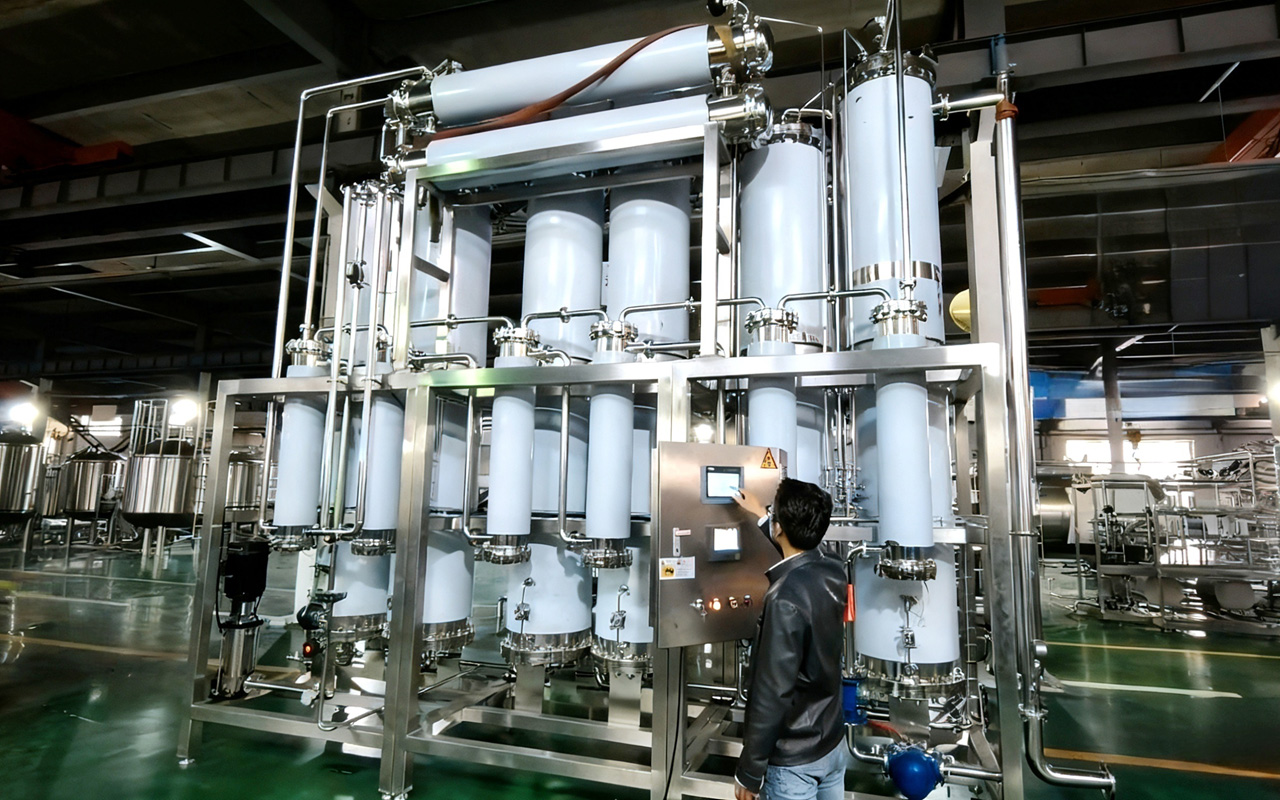
In the pharmaceutical and biotechnology industries, the quality of water is not merely a matter of compliance; it is the foundation of safety and efficacy. For manufacturers of injectable drugs, medical devices, and high-purity bioproducts, the demand for Water for Injection (WFI) is non-negotiable. Among the various technologies available to achieve this stringent standard, the Multiple Effect Distiller (MED) stands as the gold standard.
At SKE&EAGLE, we specialize in the engineering and manufacturing of high-performance pure water systems. With decades of experience in the field, we understand that the choice between distillation technologies can define the operational efficiency and product safety of a facility. This article aims to provide a technical yet accessible exploration of the multiple effect distillation process, explaining why it remains the preferred method for generating pharmacopoeia-grade water.
Understanding the mechanics of a multiple effect distiller is crucial for any quality assurance or plant operations manager. Unlike single-effect distillation, which is energy-intensive, the multiple effect design leverages the principle of energy conservation. By reusing latent heat, these systems achieve remarkable efficiency while maintaining the absolute purity required for critical applications.
What is a Multiple Effect Distiller?
A multiple effect distiller is a sophisticated thermal separation device designed to produce high-purity water, typically WFI, by evaporating pretreated feed water and condensing the resulting vapor. The “multiple effect” refers to the arrangement of several evaporation chambers (effects) operating at progressively lower pressures and temperatures.
The process begins with a primary heat source, usually industrial steam, which heats the first effect. As the water in the first effect boils, the generated vapor is used as the heating medium for the second effect. Because the second effect operates at a lower pressure, the vapor from the first effect condenses while simultaneously boiling the water in the second. This chain reaction continues across multiple effects, maximizing the yield of distilled water per unit of energy input.
For pharmaceutical manufacturers, the appeal of the MED lies in its ability to consistently produce water that meets or exceeds the stringent limits set by the US Pharmacopeia (USP), European Pharmacopoeia (EP), and Japanese Pharmacopoeia (JP). The system’s robust design ensures the removal of endotoxins, bacteria, and dissolved solids, which are critical contaminants in parenteral applications.
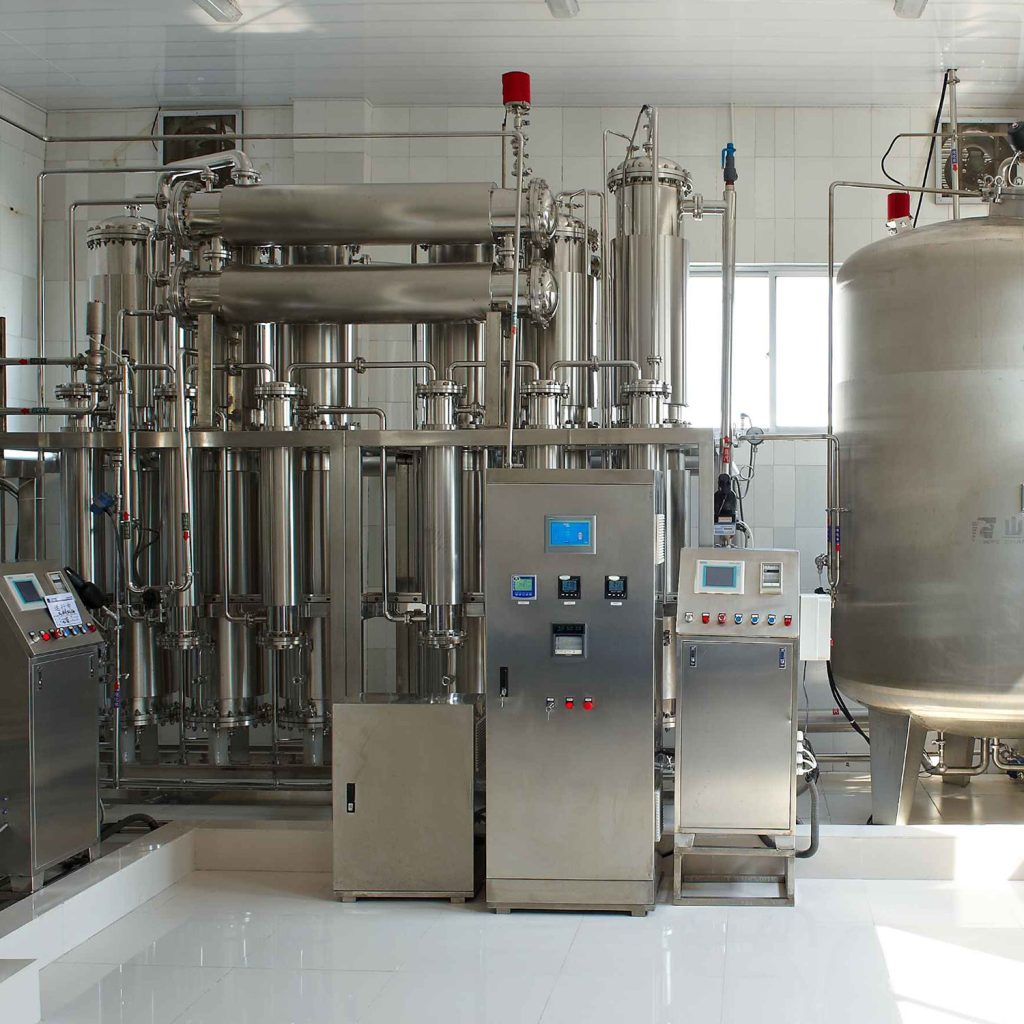
The Core Principle: Multi Effect Distillation MED
The acronym multi effect distillation MED encapsulates the thermodynamic heart of the technology. In a standard MED system, the number of effects typically ranges from 4 to 12, depending on the desired capacity and energy efficiency goals. The core principle is the cascading use of energy.
In the first effect, external steam (or another heating medium) introduces energy. As the water evaporates, the vapor temperature decreases slightly. This vapor is then routed to the shell side of the second effect, where it acts as the heating source. Because the boiling point in the second effect is lower due to reduced pressure, the vapor condenses into distilled water, releasing its latent heat to evaporate the feed water in the second effect.
This series continues until the final effect, where the remaining vapor is condensed using cooling water. This design results in a performance ratio that is nearly equivalent to the number of effects. For example, a 6-effect MED system can produce approximately 6 kilograms of distillate for every kilogram of heating steam consumed. This efficiency makes multi effect distillation MED an environmentally and economically superior choice for large-scale pharmaceutical water generation compared to traditional vapor compression or single-effect stills.
Understanding the Multi Effect Desalination Process
While the primary focus for pharmaceutical manufacturers is Water for Injection, the underlying technology is derived from decades of advancements in the multi effect desalination process. This process has been widely used in municipal and industrial settings to convert seawater into potable water.
The multi effect desalination process relies on low-temperature operation, typically below 70°C in the final effects. This low-temperature operation is a significant advantage for pharmaceutical applications because it minimizes the formation of scale (calcium carbonate and sulfates) on heat transfer surfaces. Reduced scaling translates to lower maintenance requirements and longer operational cycles between chemical cleaning (CIP).
For pharmaceutical water systems, this desalination heritage ensures robustness. The feed water—typically purified water or municipal water pretreated by reverse osmosis—enters the system where it is preheated and deaerated to remove non-condensable gases (like oxygen and carbon dioxide) that could cause corrosion or reduce heat transfer efficiency. The result is a stable, continuous flow of pyrogen-free distillate.
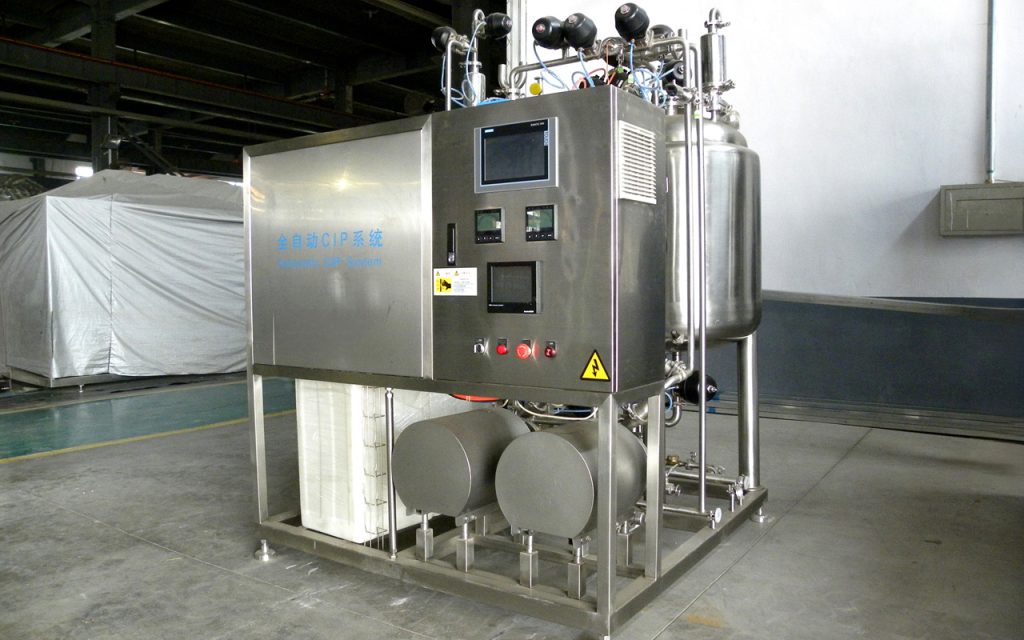
Key Components of a Multiple Effect Distiller
To appreciate the sophistication of a modern MED system, one must understand its critical mechanical components. At SKE&EAGLE, we engineer our systems with precision to ensure longevity, hygiene, and compliance. The following table outlines the primary components and their functions.
| Component | Function |
|---|---|
| Evaporator Effects (Vessels) | Series of vertically or horizontally oriented pressure vessels where evaporation and condensation occur. Designed for sanitary construction with sloped floors for complete drainability. |
| Tube Bundles | Heat transfer surfaces, typically made of 316L stainless steel or titanium. In falling-film evaporators, feed water is distributed over the tubes, forming a thin film for efficient boiling. |
| Demisters | Mesh pads or vane separators installed at the vapor outlets to capture and remove fine liquid droplets (carryover), ensuring that only pure vapor passes to the next effect. |
| Final Condenser | A shell-and-tube heat exchanger that condenses the vapor from the final effect. It also preheats the incoming feed water, improving overall thermal efficiency. |
| Distillate Pump | Sanitary centrifugal pump that continuously removes the produced distilled water from the system, often routing it to storage tanks under hot, sanitizing conditions. |
| Control System (PLC/HMI) | Automated control panel with Programmable Logic Controller (PLC) and Human-Machine Interface (HMI) for monitoring temperatures, pressures, conductivity, and flow rates. Ensures consistent operation and alarm management. |
Advantages of MED for Pharmaceutical Water Generation
When compared to other generation methods such as Reverse Osmosis (RO) coupled with Electrodeionization (EDI) or single-effect stills, the multiple effect distiller offers distinct advantages for critical applications.
1. Uncompromised Quality
The distillation process inherently provides a physical separation barrier. By boiling water and separating the vapor from the liquid phase, MED systems effectively remove bacteria, endotoxins, viruses, and inorganic compounds. The high operating temperatures (typically 80°C to 120°C) ensure continuous thermal sanitization, preventing biofilm formation within the unit.
2. Energy Efficiency
As discussed, the cascading effect design allows for a high Gained Output Ratio (GOR). For pharmaceutical facilities running 24/7 operations, the reduction in steam consumption translates directly to lower utility costs. Modern MED units, such as those manufactured by SKE&EAGLE, incorporate advanced thermal compressors (thermocompressors) to further boost efficiency by recycling waste vapor.
3. Reliability and Longevity
With fewer moving parts than mechanical vapor compression systems, MED units offer exceptional reliability. Constructed from high-grade stainless steel (316L) with sanitary welds and surface finishes, these systems are built to withstand the rigors of continuous operation for decades.
Operational Parameters and Efficiency Metrics
To evaluate the performance of a multiple effect distiller, engineers look at specific metrics. Understanding these metrics helps facility managers optimize their water generation infrastructure.
| Parameter | Description | Typical Value/Impact |
|---|---|---|
| Gained Output Ratio (GOR) | The ratio of distillate produced to heating steam consumed. | 6:1 to 12:1 depending on the number of effects and presence of a thermocompressor. |
| Conductivity | Real-time measurement of ionic purity. | < 0.5 µS/cm at 25°C (significantly lower than USP limit of 1.3 µS/cm). |
| Total Organic Carbon (TOC) | Measurement of organic contamination. | < 50 ppb (well within pharmacopoeia limits). |
| Operating Temperature | Temperature range across effects. | 1st Effect: 110-120°C; Last Effect: 60-80°C. |
| Cooling Water Consumption | Volume required for the final condenser. | Significantly lower than single-effect stills; often negligible in large plants using feed water preheating. |
Design Variations: Vertical vs. Horizontal Tube Banks
When selecting a multiple effect distiller, one crucial engineering decision is the orientation of the tube bundles. There are two primary configurations: vertical tube falling-film and horizontal tube spray-film.
Vertical Tube Falling-Film Distillers are the most common in pharmaceutical applications. In this design, feed water is distributed evenly from the top of the evaporator, flowing down the inside of vertical tubes as a thin film. Heating steam condenses on the outside of the tubes. The thin film ensures high heat transfer coefficients and short residence time, which is ideal for heat-sensitive applications.
Horizontal Tube Spray-Film Distillers involve spraying feed water over horizontal tube bundles. Steam condenses inside the tubes. While this design can be compact, it is less common in high-purity pharmaceutical settings due to potential challenges in complete drainability and cleaning compared to the vertical falling-film design.
At SKE&EAGLE, we primarily focus on vertical falling-film technology due to its superior sanitary characteristics, ease of cleaning, and proven track record in critical environments.
Integration with Purified Water Systems
It is important to note that a multiple effect distiller does not operate in isolation. It is the final, critical stage in a comprehensive water purification train. Typically, the feed water for a MED system is pre-treated to meet specific quality standards.
The pre-treatment train often includes:
-
Pretreatment: Multimedia filtration, softening, and activated carbon filtration to remove chlorine and particulates.
-
Reverse Osmosis (RO): A primary desalination step that removes 95-99% of dissolved ions and organics.
-
Storage: A pure water storage tank to buffer supply.
-
Final Polishing: The MED system then takes this purified water and elevates it to WFI quality.
This hybrid approach (RO followed by MED) is becoming increasingly popular. It reduces the scaling potential on the distiller’s heat transfer surfaces and lowers the overall energy consumption by ensuring the feed water is already low in hardness and total dissolved solids.
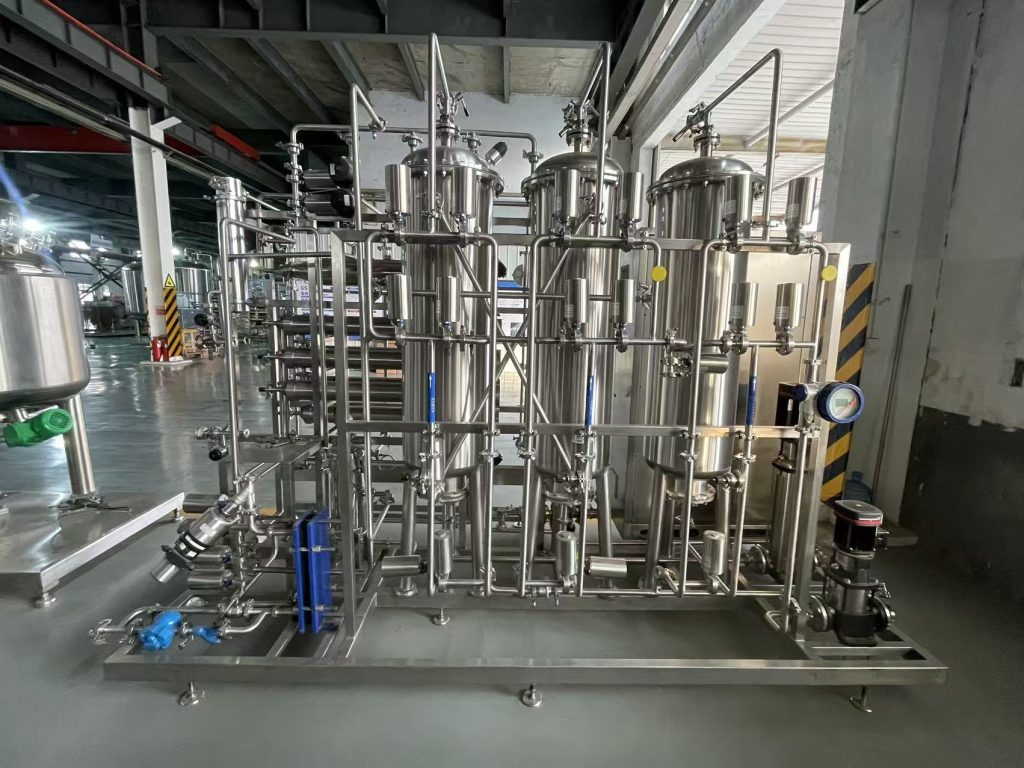
Maintenance and Sanitization Protocols
One of the operational advantages of a multi effect distillation med system is its inherent resistance to microbial contamination. Because the system operates at high temperatures (above 60°C throughout), it is constantly in a state of thermal sanitization. However, periodic maintenance is still required to ensure long-term reliability.
Descaling: Even with softened feed water, scale can eventually accumulate on heat transfer surfaces. Most MED systems are equipped with Clean-in-Place (CIP) connections. Periodic acid washing (using nitric or citric acid) dissolves mineral deposits, restoring thermal efficiency.
Demister Inspection: Demisters are critical for preventing endotoxin carryover. Regular inspection ensures that these components are free from damage or fouling.
Non-Condensable Gas Venting: Oxygen and carbon dioxide must be efficiently removed via the vent condenser. If not properly vented, these gases can accumulate, creating a thermal barrier that reduces efficiency and increases corrosion risk.
SKE&EAGLE: Your Partner in High-Purity Water
As a dedicated manufacturer of pure water and Water for Injection systems, SKE&EAGLE brings together decades of engineering expertise with cutting-edge manufacturing practices. Our multiple effect distillers are designed with a focus on hygienic engineering, energy efficiency, and compliance with global regulatory standards (ASME BPE, cGMP, FDA).
We understand that each facility has unique demands. Whether you require a compact skid-mounted unit for a small R&D lab or a high-capacity industrial system for large-scale parenteral manufacturing, our solutions are tailored to meet your specific water quality and flow requirements. Our commitment to quality is reflected in our factory acceptance testing (FAT), documentation packages (IQ/OQ), and after-sales support.
Frequently Asked Questions (FAQ)
Q1: What is the difference between a Multiple Effect Distiller and a Vapor Compression Still?
A: A Multiple Effect Distiller uses an external heat source (steam) cascaded across multiple chambers. A Vapor Compression Still uses a mechanical compressor to recompress vapor, generating heat. While vapor compression is efficient for smaller scales, MED is typically preferred for larger capacities due to its simplicity, lower maintenance costs, and robustness against scaling.
Q2: Can a Multiple Effect Distiller produce Water for Injection (WFI) without additional polishing?
A: Yes. When properly designed and operated, a multi effect distillation med system produces WFI that meets USP, EP, and JP standards for conductivity, TOC, and bacterial endotoxins. The distillate is typically collected hot (above 80°C) to maintain its sterile and pyrogen-free state.
Q3: What is the typical lifespan of a pharmaceutical MED system?
A: With proper maintenance, a high-quality MED system constructed from 316L stainless steel can operate effectively for 20 to 30 years. Regular descaling and replacement of wear items like gaskets and instrumentation ensure longevity.
Q4: How does the multi effect desalination process handle scaling?
A: Modern multi effect desalination process units are designed for low-temperature operation (typically below 70°C in the last effect). Combined with advanced feed water pretreatment (softening or RO), this minimizes the risk of calcium carbonate scaling. Many systems also include automated CIP procedures for periodic scale removal.
Q5: Why is low conductivity important in distillate?
A: Low conductivity indicates the removal of ionic contaminants. In pharmaceutical applications, high conductivity could indicate a mechanical failure (such as a tube leak) that allows cooling water or feed water to contaminate the distillate. Continuous conductivity monitoring serves as a critical quality assurance parameter.
Contact SKE & Eagle for Advanced Solutions
For customized system engineering solutions or integration of high-performance water treatment technologies, please contact SKE & Eagle. Our professional team collaborates closely with industrial partners to design, implement, and maintain solutions tailored to your operational needs.
Official Website: https://www.ske-eagle.com/
Contact Email: info@ske-eagle.com
Follow us on Facebook for the latest industry insights: SKE & Eagle Facebook
Business Inquiries: Visit our official website and submit the contact form at the bottom.