

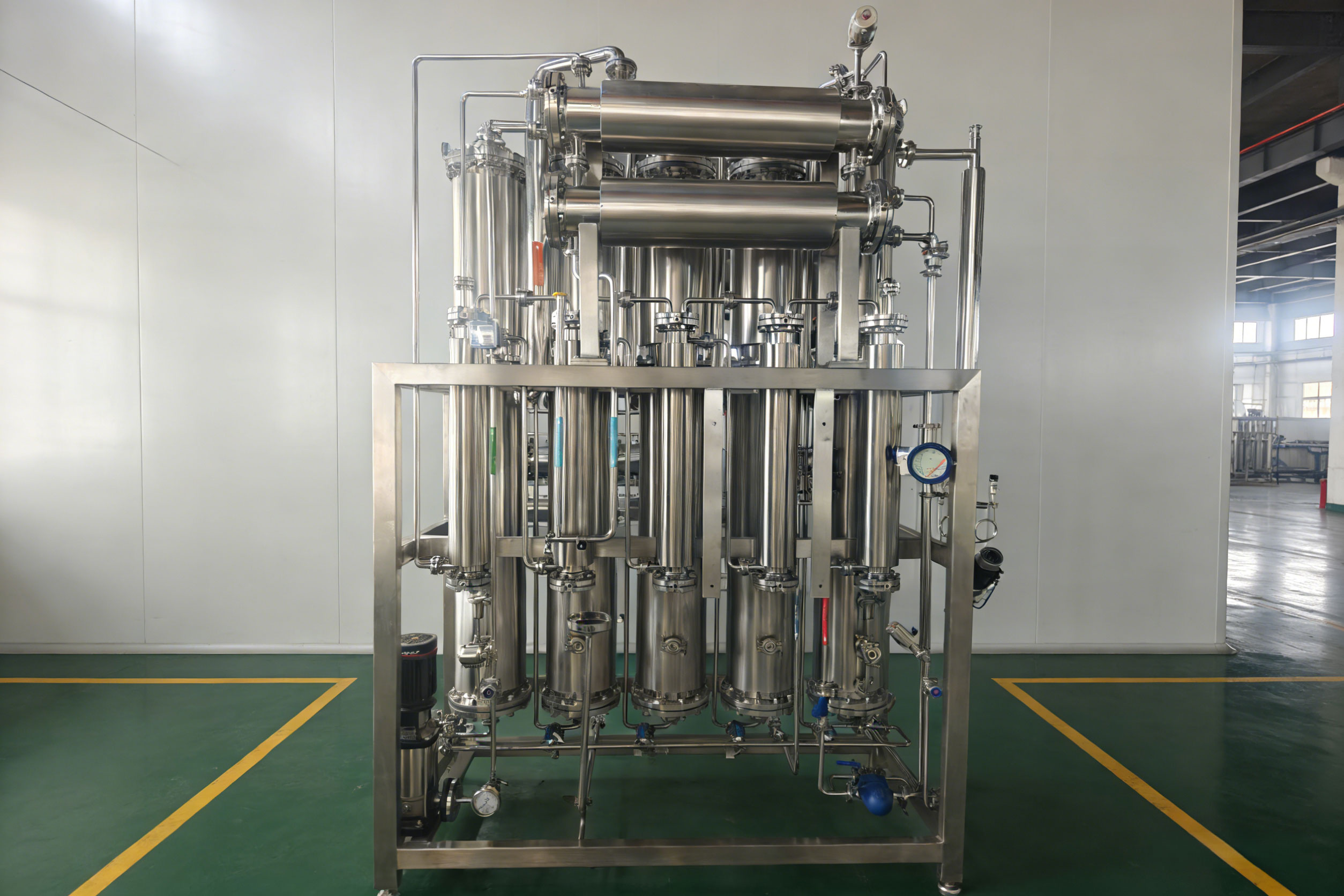
In the world of pharmaceutical manufacturing, water is more than just a solvent; it is a critical raw material. The quality of Water for Injection (WFI) directly impacts product safety, efficacy, and regulatory compliance. Among the various technologies available for generating high-purity water, Multiple Effect Distillation (MED) stands as the undisputed gold standard.
For industry leaders like SKE&EAGLE, the focus has always been on bridging the gap between thermodynamic efficiency and absolute purity. In this guide, we will explore the mechanics of multi effect distillation, its critical role in pharmaceutical applications, and why it remains the preferred choice for injection water equipment.
What is Multiple Effect Distillation?
Multiple Effect Distillation is a process that purifies water by utilizing a series of evaporators, known as “effects.” The core principle hinges on energy conservation: the vapor generated in one effect serves as the heating medium for the next.
In a traditional single-effect distiller, large amounts of energy are required to generate steam, which is then condensed and discarded as waste heat. MED technology recycles this thermal energy. By operating under progressively lower pressures across sequential effects, the boiling point of water is reduced. This allows the vapor from the previous effect to condense while simultaneously boiling the incoming feed water in the next effect.
This cascading effect results in a dramatic reduction in steam consumption. For pharmaceutical manufacturers, this translates to a lower carbon footprint and reduced operational expenditures without sacrificing the purity required for injection water equipment.
How Multi Effect Water Distillers Work
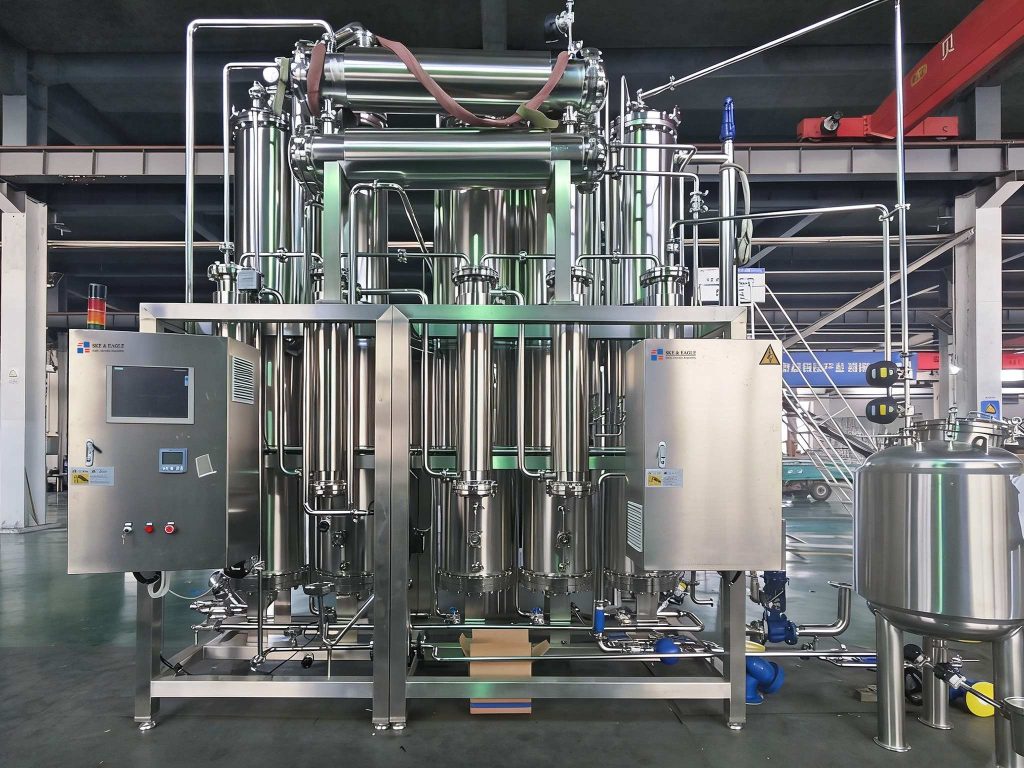
Understanding the engineering behind a multi effect water distiller requires a look at its primary components: the preheater, the evaporator effects, the steam condenser, and the control system.
The process begins with pretreated feed water (typically reverse osmosis permeate) entering the system. It passes through a series of heat exchangers where it is preheated by the outgoing distillate and waste streams. Once heated, it enters the first effect. Here, industrial steam (the primary energy source) heats the water to its boiling point. The resulting vapor is free from non-volatile impurities and endotoxins, which remain in the concentrated brine.
This pure vapor is then routed to the second effect. Because the second effect operates at a lower pressure, the vapor condenses, releasing its latent heat to generate new vapor from the feed water. This process repeats across multiple effects. At the end of the chain, the final vapor is condensed into high-purity distillate—typically achieving conductivity below 0.2 µS/cm and endotoxin levels below 0.1 EU/mL.
The Role of Pharmaceutical Multiple Effect Stills
When we discuss pharmaceutical multiple effect stills, we are not just talking about water purification; we are discussing regulatory compliance. The pharmaceutical industry operates under strict guidelines such as cGMP (current Good Manufacturing Practices), USP (United States Pharmacopeia), and EMA (European Medicines Agency) standards.
For a still to be considered “pharmaceutical grade,” it must be constructed from materials that resist corrosion and contamination, typically 316L stainless steel. Furthermore, the design must be sanitary. This means no dead legs where bacteria can proliferate, full drainability, and the ability to withstand Sanitization-in-Place (SIP) procedures.
SKE&EAGLE designs its pharmaceutical stills with these principles at the forefront. The use of tube-in-tube heat exchangers and falling film evaporation technology ensures that the water is exposed to high temperatures (typically operating above 121°C) for sufficient duration to guarantee pyrogen-free output. This thermal efficiency is critical for facilities producing injectable drugs, ophthalmic solutions, and biotech products.
Why Injection Water Equipment Must Prioritize Efficiency
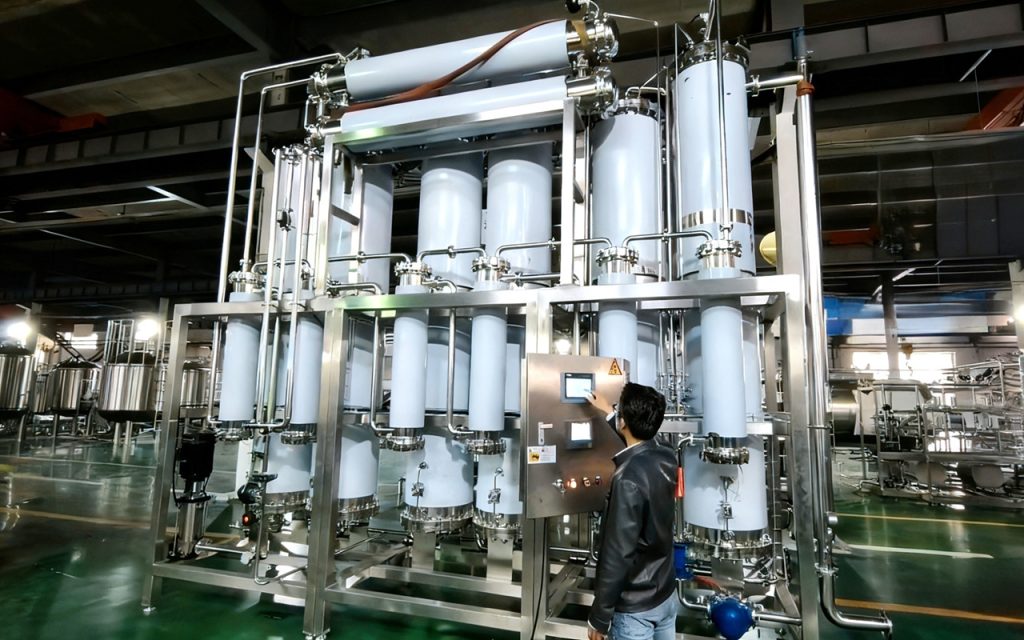
The operational cost of producing WFI is traditionally dominated by energy consumption. This is where modern injection water equipment has evolved. Traditional distillation units often consume between 0.2 to 0.25 kg of steam per kg of distillate produced. Advanced multi-effect systems, however, have revolutionized this metric.
By utilizing multiple effects—often ranging from 6 to 12 effects—manufacturers can achieve steam economy ratios as high as 10:1 or more. This means that 1 kg of input steam can produce up to 10 kg of high-quality WFI.
Moreover, contemporary systems integrate intelligent automation. By utilizing continuous monitoring of conductivity, temperature, and pressure, modern MED units ensure that the system only runs at peak efficiency when production is demanded. This “on-demand” capability reduces idle energy waste, making multi effect distillation not only the safest choice for purity but also the most economically viable choice for large-scale pharmaceutical manufacturing over the lifecycle of the equipment.
Technical Comparison: MED vs. Other WFI Technologies
To understand the value of multiple effect distillation, it is essential to compare it against alternative technologies like Vapor Compression (VC) and Single-Effect Stills.
While Reverse Osmosis (RO) with hot water sanitization has gained acceptance for WFI production in some regions (following the 2017 USP <1231> revision), distillation remains the “fail-safe” technology. Distillation provides a phase change, which is the most reliable method for removing endotoxins and microbial contaminants.
| Feature | Multiple Effect Distillation (MED) | Vapor Compression (VC) | Single-Effect Still |
|---|---|---|---|
| Energy Efficiency | Excellent (High steam economy) | Good (Uses electrical energy) | Poor (High steam waste) |
| Operational Cost | Low (Steam-driven, multi-reuse) | Moderate (High electricity for compressor) | High (Constant high steam demand) |
| Ideal Scale | Large-scale pharmaceutical | Medium-scale / Low steam availability | Small-scale / Legacy systems |
| Maintenance | Moderate (Standard tube cleaning) | High (Compressor maintenance) | Low (Simple mechanics) |
| Purity Output | Highest (Consistent <0.1 EU/mL) | Highest (Consistent <0.1 EU/mL) | High (Dependent on blowdown) |
For facilities requiring 1,000 to 20,000+ liters per hour, MED systems from manufacturers like SKE&EAGLE offer the optimal balance of reliability and utility consumption.
Key Design Features of Modern Multi Effect Distillers
Modern multi effect water distiller systems have moved far beyond simple evaporation chambers. Today, the focus is on hygienic design and smart integration. One of the most critical advancements is the “falling film” technology.
In a falling film evaporator, feed water is distributed evenly inside the tubes, forming a thin film that flows downward due to gravity. This thin film allows for rapid heat transfer and minimal liquid hold-up volume. The benefits are twofold: first, it allows for a quick startup and shutdown process; second, it minimizes the thermal stress on the water, ensuring that the distillate remains cool and stable upon exit.
Additionally, the integration of double tube sheets in the heat exchangers is a non-negotiable feature for pharmaceutical use. This design ensures that even if a tube leak occurs, the lower-pressure utility fluid (like cooling water) cannot contaminate the high-purity distillate stream, maintaining the sterile barrier integral to the equipment.
Energy Optimization in MED Systems
As sustainability becomes a driving force in pharmaceutical engineering, the optimization of multiple effect distillation systems has become a key area of innovation.
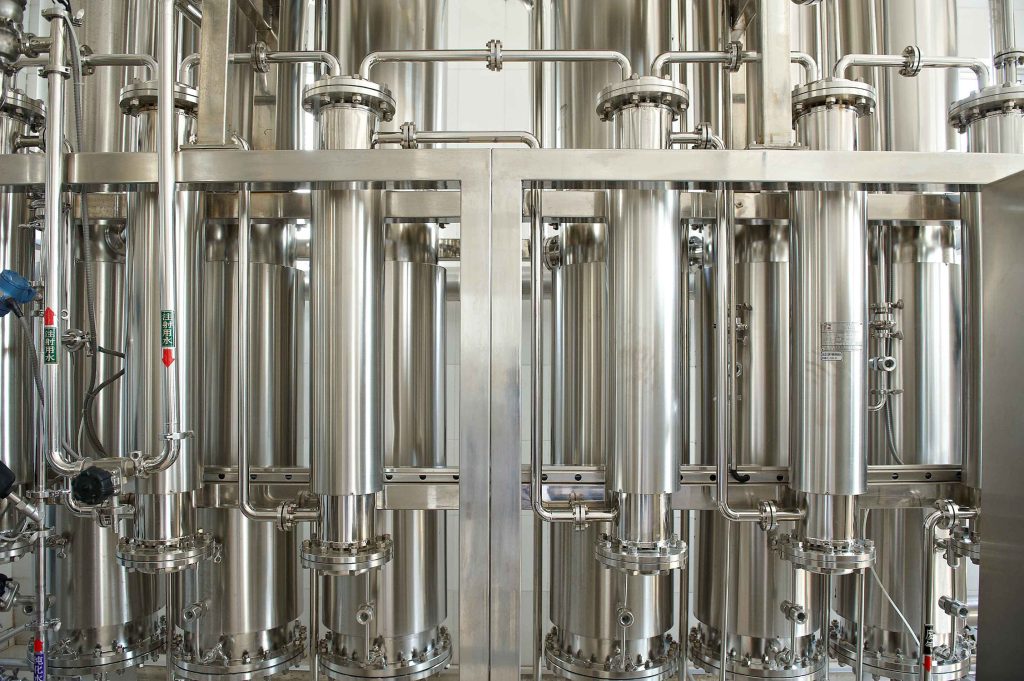
The number of “effects” in a system directly correlates to its steam economy. However, adding more effects increases capital investment and the physical footprint of the machine. The sweet spot for most modern facilities lies between 6 and 10 effects. At this range, the steam economy is high enough to justify the investment, and the system size remains manageable for facility layout.
SKE&EAGLE utilizes advanced thermo-compressors in its designs. A thermo-compressor is a jet pump that uses high-pressure motive steam to recompress a portion of the vapor generated in the last effect, reintroducing it into the first effect. This technology effectively increases the number of effects without adding physical evaporation vessels, boosting efficiency by 15-20% compared to standard multi-effect designs without thermo-compressors.
Material Selection and GMP Compliance
For any pharmaceutical multiple effect still, the materials of construction are as important as the thermodynamics. 316L stainless steel is the industry standard, but the quality of the finish is what separates standard equipment from GMP-compliant equipment.
The internal surfaces of a still must be electropolished. This electrochemical process removes the outer layer of the steel, eliminating microscopic burrs and crevices where bacteria can harbor. It also creates a passive, inert layer that enhances corrosion resistance. For systems manufactured by SKE&EAGLE, all product-contact surfaces are polished to a Ra (roughness average) of less than 0.4 µm.
Furthermore, GMP compliance requires that all materials of construction be fully traceable. From the welds to the gaskets, every component must be documented to ensure that if a quality deviation occurs, the root cause can be traced back to the exact batch of material used in manufacturing.
Industrial Applications Beyond WFI
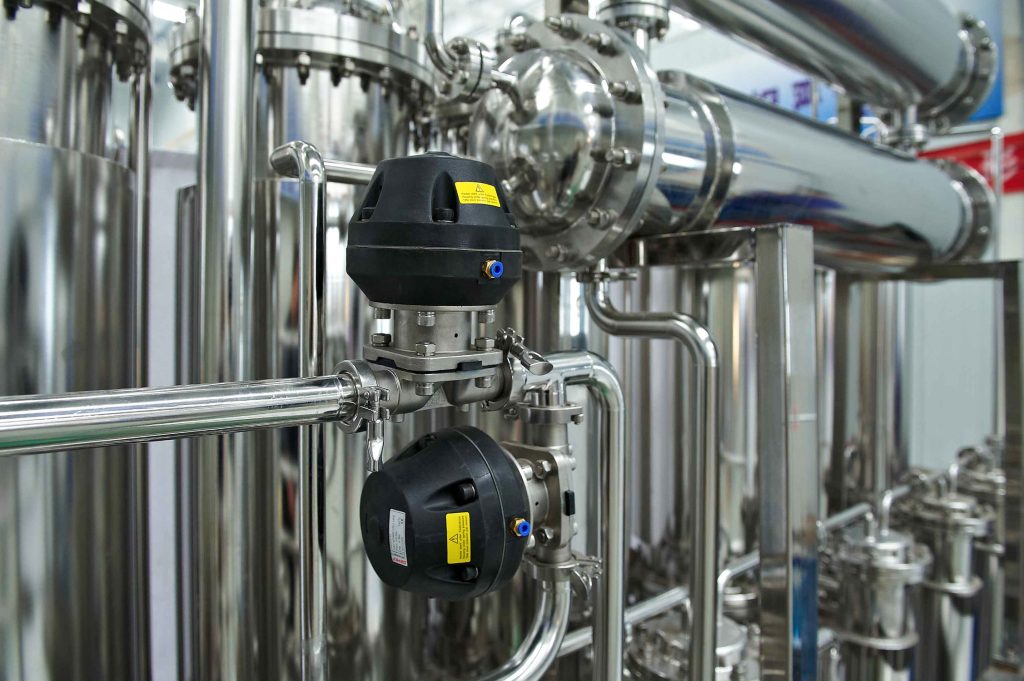
While the primary use of injection water equipment is the production of WFI for parenteral drugs, the versatility of multi effect distillation extends to other high-purity industries.
In the biotech sector, ultrapure water (UPW) is required for cell culture media preparation and fermentation processes. Similarly, the cosmetics industry relies on pyrogen-free water for high-end skincare and ophthalmic products.
Even in the specialty food and beverage sector, where product stability is paramount, MED systems are used to produce water that is free from organic contaminants and microorganisms. This cross-industry applicability highlights the robustness of the technology. However, when used in pharmaceutical settings, the qualification process (IQ, OQ, PQ) becomes more stringent, ensuring that the equipment meets the specific microbial limits set by regulatory bodies.
Maintenance and Longevity of MED Systems
A well-designed multi effect water distiller is built to last decades. However, longevity is dependent on proper maintenance and pre-treatment.
The most common cause of degradation in distillation systems is scaling. Hardness minerals in the feed water can precipitate onto heat transfer surfaces, acting as an insulator that reduces efficiency and eventually leads to tube failure. To combat this, manufacturers rely on robust pre-treatment systems (water softeners or anti-scalants) and periodic chemical cleaning (CIP) protocols.
SKE&EAGLE designs its systems with accessibility in mind. Removable tube bundles and large inspection ports allow maintenance teams to perform routine inspections without completely dismantling the system. By adhering to a strict maintenance schedule—including checking steam traps, conductivity sensors, and gaskets—facilities can ensure continuous, reliable operation and avoid costly downtime.
Automation and Control in Modern Stills
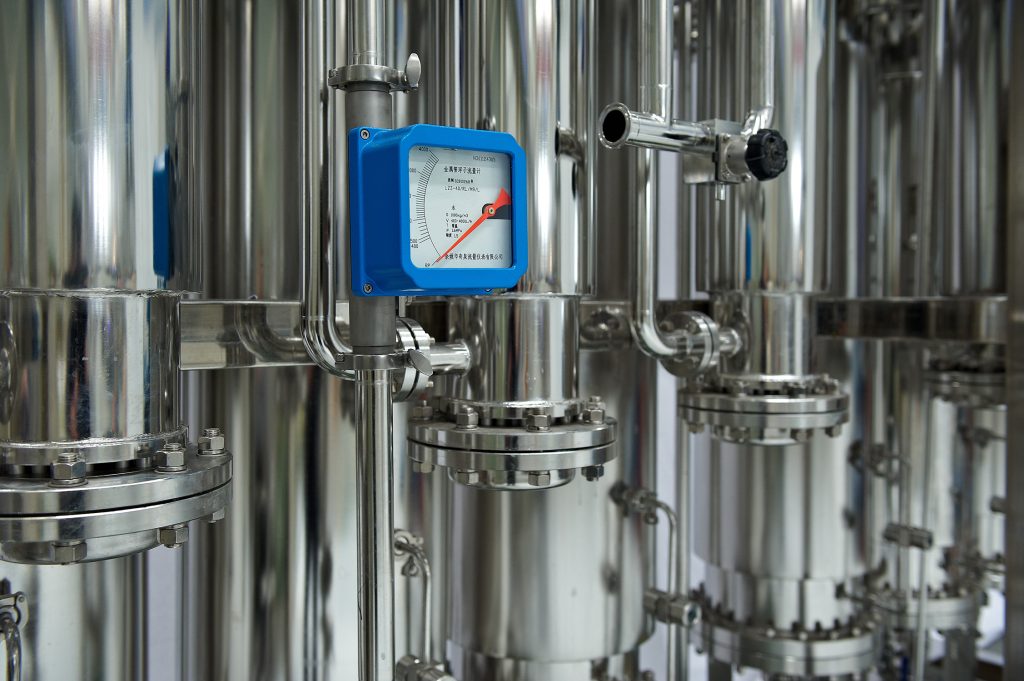
The complexity of multiple effect distillation necessitates sophisticated control systems. Gone are the days of manual valve adjustments. Today’s pharmaceutical stills utilize Programmable Logic Controllers (PLCs) with Human-Machine Interfaces (HMIs) that provide real-time data visualization.
Key automation features include:
-
Continuous Conductivity Monitoring: Automated divert valves ensure that any distillate not meeting the set purity threshold (e.g., >0.5 µS/cm) is automatically rejected and drained, preventing contamination of the storage tank.
-
Flow-Through Pasteurization: The system maintains thermal equilibrium to ensure that the water remains at a microbiologically safe temperature during operation.
-
Data Integrity: With the rise of Industry 4.0, modern systems support 21 CFR Part 11 compliance, allowing for electronic records, audit trails, and seamless integration into the facility’s Building Management System (BMS).
Why Choose SKE&EAGLE for Your Water Systems?
Selecting the right partner for injection water equipment is a strategic decision that affects product quality for the life of the facility. SKE&EAGLE combines decades of engineering expertise with a commitment to innovation.
Our approach is holistic. We do not simply ship a still; we provide a complete solution from design to validation. Our systems are engineered to meet the strictest cGMP standards, utilizing 100% 316L stainless steel construction, sanitary welding, and advanced thermo-compression technology to maximize steam economy.
Furthermore, we understand that every facility is unique. Whether you require a compact skid-mounted unit for a small-scale R&D lab or a multi-effect bank capable of producing 10 tons per hour for a large commercial facility, SKE&EAGLE delivers customized solutions backed by full documentation, FAT (Factory Acceptance Testing), and SAT (Site Acceptance Testing) support.
FAQ: Multiple Effect Distillation
Q1: What is the difference between Multi Effect Distillation (MED) and Multi Stage Flash (MSF)?
While both are distillation technologies, MED is generally preferred for pharmaceutical applications due to its lower operating temperatures and higher energy efficiency at the scale required for WFI. MSF is typically used in large-scale desalination, whereas MED is optimized for high-purity industrial and pharmaceutical water.
Q2: Can Multi Effect Distillation produce Water for Injection (WFI) without Reverse Osmosis pre-treatment?
While technically possible, it is standard practice to use Reverse Osmosis (RO) as a pre-treatment step. RO removes the bulk of dissolved solids, reducing scaling and fouling in the distillation unit. This extends the lifespan of the still and reduces chemical cleaning frequency.
Q3: How often does a pharmaceutical multiple effect still need to be cleaned?
The cleaning frequency depends on the quality of the feed water. Typically, a well-designed system with proper pre-treatment requires cleaning every 6 to 12 months. SKE&EAGLE systems are equipped with Clean-in-Place (CIP) connections to facilitate this process without dismantling the equipment.
Q4: What is the typical steam economy of a modern MED unit?
Steam economy refers to the kilograms of distillate produced per kilogram of input steam. Modern systems with thermo-compressors can achieve a steam economy ranging from 8:1 to 12:1, depending on the number of effects.
Q5: Is it necessary to use 316L stainless steel for all wetted parts?
Yes. For pharmaceutical applications, 316L stainless steel (low carbon) is required to prevent corrosion and ensure the elimination of bacterial growth. It is the standard material mandated by GMP guidelines for equipment used in the production of injectable drugs.
Contact SKE & Eagle for Advanced Solutions
For customized system engineering solutions or integration of high-performance water treatment technologies, please contact SKE & Eagle. Our professional team collaborates closely with industrial partners to design, implement, and maintain solutions tailored to your operational needs.
Official Website: https://www.ske-eagle.com/
Contact Email: info@ske-eagle.com
Follow us on Facebook for the latest industry insights: SKE & Eagle Facebook
Business Inquiries: Visit our official website and submit the contact form at the bottom.