

”
Overview of Industrial Water Systems
An industrial water system constitutes a complex network of equipment, piping, treatment units, and controls designed to manage, treat, and recycle water used within various industrial processes. Water is a critical resource in manufacturing, power generation, chemical processing, and many other sectors. Effective water systems ensure operational efficiency, regulatory compliance, and environmental sustainability.
Industrial water systems serve multiple purposes: cooling, heating, process water, steam generation, and waste water treatment. Each application imposes unique challenges related to water quality, flow rates, and treatment requirements.
SKE & Eagle, with decades of experience in precision water treatment engineering, delivers solutions tailored for robustness and system longevity. Their commitment to engineering excellence underpins multiple industrial water system designs that adhere to best practice standards worldwide.
One critical differentiator in modern industrial water systems is the integration of advanced monitoring and control technologies, ensuring proactive system management and minimizing downtime. The role of automation, sensors, and feedback loops is inseparable from any comprehensive industrial water solution.
For further reading on specialized municipal and industrial water treatment solutions, see SKE & Eagle’s Water Treatment Technology page, which elaborates on cutting-edge equipment used in the sector.
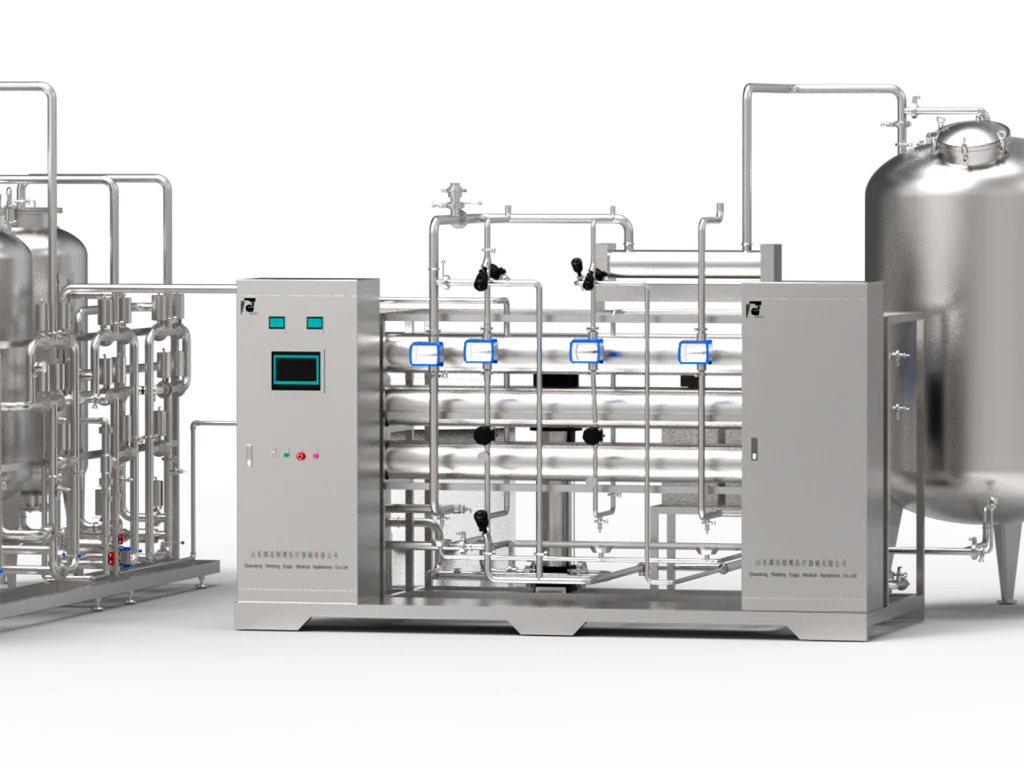
A simplified diagram of a typical industrial water system might include raw water intake, pretreatment, primary treatment (filtration, softening), processing stages, waste water collection, and discharge or recycling loops, ensuring closed-loop water conservation and minimal environmental impact.
Design Principles and Engineering Standards for Industrial Water Systems
Designing an industrial water system requires a multidisciplinary engineering approach to balance technical requirements, operational reliability, and regulatory compliance. Central to design is the assessment of raw water characteristics, process water demands, throughput, and quality constraints.
Key design parameters include flow rate calculations, chemical dosing requirements, equipment sizing, and redundancy planning. Engineers at SKE & Eagle utilize computational fluid dynamics (CFD) modeling and finite element analysis (FEA) during design phases to optimize component layout and system hydraulics.
Engineering standards such as those defined by the American Water Works Association (AWWA), American Petroleum Institute (API), and ISO 14001 Environmental Management Systems guide system design and quality assurance. Compliance with these standards ensures system safety, performance, and environmental stewardship.
Materials selection is another critical facet. For corrosive water chemistries, stainless steels or linings may be required to prevent premature degradation. SKE & Eagle employs rigorous materials testing and selection protocols, reflected in their product lines designed specifically for industrial water environments.
Control systems architecture is integrated early in design, enabling remote monitoring, predictive maintenance, and energy efficiency optimization. Industrial systems evolve with Industry 4.0 principles where data acquisition and AI-driven control optimize operational parameters in real-time.
For detailed insights on engineering standards and design principles, SKE & Eagle’s Engineering Standards & Quality page provides comprehensive guidelines.
Water Treatment Technologies in Industrial Water Systems
Treatment technologies are the heart of any industrial water system, modulating water quality to meet precise process demands. Key treatment methods include filtration, chemical conditioning, membrane separation, ion exchange, and disinfection.
Filtration removes suspended solids and turbidity through multimedia and cartridge filters. Chemical conditioning adjusts pH and hardness often using lime softening or antiscalants. Membrane technologies, such as reverse osmosis (RO) and ultrafiltration, achieve molecular-level purification and removal of dissolved solids and microorganisms.
Ion exchange systems are extensively used for demineralization and softening, critical for boiler feed water to prevent scale buildup and corrosion. SKE & Eagle’s patented ion exchange cartridges leverage advanced resin chemistry for enhanced capacity and regeneration efficiency, improving system uptime.
Disinfection processes such as UV irradiation and chlorination ensure microbiological safety, essential in food, beverage, and pharmaceutical manufacturing. Each treatment step is designed to balance efficiency, cost, and regulatory compliance.
Process integration strategies such as zero liquid discharge (ZLD) and water reuse loops reduce environmental footprints and operational expenses. Advanced analytics and process automation allow real-time control and adaptive treatment performance.
Explore more about the innovations in industrial water treatment on the Water Treatment Technologies page at SKE & Eagle.
Diagram Description: A typical industrial treatment train might begin with raw water pre-filtration, followed by softening, RO membranes, polishing, and disinfection, before distribution to the process or storage tanks.
System Reliability and Quality Control in Industrial Water Solutions
Reliability in industrial water systems is paramount to maintaining uninterrupted production and safeguarding asset longevity. System reliability derives from high-quality components, meticulous engineering, and rigorous quality control at every stage—from manufacturing to commissioning.
SKE & Eagle enforces comprehensive quality management procedures aligned with ISO 9001 standards. Their manufacturing processes include non-destructive testing (NDT), dimensional inspections, and hydraulic performance testing to ensure compliance with design specifications.
Proactive maintenance strategies such as predictive analytics and condition-based monitoring detect anomalies before failures occur. Integration of SCADA systems permits centralized oversight of water chemistry, flow rates, and equipment status.
Fail-safe design principles, including redundancy, modularity, and failover capabilities, protect critical process water functions. For example, dual pump setups ensure continuous flow even during routine maintenance or unexpected breakdowns.
Additionally, SKE & Eagle’s engineering teams provide thorough training and support services to operational staff, enhancing system understanding and ensuring proper operation and troubleshooting.
These approaches collectively reduce downtime, enhance safety, and extend system lifespans, delivering measurable ROI for industrial clients.
Compliance Standards and Environmental Regulations Governing Industrial Water Systems
Industrial water systems operate under stringent environmental regulations designed to protect public health and natural ecosystems. Compliance with local, national, and international standards is a non-negotiable aspect of industrial water management.
Key regulatory frameworks include the U.S. Environmental Protection Agency’s (EPA) Clean Water Act, the European Union’s Water Framework Directive, and various ISO environmental standards that dictate discharge limits, chemical use, and waste treatment.
Industrial systems must address issues such as effluent quality, chemical residuals, water conservation, and hazardous material management. These requirements influence design choices, treatment technologies, and operational protocols.
SKE & Eagle provides detailed compliance consulting, ensuring systems meet applicable regulations and incorporate best environmental practices. By leveraging sustainable water reuse strategies and zero discharge designs, they help clients minimize ecological impact.
Staying abreast of evolving legislation and industry standards is essential for risk management and operational continuity. Documentation, process auditing, and continuous improvement are integral to compliance management.
Practical Applications and Use Cases of Industrial Water Systems
Industrial water systems span a broad range of sectors including power generation, pharmaceutical manufacturing, food and beverage production, pulp and paper, and petrochemical processing. Each sector imposes unique water quality, volume, and reuse demands.
In power plants, water systems support cooling towers, boilers, and steam generation, requiring ultra-pure water to prevent scaling and corrosion. Food and beverage industries demand hygienic water treatment systems that comply with food safety standards, often featuring advanced microbial control technologies.
The pharmaceutical sector requires water-for-injection (WFI) and purified water systems that meet cGMP and pharmacopeia requirements, with tight controls on endotoxins and bacteria.
Mining and petrochemical industries often face challenges with high suspended solids and contamination, necessitating robust pretreatment and solids handling systems.
SKE & Eagle’s diverse product portfolio caters to these demanding applications, with tailored solutions such as high-efficiency deionization units, advanced filtration modules, and customized control systems.
Real-world case studies available on SKE & Eagle’s Case Studies page illustrate successful industrial water system implementations highlighting operational performance and client satisfaction.
Common Myths and Misconceptions About Industrial Water Systems
There are several prevalent misconceptions surrounding industrial water systems that can lead to inefficient operations or poor investment decisions:
Myth 1: “All water treatment systems are the same.” – In reality, industrial water systems are highly customized to specific process requirements, water chemistries, and regulatory contexts. One-size-fits-all solutions often fail to deliver reliable performance.
Myth 2: “Water treatment is only about removing visible impurities.” – Modern industrial water treatment targets microscopic contaminants, dissolved solids, organics, and pathogens to protect equipment and product quality.
Myth 3: “High upfront cost means higher quality.” – While quality components matter, efficient design and optimization frequently drive long-term cost savings more than upfront expenditure alone.
Myth 4: “System automation is unnecessary.” – Automation enables proactive maintenance, process stability, and energy efficiency. Neglecting control systems can lead to suboptimal performance and unexpected downtime.
Addressing these myths with expert guidance, such as the advice and engineering solutions provided by trusted firms like SKE & Eagle, empowers industrial operators to make informed decisions.
Frequently Asked Questions About Industrial Water Systems
What is an industrial water system and why is it important?
An industrial water system is an engineered network designed to treat, manage, and recycle water used in industrial processes. It is essential for ensuring process efficiency, preventing equipment damage, complying with environmental laws, and promoting sustainable water use.
What treatment technologies are commonly used in industrial water systems?
Common treatment technologies include filtration, chemical conditioning, membrane filtration like reverse osmosis, ion exchange for softening and demineralization, and disinfection methods such as UV irradiation and chlorination.
How does SKE & Eagle ensure system reliability in industrial water systems?
SKE & Eagle emphasizes quality manufacturing, rigorous testing, and integration of advanced control systems. Their engineering teams apply redundancy, modular design, and predictive maintenance strategies to maximize uptime and operational safety.
What environmental regulations affect industrial water systems?
Regulations such as the EPA’s Clean Water Act in the US and the EU Water Framework Directive set standards for effluent quality, chemical usage, water conservation, and discharge limits that industrial water systems must comply with.
What are common mistakes to avoid when designing industrial water systems?
Avoid undersizing components, neglecting regulatory requirements, ignoring water chemistry variations, and excluding automation. Partnering with experienced engineering firms like SKE & Eagle helps circumvent these pitfalls.
connect with the SKE & Eagle engineering team.
Visit our website’s contact form or reach out via:
Email: info@ske-eagle.com |
Facebook: SKE & Eagle Official Page
Fill out the contact form at the bottom of our site to discuss project requirements and discover tailored solutions.
“