

Introduction
An industrial water purification system is the silent guardian of pharmaceutical production. Every batch of medicine, every piece of cleaned equipment, and every lab test depends on the water quality it delivers.
A sudden rise in conductivity can shut down a filling line. A hidden biofilm in a storage tank can ruin an entire batch. These aren’t just technical glitches — they’re business risks that cost time, money, and customer trust.
Many manufacturers wait until something breaks before they act. That reactive approach is expensive and, in pharma, genuinely risky. The better path is preventive maintenance: a simple daily routine that keeps the system healthy and production running smoothly.
This guide walks through the key components of a pharmaceutical water system, what to check every day, and how to spot problems early — plus the extra monitoring pharmaceutical-grade water demands under FDA and USP expectations.
Key Takeaways
- New, well-maintained RO membranes typically reject 97–99% of dissolved ions; a drop of 3–4% from baseline is an early fouling signal (AMPAC USA).
- Ambient-temperature purified water loops need regular sanitization — commonly weekly to biweekly — because they’re especially prone to biofilm (BioProcess International).
- Pretreatment filters aren’t optional extras: a failed carbon filter lets chlorine reach and permanently damage an RO membrane, which is far more expensive to replace than a filter cartridge.
Understanding Your System: Key Components
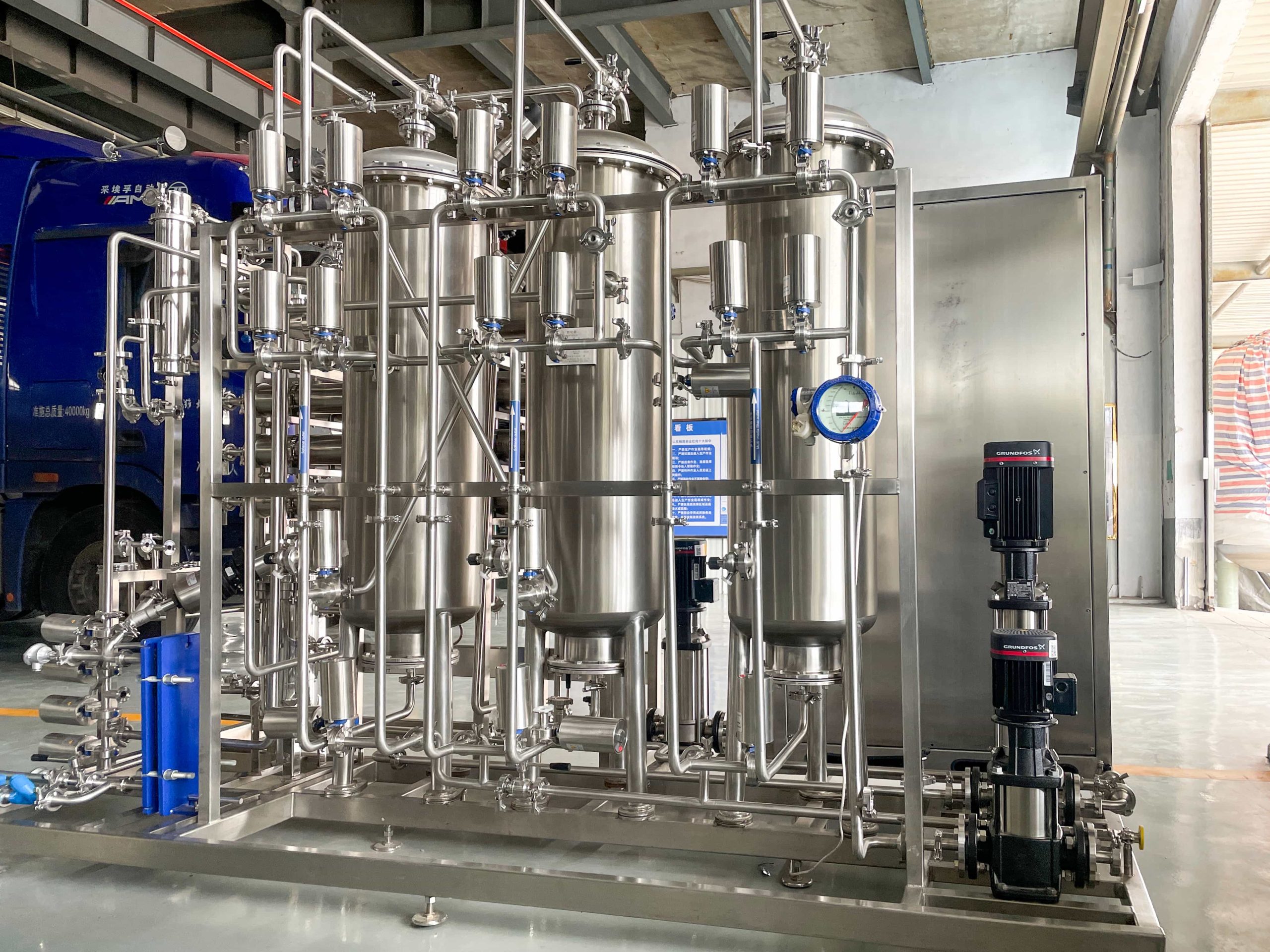
Before you can maintain a purification system, it helps to understand its main stages. A typical pharmaceutical setup includes several steps, and each one needs its own kind of attention.
Pretreatment System
Pretreatment is the first line of defence. It strips out large particles and reactive chemicals before water reaches the more sensitive stages downstream, typically through sediment filters, activated carbon, and water softeners.
Why does this matter so much? Chlorine breaks down RO membranes. If a carbon filter fails, chlorine reaches the membrane and damages it permanently — and a replacement membrane costs far more than a filter change. Keeping pretreatment healthy is the cheapest, highest-leverage maintenance task on the whole line.
Reverse Osmosis (RO) System
The RO stage is the heart of the process. It forces water through a semi-permeable membrane under pressure, and a new, well-maintained membrane typically rejects 97–99% of dissolved ions, bacteria, and other contaminants (AMPAC USA).
RO membranes are sensitive and expensive. Chlorine, scaling, fouling, and simple age can all degrade them. Watch rejection performance closely: a 3–4% drop from your established baseline is an early warning, and a fall to 90% or below on a system that used to run at 98% usually means the membrane is fouled, scaled, or damaged and needs service.
Electrodeionization (EDI) System
Many pharmaceutical lines add EDI after RO to reach very high purity. It uses electricity and ion-exchange resin to strip the last remaining ions, producing ultra-pure water without chemical regeneration.
EDI is powerful but sensitive, and it depends entirely on good feed water from the RO stage upstream. If RO performance slips, the EDI stage struggles to compensate. Track feed water quality, voltage, and current to keep it running within spec.
Storage and Distribution
After purification, water sits in a tank and circulates through a piping loop until it’s used. For pharmaceutical systems, keeping this loop clean and free of bacteria matters just as much as the purification step itself.
Daily and Weekly Maintenance Checklist
Good maintenance starts with simple, regular checks. Each one takes only a few minutes but tells you a lot about system health.
| Frequency | Task | What to Check | Why It Matters |
|---|---|---|---|
| Daily | Visual Inspection | Leaks, drips, unusual noises, vibrations. | Catches mechanical problems before they cause failure. |
| Daily | Control Panel | Alarm messages, warning lights, error codes. | Identifies operational issues immediately. |
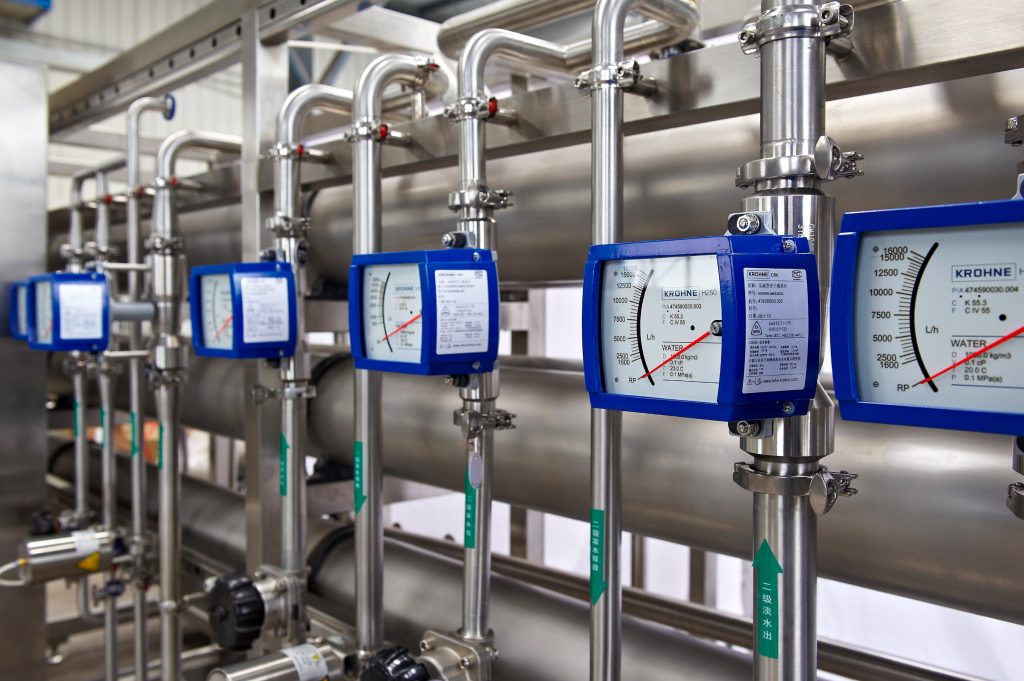
| Daily | Data Logging | Pressures, flow rates, conductivity, resistivity. | Tracks performance trends over time. |
| Weekly | Pre-Filter Check | Pressure drop across sediment and carbon filters. | Prevents blockages and protects RO membranes. |
| Weekly | Water Softener | Salt level and regeneration schedule. | Prevents hardness scaling on RO membranes. |
| Monthly | Consumable Review | UV lamp hours, filter age, carbon performance. | Ensures timely replacement of wearing parts. |
Sediment cartridges typically need replacing every 3–12 months and carbon cartridges every 6–12 months, but the wide range matters: feed water above 1 NTU turbidity or heavily chlorinated municipal supply pushes both toward the shorter end (Water Filtration Authority). Tracking pressure drop, not just a calendar date, is what actually tells you when a filter is spent — two identical systems on different feed water can need completely different replacement schedules.
What to Check Every Day
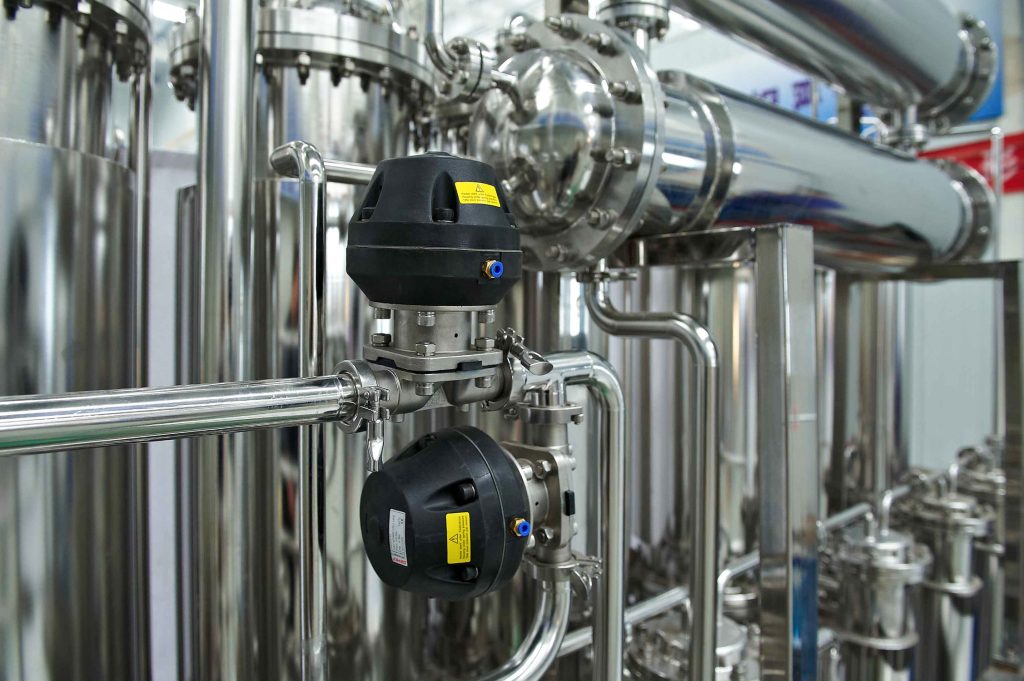
Look for leaks. Walk the entire system and check every pipe, valve, pump seal, and connection. A small drip can mean a loose fitting, a worn seal, or a developing crack. Fixing it today prevents a flood tomorrow.
Listen to the pumps. They should run smoothly and quietly. Grinding, squealing, or knocking signals trouble, and unusual vibration often points to a bearing problem. Catching this early avoids a sudden breakdown.
Check the control panel. It shows the system’s vital signs. Don’t ignore a red light or an alarm message — find the cause and act on it before resetting anything.
Record the readings. Log feed pressure, RO pressure, permeate flow, concentrate flow, and product water conductivity every day; for EDI systems, add resistivity, voltage, and current. A gradual drift over several days is often more telling than any single bad reading.
Special Maintenance for Pharmaceutical Water Systems
Pharmaceutical water carries stricter requirements than general industrial use. It may end up in a drug product or touch equipment that does, so quality rules set by regulators like the FDA and EMA apply directly to how you maintain the system.
Monitor More Than Conductivity
A general industrial system usually leans on conductivity as its main water-quality check. Pharmaceutical systems need more: Total Organic Carbon (TOC), microbiological quality, and temperature all matter, particularly for systems producing Water for Injection (WFI) or highly purified water, where limits are tight and EDI performance has to be tracked closely.
Control Biofilm and Contamination
Biofilm, a thin bacterial layer that forms inside pipes and tanks, is one of the biggest risks in a pharmaceutical water loop — and once it forms, it’s genuinely hard to remove. Systems that run at ambient temperature are especially prone to it, which is why purified-water loops are typically sanitized weekly to biweekly using heat, ozone, or chemical agents; newly qualified systems often start on a tighter schedule and relax it once performance data supports doing so (BioProcess International).
Maintain Hygienic Design
How the system is built affects how easy it is to keep clean. Dead legs, poor drainage, and damaged seals all create places for bacteria to hide. A good water treatment partner can help spot and fix these design issues before they become recurring contamination events.
Keep Complete Records
For pharmaceutical manufacturers, documentation isn’t optional. Daily operating data, filter changes, cleaning and sanitization logs, calibration records, repairs, and water-quality results all need to be on file — they’re what shows a regulator you’re in control of the system.

Common Problems and Quick Solutions
Even with good maintenance, problems happen. Knowing how to respond quickly limits downtime and protects the system from expensive damage.
Problem: Low Water Flow
Possible causes: blocked pre-filters, fouled RO membranes, low feed pressure, or pump problems.
Quick actions: check the pressure drop across the pre-filters first. If it’s high, change them. If pressure looks normal but flow is still low, the RO membrane likely needs cleaning — that’s a job for a professional water treatment partner with the right chemical cleaning (CIP) protocol.
Problem: High Product Water Conductivity
Possible causes: RO membrane damage, fouling, feed water changes, EDI problems, or a faulty sensor.
Quick actions: check conductivity at each stage. High RO permeate conductivity points to the RO stage; good RO water with a poor final result usually means the EDI stage needs attention — check its voltage and current for signs of scaling.
Problem: Frequent Alarms
Possible causes: sensor errors, pressure fluctuations, electrical issues, or control setting problems.
Quick actions: don’t reset an alarm without understanding what triggered it. Review the alarm history for patterns, and if the cause isn’t obvious, bring in professional help before it recurs.
When to Call a Professional
Operators can handle daily checks, filter changes, and basic troubleshooting on their own. Some tasks, though, need specialized knowledge and equipment: RO membrane chemical cleaning (CIP), where the wrong chemistry can destroy a membrane; EDI troubleshooting, since it’s a complex device to diagnose blind; and system upgrades or audits, where getting the design and documentation right the first time saves a lot of rework later.
SKE&EAGLE works with pharmaceutical manufacturers on exactly this kind of maintenance, troubleshooting, and system upgrade support.

Frequently Asked Questions
How often should I change the pre-filters in an industrial water purification system?
It depends on feed water quality more than the calendar. Sediment cartridges commonly last 3 to 12 months and carbon cartridges 6 to 12 months, but watch pressure drop rather than relying purely on a fixed schedule — a sharp rise means it’s time to change the filter regardless of how many months have passed (Water Filtration Authority).
What does EDI do in a purified water system?
Electrodeionization removes the ionic impurities left after RO, using electricity instead of chemical regeneration to reach very high purity. Its performance depends heavily on the quality of the RO water feeding it.
How do I know when my RO membrane needs cleaning?
Watch for three signs together: falling permeate flow, rising pressure drop, and rising conductivity. A 3–4% drop in salt rejection from your established baseline is an early signal; below 90% typically means service is overdue (AMPAC USA).
Why is pharmaceutical water maintenance different from general industrial maintenance?
Pharmaceutical systems add TOC, microbiological, and endotoxin monitoring on top of the usual checks, plus complete documentation for regulatory audits under GMP.
When should I call a professional water treatment company?
For RO membrane cleaning, EDI troubleshooting, major repairs, system upgrades, or anything tied to regulatory compliance.
Conclusion
A reliable industrial water purification system is only half the story for a pharmaceutical manufacturer — how you maintain it is the other half. Daily checks, trend-based monitoring rather than calendar-only replacement, and pharma-specific attention to TOC, microbiology, and sanitization records are what keep production running and audits clean.
SKE&EAGLE designs and supports integrated water purification systems, from pretreatment and RO through EDI, storage, and distribution, for pharmaceutical manufacturers. Get in touch if you’d like help building or maintaining a system to these standards.