

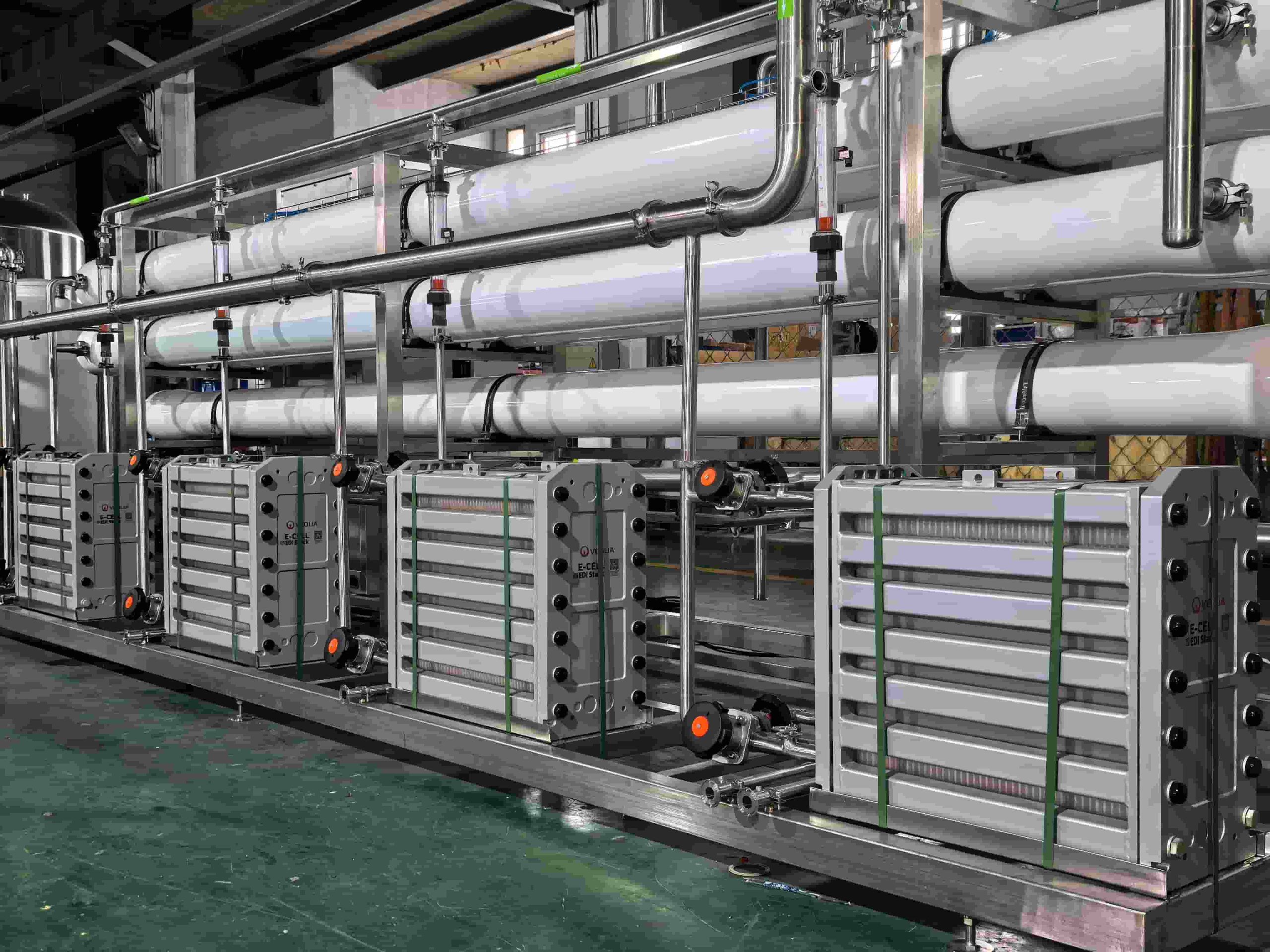
Introduction to USP Water System
The USP (United States Pharmacopeia) water system is a specialized water treatment infrastructure designed to produce purified water that meets the stringent requirements of pharmaceutical and biotech industries. USP water systems are engineered to comply with USP Purified Water (PW) and Water for Injection (WFI) standards, ensuring ultra-high purity and microbial control for sensitive processes.
Understanding the USP water system requires grasping its technical foundations, regulatory frameworks, and the evolving best practices in water treatment engineering. As a recognized leader in advanced water treatment solutions, SKE & Eagle incorporates rigorous engineering principles and innovative membrane technology to deliver USP-compliant water systems known for reliability and system integrity.
The importance of a USP water system cannot be overstated in pharmaceutical manufacturing, formulation, and laboratory settings, where water purity impacts product safety, efficacy, and shelf life. The system design balances high-throughput volume requirements with tight microbial and chemical control, necessitating sophisticated filtration, sanitization, and monitoring technologies.
This article thoroughly explores the core components, design considerations, regulatory compliance, and practical applications of USP water systems. It also addresses common industry myths and highlights SKE & Eagle’s approach to manufacturing scalable, maintainable, and sustainable water purification solutions.
Essential Design Criteria and Engineering Standards
The design of a USP water system is fundamentally grounded in compliance with USP Chapters Purified Water (1231) and Water for Injection (1231), along with adherence to cGMP (current Good Manufacturing Practices). These regulatory documents dictate water quality specifications, microbial limits, endotoxin levels, and allowable contaminants. System design must embody these strict requirements through a blend of validated process control and engineering excellence.
Engineering Standards for USP Water Systems
Key engineering standards shaping USP water system design include ASME BPE (BioProcessing Equipment) guidelines, which specify sanitary design practices, surface finish criteria, and system integrity testing. Additionally, considerations from ASTM standards for water quality and ISO controls factor heavily into system engineering.
Critical Design Factors
- Material Selection: Stainless steel (typically 316L) is preferred for its corrosion resistance and cleanability. All wetted surfaces must achieve specified surface roughness (e.g., Ra ≤ 0.4 µm) to prevent biofilm formation.
- Loop Design: Recirculating loop systems maintain water movement, preventing stagnation and microbial proliferation. Redundant pumps and optimized flow rates assure system robustness.
- Sanitization Capability: The system must support routine thermal or chemical sanitization cycles, usually at elevated temperatures (80-85°C) or with chemical oxidants, aligned with USP protocols.
- Instrumentation and Controls: Continuous monitoring of conductivity, resistivity, temperature, and microbial counts is paramount. PLC-based automation with event logging supports validation and audit trails.
Incorporating these design principles allows manufacturers to build USP water systems with maximized uptime, ease of maintenance, and verified reproducibility — key expectations underscored by SKE & Eagle’s engineering philosophy.
Core Technology and Components in USP Water Systems
The USP water system integrates multiple sophisticated water treatment technologies to meet purity demands. Understanding these components elucidates both the operational complexity and technological innovation involved.
Pre-treatment Modules
Raw water conditioning begins with mechanical filtration, activated carbon, and water softening to remove suspended solids, chlorine, and hardness ions. These pre-treatment steps preserve downstream components and secure initial water quality.
Reverse Osmosis (RO) and Ultrafilter (UF) Technologies
Membrane filtration via RO is central to USP water systems, efficiently rejecting dissolved salts, organics, and endotoxins. RO modules in pharmaceutical-grade systems offer tight molecular exclusion with high permeate recovery. Ultrafilters supplement RO by removing particles down to 0.01 microns, targeting endotoxin and bacterial removal with absolute efficiency.
Electrodeionization (EDI)
For USP purified water, EDI serves as a continuous deionization solution that reduces conductivity to ultra-low levels without chemical regeneration. This technology enhances water resistivity, ensuring compliance with USP limits.
Storage and Distribution Loops
Purified water is stored in sanitary stainless steel tanks, designed with smooth surfaces and rounded corners for sanitary drainage. Distribution loops incorporate insulated pipework with sanitary valves, and recirculation pumps maintain temperature uniformity and prevent microbial growth.
UV Disinfection
UV lamps emitting 254 nm wavelength provide secondary microbial control, effectively reducing heterotrophic bacteria counts within the recirculation lines.
These technologies collectively define a USP water system’s capability for delivering pharmaceutical-grade water reliably. The continuous development in membrane materials and process controls at SKE & Eagle ensures cutting-edge system performance aligned with emerging industry needs.
Quality Assurance & Compliance with USP Standards
Ensuring compliance with USP water quality standards is non-negotiable for pharmaceutical manufacturers. The USP defines critical physicochemical and microbiological water characteristics, such as conductivity (≤ 1.3 µS/cm for PW), endotoxin levels (< 0.25 EU/mL for WFI), total organic carbon (TOC), and heterotrophic plate counts.
Validation and Qualification
Water system validation must encompass Installation Qualification (IQ), Operational Qualification (OQ), and Performance Qualification (PQ). Continuous monitoring data validate sustained compliance, while periodic challenge testing confirms microbial and endotoxin control.
Sampling and Testing Protocols
Sampling ports must be strategically placed according to USP recommendations to provide representative monitoring. Analytical testing employs methods like conductivity measurement, microbial culture, endotoxin assays (LAL), and TOC analysis. SKE & Eagle’s sterile water prefiltration solutions facilitate consistent sample integrity and system reliability.
An effective Quality Management System ensures corrective actions and preventive maintenance track the water system’s health, preventing deviations from USP compliance.
Operational Principles and System Reliability
Optimal operation of USP water systems demands a balance of chemistry, hydraulics, and microbiology underpinned by robust engineering controls. The system must maintain thermal or chemical sanitization cycles, constant recirculation velocities (typically ≥ 1 ft/sec), and real-time monitoring of key parameters.
Sanitization and Maintenance Protocols
Thermal sanitization incorporates steam or hot water circulating at ≥80°C, validated for microbial inactivation. Chemical sanitization employs agents such as hydrogen peroxide or peracetic acid when thermal cycles are unavailable. Cleaning procedures are governed by validated Standard Operating Procedures (SOPs).
Process Controls and Automation
Automation platforms leverage scalable PLCs to regulate pump speeds, valve actuations, and alarm thresholds, enhancing system responsiveness. Event logging and data analytics assist operators in proactively identifying deviations.
System Redundancy and Fail-Safe Design
Redundant pumps, dual RO trains, and backup power sources minimize downtime. System design emphasizes modularity for rapid maintenance without compromising production schedules. SKE & Eagle’s ultrafiltration verification exemplifies best practices in ensuring filtration reliability through advanced diagnostics.
Practical Applications and Industry Use Cases
The USP water system is integral to multiple pharmaceutical and biotechnology processes, including but not limited to:
- Preparation and formulation of injectables requiring Water for Injection (WFI).
- Manufacture of oral solids and liquid dosage forms requiring Purified Water (PW).
- Cleaning-in-place (CIP) processes applying USP water for equipment sanitation.
- Laboratory applications demanding ultra-pure water for analytical assays.
Several case studies demonstrate the versatility and criticality of USP water systems:
Case Study 1: Biopharmaceutical Facility Upgrade
SKE & Eagle engineered a turnkey USP water system incorporating dual RO and EDI technologies to achieve a 100 m3/day capacity with state-of-the-art monitoring. The system achieved full USP Compliance and cGMP validation, reducing microbial excursions by 50% compared to legacy systems.
Case Study 2: Modular Small-Scale USP Water System for Clinical Trials
Designed for flexible clinical manufacturing, SKE & Eagle’s USP water package offered rapid commissioning and validated sanitization cycles enabling consistent supply of purified water suitable for multiple small-scale batch productions.
The USP water system also plays a pivotal role in the emerging personalized medicine segment, where consistent water purity supports new drug delivery formats and advanced therapies.
Common Myths and Misconceptions about USP Water Systems
Despite its scientific rigor, the USP water system domain is surrounded by myths that can misdirect project planning and operational decisions.
Myth 1: USP Water Systems Are Only Necessary for WFI
While WFI demands are stringent, USP Purified Water systems are equally critical for formulations and processes where microbial purity and chemical cleanliness dictate product quality. Both water types require carefully engineered systems.
Myth 2: Reverse Osmosis Alone is Sufficient for USP Water
RO is essential but insufficient alone to meet USP water standards. Post-treatment steps such as EDI polishing, ultrafiltration, and UV sterilization are mandatory to eliminate endotoxins, organics, and bacteria.
Myth 3: USP Water Systems Do Not Require Routine Sanitization
Routine sanitization is crucial to prevent microbial biofilms and endotoxin contamination. Ignoring sanitization compromises system integrity and risks costly batch rejections.
Myth 4: Any Stainless Steel Piping is Acceptable
Only high-grade stainless steel with specific surface finishes and weld qualities (e.g., orbital welding per ASME BPE) are acceptable for USP water systems to avoid corrosion and microbial harborage.
Frequently Asked Questions
What is the difference between USP Purified Water and Water for Injection?
USP Purified Water (PW) meets quality standards suitable for general pharmaceutical processes excluding parenteral products, while Water for Injection (WFI) requires higher purity standards, including sterility and endotoxin limits, for injections and sterile manufacturing processes.
How often should a USP water system undergo sanitization?
Sanitization frequency depends on system design and usage but typically occurs weekly or biweekly through thermal or chemical methods to maintain microbial control and comply with USP requirements.
Can ultraviolet light replace chemical sanitization in USP water systems?
UV light serves as a supplementary microbial control measure but is not a full replacement for thermal or chemical sanitization, which provide comprehensive biofilm removal and endotoxin control necessary for USP compliance.
What role does SKE & Eagle’s technology play in USP water systems?
SKE & Eagle integrates advanced membrane filtration, ultrafiltration validation, and engineered system design to deliver USP water systems with superior reliability, validated sanitization cycles, and compliance assurance for pharmaceutical manufacturing.
Are USP water systems scalable for different production volumes?
Yes, USP water systems can be custom engineered by manufacturers such as SKE & Eagle to scale from small clinical trial facilities to full-scale commercial production, maintaining compliance and operational efficiency at all sizes.
Get in Touch with SKE & Eagle
If you are exploring advanced USP water system solutions or wish to learn more about engineering standards and validated water treatment technologies, we invite you to contact SKE & Eagle’s expert team. Our commitment to innovation and quality can support your pharmaceutical water purification requirements.
Connect with us on Facebook or email us directly at info@ske-eagle.com. For detailed inquiries and consultations, please visit the contact form at the bottom of our website.
We look forward to helping you achieve impeccable water purity and operational excellence for your pharmaceutical processes.