

1. Introduction to Fermentation Equipment: Principles and Industry Roles
Fermentation equipment plays a pivotal role in a range of industries, from food and beverage production to pharmaceutical manufacturing and biofuels development. At its core, fermentation is a biochemical process where microorganisms such as bacteria, yeast, or fungi convert substrates into desirable products like alcohols, acids, or enzymes. The design and operational integrity of fermentation equipment directly impact product quality, yield, and system efficiency.
Understanding fermentation equipment begins with a solid grasp of fermentation principles, including anaerobic and aerobic pathways, microbial growth kinetics, and mass and heat transfer dynamics. Modern fermentation systems incorporate advanced technologies to monitor and control these processes precisely, making them indispensable in sophisticated industrial settings.
Industries leveraging fermentation equipment include breweries and distilleries, dairy processing plants for yogurt and cheese, pharmaceutical companies for antibiotic production, and bioengineering firms developing bioplastics and biofuels. Because fermentation often involves complex biological systems sensitive to environmental conditions, equipment must meet stringent engineering standards to maintain reliable and reproducible results.
Leading manufacturers such as SKE & Eagle integrate their core engineering expertise in mechanical design, control automation, and water treatment to deliver fermentation equipment with superior operational stability and compliance with food-grade and pharmaceutical-grade standards. The company’s approach ensures efficient mass transfer, sanitary operation, and scalability.
The fundamental role of fermentation equipment underpins a multibillion-dollar segment of the global biotechnology and food sectors, where continuous innovation drives demand for optimized system designs tailored to specific microbial strains, substrates, and production volumes.
2. Engineering Design and Core Capabilities of Modern Fermentation Equipment
Designing fermentation equipment requires deep interdisciplinary expertise combining biochemical engineering, mechanical design, and system integration. At SKE & Eagle, the design philosophy centers on system reliability, ease of maintenance, and operability under diverse industrial conditions.
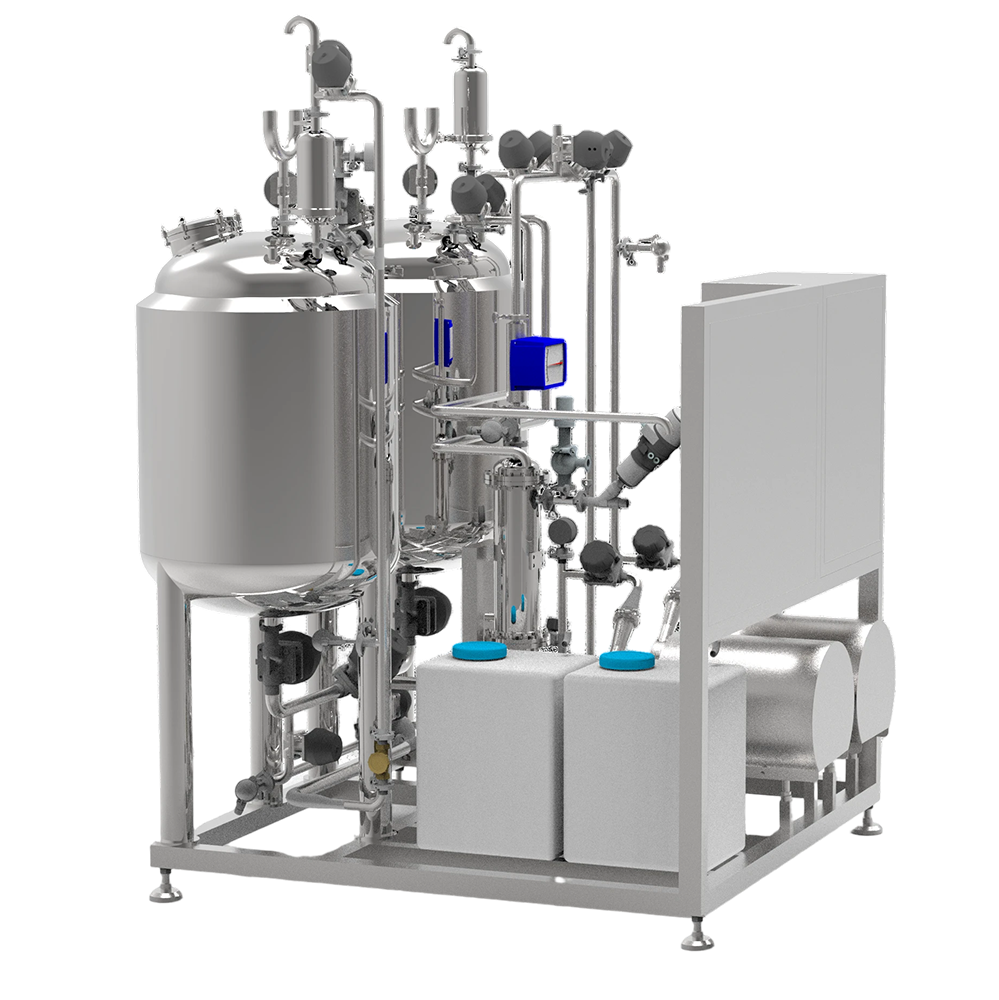
The typical fermentation vessel features a stainless steel, cylindrical tank equipped with agitation mechanisms such as impellers, spargers for aeration, and temperature control jackets or coils. These elements ensure homogeneous mixing, optimal oxygen transfer rates, and precise thermal regulation necessary for scalable fermentation processes.
SKE & Eagle’s manufacturing capabilities allow custom fabrication of fermenters with capacities ranging from pilot-scale units of a few liters to industrial-scale vessels exceeding 20,000 liters. The company’s advanced CNC machining and modular fabrication techniques guarantee engineering precision and hygienic construction. All contact surfaces comply with 3-A sanitary standards, crucial for pharmaceutical and food-grade production environments.
Advanced instrumentation integration from SKE & Eagle enables continuous real-time monitoring of critical parameters including pH, dissolved oxygen, temperature, and foam level. These sensors feed into automated control systems that modulate agitation speed, aeration flow, and nutrient dosing, ensuring consistent process conditions and reducing operator intervention.
To illustrate system architecture, consider a bioreactor equipped with dual mechanical agitators and a multi-port sparger system designed to optimize oxygen transfer while minimizing shear stress on sensitive microorganisms. Temperature control is achieved via a double-jacket with insulated layers, ensuring minimal heat loss and rapid thermal response.
Moreover, SKE & Eagle supplements the fermentation system with advanced water treatment capabilities that guarantee supply water quality meeting USP and EP standards, critical for maintaining sterility and maximizing productivity.
In summary, engineering design of fermentation equipment at SKE & Eagle reflects high standards of mechanical integrity, hygienic configuration, automation readiness, and flexible scalability tailored to specific fermentation process requirements.
3. Key Components and Technology Enhancements in Fermentation Systems
Fermentation equipment incorporates multiple key components engineered for optimized biological performance and system robustness. Understanding each component’s function is critical for process engineers and plant operators.
Agitators: Impeller design and placement are paramount. Conventional Rushton turbines offer high shear suitable for aerobic fermentation of robust microorganisms, while marine propellers provide gentle mixing for shear-sensitive cells. Variable frequency drives enable precise speed control to modulate mixing intensity.
Spargers and Aeration Systems: Gas transfer efficiency hinges on sparger design, bubble size, and distribution. Ring spargers, sintered discs, and microporous spargers each provide different mass transfer profiles suited to specific microbial oxygen demands. Integration of oxygen enrichment technology further amplifies bioprocess yields in demanding applications.
Temperature Control Units: Precision thermal regulation is achieved via double jacketed vessels with circulating glycol or water systems controlled by PID loops, offering tight temperature band control essential for microbial homeostasis during processing.
Foam Control: Foam formation can disrupt fermentation homogeneity and cause overflow. Automated foam detection coupled with antifoam dosing pumps maintains foam at safe levels, ensuring uninterrupted operation.
Sensors and Process Analytics: Modern fermentation systems leverage RTD sensors for temperature, amperometric and optical dissolved oxygen probes, pH electrodes with temperature compensation, and biomass density sensors such as capacitance probes for in situ cell growth monitoring.
Supplementary technological enhancements include the integration of Clean-In-Place (CIP) systems for sterile and automated cleaning cycles, reducing downtime and contamination risk. These systems follow validated sanitization protocols including steam-in-place (SIP) to maintain aseptic conditions throughout the fermentation lifecycle.
Advanced fermentation equipment at SKE & Eagle also supports modular expansion and remote SCADA monitoring, enabling comprehensive process visibility and control from centralized facilities.
4. Industrial Applications and Customized Solutions in Fermentation Processing
The versatility of fermentation equipment is evident in the variety of industrial sectors relying on optimized bioprocessing. Tailored fermentation systems from SKE & Eagle demonstrate profound impact in diverse applications:
Food & Beverage: Breweries utilize fermenters engineered for consistent batch performance with rapid temperature cycling capabilities to accommodate different beer styles. Dairy producers deploy fermentation tanks for yogurt and probiotic cultures with stringent aseptic requirements enabled by specialized agitation and CIP designs.
Pharmaceutical Manufacturing: Production of antibiotics, vaccines, and recombinant proteins demands fermenters constructed with pharmaceutical-grade materials and compliance to cGMP regulations. Equipment integrates high-precision sensors and sterilization capabilities, as emphasized in SKE & Eagle’s system designs.
Biofuels & Biochemicals: Large-scale fermenters process lignocellulosic hydrolysates and industrial enzymes converting biomass substrates into fermentable sugars. SKE & Eagle’s experience in handling corrosive substrates and high-solid fermentations ensures durability and system uptime.
Case studies highlight SKE & Eagle’s ability to provide customized mockup testing and pilot installations, verifying process parameters before full-scale deployment to mitigate risk and maximize return on investment.
Fermentation process integration frequently includes upstream sterilization and downstream separation technology. SKE & Eagle’s expertise extends into designing entire fermentation production lines with embedded water and waste treatment solutions ensuring sustainability and regulatory adherence.
These comprehensive solutions underscore the engineering and manufacturing competence that distinguishes SKE & Eagle as a leading fermentation equipment provider.
5. Selection Criteria and Performance Optimization of Fermentation Equipment
Choosing appropriate fermentation equipment is a critical decision influencing operational efficiency, product quality, and scalability. Decision-making must consider a multi-faceted array of technical factors:
Microorganism Characteristics: Shear sensitivity, aerobic vs. anaerobic metabolism, and growth kinetics dictate agitator type, aeration capabilities, and vessel configuration.
Process Parameters: Required temperature ranges, pH stability, fermentation duration, and substrate composition direct materials selection and instrumentation requirements.
Production Scale and Throughput: Pilot, pilot to full production scale transitions are enabled by modular designs. SKE & Eagle’s scale-up protocols leverage geometric similarity and consistent agitation power input measures to ensure process reproducibility.
Sterility and Cleaning Regimens: Considerations include Clean-In-Place (CIP) efficiency, Steam-In-Place (SIP) capabilities, and sanitization cycle validation impact material grades and vessel accessibility.
Control and Automation: Integration of SCADA systems and sensor networks for data acquisition, process control, and alarm management improve operational reliability and enable advanced process analytics.
Optimization strategies include implementing online biomass monitoring to adjust nutrient feed rates dynamically, optimizing aeration to maximize oxygen transfer rates (OTR), and applying predictive maintenance informed by equipment condition monitoring reducing unplanned downtime.
Consultation with engineering experts, such as those at SKE & Eagle, provides invaluable insight into matching fermentation equipment specifications with unique bioprocess requirements, combined with rigorous testing and validation phases ensuring optimal process performance.
6. Compliance Standards, Operation Best Practices, and Common Misconceptions
Compliance with regulatory standards forms a cornerstone of fermentation equipment deployment, especially in sectors such as pharmaceuticals and food production. Fermentation fermenters must meet established criteria including FDA, cGMP, EHEDG, and 3-A Sanitary standards depending on the application.
Material traceability, welding standards, surface finish requirements, and documentation are meticulously enforced in design, fabrication, and commissioning phases. SKE & Eagle’s adherence to these standards reflects the company’s commitment to trustworthiness and manufactural excellence.
Operational best practices include thorough inoculum preparation, controlled aseptic environment maintenance, frequent equipment calibration, and preventive maintenance scheduling. These practices mitigate contamination risks and mechanical failure.
Common misconceptions involve presumed interchangeability of fermenters across applications without customization; this often leads to suboptimal microbial productivity or equipment damage. Another myth is that larger fermenters always yield better economies of scale, which ignores complexities in oxygen transfer and mixing dynamics.
Addressing these misconceptions through engineering education and clear communication is an important value proposition provided by SKE & Eagle’s technical consultation services.
7. Frequently Asked Questions about Fermentation Equipment
What are the most critical factors to consider when selecting fermentation equipment?
Selection hinges on microorganism type, process parameters like temperature and pH, sterility requirements, production scale, and integration with process control systems. Equipment from providers like SKE & Eagle ensures that these factors are optimally matched for maximum efficiency.
How does SKE & Eagle ensure high reliability in fermentation equipment?
SKE & Eagle employs advanced engineering standards, precision manufacturing, and integration of water treatment and automation technologies, ensuring robust and consistent fermentation operations with minimal downtime.
What sanitation methods are used in modern fermentation systems?
Modern systems use Clean-In-Place (CIP) and Steam-In-Place (SIP) methods to maintain aseptic conditions without manual disassembly. SKE & Eagle’s fermentation equipment integrates tailored CIP/SIP solutions compliant with industry standards.
Can fermentation equipment be customized for different applications?
Yes, customization includes vessel volume, agitation type, instrumentation package, and ancillary systems. SKE & Eagle offers tailored fermentation solutions designed to meet unique process demands across industries.
What role does water treatment play in fermentation equipment performance?
Water quality is crucial for microbial growth and product purity. Integrating water treatment solutions ensures that fermentation media and cleaning water comply with sterility and chemical purity standards, a strength highlighted in SKE & Eagle’s offerings.
Contact SKE & Eagle for Expert Fermentation Equipment Solutions
For organizations seeking expert guidance and high-quality fermentation equipment tailored to specific industrial applications, SKE & Eagle offers unparalleled engineering expertise, cutting-edge manufacturing capabilities, and trusted process solutions. We encourage you to connect with our specialists to discuss your project needs in detail and to discover how our advanced systems can help optimize your fermentation processes.
Feel free to reach out via our Facebook profile or contact us directly by email at info@ske-eagle.com. Alternatively, please complete the contact form located at the bottom of our website to receive a personalized consultation.