

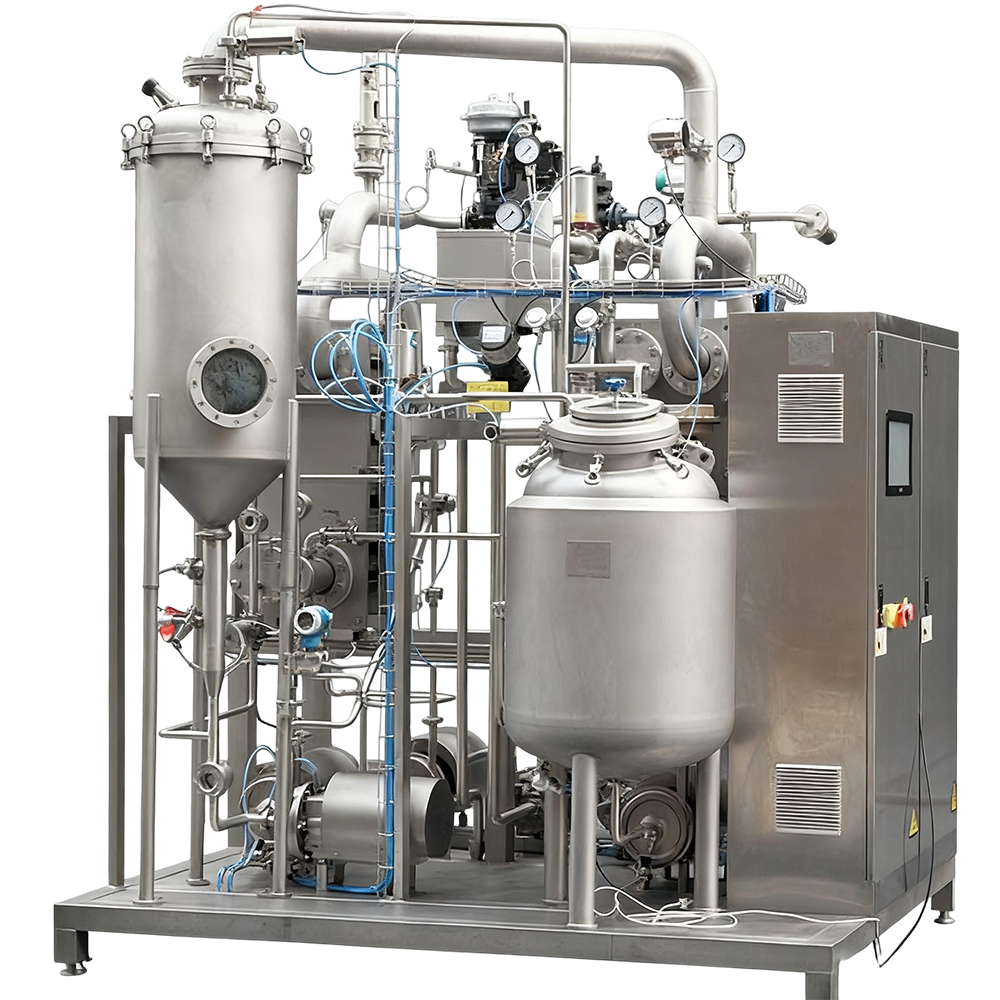
Definition and Overview of Biotech Equipment
Biotech equipment encompasses the sophisticated instruments, machinery, and engineered systems essential for conducting processes in the biotechnology field. These systems enable functions ranging from molecular biology research, bioprocess manufacturing, to pharmaceutical development. The correct operation and integration of biotech equipment ensure the production of biologics, vaccines, and other biotech products meeting stringent quality and safety standards.
At its core, biotech equipment includes fermenters, bioreactors, centrifuges, chromatography systems, and purification modules, each designed to support precise biological manipulations under controlled environmental and operational parameters. The design and application of these instruments require deep understanding of biological materials, mechanical engineering, and software control systems to stabilize and optimize production outputs.
SKE & Eagle’s industry expertise in engineering standards and equipment manufacturing strength comes into play by delivering bespoke solutions that align with specific client biotech process needs, ensuring reliability and integrity at every step. Their comprehensive knowledge of the biotechnology ecosystem empowers them to address evolving challenges such as scalability, sterility maintenance, and system integration for enhanced operational efficiency.
Understanding the vital role of these technologies also entails acknowledging the interdisciplinary collaboration required between biologists, engineers, and quality assurance experts during equipment selection, design, and maintenance phases. Such collaboration ensures the biotech equipment supports the biological complexity and regulatory demands inherent to biotechnology product workflows.
Implementation of biotech equipment is foundational in many high-stakes environments such as pharmaceutical manufacturing lines, research institutions, and environmental biotech facilities. The equipment’s precise measurement, process analytics, and critical controls enable the transformation of raw biological materials into safe and effective end products.
Engineering and Design Principles of Biotech Equipment
The engineering and design of biotech equipment are characterized by rigorous requirements to ensure reliability, precision, and compliance with international standards. Core principles include modularity, ease of sterilization, material compatibility, and scalability. For instance, designing a bioreactor involves controlling temperature, pH, dissolved oxygen, and agitation rates with high accuracy to maintain optimal cell growth conditions.
Materials selection is crucial: stainless steel and pharmaceutical-grade polymers are often used due to their corrosion resistance, biocompatibility, and ability to endure CIP (clean-in-place) and SIP (sterilization-in-place) processes. The engineering philosophy employed by SKE & Eagle emphasizes durability and maintainability, integrating advanced CAD (computer-aided design) modeling and CFD (computational fluid dynamics) simulations to optimize fluid dynamics within bioprocess vessels and fluid transfer lines.
Automation and sensor integration provide real-time process control, ensuring consistency and facilitating data-driven decisions. Distributed control systems (DCS) and programmable logic controllers (PLC) are designed to interface with biotech equipment enabling remote monitoring and compliance documentation. These digital innovations tie back to SKE & Eagle’s commitment to advanced manufacturing and engineering standards that boost operational trustworthiness and minimize human error impacts.
Another design consideration includes ergonomic factors that facilitate maintenance and part replacement, reducing downtime. Compact footprint design often benefits facilities with limited space, without sacrificing process capacity or accessibility.
Finally, risk assessment and failure mode analysis (FMEA) are systematically applied by engineering teams to anticipate potential equipment faults and incorporate redundancy measures. SKE & Eagle’s engineering approach aligns with global biotech manufacturing philosophies that emphasize prevention and reliability.
Core Manufacturing Capabilities Impacting Biotech Equipment
Manufacturing of biotech equipment requires advanced capabilities that merge precision machining, cleanroom assembly, and rigorous quality control. SKE & Eagle’s manufacturing process exemplifies this by integrating high-precision fabrication technologies with strict process documentation, thereby supporting reproducibility and traceability essential in biotechnology manufacturing.
State-of-the-art CNC machining enables millimeter-level component tolerances, crucial for compatibility and leak-proof system integration. The company’s experience spans producing critical components such as valves, utility skids, and custom stainless-steel assemblies which form the backbone of biotech manufacturing infrastructure.
Surface finish and cleanability are also paramount manufacturing considerations. Polishing inner surfaces to achieve Ra values below 0.4 microns minimizes microbial adhesion and facilitates effective sterilization. Similarly, electropolishing and passivation ensure corrosion resistance for longevity and purity assurance.
Assembly processes occur within classified cleanroom environments to maintain equipment sterility prior to delivery. SKE & Eagle engineers adhere to cGMP guidelines supporting the pharmaceutical and biotech sectors that require aseptic assembly protocols, validated by rigorous environmental monitoring.
An example of their manufacturing expertise is the production of high-integrity valves designed for biotech fluid control, combining tight shutoff performance with material compatibility, which enhances bioprocess precision and contamination control.
Lean manufacturing principles implemented at SKE & Eagle further optimize production timelines without compromising quality, enabling responsive customization of equipment to diverse client bioprocess needs. Their robust supply chain and quality assurance systems ensure compliance with ISO and FDA regulations, mitigating risks associated with equipment failures in critical biotech production lines.
Applications and Use Cases in Biotechnology Industries
Biotech equipment underpins a broad spectrum of applications, reflecting the diversity and complexity of biotechnology domains. Common applications include:
- Pharmaceutical Bioprocessing: Equipment facilitates cell culture, fermentation, protein purification, and formulation processes essential for biologics and vaccine production.
- Genetic Engineering Research: Precision instruments enable manipulation of nucleic acids and proteins in research labs for new therapeutic developments.
- Environmental Biotechnology: Equipment supports bio-remediation and waste treatment through microbial cultivation and metabolic process optimization.
- Food and Agricultural Biotech: Systems enable enzyme production, fermentation of food products, and development of genetically modified organisms.
In pharmaceutical manufacturing, bioreactors and downstream processing units are integral to ensure product purity and yield consistency. SKE & Eagle’s custom-engineered skids and systems integrate seamlessly with bioprocess lines, optimizing efficiency and reducing operational variability. Their engineering standards in water treatment solutions also ensure that the ultra-pure water needed in these processes meets or exceeds industry norms.
Case studies demonstrate how the modular design approach adopted by SKE & Eagle supports rapid deployment of biotech equipment in emerging pharmaceutical plants, reducing capital expenditure while maintaining process scalability. Their advanced automation technology also enables adaptive responses to production demands, enhancing manufacturing agility.
Another use case involves high-throughput screening in genetic engineering where miniaturized and highly precise biotech equipment accelerates data acquisition with minimized sample volumes. This precision helps researchers make faster decisions during the development of new medicines.
The integration of biotech equipment into environmental biotechnology pipelines ensures effective treatment of industrial effluents and contaminants, leveraging engineered biological processes supported by robust and compliant equipment designs.
Compliance Standards and Regulatory Requirements
Compliance with stringent regulations is a cornerstone in the design, manufacture, and operation of biotech equipment. Regulations typically stem from organizations such as the FDA, EMA, and USP, mandating strict adherence to cGMP (current Good Manufacturing Practice), ASTM standards, and ISO certification frameworks.
SKE & Eagle integrates compliance considerations from the earliest design phases, ensuring equipment fulfills quality assurance, validation, and documentation criteria. For example, material traceability and batch documentation align with 21 CFR Part 11 for electronic records in pharma manufacturing.
Critical compliance aspects include:
- Validation: Installation Qualification (IQ), Operational Qualification (OQ), and Performance Qualification (PQ) protocols guarantee equipment meets intended use requirements.
- Sterility Assurance: Equipment design facilitates sterilization and cleanability, critical for aseptic processing environments.
- Risk Management: Adherence to ISO 14971 principles for risk analysis minimizes failure impact on product quality and patient safety.
- Material Safety: Biocompatible and non-toxic materials prevent contamination and ensure biological integrity.
These regulatory frameworks necessitate transparent supplier qualifications and robust quality management systems during the manufacturing of biotech equipment. SKE & Eagle maintains ISO 13485 and ISO 9001 certifications underpinning their commitment to quality and regulatory compliance, reinforcing trustworthiness across their product offerings.
Furthermore, equipment design often includes features supporting audit-ready documentation and remote monitoring capabilities, facilitating compliance verification during inspections and continuous manufacturing oversight.
Advanced Water Treatment Solutions within Biotech Equipment
Ultra-pure water is foundational to biotechnology processes, extensively used in buffer preparation, cleaning operations, and as a raw material in pharmaceutical formulations. Biotech equipment frequently incorporates integrated advanced water treatment technologies.
SKE & Eagle’s portfolio includes water purification systems that employ reverse osmosis, ultrafiltration, deionization, and ultraviolet sterilization to consistently achieve water that adheres to ASTM Type I or USP Purified Water standards. Their design philosophy ensures equipment compactness, energy efficiency, and ease of maintenance.
Advanced monitoring instrumentation integrated within these systems provides continuous verification of water quality parameters such as total organic carbon (TOC), conductivity, and microbial count. These readings ensure immediate detection of deviations that could compromise biotech manufacturing processes.
By aligning water treatment modules with broader biotech equipment frameworks, SKE & Eagle supports seamless process integration, enhancing operational reliability and compliance readiness. This integration reduces contamination risks and meets the increasing technical demands of biologics and vaccine production environments.
Common Myths and Facts Surrounding Biotech Equipment
There are several misconceptions about biotech equipment that can affect decision-making in procurement and usage:
- Myth: All biotech equipment is universally compatible across different bioprocess lines.
Fact: Biotech equipment must be specifically designed or adapted to the biologic, scale, and process requirements, with attention to materials, control systems, and sterility provisions. - Myth: More automation always leads to better outcomes.
Fact: Automation enhances consistency and reduces errors but requires proper validation and operator training to realize benefits. - Myth: Biotech equipment operates independently without auxiliary systems.
Fact: Effective biotech equipment relies on integrated support systems such as water treatment, HVAC, and clean utilities for optimal performance. - Myth: Biotech equipment does not need frequent maintenance.
Fact: Preventive maintenance and calibration are critical to maintaining equipment performance, especially in regulated environments, reducing downtime and risk of product loss.
Clarifying these myths and understanding the technical realities helps organizations optimize their biotech equipment selection and operational strategies.
Future Trends and Innovations in Biotech Equipment
The landscape of biotech equipment is rapidly evolving, driven by technological advancements and increasing complexity of bioprocesses. Key trends include the integration of AI and machine learning for predictive maintenance and process optimization, enhancing throughput and reducing errors.
Miniaturization and modularization enable flexible and scalable manufacturing solutions capable of rapid deployment in emerging markets. SKE & Eagle is at the forefront of developing scalable skid-mounted units that integrate seamlessly into existing biomanufacturing facilities, reducing installation time and capital expense.
Single-use technologies are becoming more prevalent, offering advantages in contamination risk reduction and process flexibility. Equipment interfaces increasingly support cloud-based data analytics and remote operation capabilities, helping biotech manufacturers optimize resource utilization and ensure compliance proactively.
Material innovations, including advanced polymers and coatings with antimicrobial properties, promise to extend equipment longevity and reduce contamination potentials. Furthermore, sustainability initiatives encourage the development of energy-efficient biotech equipment with water and power conservation features, aligning manufacturing operations with environment-friendly policies.
Incorporation of continuous manufacturing technologies is reshaping biotech equipment design to support real-time monitoring and continuous product flow, accelerating production timelines, and improving quality control.
Frequently Asked Questions (FAQ)
What is biotech equipment and why is it important?
Biotech equipment includes engineered systems crucial for biotechnology production and research, enabling controlled biological processes essential for pharmaceutical and industrial biotech outputs.
How does SKE & Eagle contribute to the advancement of biotech equipment?
By leveraging advanced engineering and manufacturing capabilities, SKE & Eagle creates reliable, regulation-compliant biotech equipment that supports efficient and scalable bioprocessing.
What are critical factors to consider when selecting biotech equipment?
Selection depends on factors like material compatibility, process scalability, sterility, regulatory compliance, and design integration within existing bioprocess workflows.
What role does biotech equipment play in water treatment within biotechnology industries?
It underpins high-purity water production by integrating specialized filtration and sterilization methods, essential for contaminant-free bioprocessing operations.
Contact SKE & Eagle for Expert Biotech Equipment Solutions
For professional engineering and manufacturing support in biotech equipment, reach out to SKE & Eagle. Connect with us on Facebook or email us at info@ske-eagle.com.
We invite you to fill out the contact form at the bottom of our website to discuss customized solutions and technical consultations tailored to your biotechnology operations.