

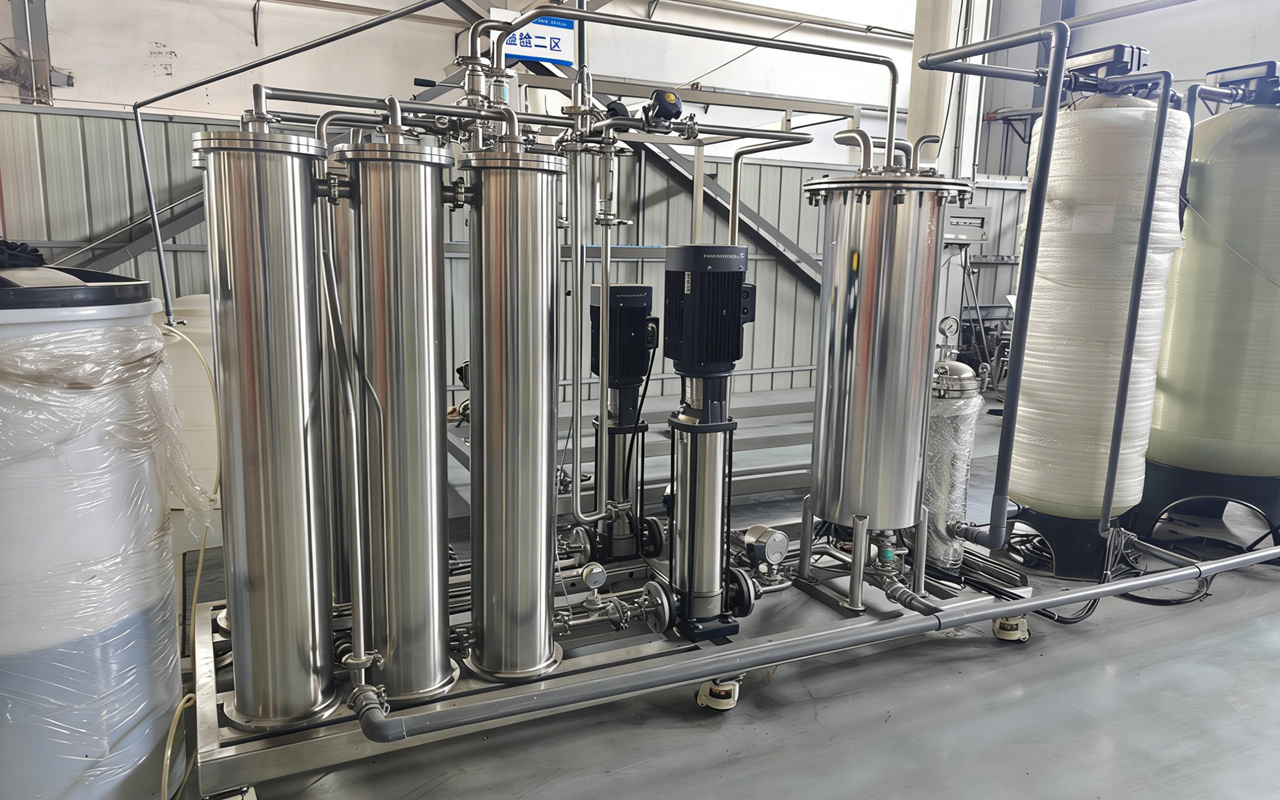
- RO and EDI aren’t competing choices in most pharmaceutical systems, RO removes 95-99%+ of dissolved solids first, then EDI polishes what RO leaves behind down to very low conductivity (Morui Water, 2025).
- EDI’s main advantage over traditional ion exchange is eliminating chemical regeneration entirely, which matters most for continuous, high-volume operations.
- RO alone can meet Purified Water conductivity limits in many cases; EDI becomes necessary when downstream requirements (like WFI-grade polish) demand consistently lower conductivity than RO alone reliably delivers.
Is “RO vs. EDI” Really the Right Question?
In most pharmaceutical water systems, it’s not RO versus EDI, it’s RO then EDI. RO handles the bulk of dissolved solids removal, typically 95-99%+ rejection, and EDI polishes what remains, stripping residual ions down to very low conductivity without chemical regeneration (Morui Water, 2025). The real decision most facilities face isn’t which technology to pick, it’s whether their required output purity justifies adding EDI on top of RO at all.
For the broader technology comparison including ultrafiltration’s role, see our water purification technology guide.
When Is RO Alone Sufficient?
RO alone can meet USP Purified Water conductivity requirements in many applications, particularly where feed water quality is good and the required purity margin isn’t tight against the 1.3 µS/cm limit. Facilities producing Purified Water for non-sterile formulation or general cleaning often run RO-only or RO plus a simpler polishing step without needing EDI’s added capital cost.
When Do You Need to Add EDI?
EDI becomes necessary when downstream requirements demand conductivity consistently and reliably below what RO delivers on its own, common in facilities producing water that feeds into WFI generation, or where feed water variability makes RO-only performance too inconsistent to trust without a polishing stage. EDI’s chemical-free continuous regeneration also matters operationally for any facility running production continuously, since traditional ion exchange’s regeneration downtime becomes a real throughput constraint at scale.
What Are the Cost and Operational Tradeoffs?
RO-only systems cost less upfront and have fewer components to maintain. Adding EDI increases capital cost but removes the ongoing chemical storage, regeneration downtime, and spent-regenerant disposal that a comparable ion-exchange polishing stage would require. For continuous, high-volume operations, EDI’s operational savings often justify the added capital cost within a reasonable payback period; for smaller or intermittent-use systems, the math is less clear-cut.
Frequently Asked Questions
Do I need both RO and EDI, or just one?
Most pharmaceutical systems use RO first, then EDI as a polishing stage, rather than choosing one over the other. Whether you need EDI on top of RO depends on your required output conductivity and how consistently your feed water quality holds.
Can RO alone meet USP Purified Water standards?
In many cases, yes, particularly with good feed water quality and adequate margin against the 1.3 microsiemens per centimeter conductivity limit. Tighter purity requirements or variable feed water typically require EDI polishing to reliably stay in spec.
Why choose EDI over traditional ion exchange for polishing?
EDI regenerates continuously using an electrical field, eliminating the chemical storage, regeneration downtime, and spent-regenerant disposal that traditional ion exchange requires, which matters most in continuous, high-volume operations.
SKE & Eagle RO and EDI Water Systems
SKE & Eagle designs purified water systems integrating RO and EDI stages sized to your required output purity, not a one-size default. See our USP water standards guide for the specific conductivity and TOC limits these systems are designed to meet.