

”
Understanding cGMP Water Treatment
Current Good Manufacturing Practices (cGMP) water treatment is a crucial aspect of pharmaceutical, biotechnology, and other regulated industries’ production environments. The water used in these applications often needs to meet stringent quality standards to ensure product safety, efficacy, and regulatory compliance. The term cGMP water treatment refers not only to the process of purifying and conditioning water but also to establishing and maintaining systems that comply with regulations enforced by agencies such as the FDA, EMA, and WHO.
cGMP guidelines mandate strict control over water quality parameters, system hygiene, documentation, and record-keeping. Water used for active pharmaceutical ingredients (APIs), cleaning, and formulation must be produced with controlled microbial levels, organic contaminants, endotoxins, and chemical impurities. The water quality standards commonly referenced include Water for Injection (WFI), Purified Water (PW), and Clean Steam, each with specific standards defined in pharmacopeial compendia.
From the engineering perspective, cGMP water treatment involves complex systems integrating multiple purification technologies, system design principles, and operation protocols to ensure consistent high-quality outputs. This article explores the engineering fundamentals, technological options, compliance requirements, and practical implementations of cGMP water treatment systems with reference to SKE & Eagle’s industry-leading expertise in engineered water treatment solutions.
To appreciate the scope of cGMP water treatment, one must understand the water quality specifications and regulatory framework. For instance, Purified Water must meet specifications for conductivity, total organic carbon (TOC), microbial contamination, and endotoxin levels under pharmacopeial standards. WFI, the most stringent grade, is typically produced by distillation or advanced membrane technologies and supplied via hygienically designed distribution systems.
Implementing compliant water treatment infrastructure requires multidisciplinary coordination, blending chemical engineering, microbiology, automation, and validation disciplines. SKE & Eagle excels in delivering solutions where engineering prowess meets regulatory rigor, ensuring water treatment systems align with current standards while maximizing operational efficiency.
Engineering Standards and Design Criteria for cGMP Systems
Designing and engineering water treatment systems that meet cGMP standards demand a rigorous approach encompassing material selection, hygienic design, system validation readiness, and operational sustainability. Regulatory agencies expect that system design prevents contamination, facilitates cleaning and sanitization, and allows for thorough documentation and traceability.
Key engineering standards relevant to cGMP water treatment systems include:
- ASME BPE (Bioprocessing Equipment) Standards: These standards dictate hygienic design of piping and equipment, including surface finishes, weld integrity, and pressure ratings.
- FDA and EMA cGMP Guidelines: These guidelines provide overarching expectations for water system design, monitoring, and maintenance.
- Pharmacopeia Standards: The US, European, and Japanese Pharmacopeias outline water quality requirements, test methods, and system attributes.
Material selection is critical due to the corrosive and sanitary nature of purified and WFI water. Stainless steel, particularly 316L with electropolished finishes, is the industry standard for piping, storage tanks, and distribution loops. The smooth, inert surface prevents microbial adhesion and biofilm formation, which are critical concerns in cGMP compliance.
System design incorporates continuous recirculation of treated water at elevated temperatures, automated clean-in-place (CIP) and sterilize-in-place (SIP) capabilities, and robust instrumentation for comprehensive monitoring (conductivity, TOC, temperature, microbial counts). The design philosophy prioritizes minimizing dead legs, avoiding pipe crevices, and facilitating easy drain and vent to support hygienic operation.
The role of automation and control systems cannot be overstated. Integrated SCADA and PLC solutions enable real-time monitoring, alarm generation, and automated sanitization cycles ensuring continuous compliance and process stability. SKE & Eagle systems employ advanced control architectures to meet these rigorous engineering demands with proven reliability.
Core Technologies in cGMP Water Treatment
Multiple technological components synergize to create water treatment systems that comply with cGMP standards. While the technology mix depends on feedwater quality, regulatory requirements, and facility layout, proven core technologies include:
Pretreatment Processes
These typically include multimedia filtration, activated carbon filters, and/or water softening to remove suspended solids, chlorine, chloramines, and hardness which would damage downstream equipment or hinder purification steps.
Reverse Osmosis (RO) and Ultrafiltration (UF)
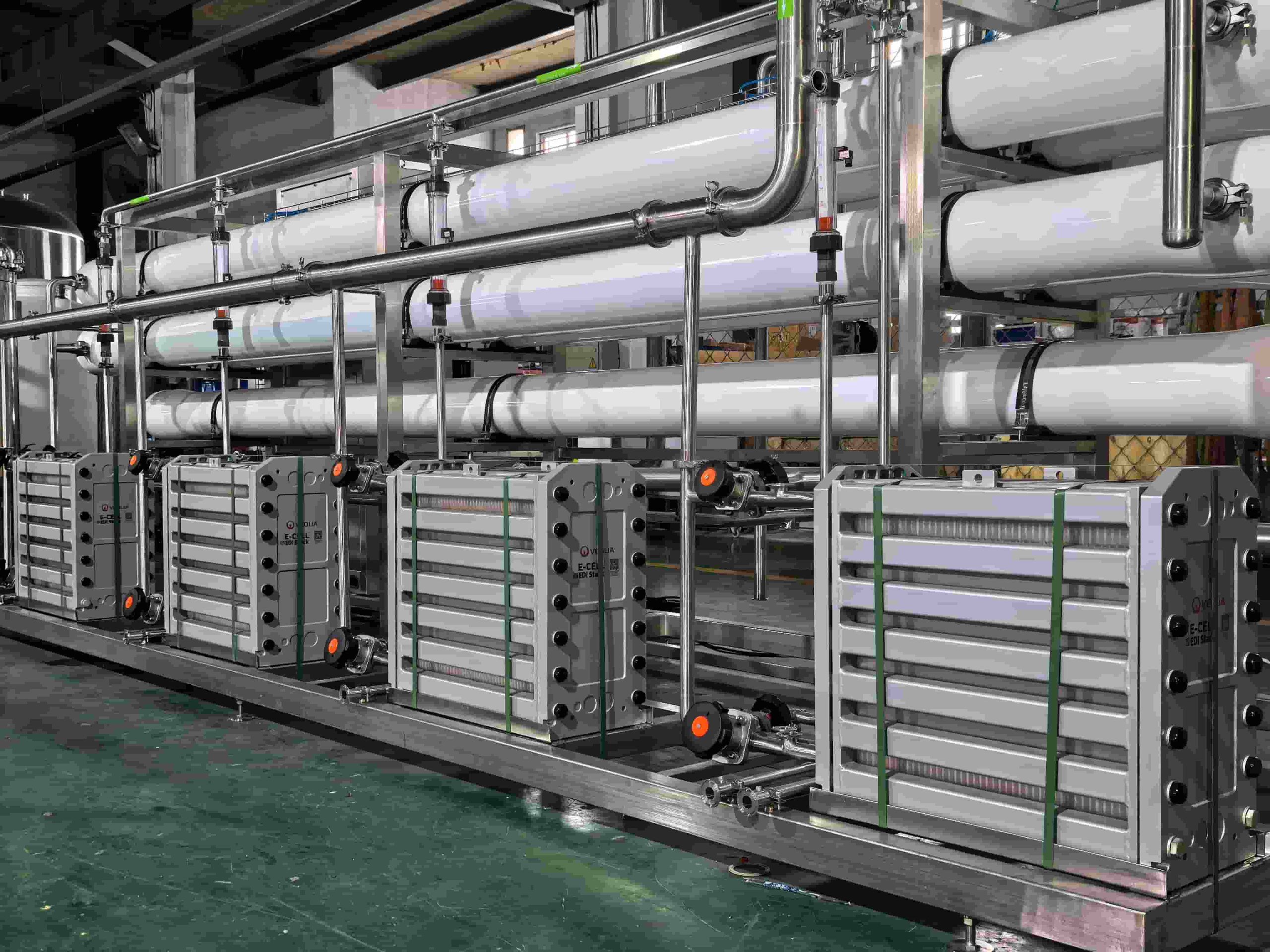
RO membranes remove a broad spectrum of dissolved solids, bacteria, pyrogens, and organic compounds. Ultrafiltration provides additional microbial barrier protection and is often applied post-RO for enhanced microbial control. RO and UF membranes used in cGMP settings are designed for sanitary operation, validated for reproducibility, and maintainable by clean-in-place processes.
Electrodeionization (EDI)
As a continuous method of polishing and deionizing water without chemical regenerants, EDI improves water purity sustainably. EDI technology is commonly integrated following RO for high-purity Water for Injection production.
Distillation
Multi-effect and vapor compression distillation remain gold standards for producing WFI, especially in US pharmaceutical plants complying with USP. Distillation inherently provides microbial and endotoxin rejection but requires robust heating and condensate collection design.
UV and Ozone Sanitization
These advanced oxidation processes disinfect water and sanitize distribution loops without altering water chemistry. Ozone is effective in controlling biofilm formation but demands sophisticated off-gas destruction due to its oxidative nature.
Deionization (DI) and Ion Exchange
Although less common in continuous processes, DI resin tanks may be used for batch or backup purification stages. Their use is declining in favor of automated EDI units to minimize downtime and chemical use.
Selecting technologies requires a thorough evaluation of feedwater characteristics, flow rates, temperature requirements, microbial control targets, and overall system integration. SKE & Eagle’s product line and engineered solutions demonstrate mastery across this technology spectrum, configured with customer-specific regulatory and operational demands in mind. For example, their water treatment systems feature modular designs enabling scalable and validated implementation.
Validation and Compliance in Water Treatment
Beyond engineering and technology, achieving cGMP compliance with water treatment systems hinges on precise, documented validation protocols. Validation is the documented evidence that the system performs consistently within specifications meeting quality and regulatory expectations.
Key validation stages include:
- Design Qualification (DQ): Documentation that the design meets cGMP requirements and user needs.
- Installation Qualification (IQ): Confirmation that equipment is installed per design specifications including material certifications, weld inspections, and sanitary connections.
- Operational Qualification (OQ): Testing system operations to verify control functions, instrument calibrations, alarms, and cleaning protocols.
- Performance Qualification (PQ): Demonstration of system capability to consistently produce water meeting quality specifications under normal operating conditions.
Validation protocols heavily reference pharmacopeial test methods for microbial limits, endotoxin levels, chemical purity, TOC, conductivity, and turbidity. Water sampling points are strategically determined to represent the distribution loop including storage tanks and critical use points.
Periodic revalidation and trend analysis are vital to maintain ongoing compliance. Continuous monitoring systems integrated in modern water treatment setups allow for immediate detection of drift from quality ranges. SKE & Eagle emphasizes the integration of networked analytics and automated reporting tools into their engineered systems to facilitate lifelong validation readiness.
Additionally, compliance extends beyond system functionality to GMP documentation practices including SOPs, batch records, preventive maintenance schedules, and deviation management to satisfy inspector expectations during audits.
For companies aiming to exceed regulatory expectations, the utilization of engineering standards and validation frameworks aligned with SKE & Eagle’s implemented design solutions streamlines compliance while optimizing operational life cycles.
Operational Best Practices and Maintenance for System Reliability
End-to-end reliability in cGMP water treatment is achieved through rigorous operational discipline and preventative maintenance. Proper operation ensures systems perform within validated parameters and prolong equipment lifespan.
Best practices include:
- Routine Monitoring: Continuous tracking of conductivity, TOC, microbial counts, temperature, and pressure with immediate corrective action if deviations occur.
- Scheduled Sanitization and Cleaning: Automated CIP/SIP cycles with chemical or thermal sanitizers to prevent biofilm accumulation and microbial ingress.
- Filter and Membrane Management: Timely replacement of cartridge filters, RO membranes, and UV lamps based on usage and water quality trends.
- Instrumentation Calibration: Regular verification of sensor and analyzer accuracy to ensure data reliability.
- Documentation and Training: Maintaining detailed logs and training operational staff in GMP protocols, system troubleshooting, and emergency procedures.
Proactive asset management frameworks extended by SKE & Eagle’s engineering teams focus on predictive maintenance enabled by IoT sensor integration within water treatment systems. This approach reduces unplanned downtime and supports sustainable production operations with minimal risk of cGMP non-compliance.
Operator insights gained through multi-industry experience highlight the importance of integrating robust alarm management and response protocols. By doing so, water system anomalies are controlled proactively, maintaining product quality and safety.
Application Case Studies in Pharmaceutical Manufacturing
Real-world applications of cGMP water treatment systems illuminate practical engineering challenges and solutions. Pharmaceutical manufacturers rely on compliant water systems for APIs synthesis, formulation, cleaning, and sterile processes.
One case involved retrofitting a complex pharmaceutical production plant’s water system to comply with recent revisions in WFI standards. The project required integrating advanced EDI polishing units with ultraviolet oxidation systems and reconstructing the distribution loop using ASME BPE-certified piping to mitigate biofilm risks. SKE & Eagle’s engineering team provided turnkey solutions featuring modular design, automated monitoring, and seamless validation support, ultimately improving water quality consistency and regulatory audit readiness.
Another application highlights a biotechnology company’s implementation of a multi-effect distillation-based WFI system designed for minimal energy consumption and maximal microbial control. By utilizing high-grade materials, hygienic engineering practices, and precise automation controls, the system achieved operational excellence aligned with strict cGMP compliance.
These case studies underscore the importance of tailored engineering solutions and validation-integrated operations. For deeper insight into industry-recognized design methodologies and product configurations, SKE & Eagle’s comprehensive water treatment product portfolio offers robust guidance and proven technology platforms.
Common Misconceptions and Myths about cGMP Water Treatment
Despite extensive knowledge in the field, several myths persist regarding cGMP water treatment systems. Clarifying these misconceptions is important to guide both engineers and quality professionals in best practices:
- Myth 1: Chemical sanitization alone is sufficient to maintain system sterility. Reality: While chemical sanitizers are essential, integration of thermal sanitization and continuous monitoring is critical to controlling biofilm and microbial contamination.
- Myth 2: Reverse Osmosis systems alone can produce Water for Injection quality water. Reality: Regulatory standards require distillation or validated membrane combinations (like RO with EDI and ultrafiltration) to achieve true WFI water purity.
- Myth 3: Frequent membrane replacement is always required regardless of water conditions. Reality: Proper pretreatment, cleaning regimes, and operational controls optimize membrane life and reduce costs.
- Myth 4: Monitoring conductivity alone ensures water quality compliance. Reality: Conductivity is a partial indicator; TOC, microbial counts, and endotoxin testing provide comprehensive assessments necessary for cGMP adherence.
SKE & Eagle addresses these misconceptions through their engineering education initiatives and system design philosophy, focusing on validated multi-technology approaches and integrated monitoring. This ensures water treatment systems exceed compliance with sustainable and practical performance.
Frequently Asked Questions about cGMP Water Treatment
What is the difference between Purified Water and Water for Injection in cGMP water treatment?
Purified Water (PW) is water treated to remove impurities and meets pharmacopeial specifications, typically used for general pharmaceutical processes. Water for Injection (WFI) has higher purity standards, is sterile, and free from endotoxins; produced via distillation or equivalent methods and used in parenteral product manufacturing. Both require cGMP-compliant treatment systems with validated processes.
How does SKE & Eagle ensure compliance in their water treatment systems?
SKE & Eagle leverages their engineering standards aligned with ASME BPE, stringent material selection, and advanced automation platforms. Their systems incorporate validated process steps, continuous monitoring, and are designed for hygienic operation to meet cGMP requirements. They also support detailed validation documentation and lifecycle services.
What are the key considerations for maintaining a cGMP water treatment system?
Regular sanitization cycles, monitoring critical water quality parameters, timely maintenance of components like filters and membranes, and strict adherence to SOPs are essential. Training personnel and thorough documentation also support ongoing compliance and system reliability.
Can modern membrane technologies replace distillation for WFI production?
Recent regulatory updates allow certain membrane-based systems combining RO, EDI, and ultrafiltration to produce compliant WFI, provided systems are fully validated. However, distillation remains the conventional gold standard and preferred in many facilities. System choice depends on facility-specific regulation, feedwater, and validation strategies.
Follow us on Facebook or email us directly at info@ske-eagle.com.
We invite you to fill out the contact form at the bottom of our website to discuss your specific water treatment challenges and solutions.
“