

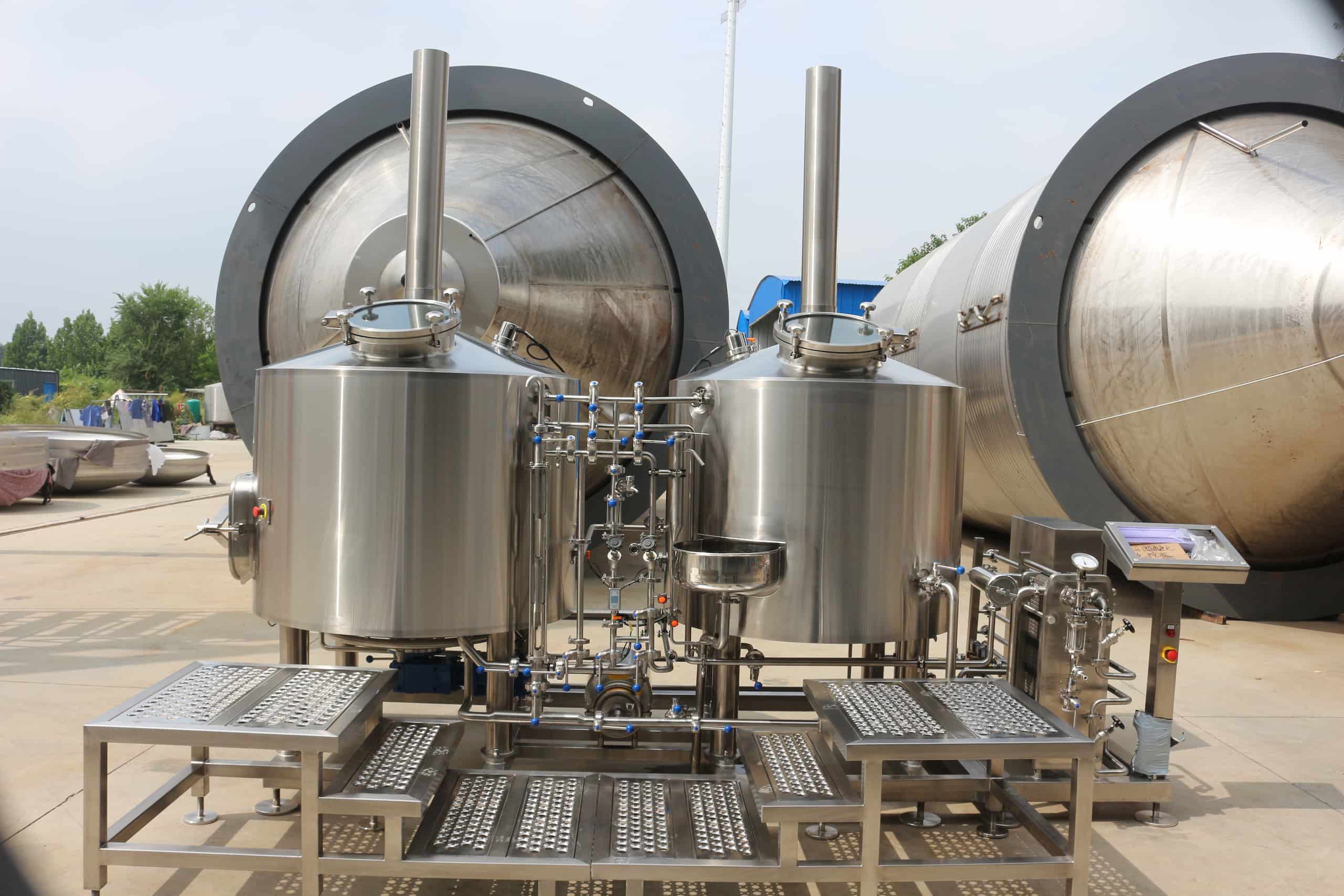
Overview of Brewhouse Equipment and Its Importance
The brewhouse is the central hub in the brewing industry where raw ingredients such as malted barley, water, hops, and yeast are transformed into beer through carefully controlled biochemical processes. At the heart of this transformation lies the brewhouse equipment — a collection of highly specialized vessels and mechanical systems designed to perform mashing, lautering, boiling, and whirlpool stages with precision and reliability.
Understanding brewhouse equipment is critical for brewers to optimize efficiency, control product quality, and maintain system reliability. This extends beyond traditional brewing vessels to encompass integrated systems that enhance energy efficiency, process automation, and sanitation. For companies such as SKE & Eagle, engineering innovative brewhouse solutions aligned with stringent manufacturing standards underpins a competitive edge in the global brewing equipment market.
In this comprehensive article, we delve into the technical foundations, modern advancements, operational considerations, and engineering rigor defining brewhouse equipment in contemporary brewing environments. Whether you are an engineer, brewer, or industry professional, understanding these facets equips you to make informed decisions and maximize your brewhouse system’s performance.
Core Components of Modern Brewhouse Equipment
The brewhouse equipment suite commonly includes the mash tun, lauter tun, brew kettle, whirlpool, and heat exchangers. Each component serves a distinct function in extracting fermentable sugars, clarifying wort, and preparing for fermentation.
Mash Tun
The mash tun is the vessel where milled malt is combined with water under controlled temperature conditions to convert starches into fermentable sugars. Precision temperature control and agitation are paramount to optimize enzymatic activity during mashing. SKE & Eagle’s expertise in precision welding and advanced vessel design facilitates highly efficient mash tun configurations ensuring thermal homogeneity and robust sanitation.
Lauter Tun
Following mashing, the lauter tun separates wort from spent grains through a false bottom filtration system designed to maximize extract recovery while minimizing wort turbidity. Engineering considerations here include grain bed permeability, recirculation circuits, and integrated runoff control.
Brew Kettle and Whirlpool
The wort is then transferred to the brew kettle for boiling with hops, sterilization, and protein coagulation. The design of the kettle prioritizes strong agitation, heat dispersion, and hopping homogenization. The whirlpool vessel then separates spent hops and trub particles post-boil by centrifugal action, enhancing wort clarity prior to cooling.
Heat Exchangers
Heat exchangers rapidly cool wort from boiling temperatures to fermentation set points. Plate and shell-and-tube designs are common, with materials engineered for corrosion resistance and sanitary operation. SKE & Eagle’s precision-assembled heat exchangers meet rigorous brewing hygiene standards, supporting continuous production schedules with minimal thermal losses.
Visualizing these components, the typical brewhouse flows in this sequence:
[Diagram Description]: Starting at the mash tun, the wort flows to the lauter tun where spent grains are removed; it then goes into the brew kettle for boiling; next to the whirlpool for particle separation; finally passing through a heat exchanger to prepare for fermentation.
For brewers looking to integrate these core components with turnkey engineering solutions, exploring the custom brewing equipment engineering offerings from industry leaders can provide scalable, optimized brewhouse configurations tuned to their specific operational profile.
Engineering Design Principles behind Brewhouse Equipment
Designing brewhouse equipment incorporates advanced thermodynamics, fluid dynamics, material science, and process engineering principles. Central themes include efficiency, sanitation, thermal control, and mechanical integrity throughout the equipment lifecycle.
Thermal Management and Heat Transfer
Effective heat transfer during mashing and boiling phases is achieved through jacketed vessels and steam or hot water circulation systems. Engineers apply conduction and convection principles alongside computational fluid dynamics (CFD) modeling to optimize heat uniformity and reduce energy consumption.
Fluid Flow Optimization
Pumping, wort recirculation, and wort runoff require careful fluid flow management to prevent shear degradation and preserve constituents’ integrity. Vessel internals such as agitators and false bottoms are engineered for laminar flow conducive to enzymatic reactions and efficient wort separation.
Structural Integrity and Safety Margins
Brewhouse vessels typically operate under pressure and temperature extremes, demanding high structural integrity. Design codes such as ASME Boiler and Pressure Vessel Code guide manufacture and testing. SKE & Eagle’s manufacturing capabilities exemplify adherence to these codes assuring reliability and operational safety for every system component.
Cleanability and Sanitation by Design
To meet stringent food safety standards, brewhouse equipment must be designed for Clean-in-Place (CIP) systems with smooth surfaces, minimal weld defects, and proper drainage to prevent microbial contamination. The surface finish and seamless construction are crucial engineering parameters driving hygienic equipment performance.
Incorporating these principles ensures that the brewhouse not only performs efficiently but also maintains a sanitary environment to comply with industry safety regulations like those outlined by the water treatment and sanitation solutions practiced by trusted manufacturers.
Material Selection and Manufacturing Standards
Material choice profoundly affects brewhouse equipment durability, corrosion resistance, cleanability, and thermal performance. Stainless steel alloys, particularly 304 and 316 grades, dominate due to their corrosion resistance against wort acids and cleaning chemicals.
Stainless Steel and Alloy Grades
316 stainless steel, with molybdenum addition, offers enhanced resistance to pitting and crevice corrosion critical in acidic wort environments. However, cost and mechanical properties require careful balance, often leading manufacturers like SKE & Eagle to customize grades for specific component duty cycles.
Weld Quality and Surface Finish
Welding precision is paramount—both from a structural and sanitation perspective. TIG and orbital welding techniques are preferred for consistent, high-quality seams. Polished interior finishes with Ra values <0.8 microns reduce microbial adherence and simplify CIP processes.
Compliance with Manufacturing Standards
Equipment undergoes rigorous testing and certification for compliance with ASME, PED, and other relevant standards. Additionally, traceability of raw materials and production processes is typically maintained to uphold quality assurance. SKE & Eagle’s proven manufacturing process reflects ISO 9001 quality management frameworks enhancing client confidence in each brewhouse implementation.
Understanding the metallurgy and manufacturing standards governing brewhouse equipment will guide operators on expected equipment longevity and performance consistency under continuous brewing conditions.
Incorporating Advanced Technologies and Automation
Modern brewhouse equipment extends traditional designs by integrating digital control systems, automation, and monitoring technologies to boost precision, repeatability, and data-driven decision-making.
Digital Control and Automation Systems
Programmable Logic Controllers (PLCs) and Human Machine Interfaces (HMIs) enabled with sophisticated algorithms regulate temperature ramps, timing, agitation, and flow rates in automatic sequences. This reduces operator error and enhances batch consistency. SKE & Eagle incorporates such automation elements aligned with their core engineering capabilities to deliver integrated brewhouse systems.
Real-Time Process Monitoring
Inline sensors for temperature, pH, gravity, and turbidity provide real-time insights during mashing and boiling. Data analytics enable proactive optimization and fault detection, reducing downtime. The capability to remotely monitor and control brewhouse operations is now a benchmark for high-throughput brewing facilities.
Energy Efficiency and Sustainability Innovations
Energy recovery systems, such as wort heat recovery exchangers and recirculated steam condensate loops, are engineered to reduce fuel consumption and carbon footprint. Implemented by industry leaders like SKE & Eagle, these reflect the brewing sector’s commitment to sustainable production without compromising performance.
Emerging technologies such as AI-assisted process optimization and IoT-enabled maintenance reporting will continue to shape brewhouse equipment evolution, offering brewers unprecedented control and efficiency gains.
Selection Criteria: How to Choose Optimal Brewhouse Equipment
Choosing brewhouse equipment requires comprehensive evaluation of brewery scale, product portfolio, and operational priorities. Key criteria cover technical capacity, compatibility, ease of maintenance, and cost of ownership.
Capacity and Throughput
Selection begins by defining target batch sizes and production frequency. Equipment sizing impacts wort volume handling, vessel dimensioning, and auxiliary system specification. Oversizing increases capital expenditure and operating costs; undersizing limits output and scalability.
Process Flexibility
Versatility to produce diverse beer styles necessitates adaptable mashing profiles, multi-stage heating, and modular equipment design. This flexibility may influence system complexity and automation options.
Integration with Existing Systems
New brewhouse equipment must interface seamlessly with fermentation tanks, packaging lines, and quality control labs. Manufacturers like SKE & Eagle provide turnkey integration solutions ensuring balanced workflows and minimizing installation disruptions.
Sanitation and Maintenance
Ease of cleaning, accessibility of components, and availability of spare parts directly affect downtime and hygiene compliance. Considering the manufacturer’s maintenance support network and engineering documentation can mitigate long-term risks.
Prospective buyers should review technical datasheets, attend site visits, and request test certificates from suppliers demonstrating adherence to standards and system reliability.
Operation Best Practices and Maintenance
Optimal brewhouse operation relies on thorough understanding of equipment dynamics, proactive maintenance routines, and careful process control.
Startup and Shutdown Procedures
Establishing standardized protocols for gradual heating, ingredient loading, and post-brew cooldown minimizes thermal stress and equipment wear. Automated control systems supported by sensors assist operators in maintaining ideal batch conditions throughout the process.
Routine Maintenance Tasks
Scheduled inspections and preventive maintenance, such as gasket replacement, weld examination, and valve calibration, prevent leaks and mechanical failures. SKE & Eagle’s equipment documentation typically includes detailed maintenance guides reflecting engineering best practices.
Troubleshooting Common Issues
Common operational challenges include heat exchanger fouling, agitation motor failure, and false bottom clogging. Timely identification and corrective action supported by sensor data analytics optimize uptime and product quality.
Training and Operator Expertise
Investment in operator training on brewhouse principles, control systems, and safety precautions ensures consistent performance and facilitates quick response to anomalies in the production cycle.
Compliance, Safety, and Troubleshooting Myths
Compliance with national and international brewing equipment standards safeguards personnel and product quality. Understanding common misconceptions aids in designing safer, more efficient brewhouse systems.
Key Regulations and Certifications
Brewhouse equipment must conform to ASME Boiler and Pressure Vessel Codes, FDA food contact regulations, and regional standards such as the European PED Directive. Manufacturers like SKE & Eagle deliver certified equipment with traceability ensuring regulatory compliance and operational safety.
Myths and Misconceptions
Myth: Bigger vessels always translate to higher productivity.
Fact: Oversized equipment can cause uneven heating and inefficient wort extraction. Proper sizing is critical.
Myth: Automation fully replaces the need for skilled operators.
Fact: Automation optimizes process control but skilled personnel remain essential to interpret data and manage exceptions.
Safety Considerations
Working with pressurized, hot liquid vessels demands rigorous safety protocols including pressure relief valves, thermal insulation, and emergency shutdown systems. Regular audit and compliance reviews are integral components of brewhouse plant management.
Future Outlook
As brewing scales up globally, embracing innovations in materials, automation, and sustainable design will be essential for brewhouse equipment to meet evolving quality and efficiency targets.
Frequently Asked Questions
What is the primary function of brewhouse equipment?
Brewhouse equipment facilitates the conversion of raw brewing ingredients into wort by carrying out mashing, lautering, boiling, and wort clarification processes under controlled conditions.
How does material selection impact brewhouse equipment performance?
Selecting corrosion-resistant and hygienic materials like 316 stainless steel ensures durability, cleanability, and compliance with food safety standards, which directly affects brewing quality and equipment lifespan.
Can automation be integrated into all brewhouse equipment?
Most modern brewhouse equipment can incorporate automation and digital controls to optimize process precision and repeatability, though customization may be required for legacy systems or specialized processes.
What considerations should be made when selecting brewhouse equipment?
Key considerations include production capacity, process flexibility, integration with other brewery components, maintenance demands, and compliance with applicable engineering standards.