


Sterile water looks simple. It is clear, colorless, and has no active ingredient. But in pharmaceutical manufacturing, it is one of the most important materials used in injectable medicines.
For manufacturers, making sterile water is not just about removing impurities. The water must meet strict quality rules. It must stay safe from contamination during production, storage, and distribution.
This needs more than a purification unit. It needs a well-designed pharmaceutical water system, supported by the right sterilization methods, monitoring equipment, and validation work.
This article explains what sterile water is, how it differs from Water for Injection (WFI), and why SIP and cGMP systems matter.
What Is Sterile Water Used For?
Sterile Water for Injection (SWFI) is a sterile, nonpyrogenic preparation. It is made from Water for Injection that has been sterilized and packed in a suitable way. It contains no antimicrobial agent, preservative, or other added substance.
Its main job is to act as a sterile solvent or diluent for injectable medicines. For example, a pharmacist may use it to dissolve a powder drug. Or a nurse may use it to dilute a concentrated solution before it is given to a patient.
But sterile water must not be injected directly into a vein without first adding a solute. It is hypotonic compared with blood. This means it has fewer dissolved particles than blood cells. If given alone, it can cause red blood cells to swell and break. This is called hemolysis.
Sterile water also has uses in pharmaceutical production. Depending on the product and the pharmacopoeia rules, it may be used to clean equipment, prepare containers, or make other sterile products. The right water grade depends on the process and the intended use.
For manufacturers, the key task is to choose the correct water grade and keep its quality through the whole process.
Sterile Water vs. Water for Injection: What Is the Difference?
Sterile Water for Injection and Water for Injection are close, but they are not the same product.
Water for Injection (WFI) is a pharmaceutical-grade bulk water. It is used to make parenteral medicines. It must meet pharmacopoeia limits for chemical quality and bacterial endotoxins.
Sterile Water for Injection is a finished product. It is made from WFI that has been sterilized and packed in a suitable way. So its production includes extra sterilization and packaging steps.
The table below shows the main differences.
| Aspect | Water for Injection (WFI) | Sterile Water for Injection |
|---|---|---|
| Main purpose | Ingredient for pharmaceutical production | Sterile solvent or diluent |
| Production | Made by an accepted WFI process | Made from WFI |
| Sterility | Bulk WFI is not always sterile | Must meet sterility limits |
| Packaging | May be stored in bulk systems | Supplied in sterile containers |
| Quality control | Chemical, microbial, and endotoxin control | Sterility, endotoxin, and finished-product tests |
This difference matters when you choose water equipment.
A WFI system makes bulk water. It does not automatically make finished Sterile Water for Injection. The final product also needs the right processing, sterilization, packaging, and quality control.
The Hidden Challenge: Keeping Water Under Control
Cleaning water is only the first step. Keeping its quality during storage and distribution is a big engineering problem.
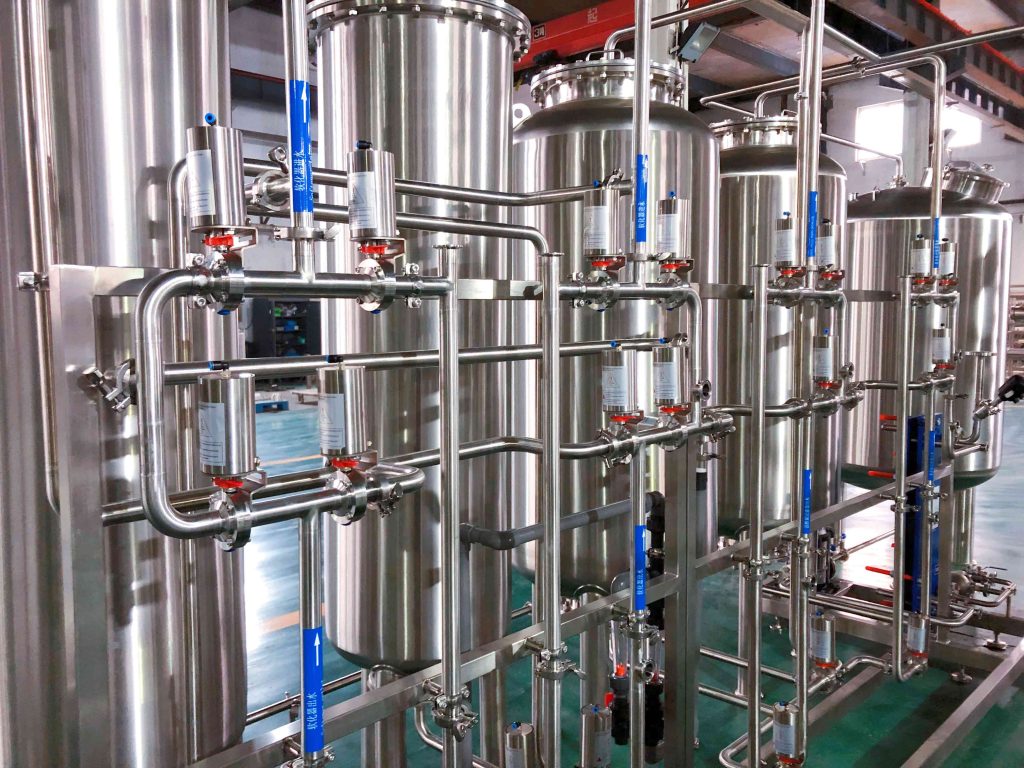
Even after good purification, microorganisms can enter a water system. They may come in through equipment, valves, connections, or maintenance work. If conditions are right, they can stick to inner surfaces and form biofilms.
Biofilms are hard to remove. The microorganisms grow inside a protective layer. They can also release bacteria and endotoxins into the water.
Good design can lower this risk:
-
Pipe design: Pipes should avoid needless branches and still sections.
-
Dead-leg control: Short pipe parts with little or no flow should be reduced.
-
Turbulent flow: Good circulation helps stop microbes from sticking to surfaces.
-
Drainability: Equipment and pipes should not hold unwanted water.
-
Temperature control: WFI storage and distribution should limit microbial growth.
For example, hot circulation above 70°C is a common way to control microbes in WFI. Other validated methods may also be used, depending on the system design and the rules that apply.
Even with hot operation, regular sanitization, monitoring, and maintenance are still needed.
SIP Water Systems: Sterilization Without Dismantling
SIP stands for Sterilization-in-Place. It is a process that sterilizes equipment and product-contact surfaces without taking the system apart.
In water systems, SIP may be used for tanks, distribution pipes, valves, and related parts. Saturated pure steam is the usual sterilizing medium.
SIP is not the same as routine cleaning. It is designed to reach validated sterilization conditions on all the required surfaces.
Most SIP processes use saturated steam at 121°C or higher. But no single temperature and hold time fits every water system. The real cycle settings must be set by cycle development and validation.
Several design points decide if SIP can work well.
1. Hygienic design
Product-contact surfaces should be smooth and easy to clean. Pipe joints, valves, and equipment should have few crevices. Water or condensate should not collect in corners.
2. Steam distribution
Pure steam must reach all the needed surfaces. Poor pipe layout, bad valve positions, and weak condensate drainage can create cold spots.
3. Temperature monitoring
Temperature sensors should sit at points that are hard to sterilize. These may be far parts of the loop, valve areas, and other possible cold spots.
4. Automatic cycle control
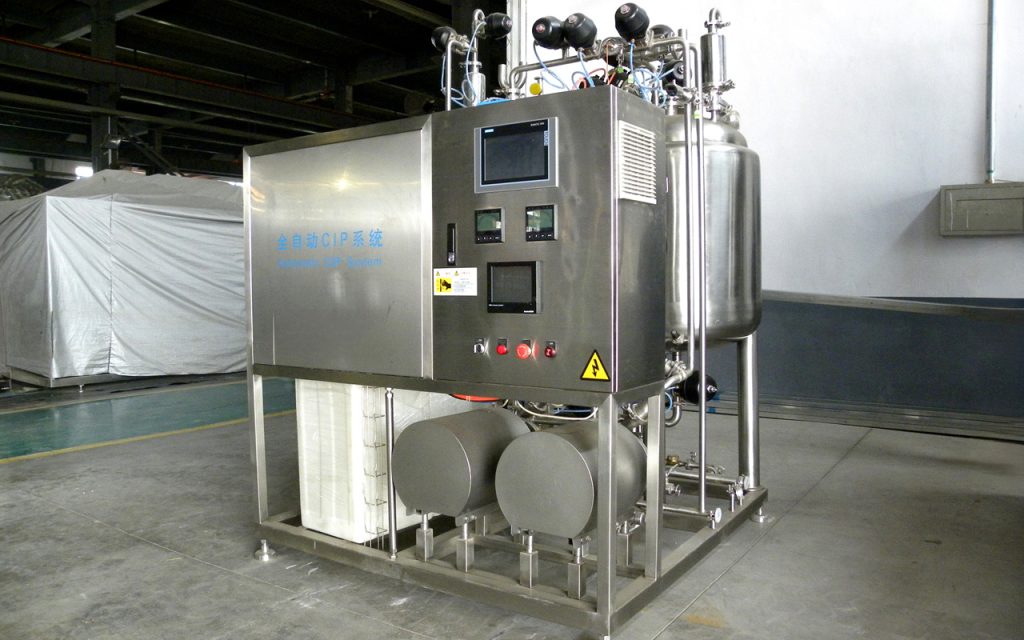
Automatic systems can control steam supply, temperature, pressure, and cycle time. They can also record data for review.
5. SIP validation
Validation must show that the required conditions are reached at the hardest points for the full hold time. The records prove that the cycle meets its approved limits.
For SKE&EAGLE, SIP compatibility is a key part of water equipment design. Our multi-effect water distillers use double-tubesheet heat exchangers to lower the risk of cross-contamination. Water-contact surfaces are made from SS316L stainless steel. The surfaces are electro-polished to meet set finish limits.
These features support clean operation and easy integration into water systems.
cGMP Water Systems: Keeping Quality Through Control
A SIP cycle gives periodic sterilization. A cGMP water system gives the wider quality framework. This framework keeps water quality safe during normal operation.
cGMP means current Good Manufacturing Practice. It covers how equipment and processes are designed, installed, run, monitored, and maintained.
For water systems, cGMP control has several key parts.
System qualification
Water systems normally go through a set qualification process:
-
Installation Qualification (IQ): checks that the equipment is installed as designed.
-
Operational Qualification (OQ): shows that the system works well within its set ranges.
-
Performance Qualification (PQ): tests whether the system can keep working under normal conditions.
The monitoring period and sampling plan should be based on risk. Seasonal changes in feedwater, operating conditions, and microbial results should also be considered.
Routine water quality monitoring
A water system needs a good monitoring plan to spot changes in quality.
Depending on the grade and design, monitoring may include:
-
Conductivity
-
Total Organic Carbon (TOC)
-
Microbial counts
-
Bacterial endotoxins
-
Temperature and flow
Online instruments can give continuous data on some quality points. Lab tests and sampling at key points are still important parts of the full control plan.
Data integrity
Monitoring data must be reliable and traceable. Teams need to know when a test was done, who did it, and if any result was abnormal.
Electronic records, audit trails, calibration records, and approved procedures all help meet this need.
Maintenance and change control
Equipment changes, maintenance work, and new operating conditions may affect water quality. These activities should be checked, recorded, and reviewed. Then the team can decide if more testing or re-qualification is needed.
SKE&EAGLE helps manufacturers with equipment documents, engineering design, and validation support. Our systems are designed with USP, EP, and other relevant pharmacopoeia rules in mind, based on project specs and intended use.
SIP vs. cGMP: Different Roles, Same Goal
SIP and cGMP are closely linked, but they do different jobs in water production.
| Aspect | SIP | cGMP |
|---|---|---|
| Main purpose | Sterilize equipment and contact surfaces in place | Keep a controlled, recorded process |
| Application | Periodic sterilization cycles | Whole equipment and system lifecycle |
| Key controls | Steam quality, temperature, pressure, hold time | Qualification, monitoring, maintenance, documents |
| Main evidence | Validated cycle records | Qualification reports, monitoring data, audit trails |
| Design impact | Steam-friendly design and good drainage | Hygienic design and reliable control |
Neither one works alone.
A good SIP process needs the right equipment design and reliable validation records. At the same time, cGMP compliance needs ongoing control of the water system, including the right sanitization and microbial monitoring.
Together, these approaches help manufacturers keep water quality reliable and lower contamination risk.

FAQ
1.What is the difference between sterile water and purified water?
Purified Water is a grade that meets set chemical and microbial limits. Sterile water has been sterilized and packed for a certain use. They are not interchangeable. The right grade depends on the intended use.
2.Is WFI always sterile?
No. Bulk WFI is controlled for chemical quality, microbial levels, and endotoxins. But it is not automatically sterile. Sterile Water for Injection is a separate finished product. It is made from WFI through sterilization and suitable packaging.
3.What equipment is used to make WFI?
WFI may be made by multi-effect distillation, vapor compression distillation, or suitable membrane methods. The choice depends on pharmacopoeia rules and the approved process. The system also needs storage, distribution, monitoring, and sanitization equipment.
4.Why is SS316L stainless steel used in water systems?
SS316L offers good corrosion resistance and suits hygienic equipment. Its surface can be electro-polished to improve cleanability and reduce places where contaminants may collect. Material and surface finish should match the process needs.
5.What does a water system manufacturer provide?
A good manufacturer may provide water generation units, storage tanks, distribution systems, control systems, engineering design, technical documents, and validation support. The exact scope depends on the project and the maker’s skills.
Conclusion
Sterile water may look like a simple ingredient. But making it reliably needs careful engineering and strict quality control.
The process starts with good water generation. It then moves through storage, distribution, sterilization, packaging, and routine monitoring. Each stage helps protect the final product from contamination.
SIP helps sterilize suitable equipment and contact surfaces. cGMP gives the framework to keep and record system performance through its whole lifecycle.
For manufacturers, choosing the right equipment is not only about capacity. It is also about hygienic design, reliable operation, effective sanitization, and long-term quality control.
If you are planning a new WFI system or upgrading old equipment, our team can help you review the technical needs and build a solution that meets your production and quality goals.
Contact Email: info@ske-eagle.com
Follow us on Facebook for the latest industry insights: SKE & Eagle Facebook
Business Inquiries: Visit our official website and submit the contact form at the bottom.