
Meta Description: Learn how a reverse osmosis water filter works, why household filter water systems differ from a GMP reverse osmosis purified water system, and what to check before choosing pharmaceutical water equipment.
A reverse osmosis water filter is one of the most common water treatment products on the market. You can buy one for a home kitchen, an office, or a small laboratory. But the same name can describe very different systems.
For pharmaceutical manufacturers, the choice is not about a simple filter. It is about a controlled, validated water treatment process. This article explains the technology in plain language and shows where consumer products and pharmaceutical systems part ways.
It is written for facility managers, engineers, and QA teams who want a clear overview before starting a project.
What Is a Reverse Osmosis Water Filter?
Reverse osmosis (RO) is a separation process. Water is pushed under pressure through a semi-permeable membrane. The membrane blocks many dissolved salts, organic matter, and microorganisms. Cleaner water passes through, and concentrated water is discharged.
A reverse osmosis water filter uses this principle to improve water quality. In a home, the goal is better taste and fewer impurities. In a factory, the goal is water that meets strict quality standards.
The basic science is the same. The engineering around it is not.
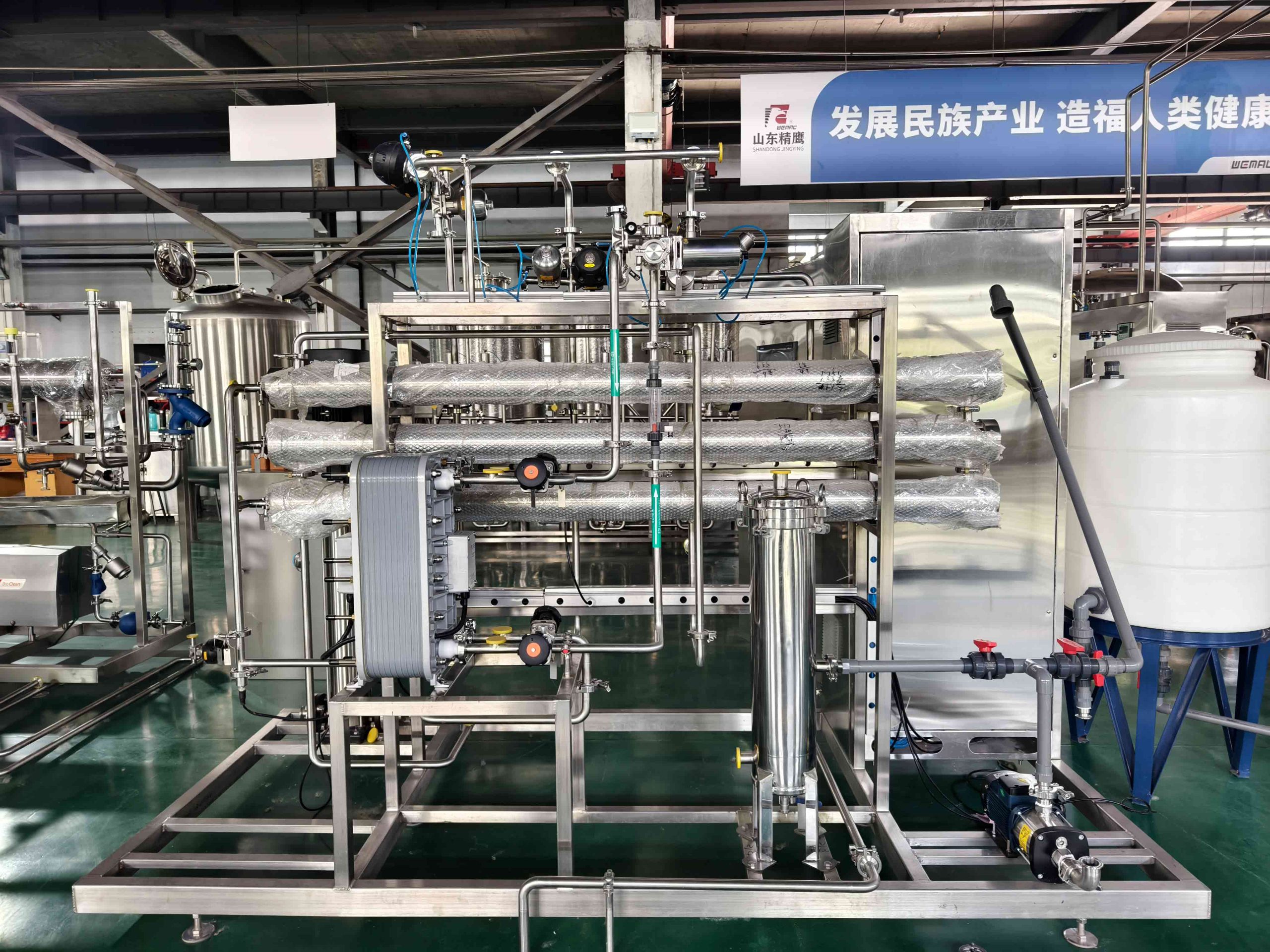
A household reverse osmosis water filter may have a sediment filter, a carbon block, an RO membrane, and a small storage tank. A pharmaceutical system may include pretreatment, double-pass RO, electrodeionization (EDI), UV treatment, and a hygienic distribution loop.
Same membrane principle, very different purpose. A reverse osmosis water filter is only one part of a much larger design.

Why Household Filter Water Systems Are Not Pharmaceutical Systems
Consumer filter water systems are designed for convenience. They are compact, easy to install, and low maintenance. Most users replace cartridges once or twice a year and check a simple indicator light.
These systems are not built to control microbial growth in long piping runs. They do not normally include sanitary stainless steel piping, online conductivity monitoring, or validation documents. They are also not designed for continuous operation in a regulated production environment.
This is not a weakness. A household product is optimized for its market.
The problem starts when someone assumes that a larger version of the same design can serve a pharmaceutical process. Scaling up a consumer unit does not create a compliant system. It only creates a bigger unit with the same limits.
A reverse osmosis water filter for home use and a GMP reverse osmosis purified water system may share a membrane, but they do not share the same engineering, documentation, or quality control.
What Makes a GMP Reverse Osmosis Purified Water System Different?
A GMP reverse osmosis purified water system is a complete water treatment solution. It is designed around water quality requirements, production capacity, hygienic engineering, and regulatory compliance.
The system must produce water consistently. It must also provide evidence that it does so. That evidence comes from design, installation, operation, and performance records.
In pharmaceutical production, water may contact equipment, enter formulations, or become part of the product. This is why regulators treat water quality as part of product safety.
A typical system may combine several treatment stages. Each stage has a clear job. Together, they protect the final water quality and keep the process stable.
The table below compares household RO filters with GMP purified water systems.
| Feature | Household RO Filter | GMP RO Purified Water System |
|---|---|---|
| Main goal | Improve drinking water quality | Produce pharmaceutical-grade water |
| Materials | Plastic housings and common tubing | Usually 316L stainless steel and sanitary fittings |
| Microbial control | Limited | Designed sanitization and hygienic distribution |
| Monitoring | Basic TDS display or filter indicator | Online conductivity and, where required, TOC monitoring |
| Documentation | User manual and warranty | Design, qualification, validation, and material records |
| Regulatory focus | Consumer product requirements | Applicable USP, EP, ChP, and GMP requirements |
| Operation | Intermittent, low maintenance | Continuous, controlled, and monitored |
This table is a starting point. The real differences appear in the details of each subsystem. A reverse osmosis water filter for a home does not need the same subsystem depth.
Pretreatment: Protecting the RO Membrane
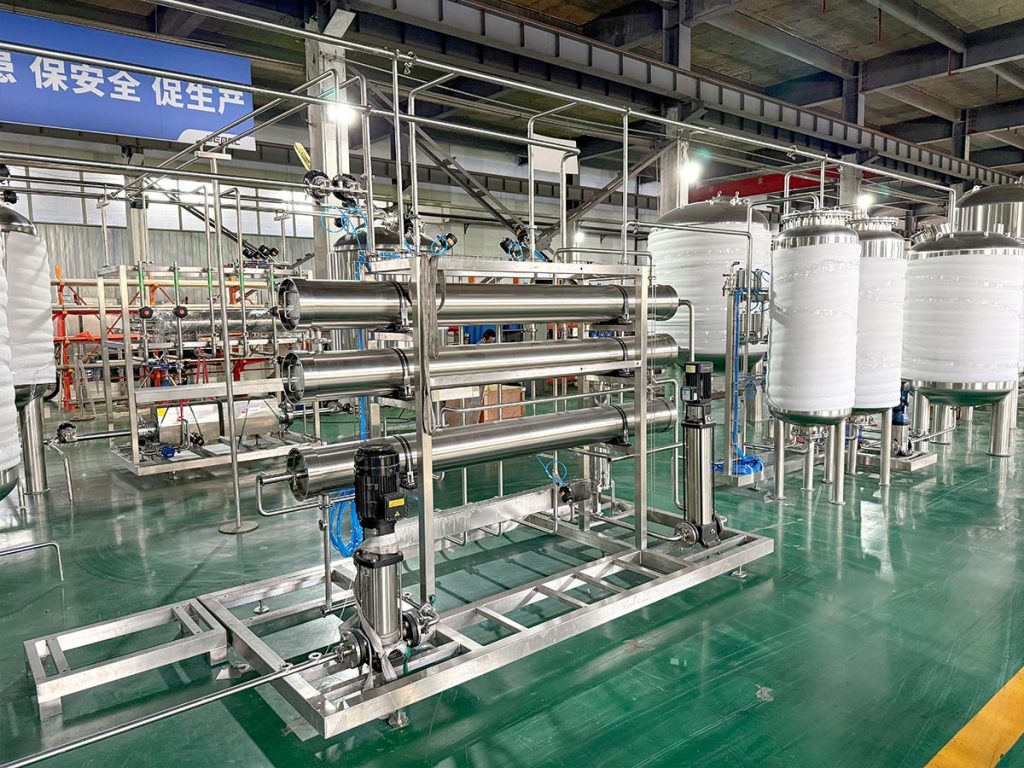
A GMP system starts with careful pretreatment. The RO membrane is valuable and sensitive. It needs protection from chlorine, hardness, and suspended solids.
Carbon filters remove free chlorine. Chlorine can damage polyamide RO membranes. Softeners reduce hardness and help prevent scaling. Multimedia filters reduce suspended solids and protect downstream equipment.
In a household reverse osmosis water filter, pretreatment may be a few replaceable cartridges. In a pharmaceutical plant, pretreatment is a monitored subsystem. It has defined operating limits, maintenance tasks, and sanitation requirements.
Carbon beds are a good example. If they are not properly maintained, they can become a source of microbial contamination. A GMP design treats pretreatment as a process control point, not a disposable accessory.
Good pretreatment protects the membrane. It also makes the whole system more stable. A reverse osmosis water filter without proper pretreatment can fail early.
The RO Stage and Double-Pass Design
Pharmaceutical RO systems often use double-pass configurations.
The first pass removes most dissolved impurities. The second pass further reduces residual ions and improves permeate quality. This can provide more stable conductivity and better protection for downstream equipment.
Single-pass RO may be suitable for some applications. The right choice depends on raw water quality, system configuration, and the required final water quality.
Double-pass RO is common when tighter and more consistent control is needed. But it is not an automatic requirement for every project.
The correct design should come from the actual application. It should not come from a general assumption that every pharmaceutical water system needs the same configuration.
A reverse osmosis water filter in a home rarely needs this level of design review. A pharmaceutical system does.
EDI and Polishing Steps
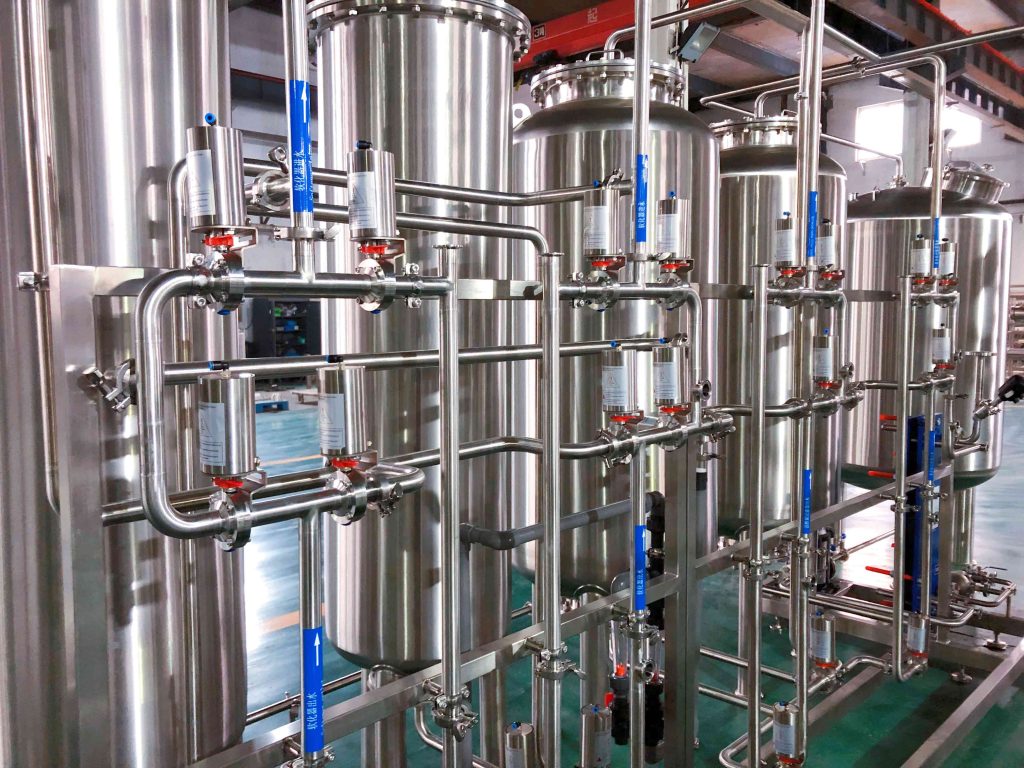
RO alone may not provide enough conductivity control for every pharmaceutical application. Electrodeionization (EDI) is often used after RO to reduce residual ionic impurities.
EDI uses electricity and ion-exchange materials. It removes dissolved ions without the regular chemical regeneration needed by conventional mixed-bed systems.
The combination of RO and EDI is widely used for pharmaceutical Purified Water. It can improve water quality stability and reduce chemical use.
EDI is not the only option. UV treatment may be used to control microbial levels. Other polishing steps may be added depending on the water grade and pharmacopoeial requirements.
The final configuration should match the required water grade, feedwater conditions, and applicable regulations.
Hygienic Design: Protecting Water After Treatment
Water can be clean when it leaves the RO membrane. It can become contaminated as it travels through piping.
GMP systems therefore require careful hygienic design. Common points include:
-
Sloped piping for complete drainage.
-
Minimal dead legs and stagnant sections.
-
Sanitary diaphragm valves and hygienic fittings.
-
Suitable internal surface finishes to reduce biofilm risk.
-
Proper circulation and flow control.
-
Accessible sampling points for routine monitoring.
A dead leg is a section of pipe where water flow is limited or absent. Its acceptability depends on the piping design, flow conditions, and applicable hygienic requirements.
These details matter during design, installation, qualification, and routine inspection. They help protect water quality from the treatment equipment to the point of use.
A household reverse osmosis water filter does not normally address these points. It is not built for a distribution loop.
Validation and Documentation
A household reverse osmosis water filter usually comes with a user manual and a warranty. A pharmaceutical water system needs a much fuller documentation package.
A typical qualification and validation package may include:
-
Design Qualification (DQ).
-
Installation Qualification (IQ).
-
Operational Qualification (OQ).
-
Performance Qualification (PQ).
-
Material certificates and equipment specifications.
-
Welding records and piping documentation.
-
Instrument calibration records.
-
Control system and software documentation.
These documents show that the system was designed correctly, installed as specified, operates within defined parameters, and performs consistently in real conditions.
Documentation is not paperwork added at the end. It is part of the engineering deliverable.
A supplier that cannot support qualification and validation may create compliance problems for the manufacturer. This is also why consumer filter water systems cannot become compliant simply by adding more filters.
Monitoring and Data Integrity
Consumer systems may show filter life or total dissolved solids (TDS). GMP systems require a more systematic approach.
Conductivity is commonly monitored online to track ionic water quality. Total Organic Carbon (TOC) monitoring may be added according to pharmacopoeial requirements and the site’s quality strategy.
Instruments should be properly calibrated. Critical process data should be recorded and reviewed. Alarm limits, sampling procedures, and corrective actions should be defined in the quality management system.
Choosing the Right System
The decision starts with the intended water use.
If the water is only for drinking, a household reverse osmosis water filter may be a good solution. If the water is used in pharmaceutical manufacturing, the system must meet applicable pharmacopoeial and GMP requirements.
There is no simple upgrade that turns an ordinary filter water system into a validated pharmaceutical system. The missing parts are hygienic engineering, controlled operation, qualification, and documented performance.
SKE&EAGLE designs and manufactures pharmaceutical water treatment systems for regulated production. Our RO purified water solutions can integrate pretreatment, double-pass RO, EDI, UV treatment, and hygienic storage and distribution.
Each system can be configured based on raw water quality, required capacity, water grade, and process needs. From process design and equipment manufacturing to documentation and validation support, SKE&EAGLE helps customers build water treatment solutions for reliable production and long-term GMP compliance.

Frequently Asked Questions
1.Can a reverse osmosis water filter produce water for pharmaceutical use?
A household reverse osmosis water filter is not suitable for pharmaceutical production. Pharmaceutical use requires a complete system with proper pretreatment, hygienic design, microbial control, monitoring, and qualification documents.
2.Is reverse osmosis alone enough for Purified Water?
Not always. RO removes most dissolved impurities, but extra polishing such as EDI may be needed for stable water quality and pharmacopoeial compliance.
3.What is the difference between filter water systems and a GMP purified water system?
Standard filter water systems focus on reducing common contaminants. A GMP reverse osmosis purified water system is engineered and qualified to maintain consistent water quality through controlled treatment, hygienic distribution, monitoring, and documentation.
4.Why does a pharmaceutical water system need validation?
Validation provides documented evidence that the system is properly designed, installed, operated, and able to meet its performance requirements consistently. Typical activities include DQ, IQ, OQ, and PQ.
5.Can an RO system be used for WFI production?
An RO system may be part of a WFI process, depending on applicable pharmacopoeial requirements and permitted production methods. RO alone does not establish WFI compliance. The complete system must meet the relevant quality and regulatory requirements.
6.Does SKE&EAGLE provide validation documents?
SKE&EAGLE supports projects with technical documentation, including design specifications, material certificates, calibration records, and IQ/OQ/PQ documentation support, according to the project scope.
Contact SKE & Eagle for Advanced Solutions
For customized system engineering solutions or integration of high-performance water treatment technologies, please contact SKE & Eagle. Our professional team collaborates closely with industrial partners to design, implement, and maintain solutions tailored to your operational needs.
Contact Email: info@ske-eagle.com
Follow us on Facebook for the latest industry insights: SKE & Eagle Facebook
Business Inquiries: Visit our official website and submit the contact form at the bottom.