

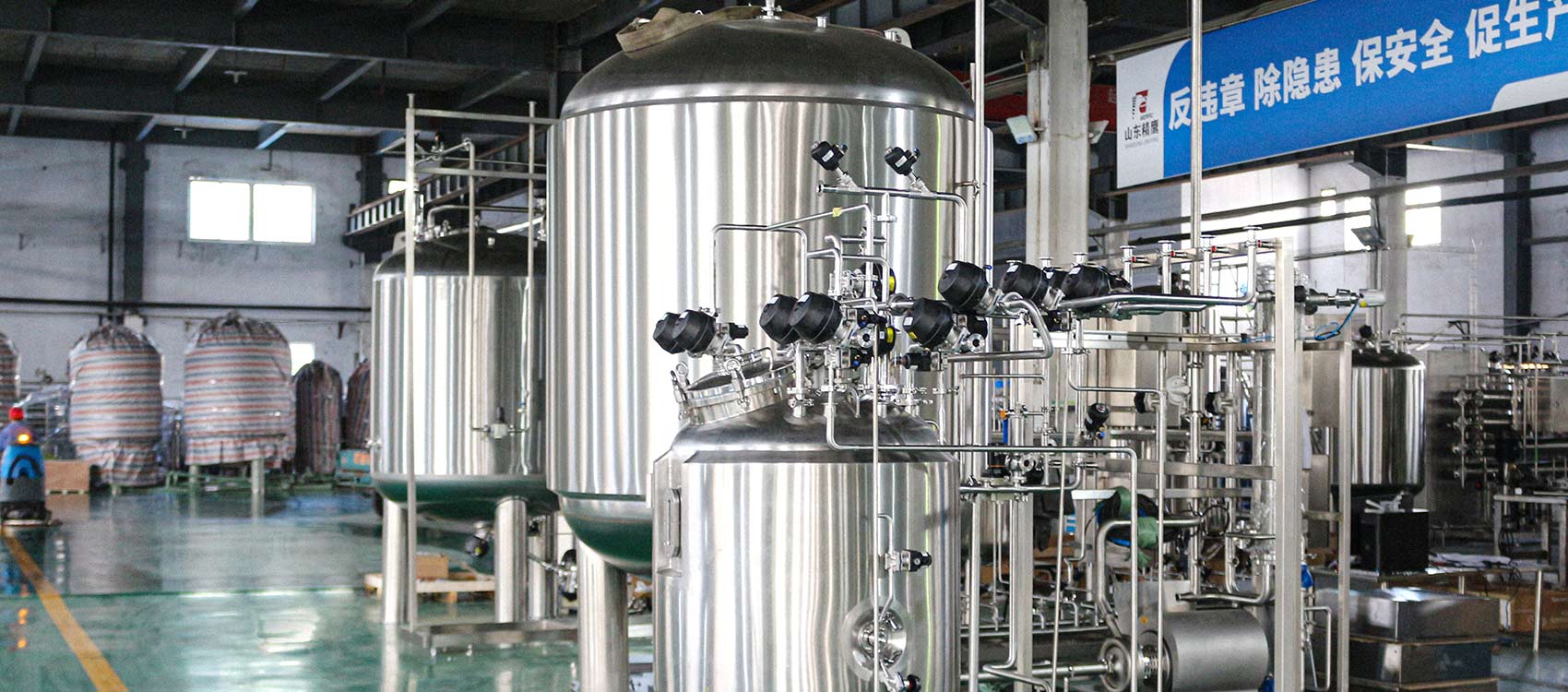
In the biopharmaceutical industry, the bioreactor fermenter is a core piece of equipment that determines both product quality and production capacity. For readers who are new to this field, understanding the basic concepts of these systems, the requirements for aseptic operation, and the role of pharmaceutical water systems is an essential starting point. This article begins with fundamental definitions and gradually moves toward practical applications, helping you build a clear picture of how these elements work together.
What Is a Bioreactor Fermenter?
A bioreactor fermenter is a vessel that provides a controlled environment for biological reactions. The term “bioreactor” is a broad category that refers to any equipment supporting a biological process, whether for producing medicines, vaccines, or antibodies. A fermenter is a specific type of bioreactor, mainly used to drive fermentation processes such as the production of lactic acid or ethanol. In everyday use, the two terms are often used interchangeably, but strictly speaking, a fermenter is a subset of a bioreactor.
In the pharmaceutical industry, a pharmaceutical fermenter usually refers to fermentation equipment that meets Good Manufacturing Practice (GMP) requirements. It is used to culture bacteria, yeast, or mammalian cells to produce therapeutic proteins, antibiotics, and other biological products. An aseptic bioreactor, meanwhile, emphasizes the ability to operate without contamination. The system must prevent unwanted microorganisms from entering and ensure that the pure culture process remains uncontaminated. These three terms describe the same category of core equipment from different angles: controlled, repeatable, and compliant with regulatory requirements.
A typical stirred bioreactor fermenter contains several key components: an agitator for mixing the culture liquid, a sparger for oxygen supply, and sensors for pH and temperature. Large-scale production fermenters are usually made of corrosion-resistant stainless steel, with polished inner surfaces that make cleaning and sterilization easier.

Water Use Points in Bioreactor Fermenter Processes
Water is one of the most widely used raw materials in biopharmaceutical processes. It participates in nearly every step, from culture media preparation to equipment cleaning. In bioreactor fermenter processes, water use points are especially critical because water quality directly affects cell growth and product yield.
Media preparation is the most central use point. According to the European Medicines Agency (EMA) guideline on pharmaceutical water quality, media water for fermentation-based active substances should at least meet drinking water standards. For non-vaccine, non-advanced therapy medicinal product (ATMP) biologics, the media water must also be at least drinking water. For vaccines, the media water must be at least purified water. If the product is an advanced therapy medicinal product and there is no sterilization step downstream, the media water may even need to meet Water for Injection (WFI) standards. These tiered requirements reflect the direct link between water quality and product risk.
Equipment cleaning and sterilization is another important water use point. A bioreactor fermenter needs strict cleaning and steam-in-place (SIP) sterilization between batches. The steam itself is generated from water, and the final rinse step usually uses purified water or WFI to ensure no residues affect the next culture. The inner surfaces of fermenters are often electropolished to make cleaning easier and reduce spots where microorganisms can grow.
Temperature control and evaporation compensation also depend on water. During fermentation, the agitator shaft seal needs water for cooling and lubrication. In aerobic culture, air sparging causes evaporation of the culture liquid. A bioreactor fermenter is usually equipped with water-cooled condensers that return condensed water vapor to the vessel, keeping the culture volume stable.
Sampling and transfer also rely on support from the water system. Sampling ports need to be used after steam sterilization, and the cleaning of sampling lines after use also requires water that meets the appropriate quality grade.
When you look at these four use points together, a clear conclusion emerges: a pharmaceutical fermenter is not a standalone device. It is part of a larger system in which water quality, water distribution, and water monitoring are inseparable from fermentation performance. This is exactly why pharmaceutical water equipment deserves attention in any discussion of bioreactor fermenter design and operation.

Pharmaceutical Water Grades and Selection
Understanding the grading of pharmaceutical water is the foundation for choosing a water system for a bioreactor fermenter. Under current regulations, pharmaceutical water is mainly divided into three grades: drinking water, purified water, and Water for Injection.
Drinking water is the lowest grade but remains indispensable. It usually serves as the feed water for purified water production. Purified water is prepared through reverse osmosis, ion exchange, or distillation. Its chemical purity requirements include a conductivity of ≤1.3 μS/cm at 25°C and a total organic carbon (TOC) of ≤0.50 mg/L. WFI has the same chemical purity as purified water but adds a bacterial endotoxin limit of ≤0.25 EU/mL. Its production process usually uses distillation.
For bioreactor fermenter applications, the choice of water grade depends on the product type and process stage. A practical principle is that early fermentation stages have relatively relaxed water quality requirements, while downstream purification and final formulation stages are more demanding. Fermentation in injectable drug production usually requires WFI because any foreign microorganisms or endotoxins could endanger the final product.
It is worth noting that water quality must be maintained not only during production but also during storage and distribution. Purified water and WFI systems need continuous circulation to prevent stagnation. They are usually kept at above 80°C or below 4°C. Piping design should avoid dead legs, and valves and connections need to be easy to sterilize.
This is where pharmaceutical water equipment plays its role. A complete water system includes generation, storage, distribution, and monitoring. Each part must be designed to work with the bioreactor fermenter and the aseptic bioreactor environment. The equipment is not just a utility. It is a process-critical component that directly supports the three keywords introduced at the beginning of this article.
Common Water System Problems and Solutions
Even well-designed water systems can encounter problems during long-term operation. The table below summarizes common issues in water systems supporting a bioreactor fermenter and the direction for addressing them:
| Problem Type | Possible Cause | Direction for Resolution |
|---|---|---|
| Microbial exceedance at use point | Biofilm in valve or pipe dead leg | Replace seals, shorten dead legs, sanitize branch |
| Rising system microbial load | Failed sanitization cycle, RO membrane fouling | Re-sanitize, replace RO membrane, check vent filter integrity |
| Conductivity drift | RO membrane aging or EDI module depletion | Clean RO membrane, replace EDI module |
| Endotoxin exceedance | Gram-negative bacteria biofilm detachment | Emergency hot water sanitization (>80°C, at least 1 hour) |
| TOC increase | UV lamp decay, leachables from new seals | Replace UV lamp, flush system to remove leachables |
The common thread among these problems is that they usually do not happen suddenly. They can often be detected early through trend analysis. Regularly monitoring conductivity, TOC, and microbial counts, and building trend data, is an effective way to prevent water system failures.
Notice that every problem in this table is related to the three keywords. A pharmaceutical fermenter with poor water quality will produce poor results. An aseptic bioreactor with a contaminated water system cannot maintain sterility. A bioreactor fermenter with unstable water supply cannot achieve repeatable production. In other words, water system performance and fermentation performance are two sides of the same coin.

SKE&EAGLE Water Systems for Bioreactor Fermenter Applications
SKE&EAGLE, as a pharmaceutical water equipment manufacturer, provides complete solutions from purified water to WFI for bioreactor fermenter users. Our system design is built around the actual needs of biopharmaceutical processes. The production stage uses multi-stage treatment to ensure stable water quality. The storage and distribution stage maintains water quality through circulation design and sanitization strategies. Use point configuration is flexibly adapted to specific process needs.
For aseptic bioreactor applications, our water systems pay special attention to microbial control and endotoxin removal. The piping uses sanitary design to reduce connection points and dead legs, making steam sterilization or chemical sanitization easier. At the same time, we understand that every biopharmaceutical company has its own process characteristics. Therefore, we provide full support from design consultation to validation support.
The connection between our work and the three keywords is direct. A bioreactor fermenter needs water at multiple points. A pharmaceutical fermenter needs water that meets GMP requirements. An aseptic bioreactor needs water that supports contamination-free operation. Our equipment is designed to meet these needs in a reliable and compliant way.
Frequently Asked Questions (FAQ)
Q1: Are bioreactor and fermenter the same thing?
Not exactly. Bioreactor is the broader term, referring to any equipment that supports a biological process. A fermenter is a type of bioreactor, specifically used for fermentation processes. In the pharmaceutical industry, a pharmaceutical fermenter is usually a bioreactor that meets GMP requirements.
Q2: Why do fermenters need aseptic design?
Because most industrial fermentations use pure cultures. The entry of any foreign microorganism can cause batch failure. According to reports, losses from sterilization failures in industrial-scale fermentation can reach 3-5%, and contamination rates for some sensitive cell cultures are even higher. An aseptic bioreactor prevents contamination through sterilizable sampling ports, mechanical seals, and steam barriers.
Q3: Must media water use Water for Injection?
Not necessarily. According to the EMA guideline, the minimum requirement for media water in non-vaccine, non-ATMP biologics is drinking water. For vaccine media, the minimum is purified water. Only in advanced therapy products with no downstream sterilization step does media water need to use WFI. The specific grade should be determined based on product type and risk assessment.
Q4: How do water systems prevent microbial growth?
The main strategies include keeping water circulating continuously in the piping, maintaining high temperature (above 80°C) or low temperature (below 4°C) storage, regularly sanitizing the system with hot water or chemicals, and avoiding dead legs in the design. Cold WFI systems, prepared by membrane methods and stored at room temperature, have attracted attention in recent years for energy savings, but they need to be combined with ozone or regular thermal sanitization to control microorganisms.
Q5: What types of bioreactors can SKE&EAGLE water systems support?
Our water systems are suitable for stirred fermenters, single-use bioreactors, and hybrid systems, covering applications from laboratory scale to production scale. The specific configuration needs to be determined based on your process water grade requirements, water usage, and facility layout.
Q6: How does water quality affect fermentation outcomes?
Water quality affects fermentation in several ways. First, dissolved ions and organic matter in water can influence cell growth and metabolism. Second, microbial contamination in water can compete with the production culture or introduce endotoxins. Third, inconsistent water quality between batches can lead to variable product yield and quality. For these reasons, pharmaceutical water equipment is not a background utility but a process-critical part of any bioreactor fermenter system.
Contact SKE & Eagle for Advanced Solutions
For customized system engineering solutions or integration of high-performance water treatment technologies, please contact SKE & Eagle. Our professional team collaborates closely with industrial partners to design, implement, and maintain solutions tailored to your operational needs.
Official Website: https://www.ske-eagle.com/
Contact Email: info@ske-eagle.com
Follow us on Facebook for the latest industry insights: SKE & Eagle Facebook
Business Inquiries: Visit our official website and submit the contact form at the bottom.