

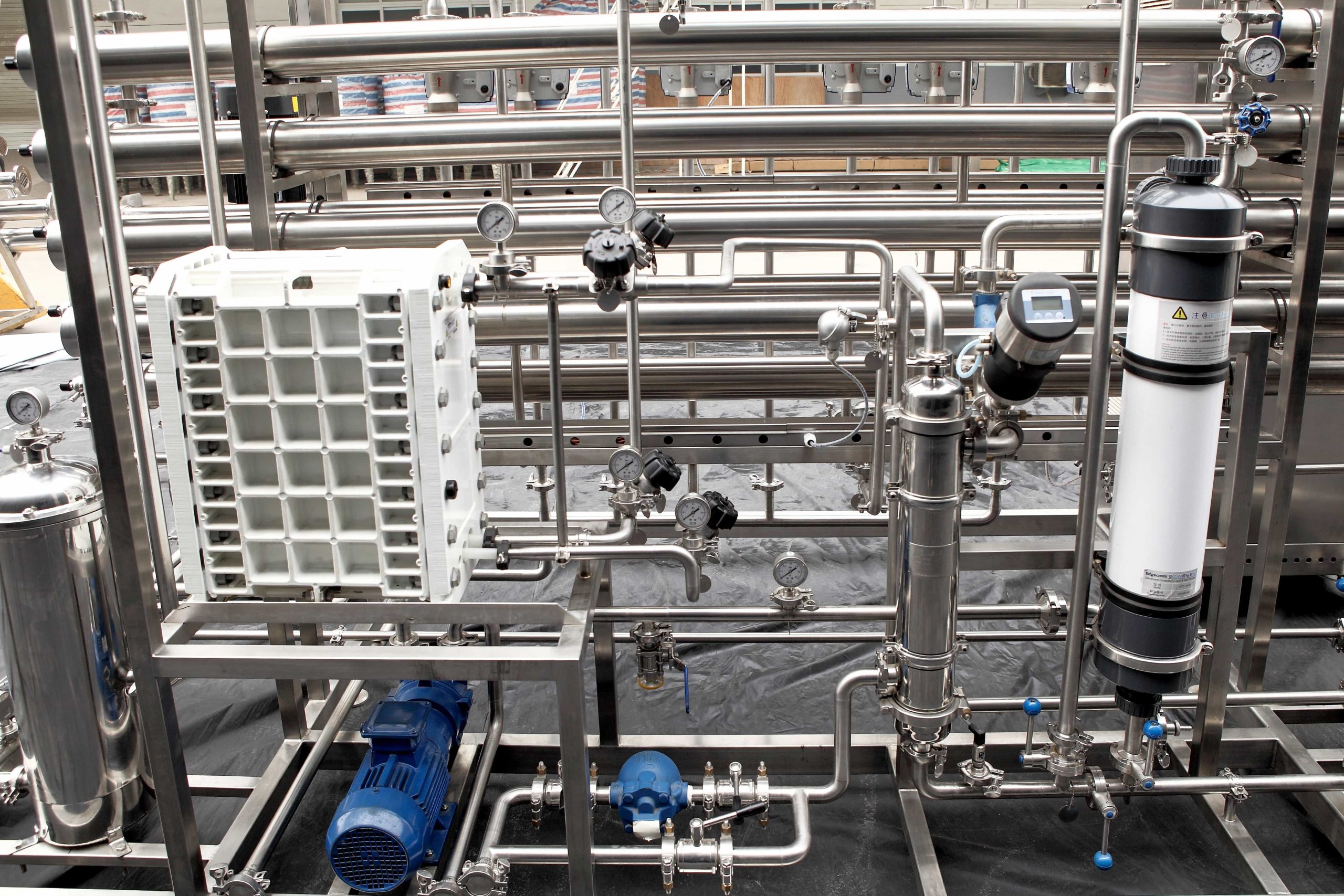
Water is one of the most important raw materials in pharmaceutical manufacturing. It is widely used as an ingredient, cleaning medium, and process material. Unlike many other raw materials, pharmaceutical water is usually produced on-site and delivered directly to production areas.
Therefore, reliable water purification systems are essential for maintaining product quality, regulatory compliance, and patient safety.
Modern water purification systems are designed not only to remove impurities but also to control microbial contamination, maintain stable water quality, and support strict GMP requirements throughout production.
A complete GMP water system integrates purification technologies, sanitary piping, storage tanks, monitoring instruments, and validation procedures. Properly designed pharmaceutical water solutions help manufacturers produce consistent and compliant water for commercial production.
Why GMP Design Matters for Water Purification Systems
Pharmaceutical water must meet strict chemical and microbiological requirements defined by international pharmacopeias, including USP and EP standards.
Common pharmaceutical water grades include:
| Water Grade | Main Application |
|---|---|
| Purified Water (PW) | Oral drugs, topical products, cleaning processes |
| Highly Purified Water (HPW) | High-quality pharmaceutical production |
| Water for Injection (WFI) | Sterile pharmaceutical manufacturing |
Each grade has different quality requirements. WFI, for example, requires strict endotoxin control because it is used in critical pharmaceutical applications.
A pharmaceutical water system cannot rely on only one purification device. Even when the generation unit produces high-quality water, contamination may still occur during storage or distribution if the overall design is poor.
For this reason, advanced water purification systems focus on the complete process, including water treatment, storage, circulation, monitoring, and final use.

Main Components of Modern Water Purification Systems
A complete pharmaceutical water solution combines several technologies to achieve stable water quality.
Pretreatment System
Pretreatment is the first stage of the purification process. It removes impurities that may affect downstream equipment, including:
- Suspended solids
- Chlorine
- Hardness ions
- Organic contaminants
Effective pretreatment protects reverse osmosis membranes and improves the long-term performance of water purification systems.
Reverse Osmosis (RO) System
Reverse osmosis is one of the most widely used technologies in pharmaceutical water treatment.
RO membranes remove dissolved salts, microorganisms, and other unwanted substances from feed water. In many pharmaceutical facilities, RO is the main purification step before further treatment.
A properly designed RO unit improves water quality stability and provides reliable operation for downstream equipment.
EDI System
Electrodeionization (EDI) is commonly combined with RO to produce high-purity pharmaceutical water.
The RO + EDI process provides:
- Stable conductivity control
- Continuous operation
- Reduced chemical consumption
- Improved environmental performance
For many pharmaceutical manufacturers, RO + EDI has become an important configuration in modern water purification systems.
Storage and Distribution Design
Producing purified water is only the first step. Maintaining water quality during storage and distribution is equally important.
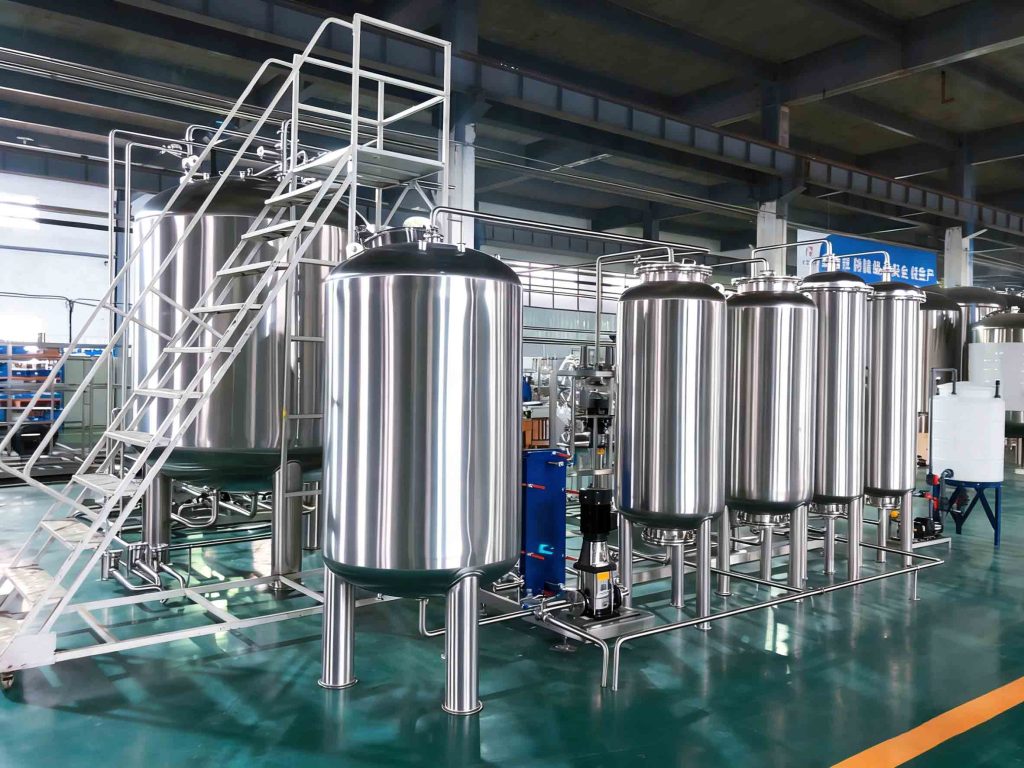
A GMP-designed purified water plant uses sanitary storage tanks and continuous circulation loops to reduce contamination risks.
The distribution system must prevent stagnant areas because microorganisms can grow in areas with limited water movement.
Professional water purification systems are designed as complete solutions where generation, storage, and distribution work together to maintain water quality.
Continuous Circulation: A Key Principle of GMP Water Systems
Continuous circulation is one of the most important design principles in GMP water systems.
When water remains stagnant, microorganisms can attach to pipe surfaces and develop biofilms. These biofilms are difficult to remove and may continuously release bacteria into the water.
Modern pharmaceutical water systems use circulation loops to keep water moving between storage tanks, distribution piping, and points of use.
Continuous circulation helps:
- Reduce stagnant areas
- Control microbial growth
- Maintain stable water quality
- Improve sanitization efficiency
Many pharmaceutical facilities also use hot water circulation or periodic hot water sanitization. This approach provides effective microbial control without introducing additional chemicals.
For WFI applications, temperature-controlled circulation is especially important because it supports strict contamination control requirements.
Dead Leg Control in Water Purification Systems
Dead legs are one of the most important contamination risks in pharmaceutical water distribution.
A dead leg is a section of piping where water flow is limited or absent. These areas may become microbial growth points because fresh purified water cannot exchange effectively with the main circulation loop.
A well-designed GMP water system minimizes dead legs through:
- Short branch connections
- Hygienic diaphragm valves
- Optimized piping layouts
- Proper sampling point design
The FDA commonly references a 6D limitation measured from the centerline of the main pipe, while WHO recommends stricter dead leg control. Shorter branch connections allow faster water exchange and improve cleaning performance.
Modern water purification systems often use zero dead leg valves and sanitary components to reduce contamination risks.
For pharmaceutical manufacturers, dead leg control is not only a design requirement but also an important contamination control strategy that supports stable operation and regulatory compliance.
316L Stainless Steel and Hygienic Design
Material selection directly affects the reliability of pharmaceutical water equipment.
Most GMP-compliant systems use 316L stainless steel because it provides:
- Excellent corrosion resistance
- Long service life
- Easy cleaning performance
- Compatibility with sanitization procedures
The internal surface finish of pipes and tanks is also critical. Rough surfaces may provide areas where microorganisms attach and grow.
High-quality water purification systems use polishing or electropolishing processes to achieve smooth sanitary surfaces and improve cleaning efficiency.
Welding quality is another important factor. Poor welding may create cracks or irregular surfaces that become contamination points.
For this reason, professional manufacturers use qualified welding procedures, skilled operators, and inspection records to ensure reliable pharmaceutical water systems.

Storage Tank Design for Pharmaceutical Water Systems
The storage tank is an important part of every purified water plant. It provides a buffer between water production and actual production demand.
A GMP-designed storage tank includes several key features:
Complete Drainability
The tank bottom is designed to prevent water accumulation and support effective cleaning and sanitization.
Hygienic Cleaning
Spray balls or other cleaning devices ensure that internal tank surfaces receive sufficient cleaning coverage.
Sanitary Vent Filtration
Hydrophobic vent filters allow air exchange while preventing airborne microorganisms from entering the system.
Clean Instrument Design
Modern water purification systems use sanitary sensors and instruments to reduce contamination points.
Non-intrusive sensors and sanitary diaphragm-sealed instruments are preferred because they are easier to clean and maintain.
Monitoring and Validation of Water Purification Systems
A reliable pharmaceutical water system requires continuous monitoring and complete validation.
Modern water purification systems monitor important parameters, including:
- Conductivity
- Total Organic Carbon (TOC)
- Temperature
- Flow rate
- Pressure
These parameters help operators identify abnormal conditions before they affect production.
Validation is also a critical requirement for GMP pharmaceutical facilities. Typical procedures include:
- Design Qualification (DQ)
- Installation Qualification (IQ)
- Operational Qualification (OQ)
- Performance Qualification (PQ)
Complete documentation, including material certificates, welding records, calibration reports, and sanitization records, supports regulatory compliance.
For commercial pharmaceutical production, properly validated systems provide confidence that water quality remains stable throughout operation.

Choosing the Right Water Purification Systems Manufacturer
Selecting the right supplier is an important decision for pharmaceutical companies.
Because pharmaceutical water directly affects product quality and regulatory approval, manufacturers need experienced partners that understand GMP requirements and provide complete engineering support.
A professional supplier should provide:
- Customized pharmaceutical water solutions
- GMP-compliant engineering design
- High-quality sanitary equipment
- Complete technical documentation
- Installation and validation support
SKE&EAGLE specializes in designing and manufacturing advanced water purification systems for commercial pharmaceutical production.
Our solutions include:
- Purified water plants
- RO + EDI systems
- Pharmaceutical water treatment equipment
- Storage tanks
- Distribution loops
From engineering design and equipment manufacturing to installation support and validation documentation, SKE&EAGLE provides complete pharmaceutical water solutions.
By focusing on sanitary design, contamination control, and reliable operation, SKE&EAGLE helps pharmaceutical manufacturers build stable and compliant GMP water systems.
Frequently Asked Questions
1.What are water purification systems in pharmaceutical manufacturing?
Water purification systems are integrated systems used to produce, store, and distribute pharmaceutical water according to GMP requirements. They usually include pretreatment, RO, EDI, storage tanks, and circulation loops.
2.Why is continuous circulation important in pharmaceutical water systems?
Continuous circulation prevents water stagnation and reduces microbial growth and biofilm formation. It helps maintain stable water quality from generation to the final point of use.
3.What materials are commonly used in water purification systems?
316L stainless steel is widely used because it provides excellent corrosion resistance, durability, and hygienic performance.
4.What is the role of RO and EDI in pharmaceutical water treatment?
RO removes dissolved impurities, while EDI further reduces ionic contaminants. Together, they produce high-purity water for pharmaceutical applications.
5.How are water purification systems validated?
Validation usually includes DQ, IQ, OQ, and PQ procedures. These confirm that the system is correctly designed, installed, operated, and able to consistently produce qualified pharmaceutical water.
Contact SKE & Eagle for Advanced Solutions
For customized system engineering solutions or integration of high-performance water treatment technologies, please contact SKE & Eagle. Our professional team collaborates closely with industrial partners to design, implement, and maintain solutions tailored to your operational needs.
Official Website: https://www.ske-eagle.com/
Contact Email: info@ske-eagle.com
Follow us on Facebook for the latest industry insights: SKE & Eagle Facebook
Business Inquiries: Visit our official website and submit the contact form at the bottom.