


Introduction: Why Multiple Effect Stills Matter
Water is one of the most important materials in pharmaceutical manufacturing. It is used to make medicines, clean equipment, and support many production processes. But different uses need different water quality.
Water for Injection (WFI) must meet very strict quality rules. It is used to make medicines for injection. Pharmaceutical companies need reliable equipment to make and keep this high-quality water. Multiple effect stills are a well-established technology for WFI production.
Multiple effect stills use several stages to make purified steam and collect high-quality water. They also reuse heat from one stage to the next. This helps reduce the need for external steam.
What Are Multiple Effect Stills?
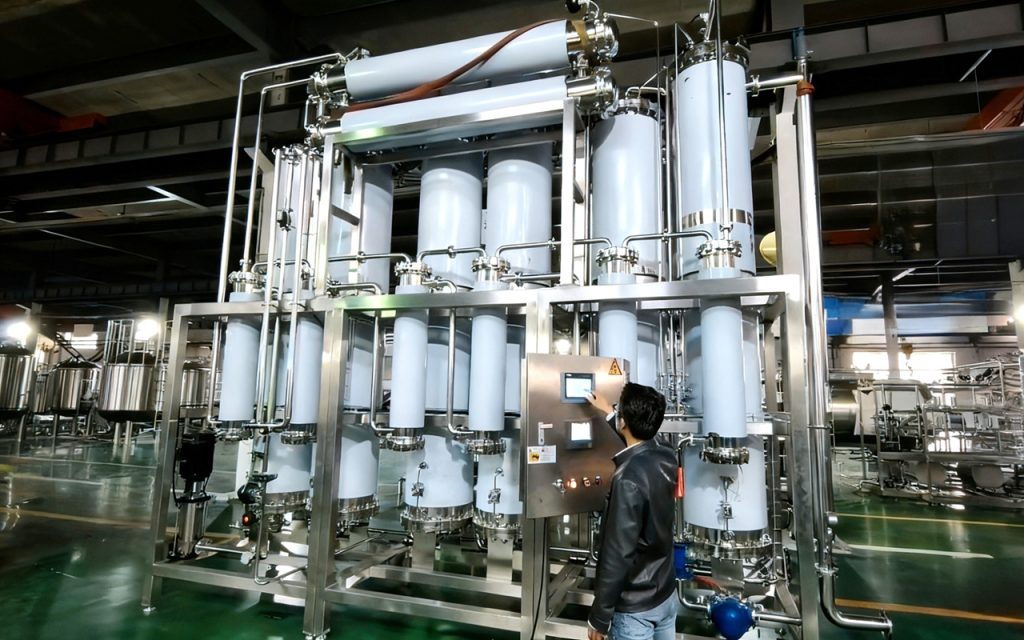
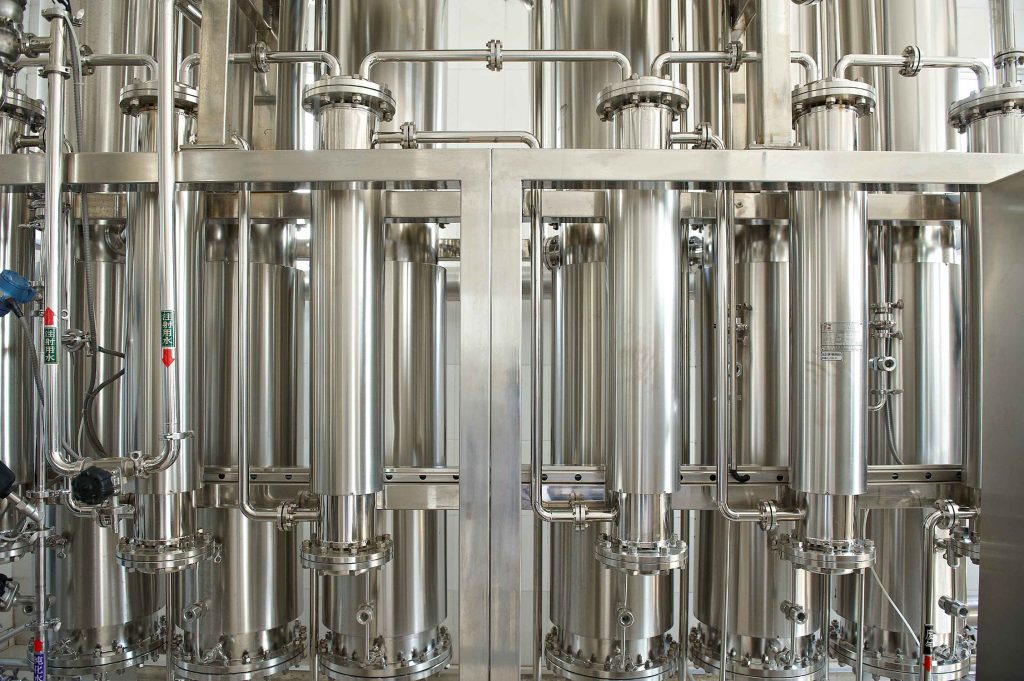
Multiple effect stills are distillation systems. They use several evaporation stages, called effects, to produce WFI. Each effect works at a different pressure and temperature. The heat released in one stage is reused to heat water in the next stage.
In a single-effect still, external steam heats the feed water to make vapor. The vapor is then condensed to get distilled water. Much of the heat used in this process is not reused for more evaporation.
Multiple effect stills improve this process. They use the vapor from one effect as the heat source for the next. So the same heat energy can support evaporation across several stages.
The number of effects depends on the equipment design, required output, energy costs, and operating conditions. More effects can reduce external steam use per unit of water. But they also affect equipment cost, size, and system complexity.
For pharmaceutical plants, the right choice depends on a balance. This balance includes production demand, energy efficiency, installation space, and long-term operating costs.
How Does the WFI Distillation Process Work?
Multiple effect stills use heat, evaporation, condensation, and effective vapor separation to produce WFI. The main steps are described below.
1. Feed Water Preparation
Before entering the still, the feed water passes through a suitable pretreatment system. Reverse osmosis (RO), water softening, and other treatment steps may be used. The choice depends on the incoming water quality and equipment requirements.
Purified water is commonly used as feed water for pharmaceutical distillation systems. The exact feed specifications depend on the still design and the manufacturer’s requirements.
Proper pretreatment helps control scaling, fouling, and corrosion. It also supports stable operation and reduces unnecessary maintenance.
2. Evaporation in the First Effect
In the first effect, external heating steam transfers heat to the feed water through a heat exchanger. The water heats up and begins to evaporate.
Dissolved salts, most microorganisms, and bacterial endotoxins generally remain in the liquid. They do not evaporate with the water. However, droplets of feed water may enter the vapor stream if separation is poor.
For this reason, effective vapor separation is essential to the performance of multiple effect stills.
3. Heat Reuse Across the Effects
The vapor produced in the first effect transfers its heat to the feed water in the second effect. As the vapor condenses, it releases heat and supports further evaporation.
This process continues through the remaining effects. Operating pressure and temperature generally decrease from the first effect to later effects. This allows heat to be reused under different conditions.
This design reduces the need for fresh heating steam at every stage. The actual energy savings depend on the number of effects, heat recovery design, operating conditions, and required output.
4. Condensation and WFI Collection
The generated vapor passes through suitable separation and condensation stages. The resulting water is collected as product water after the required process controls and quality checks.
The system must be designed to limit droplet carryover and prevent contamination. Product water quality must be confirmed against the applicable pharmacopoeial requirements.
The WFI system also needs suitable storage, distribution, monitoring, and sanitization or sterilization controls. These are required by the design and intended use.
Multiple Effect Stills vs. Other WFI Production Technologies
Multiple effect stills are widely used for pharmaceutical WFI production. But other technologies are also available. The best choice depends on local regulations, water quality, energy costs, and the needs of the facility.
| Feature | Multiple Effect Distillation | Vapor Compression Distillation | Membrane-Based WFI Systems |
|---|---|---|---|
| Main principle | Multiple evaporation stages reuse heat | Vapor is compressed to increase its heating value | Membrane processes, such as RO, form part of the treatment process |
| Energy use | Reuses heat across several effects | Reuses compressed vapor heat | Depends on membrane stages, pressure, and pretreatment |
| Feed water | Usually purified water, subject to equipment specifications | Depends on system design and feed specifications | Requires a validated treatment process and suitable pretreatment |
| Pure steam production | Possible with suitable equipment and configuration | Depends on the system design | Requires a separate suitable generation process |
| Key advantage | Established technology and staged heat recovery | Effective heat reuse in a compact process | Can reduce the need for distillation in suitable applications |
| Main consideration | Steam demand, heat recovery, and equipment complexity | Compressor performance and operating costs | Microbial control, endotoxin control, monitoring, and validation |
Membrane-based WFI production should not be treated as a simple RO/UF combination. The complete process must meet applicable pharmacopoeial and regulatory requirements. European pharmacopoeial requirements have allowed suitable non-distillation methods for WFI production since 2017. However, these methods must meet the relevant conditions.
Pharmaceutical manufacturers should check current requirements in their target markets before choosing a technology. They should also review the complete system design, qualification approach, and ongoing monitoring requirements.
Why WFI Quality Matters
Purified Water (PW) and Water for Injection (WFI) are both important in pharmaceutical production. But they are not interchangeable in every application.
Purified Water is used for many manufacturing steps, equipment cleaning activities, and products that do not require WFI quality. WFI has additional requirements for applications where control of bacterial endotoxins is critical.
A commonly applied bacterial endotoxin limit for WFI is 0.25 EU/mL. However, manufacturers must confirm the current requirements of the applicable pharmacopoeia and the intended use of the water.
Bacterial endotoxins are substances linked to the outer membrane of certain bacteria. If they enter the body through injectable medicines, they can cause serious reactions. Therefore, endotoxin control is an essential part of pharmaceutical water production.
Distillation can effectively reduce endotoxins because they do not normally evaporate with water. However, poor vapor separation can allow contaminated droplets to enter the product stream. Equipment design, operating conditions, and quality monitoring all affect the final result.
A reliable WFI system must therefore do more than produce distilled water. It must support consistent quality throughout production, storage, and distribution.
Key Factors When Selecting Multiple Effect Stills
Choosing the right multiple effect stills requires more than comparing equipment prices. Pharmaceutical manufacturers should consider the following factors.
1. Required WFI Capacity
Start by estimating the actual WFI demand of the facility. Consider daily consumption, peak demand, production schedules, and future expansion plans.
A system that is too small may not meet peak demand. A system that is too large may increase capital costs and operate inefficiently under some conditions.
The equipment capacity should match the site’s water demand and expected operating pattern.
2. Feed Water Quality
Feed water quality affects equipment performance, cleaning needs, and maintenance costs. Before selecting a still, review the incoming water analysis and the manufacturer’s feed water specifications.
Pretreatment should control relevant risks, such as hardness, scaling, and harmful chemicals. Regular monitoring can help identify changes in feed water quality before they affect system operation.
3. Energy Efficiency
Heating steam is an important operating cost for distillation equipment. Compare the expected steam consumption, cooling water demand, electricity use, and heat recovery performance of different designs.
Do not compare systems based only on the number of effects. Actual performance data under stated operating conditions provides a more useful basis for decision-making.
4. Automation and Quality Monitoring
Modern pharmaceutical water equipment may include automated control systems, online conductivity monitoring, temperature sensors, alarms, and automatic product diversion.
These functions help operators monitor process conditions and respond to abnormal results. The monitoring and control strategy should be suitable for the site’s quality system and validation requirements.
5. Storage and Distribution
WFI quality must be maintained after generation. The storage tank, distribution loop, valves, instruments, and piping can all affect the final water quality.
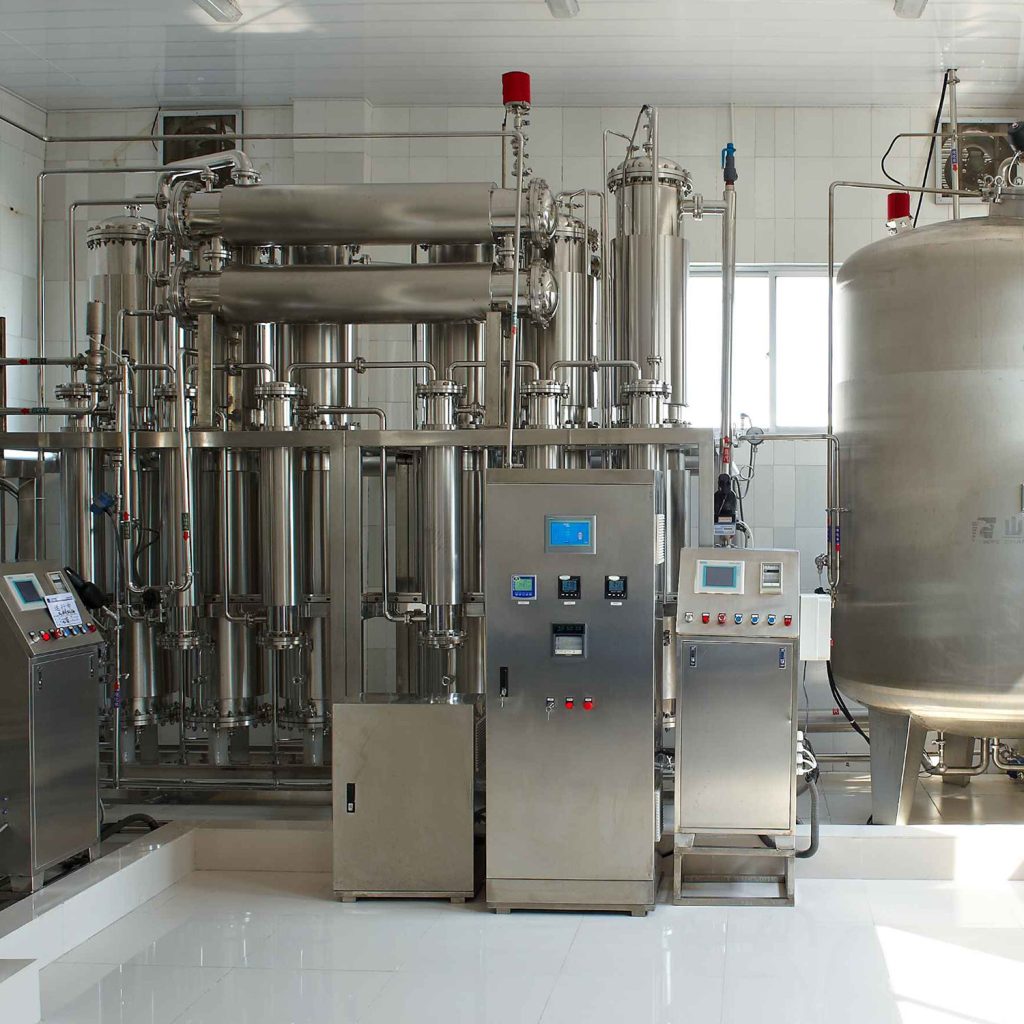
Manufacturers should consider the complete WFI system. They should not evaluate the still as an isolated unit. Materials, hygienic design, sanitization strategy, and monitoring points should be selected according to the intended application.
6. Qualification and Technical Support
Pharmaceutical equipment projects require suitable documentation and qualification activities. Depending on the project, these may include design documentation, factory and site testing, installation qualification, operational qualification, and support for performance qualification.
Manufacturers should confirm which documents, tests, and technical services are included in the supply scope. Responsibilities for qualification and final compliance should be clearly agreed before the project begins.
Frequently Asked Questions
1. What is the main purpose of multiple effect stills?
The main purpose of multiple effect stills is to produce high-quality distilled water for pharmaceutical WFI applications. They use several evaporation stages and reuse heat from one stage to the next. This helps reduce external steam demand.
2. How are multiple effect stills different from single-effect stills?
A single-effect still uses external heat for one main evaporation stage. Multiple effect stills reuse heat across several stages. This can reduce the external steam needed for each unit of product water.
3. Can multiple effect stills produce pure steam?
Some multiple effect stills can be designed to provide both WFI and pure steam. However, this capability is not available in every model. The configuration, steam quality requirements, and intended use must be confirmed with the equipment manufacturer.
4. What feed water is required for multiple effect stills?
Purified water is commonly used as feed water. The exact requirements depend on the still design, incoming water quality, and manufacturer’s specifications. Suitable pretreatment helps control scaling and fouling.
5. How does distillation reduce bacterial endotoxins?
Bacterial endotoxins do not normally evaporate with water. They mainly remain in the liquid phase during distillation. Effective vapor separation helps prevent contaminated water droplets from entering the product stream.
6. Are multiple effect stills suitable for every pharmaceutical plant?
Not necessarily. The right technology depends on required capacity, energy costs, available utilities, local regulations, and site conditions. Manufacturers should compare suitable WFI production options before making a final decision.
Conclusion
Multiple effect stills are a proven technology for pharmaceutical WFI production. By reusing heat across several evaporation stages, they can support reliable water production while reducing external steam demand.
However, equipment selection should consider more than energy efficiency. Feed water quality, production capacity, vapor separation, automation, storage, distribution, and qualification all play important roles in maintaining WFI quality.
SKE&EAGLE provides pharmaceutical water equipment and system solutions, including multiple effect stills and purified water systems. By considering each project’s water demand, process requirements, and site conditions, pharmaceutical manufacturers can select equipment that supports reliable operation and their applicable quality requirements.
For your next pharmaceutical water project, contact SKE&EAGLE to discuss your required WFI capacity, feed water conditions, and system configuration.
Official Website: https://www.ske-eagle.com/
Contact Email: info@ske-eagle.com
Follow us on Facebook for the latest industry insights: SKE & Eagle Facebook
Business Inquiries: Visit our official website and submit the contact form at the bottom.