

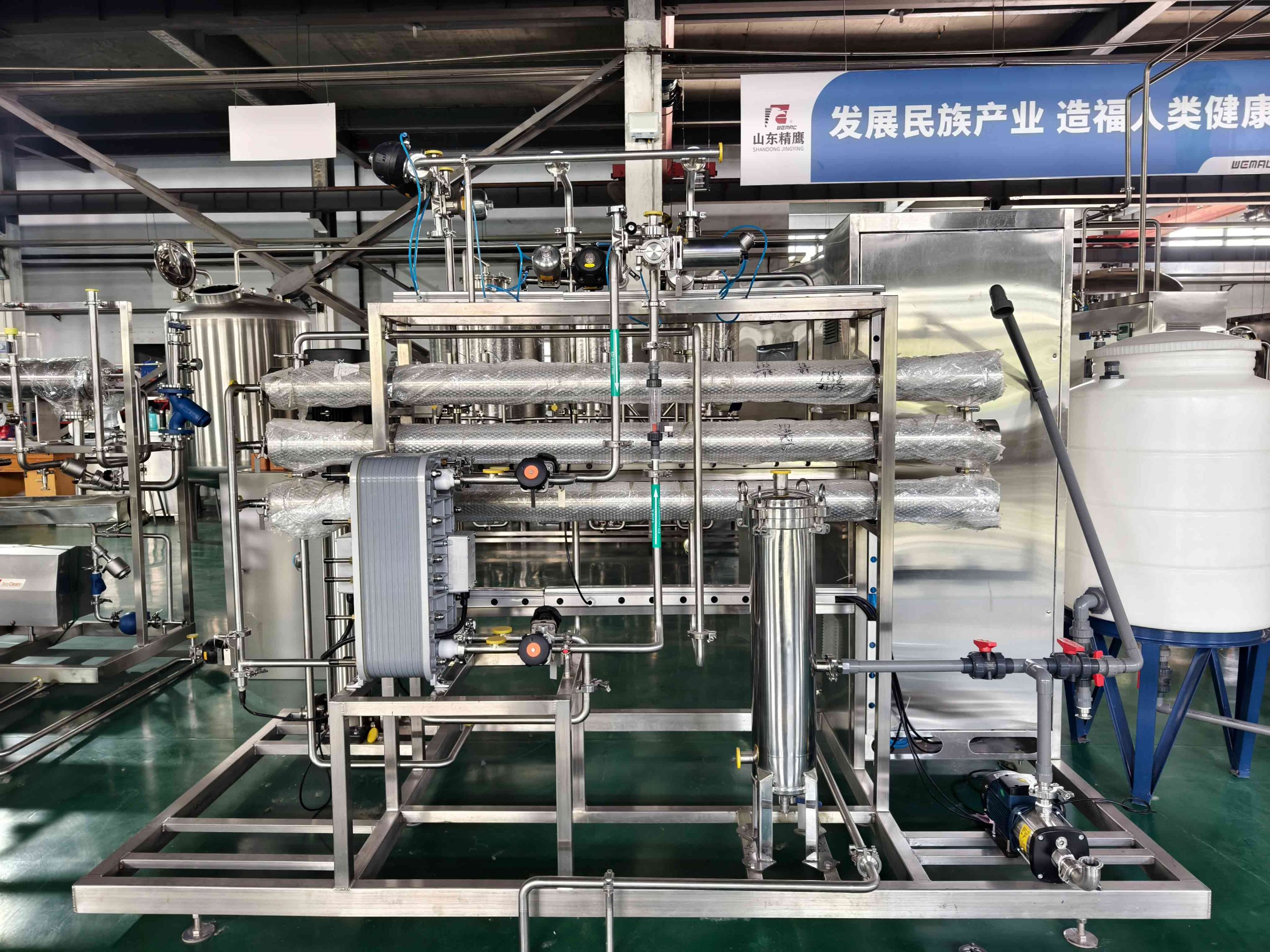
Water is one of the most important materials in pharmaceutical manufacturing. It can be used as a raw material, process ingredient, cleaning medium, or production utility. Because of this, water quality must be controlled according to its intended use and the applicable pharmacopoeial requirements.
An RO water purifier system is widely used as a key purification stage in pharmaceutical water treatment. However, pharmaceutical water production requires more than an RO membrane. A complete system may combine pretreatment, reverse osmosis, EDI, UV, ultrafiltration, storage tanks, distribution loops, online monitoring, and sanitization.
For pharmaceutical manufacturers, the purpose of an RO water purifier system is not simply to remove dissolved salts. The complete process must consistently produce the required water quality and protect it from contamination during storage and distribution.
What Is an RO Water Purifier System?
An RO water purifier system uses Reverse Osmosis (RO), a pressure-driven membrane separation process. Feed water is pushed through a semi-permeable membrane under pressure. Water passes through the membrane, while many dissolved salts, organic compounds, particles, and microorganisms are rejected and removed through the concentrate stream.
In pharmaceutical applications, the RO membrane is normally one of the main purification barriers. It can significantly reduce dissolved salts, hardness, heavy metals, suspended contaminants, many organic compounds, and many microorganisms.
The performance of an RO water purifier system depends on feed-water quality, membrane type, operating pressure, recovery rate, temperature, pretreatment, and maintenance.
Why Pharmaceutical Water Systems Need More Than RO
A residential RO unit and a pharmaceutical RO water purification system may use the same basic membrane principle, but their engineering requirements are very different.
A pharmaceutical system must be designed according to the required water grade and intended manufacturing application. It should also support monitoring, sanitization, documentation, qualification, and validation.
Important design factors include:
- Feed-water quality
- Required water grade
- Production capacity
- Conductivity
- Total Organic Carbon (TOC)
- Microbial control
- Endotoxin control where applicable
- Storage conditions
- Distribution loop design
- Sanitization method
- Online monitoring
- Data traceability
The applicable requirements depend on the intended use of the water and the relevant pharmacopoeia, such as USP, EP, or JP.
Therefore, selecting an RO water purifier system should start with the required water quality and process application. Membrane rejection is only one part of the complete design.
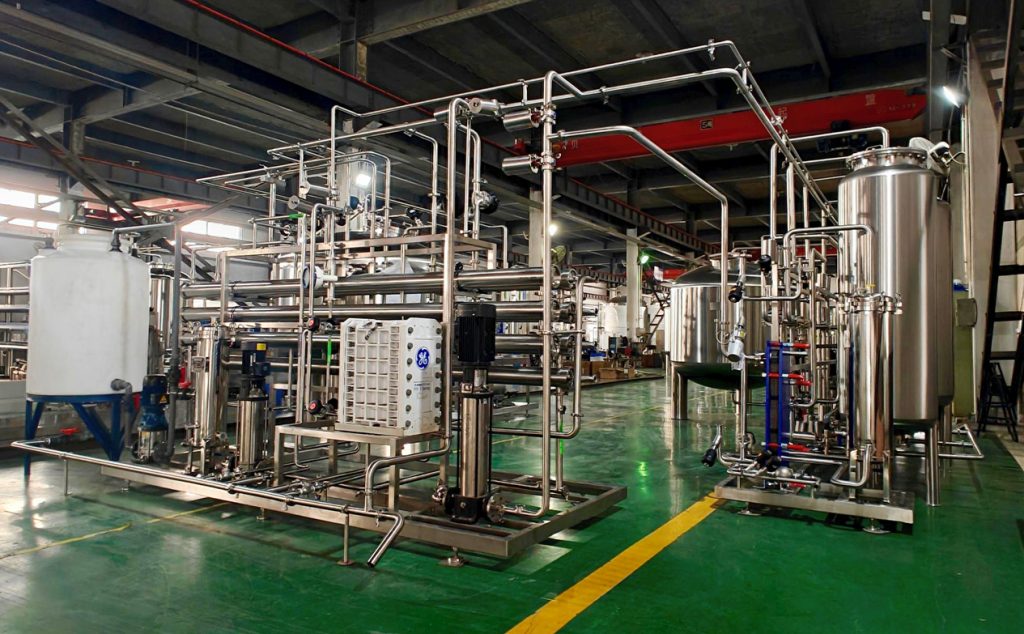
How Does an RO Water Purifier System Work?
A pharmaceutical RO system normally contains several treatment stages. Each stage has a specific function and protects the equipment that follows it.
1. Pretreatment
Pretreatment prepares feed water before it enters the RO unit.
A typical RO water purifier system may include:
- Multimedia filters
- Activated carbon filters
- Water softeners
- Cartridge filters
- Chemical dosing equipment when required
Multimedia filtration reduces suspended solids and larger particles. Activated carbon can reduce chlorine and selected organic compounds. Water softeners reduce hardness and help control scaling.
Good pretreatment is critical because poor feed-water quality can cause membrane fouling, scaling, oxidation, and shorter membrane life.
2. Reverse Osmosis
The RO unit is the main membrane purification stage. It removes most dissolved salts and many other contaminants from pretreated water.
Operating pressure, feed flow, product flow, conductivity, recovery, and differential pressure should be monitored during operation.
Depending on the project, an RO water purifier system may use one or more RO stages. The final configuration depends on feed-water quality, required recovery, production capacity, and the target water specification.
3. EDI and Other Polishing Technologies
After RO, some dissolved ions may remain in the product water.
Electrodeionization (EDI) can be used as a polishing stage. It further reduces ionized impurities and provides continuous operation without the chemical regeneration normally required by conventional ion exchange systems.
Depending on the application, the purification train may also include UV, ultrafiltration, or other polishing technologies. The correct combination depends on the required water grade, feed-water conditions, capacity, and validation strategy.
4. Storage and Distribution
Water quality must also be protected after purification.
A complete RO water purifier system may connect to pharmaceutical storage tanks and a continuous distribution loop. The system should minimize stagnation and reduce the risk of microbial growth and recontamination.
Typical equipment may include:
- Stainless steel storage tanks
- Circulation pumps
- Distribution loops
- Spray devices
- Heat or chemical sanitization systems
- Online conductivity monitoring
- Online TOC monitoring
A pharmaceutical water system therefore covers both water generation and quality protection after generation.
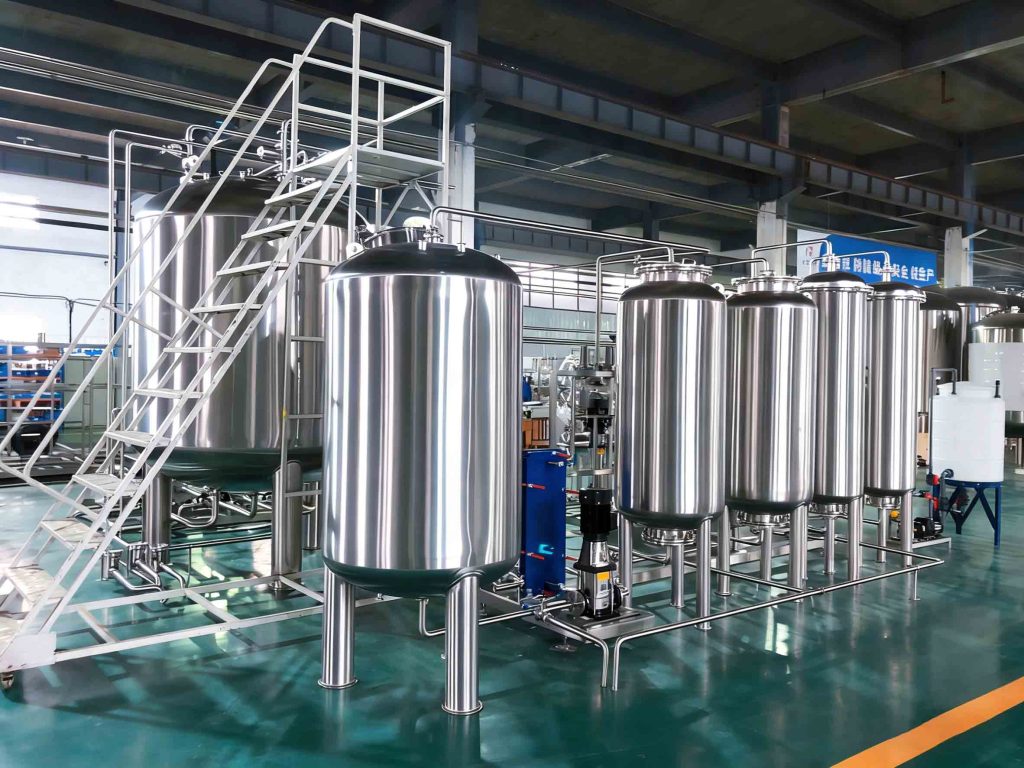
Key Components of an RO Water Purifier System
| Component | Main Function | Pharmaceutical Value |
|---|---|---|
| Multimedia Filter | Removes suspended solids and larger particles | Protects downstream equipment |
| Activated Carbon Filter | Reduces chlorine and selected organic compounds | Helps protect RO membranes |
| Water Softener | Reduces calcium and magnesium | Helps control scaling |
| RO Unit | Removes most dissolved salts and many contaminants | Main purification barrier |
| EDI Module | Removes remaining ionic impurities | Provides continuous high-purity polishing |
| UV System | Provides microbial control and, in some designs, TOC reduction | Supports microbial and organic control |
| UF System | Reduces endotoxins and high-molecular-weight contaminants | Supports applications with strict endotoxin requirements |
| Storage Tank | Stores purified water under controlled conditions | Protects water quality after generation |
| Distribution Loop | Circulates purified water | Helps reduce stagnation and recontamination |
| PLC and HMI | Controls and records system operation | Supports process control and traceability |
Not every pharmaceutical RO water purifier system requires all of these components. Equipment selection should be based on actual process requirements.
Purified Water vs. Water for Injection
An RO water purifier system can support different pharmaceutical water applications. Two important categories are Purified Water (PW) and Water for Injection (WFI).
| Item | Purified Water (PW) | Water for Injection (WFI) |
|---|---|---|
| Typical use | Many non-parenteral pharmaceutical applications | Applications requiring WFI quality |
| Main concerns | Chemical and microbial quality | Chemical quality, microbial control, and endotoxins |
| Common technologies | RO, EDI, UV, UF and other suitable processes | Distillation or qualified membrane-based systems where permitted |
| System design | Based on intended use and validation | Requires tighter microbial and endotoxin control |
| Distribution | Designed to maintain water quality | Requires strict storage and circulation control |
An RO water purifier system can be an important part of Purified Water production. In jurisdictions where membrane-based WFI production is permitted, RO may also form part of a qualified WFI generation process.
However, RO should not be described as automatically producing WFI simply because an RO membrane is used. The complete system must meet the applicable pharmacopoeial requirements and provide appropriate microbial and endotoxin control.
How to Choose an RO Water Purifier System
When selecting an RO water purifier system, pharmaceutical manufacturers should first define the process requirements.
Analyze Feed Water
A detailed feed-water analysis is the starting point. Important parameters may include conductivity, hardness, silica, chlorine, TOC, suspended solids, microbial quality, and other site-specific contaminants.
The pretreatment section can then be designed according to actual water conditions.
Define the Required Water Grade
The required water grade determines the design of the RO water purifier system.
A system designed for general Purified Water may have different requirements from one intended to support WFI production. The intended pharmaceutical process should always be defined before equipment selection.
Calculate Production Capacity
The RO water purifier system should be sized according to daily demand, peak demand, operating hours, storage volume, and future expansion.
Oversizing can increase investment and operating costs, while undersizing can limit production capacity.
Design Storage and Distribution
The system does not end at the RO skid.
Storage tanks, circulation loops, piping, pumps, valves, temperature control, sanitization, and dead-leg management can all affect final water quality.
A properly designed RO water purifier system must maintain water quality from generation to the point of use.
Plan Monitoring and Validation
A pharmaceutical RO water purifier system should include appropriate monitoring and control functions.
Common parameters include:
- Conductivity
- TOC
- Pressure
- Flow
- Temperature
- Microbial quality
- Endotoxin levels where applicable
Qualification and validation may include DQ, IQ, OQ, and PQ, supported by calibration records, operating procedures, maintenance records, and monitoring data.
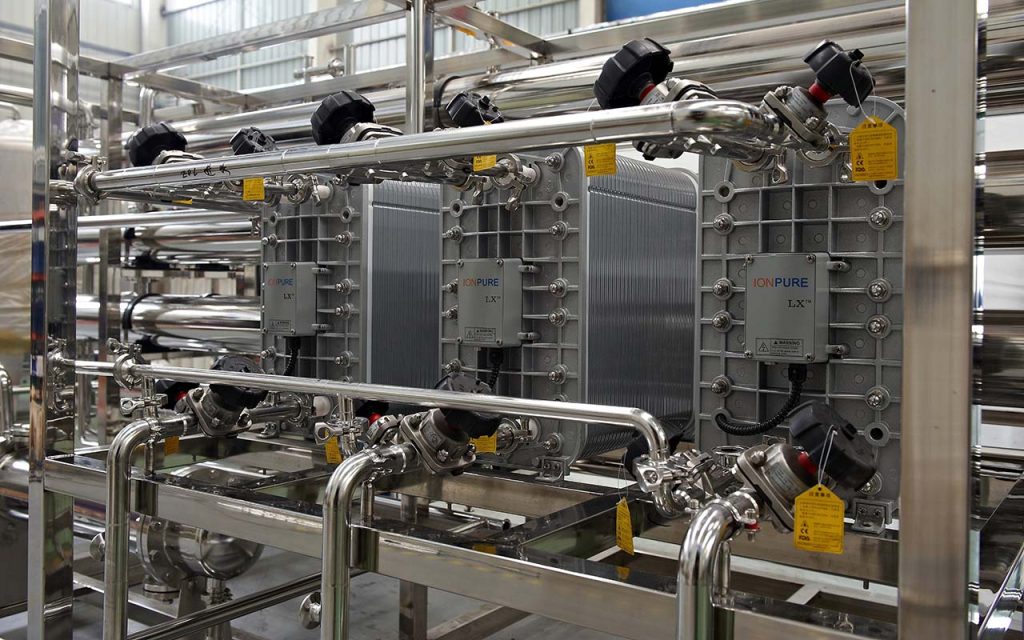
SKE&EAGLE RO Water Purification Solutions
SKE&EAGLE designs and manufactures pharmaceutical water treatment equipment for commercial pharmaceutical production.
Our RO water purifier system solutions can be configured according to feed-water conditions, required water grade, production capacity, and plant layout.
Depending on project requirements, a complete system may include:
- Pretreatment
- RO
- EDI
- UV
- UF
- Pharmaceutical storage tanks
- Distribution loops
- PLC and HMI control
- Online conductivity monitoring
- Online TOC monitoring
- Sanitization functions
SKE&EAGLE focuses on the complete pharmaceutical water process rather than a single purification unit. This approach allows the RO water purifier system to be designed together with storage, distribution, monitoring, and quality-control requirements.
We can also provide engineering documentation and qualification-related support for pharmaceutical water projects.
Frequently Asked Questions
1.Can an RO water purifier system produce Purified Water?
Yes, an RO water purifier system can be an important part of a Purified Water generation system when properly designed and operated. Additional treatment and polishing stages may be required depending on feed-water quality and the applicable water specification.
2.Can an RO water purifier system produce WFI?
An RO water purifier system can form part of a qualified WFI production process in jurisdictions where membrane-based WFI production is permitted. However, RO alone should not automatically be considered sufficient. The complete system must meet the applicable WFI requirements and provide appropriate microbial and endotoxin control.
3.What is the role of EDI in an RO water purifier system?
EDI removes remaining ionized impurities after RO. In an RO water purifier system, EDI can provide continuous high-purity polishing without the chemical regeneration normally associated with conventional ion exchange systems.
4.How often should RO membranes be replaced?
There is no fixed replacement interval for an RO water purifier system membrane. Membrane life depends on feed-water quality, pretreatment, operating pressure, recovery, cleaning, and maintenance.
Conclusion
A reliable RO water purifier system combines suitable pretreatment, RO membrane separation, polishing, storage, distribution, monitoring, and sanitization. The final configuration depends on feed-water quality, required water grade, production capacity, and applicable regulatory requirements.
For pharmaceutical manufacturers, the goal is not simply to remove contaminants. The goal is to consistently produce the required water quality and maintain that quality throughout storage and distribution.
SKE&EAGLE provides integrated pharmaceutical water purification equipment designed around these requirements, from pretreatment and RO to EDI, UV, UF, storage, distribution, control, monitoring, and qualification support.
For pharmaceutical manufacturers planning a new project or upgrading an existing plant, a properly engineered RO water purifier system can provide a controlled and scalable foundation for pharmaceutical water production.
Contact SKE & Eagle for Advanced Solutions
For customized system engineering solutions or integration of high-performance water treatment technologies, please contact SKE & Eagle. Our professional team collaborates closely with industrial partners to design, implement, and maintain solutions tailored to your operational needs.
Official Website: https://www.ske-eagle.com/
Contact Email: info@ske-eagle.com
Follow us on Facebook for the latest industry insights: SKE & Eagle Facebook
Business Inquiries: Visit our official website and submit the contact form at the bottom.