


Solution preparation is a key step in pharmaceutical manufacturing. A liquid preparation system helps manufacturers mix, dissolve, dilute, and transfer liquid products in a controlled way.
In the past, this work depended on manual operations. Operators measured ingredients and checked temperatures by hand. This can work for simple products, but it becomes harder as quality rules increase.
Modern systems use high automation to control these steps. PLC control, automatic dosing, and sensors help manufacturers achieve more consistent production.
This article explains how a modern liquid preparation system works and what to consider when selecting one.
Key Takeaways
- An automated liquid preparation system replaces manual measuring and timing with PLC-controlled water filling, dosing, mixing, temperature control, and transfer.
- Dosing accuracy, real-time sensor data, and electronic batch records are what actually drive consistency — not just having a bigger tank.
- CIP should run before SIP in the same way as other pharmaceutical water equipment: residues left behind can shield microorganisms from a 121°C steam cycle.
- The right configuration depends on product viscosity, batch size, required water grade (PW or WFI), and hygienic design details like surface finish and dead-leg control.
What Is a Liquid Preparation System?
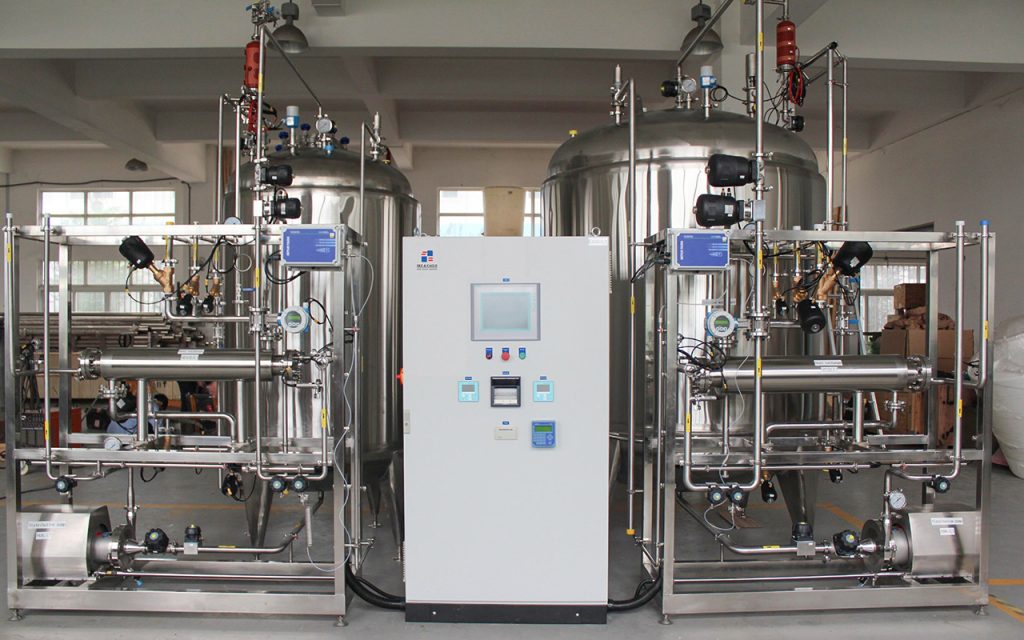
It is a group of equipment used to prepare a liquid product. The main equipment is usually a preparation tank with a mixing system.
The system may also include storage tanks, agitators, purified water or WFI supply, dosing systems, heating and cooling units, pumps, hygienic pipelines, valves, sensors, filtration units, and PLC control.
In pharmaceutical production, solution preparation often starts with pharmaceutical-grade water. Ingredients are then added according to a defined recipe. The system controls mixing, temperature, and dosing before the solution moves to the next step.
How Does an Automated System Work?
A highly automated system uses programmed controls to manage the process. A typical process includes the following steps.
1. Water filling. The system adds the required amount of purified water or another approved liquid to the tank. For pharmaceutical use, this may be Purified Water (PW) or Water for Injection (WFI).
2. Ingredient dosing. Raw materials are added according to the formulation. Dosing can be controlled by weight, flow, volume, or time. Automatic dosing reduces manual errors and improves batch consistency.
3. Mixing and dissolution. The agitator mixes the ingredients. Speed and time are controlled by the PLC. The tank and agitator design should match the product’s viscosity and mixing needs.
4. Temperature control. Some products need heating or cooling. A jacketed tank can provide this. The PLC monitors temperature and controls it according to the recipe.
5. Process monitoring. Sensors monitor temperature, level, pressure, flow, pH, conductivity, and weight. The system can display data in real time and generate alarms when values move outside the set range.
6. Transfer. After preparation, the solution moves to another tank or the next stage through hygienic piping. A closed path helps reduce exposure to the environment.
Key Components
| Component | Main Function | Key Consideration |
|---|---|---|
| Preparation Tank | Holds and mixes the product | Hygienic design and capacity |
| Agitator | Mixes ingredients | Speed and performance |
| Dosing System | Adds raw materials | Accuracy and repeatability |
| Heating/Cooling | Controls temperature | Stable control |
| Sensors | Monitor parameters | Accuracy and reliability |
| Pumps | Transfer liquids | Hygienic design |
| Valves | Control flow | Automatic operation |
| PLC/HMI | Controls the process | Recipe and alarm management |
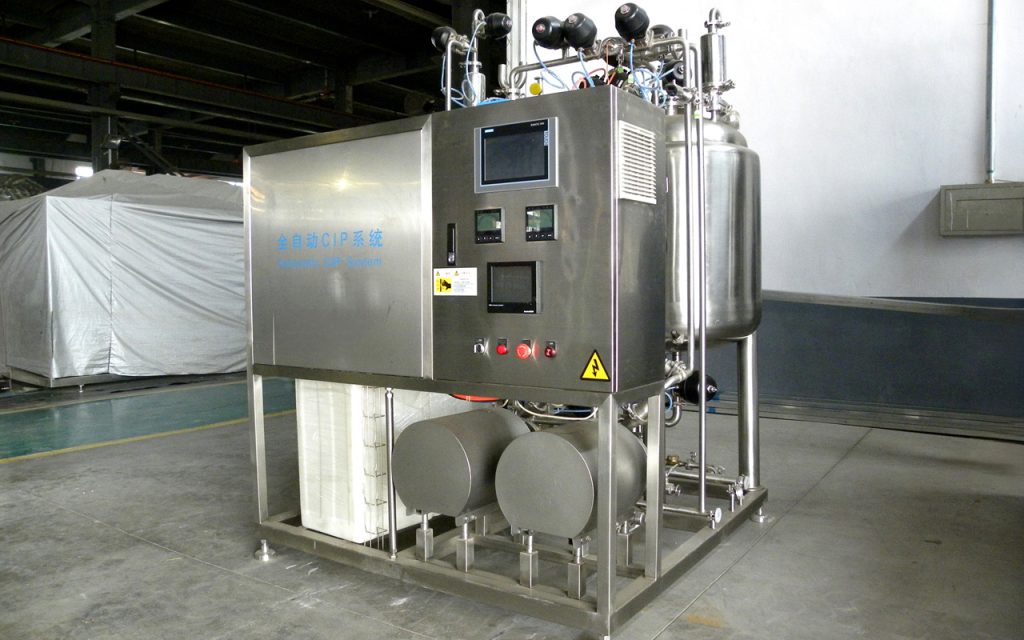
| CIP System | Cleans equipment | Repeatable cycles |
| SIP System | Sterilizes equipment | Validated process |
The exact setup depends on the product, batch size, and production needs.
Why Pharmaceutical Water Is Important
Water is one of the most important materials in solution preparation. Its quality directly affects the final product.
Different processes need different water grades. Purified Water (PW) is widely used. Water for Injection (WFI) is required for many parenteral processes.
A complete water system may include pretreatment, reverse osmosis (RO), EDI, storage, distribution, WFI generation, and monitoring systems.
The water system and liquid preparation system should work together. Purified water is supplied to the preparation tank, and the preparation system then controls dosing, mixing, and temperature.
CIP and SIP
Cleaning and sterilization are important parts of solution preparation.
Clean-in-Place (CIP) cleans the inside of tanks, pipes, and valves without taking the equipment apart. A typical CIP cycle includes pre-rinsing, cleaning solution, intermediate rinsing, final rinsing, and drainage. An automated CIP system controls flow, temperature, time, and concentration. This makes cleaning more repeatable and easier to document.
Steam-in-Place (SIP) uses steam to sterilize equipment without disassembly. It is used for processes that need a high level of microbial control. A validated SIP cycle controls temperature, pressure, and holding time. A common reference temperature is 121°C.
CIP and SIP together create a controlled process environment and reduce manual handling.
How High Automation Improves Solution Preparation
Better batch consistency. The system follows the same recipe for each batch. This reduces differences caused by manual operation.
More accurate dosing. Ingredients are added by defined weight, flow, or volume. This improves accuracy and reduces waste.
Better process control. Sensors provide real-time data. Operators monitor key parameters from the HMI instead of checking every step manually.
Improved traceability. The system records ingredient quantities, temperature, mixing time, and cleaning cycles. These records support batch review.
Reduced manual intervention. Fewer manual steps improve efficiency and reduce contamination risks.
What to Consider When Selecting a System
1. Product characteristics. Consider viscosity, solubility, temperature sensitivity, foaming, and shear sensitivity. These affect tank and agitator design.
2. Batch size. The tank should match the required batch volume and production schedule.
3. Water quality. Define the required water grade before designing the system. It may need PW or WFI.
4. Material and hygienic design. Stainless steel is common. Consider surface finish, drainability, weld quality, and dead-leg control, following hygienic design practices such as those in ASME BPE.
5. Automation level. Decide how much of the process should be automated, from water filling to CIP and data recording.
6. Cleaning and sterilization. If the process requires frequent product changes, CIP and SIP should be considered during the initial design.
Applications
Liquid preparation systems are used in many industries.
Pharmaceuticals: solutions, oral liquids, injectables, and buffers.
Biotechnology: buffers, culture media, and process solutions.
Food and Beverage: syrups, concentrates, and flavors.
Cosmetics: liquid products, emulsions, and gels.
Pharmaceutical applications usually require higher levels of hygienic design, process control, and documentation.

SKE&EAGLE for Pharmaceutical Water and Solution Preparation
SKE&EAGLE focuses on pharmaceutical water equipment for commercial production.
Solution preparation depends on a reliable source of process water. This may include a Purified Water system or a WFI system.
SKE&EAGLE provides water treatment and distribution solutions that can be integrated with downstream production. Projects can include RO and EDI systems, PW storage, WFI systems, hygienic distribution, stainless steel tanks, automated control, and data recording.
By considering the water system and solution preparation process together, manufacturers can build a more complete production solution.
FAQ
1. What is a liquid preparation system used for?
It is used to mix, dissolve, dilute, and formulate liquid products in pharmaceutical, biotechnology, food, beverage, and cosmetic production.
2. What is the difference between a liquid preparation system and a mixing tank?
A mixing tank mainly holds and mixes a product. A liquid preparation system includes the tank plus dosing, pumps, valves, sensors, automation, and CIP.
3. What water is used in pharmaceutical solution preparation?
It depends on the product and process. Pharmaceutical production may use Purified Water (PW) or Water for Injection (WFI).
4. Why is high automation important?
It helps control dosing, mixing, and temperature. It reduces operator-dependent variation and improves batch consistency and traceability.
5. Can the system be customized?
Yes. It can be designed around batch size, product characteristics, water quality, automation level, and cleaning requirements.
Written by Mandy, Marketing Specialist at SKE&EAGLE with two years of experience covering the company’s pharmaceutical water and steam equipment. Technical details in this guide were reviewed by SKE&EAGLE’s engineering team before publication.
Conclusion
A modern liquid preparation system integrates tanks, mixing, dosing, process control, and hygienic equipment into one controlled process.
For pharmaceutical manufacturers, the system must do more than mix ingredients. It must also provide accurate dosing, stable conditions, reliable cleaning, and contamination control.
High automation improves consistency and traceability, and all of this depends on a well-designed pharmaceutical water system as its foundation.
As a pharmaceutical water equipment manufacturer, SKE&EAGLE can provide complete solutions from purified water and WFI generation to storage and distribution, and can design them together with downstream liquid preparation processes.
Whether you are planning a new production line, upgrading an existing system, or integrating pharmaceutical water equipment with a liquid preparation system, SKE&EAGLE can design a suitable solution based on your product, process, batch size, water quality, and applicable requirements.
Contact SKE & Eagle for Advanced Solutions
For customized system engineering solutions or integration of high-performance water treatment technologies, please contact SKE & Eagle. Our professional team collaborates closely with industrial partners to design, implement, and maintain solutions tailored to your operational needs.
Official Website: https://www.ske-eagle.com/
Contact Email: info@ske-eagle.com
Follow us on Facebook for the latest industry insights: SKE & Eagle Facebook
Business Inquiries: Visit our official website and submit the contact form at the bottom.