

Introduction: Why Water Quality Matters
Water is one of the most important materials in pharmaceutical manufacturing. It is used in drug products, cleaning equipment, and many other tasks. If the water is not pure enough, it can affect product safety and quality.
Pharmaceutical companies need more than a basic commercial water treatment system. They need a reliable system that controls water quality, removes contaminants, and prevents bacteria growth. The system must also be monitored and documented to meet regulatory requirements.
A good commercial water treatment system helps manufacturers turn ordinary feed water into high-purity water. Depending on what is needed, the system may include several different technologies. These can include pretreatment, reverse osmosis (RO), electrodeionization (EDI), and sanitization.
This guide explains how these systems work. It also helps you understand what to look for when choosing a purified water treatment system for your facility.
What Are Commercial Water Treatment Systems?
Commercial water treatment systems are complete solutions that clean incoming water for business or industrial use. In pharmaceutical manufacturing, these systems must meet strict quality standards.
Every system starts with an analysis of the incoming water. This water may contain different types of contaminants. These include dirt, minerals, chlorine, salts, organic matter, and bacteria.
Different treatment steps are used to remove each type of contaminant. A typical purified water treatment system follows this basic path:
Feed Water → Pretreatment → Reverse Osmosis → EDI → Storage → Distribution
Some water purification systems for commercial use need extra technologies. These can include ultrafiltration, UV light, or ozone. There is no single design that works for every factory. The right design depends on the quality of the incoming water and the purity needed for production.

Why Pharma Needs Special Water Treatment
Regular commercial water treatment systems are designed to make water safe for drinking or general use. Pharmaceutical water treatment is different. It requires much more control and documentation.
A pharmaceutical water purification system for commercial use must do several things well:
-
Keep water quality within strict limits
-
Stop bacteria from growing
-
Remove organic matter and salts
-
Work reliably without frequent breakdowns
-
Store and move water without letting it get dirty again
-
Monitor important measurements continuously
-
Keep records to show the system works properly
Water can become contaminated again after it is purified. If the storage tank is poorly designed, or if water sits in pipes too long, bacteria can grow. This is why the whole commercial water treatment system must be designed carefully.
Pharmaceutical water treatment should be seen as one complete system, not just a single machine.
Key Technologies for Water Purification
Pretreatment: Protecting the Main System
Pretreatment is the first step in any commercial water treatment system. It prepares the incoming water for the main purification steps. Without good pretreatment, the RO membranes can get damaged.
Common pretreatment steps include:
-
Multimedia filters to remove dirt and particles
-
Water softeners to remove hardness minerals
-
Carbon filters to remove chlorine
These steps protect the RO membranes and help them last longer. They also reduce maintenance costs.
| Contaminant | Source | How to Remove It | Why It Matters |
|---|---|---|---|
| Dirt and particles | Municipal water | Multimedia filter | Can clog RO membranes |
| Chlorine | City water treatment | Carbon filter | Damages RO membranes |
| Hardness | Natural minerals | Water softener | Creates scale on membranes |
| Dissolved salts | Natural minerals | Reverse osmosis | Affects water purity |
| Remaining ions | After RO | Electrodeionization (EDI) | Needed for high purity |
| Bacteria | Pipes, source water | UV, ozone, or heat | Can contaminate products |
Reverse Osmosis: The Main Purification Step
Reverse osmosis is the most common technology in a purified water treatment system. RO uses pressure to push water through a special membrane. The membrane traps salts, organic matter, and bacteria while letting clean water pass through.
Some water purification systems for commercial use use one RO pass. Others use two passes for higher purity. Two-pass RO gives water with lower conductivity and better contaminant removal.
RO system design should also think about water recovery. Higher recovery means less water waste. But the right recovery level depends on the quality of the incoming water.
Electrodeionization: For Ultra High Purity
EDI is often used after RO when very high purity is needed. EDI uses ion-exchange materials, special membranes, and an electric field to remove remaining ions.
Unlike older ion-exchange systems, EDI does not need chemical regeneration. This makes it better for the environment and cheaper to run over time.
For ultra high purity water, the RO + EDI combination works very well. It provides reliable purity without the need for chemical handling. Many pharmaceutical applications require ultra high purity water for critical processes.
Extra Technologies: UF, UV, and Ozone
Some water purification systems for commercial use need additional technologies based on the application. Ultrafiltration (UF) removes bacteria and larger molecules. UV light damages the DNA of microorganisms to stop them from growing.
Ozone can be used to sanitize storage tanks and pipes. It kills bacteria effectively and breaks down into oxygen, leaving no harmful residues.
The right combination of technologies depends on your water quality needs. It is not about adding more equipment. It is about choosing what works best for your situation.

Purified Water vs. Water for Injection
One key decision is choosing the right water grade. Purified Water (PW) is used for oral drugs, skin products, and cleaning. Water for Injection (WFI) has stricter requirements and is used for injectable drugs.
| Factor | Purified Water | Water for Injection |
|---|---|---|
| Common uses | Oral drugs, skin products, cleaning | Injectable drugs, critical uses |
| Purity level | High | Very high |
| Bacteria control | Important | Critical |
| Endotoxin control | Sometimes needed | Always needed |
| Common technologies | RO, EDI, UF | Distillation or special membrane systems |
Choose the grade that matches your products and regulatory requirements.
Storage and Distribution: Keep Water Clean
Purification is not the end of the process. Water must stay clean until it is used. Storage and distribution are just as important as purification.
Storage tanks are usually made of 316L stainless steel. This material does not rust and is easy to clean. The tank design should allow complete drainage and prevent bacteria from growing.
The distribution system keeps water moving in a loop. This prevents water from sitting still, which can allow bacteria to grow. Pipes should be designed to avoid dead ends where water can become stagnant.
Hot water sanitization at 80-85°C can be used to clean the system regularly. This kills bacteria and keeps the system hygienic.
The goal is simple: produce pure water and keep it pure until it is used.
Monitoring and Automation
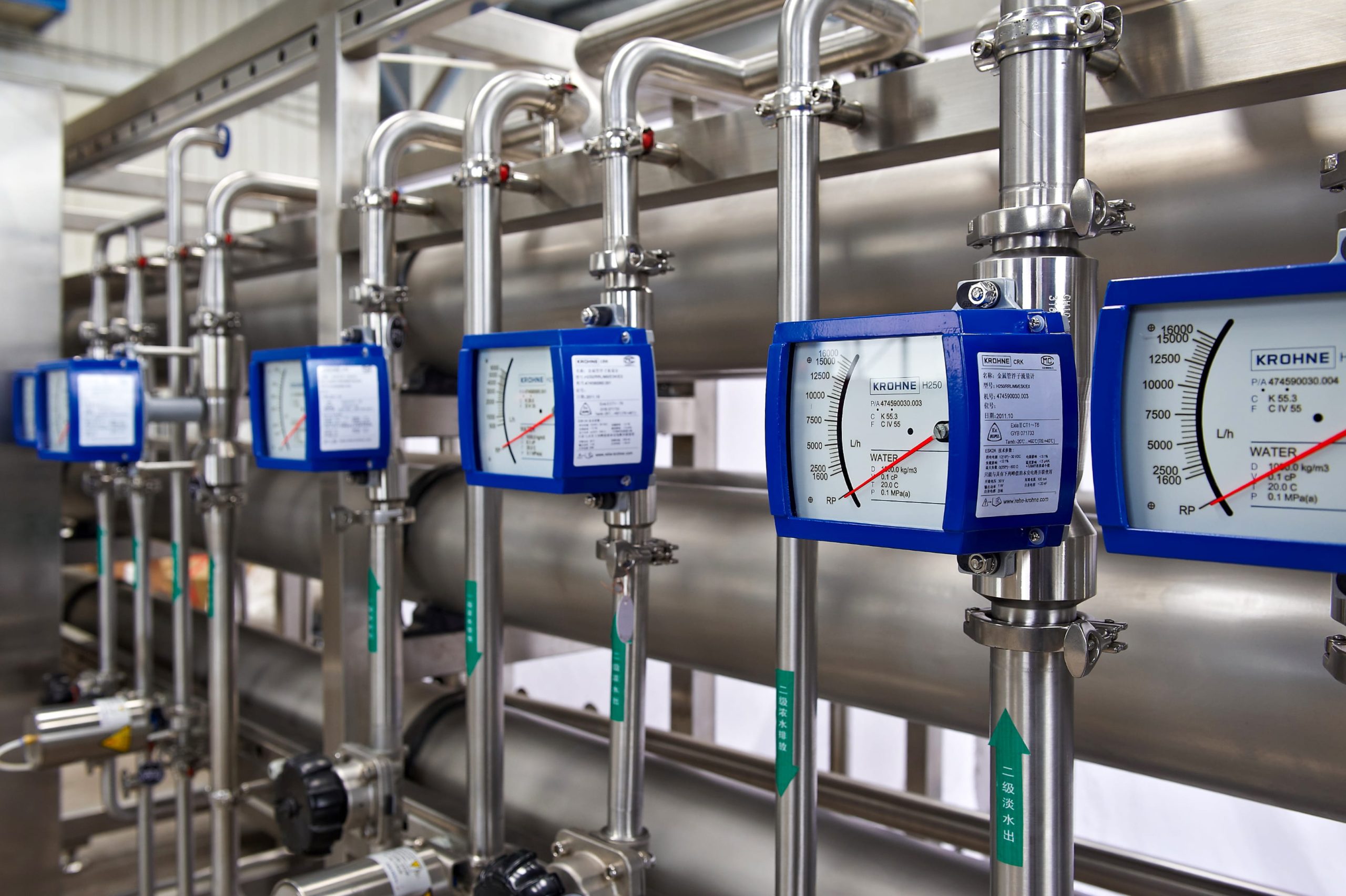
Modern pharmaceutical water purification systems for commercial use need continuous monitoring. Online sensors check important measurements in real time.
Common measurements include:
-
Conductivity
-
Total Organic Carbon (TOC)
-
Flow rate
-
Pressure
-
Temperature
If water quality goes outside the limits, automated systems can send the water to drain. This prevents bad water from being used in production.
PLC and SCADA systems help with automatic operation, alarms, and data logging. Good data management is important for regulatory compliance.

Validation: Proving the System Works
A pharmaceutical commercial water treatment system must be proven to work correctly. Validation is the process of documenting that the system performs as expected.
The validation process includes:
-
Design Qualification (DQ): Check that the design is suitable for the intended use.
-
Installation Qualification (IQ): Verify that equipment is installed correctly.
-
Operational Qualification (OQ): Show that the system works within its operating ranges.
-
Performance Qualification (PQ): Demonstrate that the system consistently produces water that meets specifications.
The PQ phase is done in three stages. Phase 1 involves daily sampling for 2-4 weeks. Phase 2 continues for 4-8 weeks. Phase 3 lasts up to one year to cover seasonal changes.
Validation is not a one-time event. The system must be monitored continuously to ensure ongoing performance.
How to Choose the Right System
When selecting a commercial water treatment system, consider these important factors:
-
Feed water quality: Test your incoming water for salts, hardness, chlorine, and bacteria.
-
Required water quality: Decide if you need Purified Water or Water for Injection. Consider whether you need ultra high purity water for your processes.
-
Production capacity: Choose a system that can meet your peak demand.
-
Storage and distribution: Plan for tanks, pipes, and sanitization.
-
Monitoring and automation: Online instruments improve reliability and compliance.
-
Validation support: The manufacturer should provide documentation and support.
Why Choose SKE&EAGLE?
Choosing a water purification system for commercial use is an important engineering decision. The right partner can help you get a system that works well and meets all requirements.
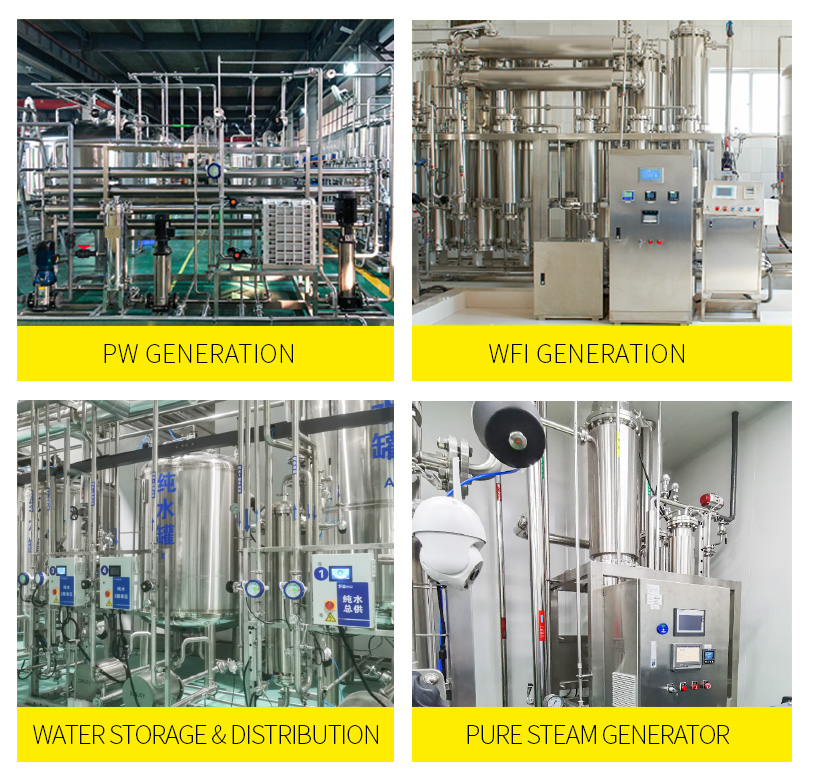
SKE&EAGLE provides customized commercial water treatment systems for pharmaceutical manufacturing. We design purified water treatment systems based on your feed water, quality needs, and production capacity.
Our water purification systems for commercial use combine purification, storage, distribution, monitoring, and automation into one complete solution. We also offer installation support, commissioning, and validation documentation.
Whether you need ultra high purity water for biotech applications or purified water for oral products, SKE&EAGLE can provide the right solution.
Our goal is to help you produce consistent water quality, protect that quality throughout the system, and document performance over time.
Conclusion
Commercial water treatment systems for pharmaceutical manufacturing need careful design. They must control water quality from the beginning through purification, storage, and distribution.
RO, EDI, and other technologies all have important roles. The best choice depends on your water quality needs, feed water conditions, and production requirements. Some applications need ultra high purity water, while others require purified water.
For pharmaceutical manufacturers, the goal is consistent quality, system reliability, and documented performance. With good engineering and system design, you can achieve all of these goals.
Frequently Asked Questions
Q: What is a commercial water treatment system?
A: It is a complete solution that cleans water for business use. In pharmaceuticals, it includes purification, storage, and monitoring.
Q: What are water purification systems for commercial use?
A: These are systems designed to produce high-quality water for business applications. They are used in pharmaceuticals, food processing, healthcare, and other industries.
Q: Is RO enough for pharmaceutical water?
A: RO is a key step, but other technologies like EDI or UF may be needed for higher purity, especially for ultra high purity water.
Q: What does EDI do in a purified water treatment system?
A: EDI removes remaining ions after RO. It is used when ultra high purity water is required for sensitive processes.
Q: What is ultra high purity water used for?
A: Ultra high purity water is used for critical applications in pharmaceuticals, biotechnology, and laboratory research. It has very low conductivity and bacteria levels.
Contact SKE & Eagle for Advanced Solutions
For customized system engineering solutions or integration of high-performance water treatment technologies, please contact SKE & Eagle. Our professional team collaborates closely with industrial partners to design, implement, and maintain solutions tailored to your operational needs.
Official Website: https://www.ske-eagle.com/
Contact Email: info@ske-eagle.com
Follow us on Facebook for the latest industry insights: SKE & Eagle Facebook
Business Inquiries: Visit our official website and submit the contact form at the bottom.