


Purified Water vs. WFI
Key Takeaways
- The dividing line is sterility exposure, not general “purity”: if the water touches a sterile injectable product at any point, WFI is required, regardless of how clean your PW system is.
- WFI carries a defined endotoxin limit (≤0.25 EU/mL); Purified Water does not carry a formal endotoxin specification at all.
- Substituting PW where WFI is required isn’t a gray area, it’s a straightforward compliance failure with no defensible middle ground.
What Actually Separates Purified Water From WFI?
It’s not that WFI is simply “more purified” PW, it’s produced and controlled to eliminate endotoxin risk specifically, which PW systems aren’t designed or validated to guarantee. PW meets USP conductivity and TOC limits and supports general microbial control, but it has no formal endotoxin specification because it’s not intended to contact sterile product.
WFI adds a defined endotoxin limit (typically ≤0.25 EU/mL) on top of the same conductivity and TOC requirements, and historically required multi-effect or vapor compression distillation to reliably hit that limit, though validated membrane-based production is now also permitted under the current USP monograph.

When Is Purified Water Sufficient?
PW is the right choice for non-sterile oral or topical formulation, API manufacturing that doesn’t feed directly into a sterile process, general equipment cleaning, and laboratory testing that doesn’t involve sterile product contact. If the water never touches something that ends up sterile and injectable, PW is very likely the correct, and more cost-effective, choice.
When Is WFI Non-Negotiable?
Any water contacting a sterile injectable or biologic product, directly in formulation, or indirectly through final equipment rinse before aseptic filling, requires WFI. There’s no partial-compliance option here: a facility can’t use PW “most of the time” and WFI “for the sensitive parts” if both touch the same product stream at any point before final sterile packaging.
Frequently Asked Questions
Can purified water be used instead of WFI?
No, not where the water contacts a sterile injectable or biologic product at any stage. WFI’s defined endotoxin limit and stricter production controls exist specifically for that use case, and PW systems aren’t validated to guarantee the same endotoxin control.

What is the endotoxin limit for WFI versus purified water?
WFI carries a defined endotoxin limit, typically 0.25 EU/mL. Purified Water does not carry a formal endotoxin specification because it isn’t intended for sterile product contact.
Is WFI always more expensive to produce than PW?
Generally yes, given the additional distillation or advanced membrane infrastructure and validation burden WFI requires. That’s exactly why over-specifying WFI where PW would suffice is a common, avoidable cost mistake.
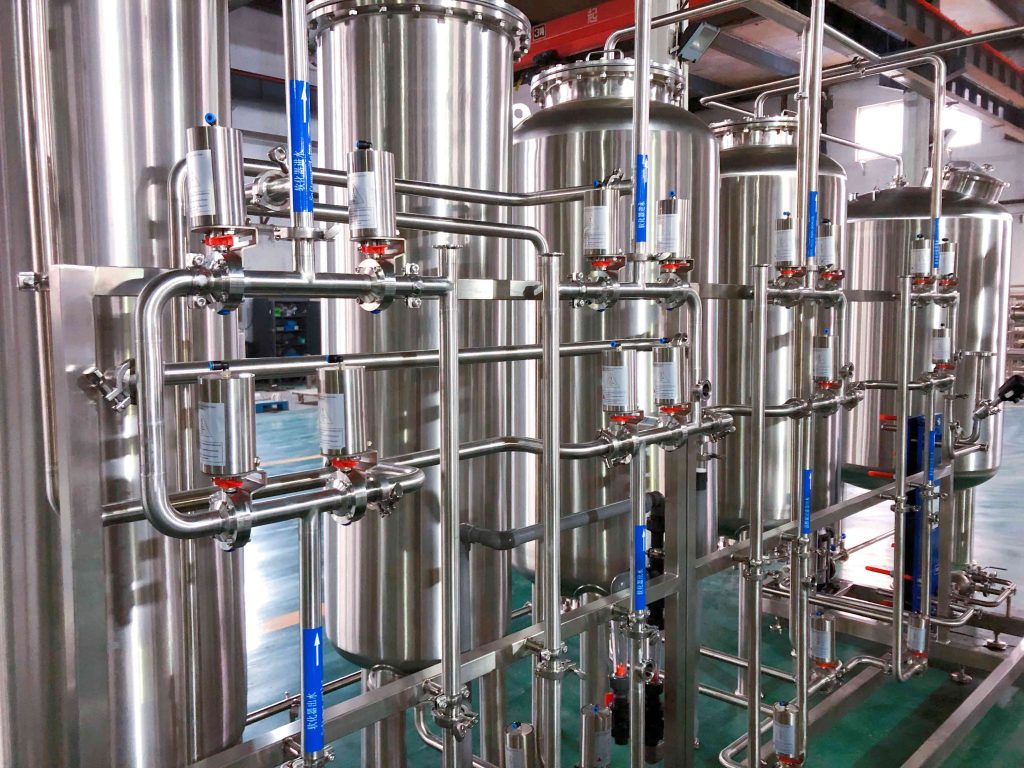
SKE & Eagle PW and WFI Systems
SKE & Eagle manufactures both Purified Water systems and WFI systems. For the full breakdown across all four pharmaceutical water grades, see our types of pharmaceutical water guide.
Contact Us
Whether you need quotations for Purified Water and WFI systems, USP compliance consultation, endotoxin standard technical support, or production cost comparison, our professional team is ready to deliver comprehensive technical guidance at any time.If you have questions about the differences between PW and WFI, pharmaceutical water grade selection, or system validation solutions, feel free to contact us for customized professional advice on GMP water preparation equipment.
- Facebook: SKE&Eagle Facebook
- Email: info@skeequipment.com