
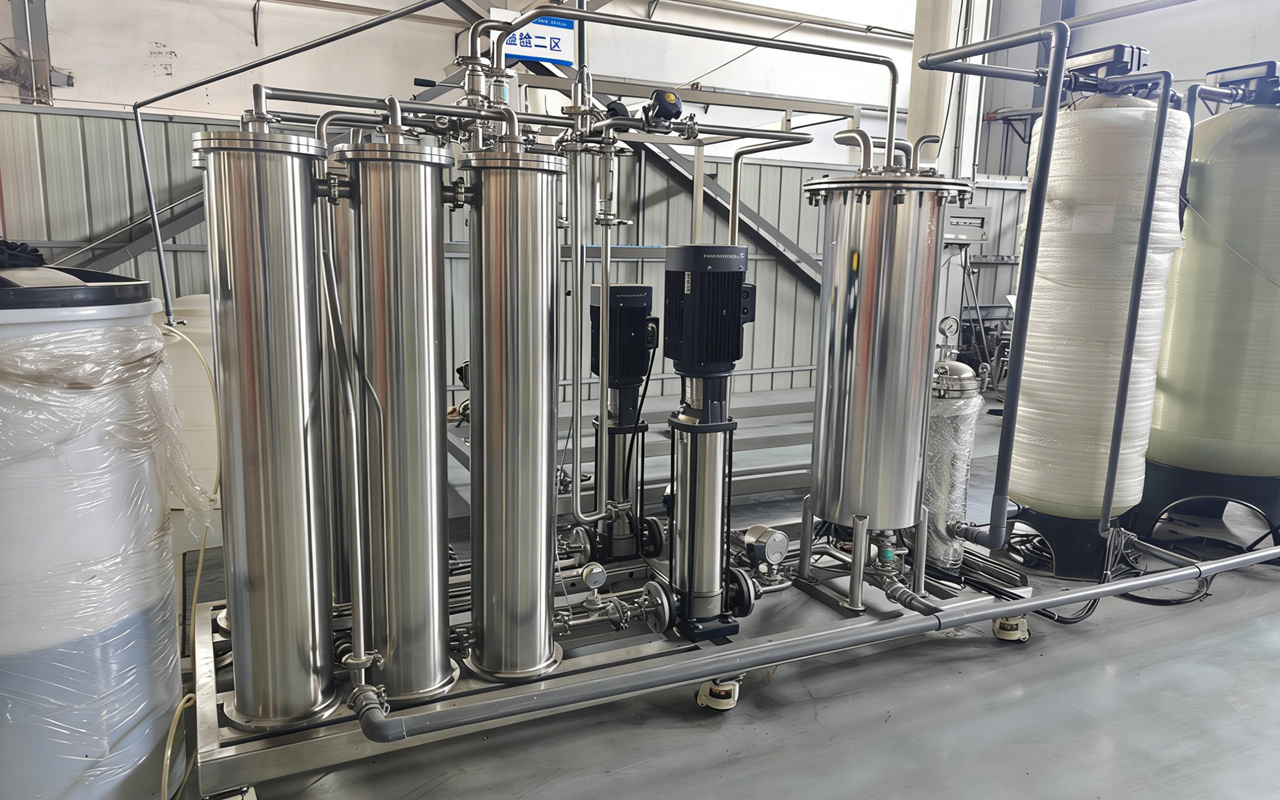
Commercial Reverse Osmosis Water Purification Systems: A Comprehensive Guide for Pharmaceutical Applications
In today’s industrial landscape, water purity is non-negotiable. Commercial reverse osmosis water purification systems stand as the gold standard for producing high-purity water at scale, powering critical operations across manufacturing, healthcare, and especially the pharmaceutical sector. This comprehensive guide explores the technology, components, applications, and best practices of commercial reverse osmosis water purification, equipping you with the knowledge to select, operate, and maintain these vital systems effectively.
What Is a Commercial Reverse Osmosis Water Purification System?
A commercial reverse osmosis water purification system is a pressure-driven water treatment technology that uses a semi-permeable membrane to separate pure water molecules from dissolved solids, contaminants, and impurities. Unlike residential RO units, commercial systems are built for continuous, high-volume operation, with capacities ranging from 500 gallons per day (GPD) to over 20,000 GPD, and even higher for industrial-scale setups. At its core, RO treatment reverses the natural osmosis process: by applying pressure greater than the feedwater’s osmotic pressure, water is forced through the membrane, while contaminants like salts, heavy metals, bacteria, and organic compounds are rejected and flushed away as concentrate.
Commercial RO water purifier systems are distinguished by their robust construction, advanced automation, and scalability. They are not just filtration devices but integrated treatment solutions that include pretreatment, membrane separation, and post-treatment stages to ensure consistent, high-quality output. For industries like pharmaceuticals, where water quality directly impacts product safety and regulatory compliance, these systems are indispensable.
The Science Behind RO Treatment: How Commercial RO Systems Work
Understanding the science of RO treatment is key to appreciating the efficiency of commercial reverse osmosis water purification. Natural osmosis occurs when water moves from a low-concentration solution to a high-concentration solution through a semi-permeable membrane, equalizing solute levels. Commercial RO systems reverse this process by applying external pressure to the feedwater, overcoming osmotic pressure and driving water molecules through the membrane against the concentration gradient.
The heart of any commercial RO water purifier is the RO membrane, typically made from thin-film composite (TFC) polyamide material. These membranes have nanoscale pores (0.0001 microns) that allow only water molecules to pass, rejecting up to 99% of dissolved salts, total dissolved solids (TDS), microorganisms, and organic contaminants. The process produces two streams: permeate (purified water) and brine (concentrated waste). The efficiency of this separation is measured by key metrics: salt rejection rate (typically ≥98% for commercial systems), water recovery rate (50–75% for most applications), and permeate flux (water flow rate through the membrane).
Pretreatment is a critical first step in commercial RO systems. Raw water often contains sediments, chlorine, hardness minerals, and organic matter that can foul or damage the RO membrane. Standard pretreatment includes multi-media filtration to remove suspended solids, activated carbon filtration to adsorb chlorine and organics, water softening to reduce scaling, and security filtration (5-micron filters) to trap fine particles. SKE&EAGLE’s pretreatment modules are customized to match feedwater quality, ensuring maximum membrane protection and system longevity.
After pretreatment, a high-pressure pump delivers water to the RO membrane array. The pump’s pressure is calibrated based on feedwater TDS and desired recovery rate—higher TDS requires greater pressure to drive separation. The membrane array, consisting of spiral-wound elements housed in stainless steel pressure vessels, performs the core purification. Post-treatment steps, such as UV sterilization, ozone treatment, or electro-deionization (EDI), may follow to further refine water quality, especially for pharmaceutical applications requiring ultra-pure water.
Core Components of a Commercial RO Water Purifier System
Component
Primary Function
Key Specifications & Materials
Critical Role in System Performance
Raw Water Pump
Delivers initial pressure to drive water through pretreatment stages
Centrifugal design, stainless steel construction, variable speed control
Ensures consistent flow to pretreatment, preventing pressure drops that reduce efficiency
Multi-Media Filter
Removes suspended solids, silt, and turbidity from raw water
Layered media (anthracite, sand, garnet), backwash capability
Protects downstream filters and membranes from physical fouling
Activated Carbon Filter
Adsorbs chlorine, chloramines, and organic compounds
Granular activated carbon (GAC), coconut shell media
Eliminates membrane-damaging chemicals and improves permeate taste/odor
Water Softener
Reduces calcium and magnesium hardness minerals
Ion-exchange resin, brine tank for regeneration
Prevents scale formation on RO membranes, extending membrane life
Security Filter
Final pretreatment step to trap particles >5 microns
Ensures consistent water supply; critical for maintaining pressure and flow in downstream processes
Control Panel
Automates system operation, monitors parameters
PLC-based, touchscreen interface, sensors for pressure, TDS, flow
Enables real-time monitoring, auto-shutdown for faults, and data logging for compliance
CIP (Clean-in-Place) System
Performs chemical cleaning of membranes to remove fouling
Stainless steel piping, chemical dosing pumps, pH control
Restores membrane performance; essential for long-term system efficiency
Applications of Commercial Reverse Osmosis Water Purification
Commercial reverse osmosis water purification systems serve a vast range of industries, with each sector requiring tailored solutions to meet specific water quality needs. Below are the primary applications, with a focus on the pharmaceutical sector—SKE&EAGLE’s core expertise:
1. Pharmaceutical & Healthcare Industry
The pharmaceutical industry has the most stringent water quality requirements, governed by USP, EP, and GMP standards. Commercial RO systems are foundational for producing two critical water types: purified water (PW) and water for injection (WFI). Purified water is used for non-sterile drug formulation, equipment cleaning, and laboratory processes, with limits on conductivity (≤5.1 μS/cm at 25°C) and total organic carbon (TOC ≤500 ppb). WFI, used for sterile injectables and vaccines, requires even stricter purity (conductivity ≤1.3 μS/cm, TOC ≤500 ppb, and endotoxin ≤0.25 EU/mL).
2. Food & Beverage Manufacturing
In food and beverage production, consistent water quality is essential for product taste, safety, and shelf life. Commercial RO water purifier systems remove minerals, bacteria, and impurities that can alter flavor, cause spoilage, or damage processing equipment. Applications include bottled water production, brewery and distillery processing, soft drink manufacturing, and dairy production. RO-treated water ensures compliance with food safety regulations (e.g., FDA standards) and improves product consistency—critical for brand reputation.
3. Industrial Manufacturing & Electronics
Industrial facilities rely on commercial RO systems for boiler feedwater, cooling tower makeup, and process water. For boilers, RO removes dissolved solids that cause scaling and corrosion, extending equipment life and reducing maintenance. In the electronics industry, ultra-pure water (UPW) produced by RO + EDI systems is used for cleaning semiconductors and microchips, where even trace contaminants can cause product failure. RO treatment is also used in chemical manufacturing, power generation, and metal finishing to protect equipment and ensure process efficiency.
4. Hospitality & Commercial Facilities
Hotels, restaurants, and office buildings use commercial reverse osmosis water purification systems to provide clean drinking water, improve coffee/tea quality, and protect plumbing fixtures from scale. These systems reduce reliance on bottled water, lower operational costs, and enhance guest satisfaction. For large hospitality complexes, scalable commercial RO units can supply purified water to entire facilities, from guest rooms to commercial kitchens.
SKE&EAGLE: Specialized Commercial RO Solutions for Pharmaceutical Water
As a dedicated pharmaceutical water equipment manufacturer, SKE&EAGLE designs commercial reverse osmosis water purification systems that exceed industry regulatory standards. Our systems are engineered to address the unique challenges of pharmaceutical water production, combining advanced RO technology with sanitary design and compliance-focused features.
Key Features of SKE&EAGLE’s Commercial RO Systems
GMP/USP Compliance: All systems are designed and validated to meet USP <1231>, EP, and GMP requirements, with full documentation for regulatory audits.
Advanced Automation: PLC-based control systems with real-time monitoring of TDS, conductivity, pressure, and flow. Auto-alerts for maintenance and fault conditions ensure uninterrupted operation.
Custom Scalability: Systems are tailored to client capacity needs, from small-scale 1,000 GPD units to large-scale 50,000+ GPD industrial arrays. Modular design allows for easy expansion as production grows.
Energy Efficiency: Variable frequency drives (VFD) on high-pressure pumps reduce energy consumption by 15–20% compared to fixed-speed systems. Optimized recovery rates minimize water waste.
Membrane Protection: Robust pretreatment with custom media and anti-scalant dosing ensures long membrane life (3–5 years with proper maintenance), reducing replacement costs.
Maintenance & Operation Best Practices for Commercial RO Systems
Proper maintenance is the cornerstone of maximizing the lifespan and performance of a commercial reverse osmosis water purification system. Neglecting maintenance leads to membrane fouling, reduced purity, increased energy consumption, and costly downtime. SKE&EAGLE provides comprehensive maintenance guidelines and support to ensure optimal system operation:
Daily Maintenance Tasks
Monitor real-time metrics: permeate TDS, conductivity, pressure, and flow rates via the control panel.
Check for leaks in piping, pumps, and membrane vessels.
Inspect pretreatment filters (sediment, carbon) for pressure drop; replace if >10 PSI drop is observed.
Verify brine flow rate to ensure proper system recovery and prevent membrane scaling.
Weekly Maintenance Tasks
Perform a manual backwash of multi-media filters to remove accumulated solids.
Inspect and clean carbon filter vents to prevent microbial growth.
Review system log data for performance trends (e.g., declining flux, rising pressure drop).
Monthly Maintenance Tasks
Sanitize pretreatment tanks and piping to control microbial growth.
Calibrate TDS, conductivity, and pressure sensors to ensure accurate readings.
Inspect membrane O-rings and seals for wear; replace if damaged.
Test CIP system functionality to ensure proper chemical distribution during cleaning.
Quarterly & Annual Maintenance Tasks
Perform a comprehensive CIP cycle using approved cleaning chemicals (acid for scale, alkaline for organic fouling).
Conduct membrane integrity testing (bubble point test) to identify damaged elements.
Replace pretreatment media (carbon, resin) as recommended by the manufacturer.
Perform a full system validation, including water quality testing to confirm compliance with standards.
Schedule a preventive maintenance inspection with SKE&EAGLE’s service team for component wear assessment.
Common Issues & Troubleshooting
Low Permeate Flow: Caused by membrane fouling, insufficient pressure, or clogged pretreatment. Solution: Perform CIP, check pump pressure, and replace filters.
High Permeate TDS: Indicates membrane damage, O-ring failure, or improper recovery rate. Solution: Test membrane integrity, replace damaged elements, and adjust recovery.
High Differential Pressure: Signals scaling or fouling. Solution: Clean membranes with acid/alkaline cleaners and adjust anti-scalant dosing.
Microbial Contamination: Caused by poor sanitization or dead legs in piping. Solution: Implement regular sanitization, inspect piping for design flaws, and use UV treatment.
Frequently Asked Questions (FAQ)
Q1: What is the difference between a commercial RO water purifier and a residential RO system?
A1: Commercial RO systems are designed for high-volume, continuous operation (500+ GPD), with robust components, advanced automation, and scalable design. Residential systems are small-scale (50–100 GPD) for household use, with basic filtration and no industrial-grade features. Commercial systems also meet regulatory standards for industrial/pharmaceutical use, which residential systems do not.
Q2: How long do RO membranes last in a commercial system?
A2: With proper pretreatment and maintenance, high-quality RO membranes (like those used in SKE&EAGLE systems) last 3–5 years. Membrane life depends on feedwater quality, recovery rate, and cleaning frequency. Poor maintenance can reduce life to 1–2 years.
Q3: Can commercial RO systems produce water for injection (WFI)?
A3: Yes. SKE&EAGLE’s commercial RO systems, when integrated with secondary RO, EDI, and terminal sterilization/filtration, consistently produce water that meets USP WFI standards (conductivity <1.3 μS/cm, endotoxin <0.25 EU/mL). This is a cost-effective alternative to traditional distillation methods.
Q4: What is the ideal water recovery rate for a commercial RO system?
A4: For most commercial applications, a recovery rate of 60–70% is optimal. This balances water efficiency with membrane protection—higher rates (over 75%) increase scaling and fouling risk, while lower rates waste water. Pharmaceutical systems typically operate at 60–65% recovery to prioritize membrane longevity.
Q5: How often should a commercial RO system be cleaned?
A5: Cleaning frequency depends on feedwater quality. For standard applications, CIP is recommended quarterly. For high-fouling feedwater (e.g., high TDS or organic content), cleaning may be needed monthly. SKE&EAGLE’s systems include automated cleaning schedules based on real-time performance data.
Contact SKE & Eagle for Advanced Solutions
For customized system engineering solutions or integration of high-performance water treatment technologies, please contact SKE & Eagle. Our professional team collaborates closely with industrial partners to design, implement, and maintain solutions tailored to your operational needs.