

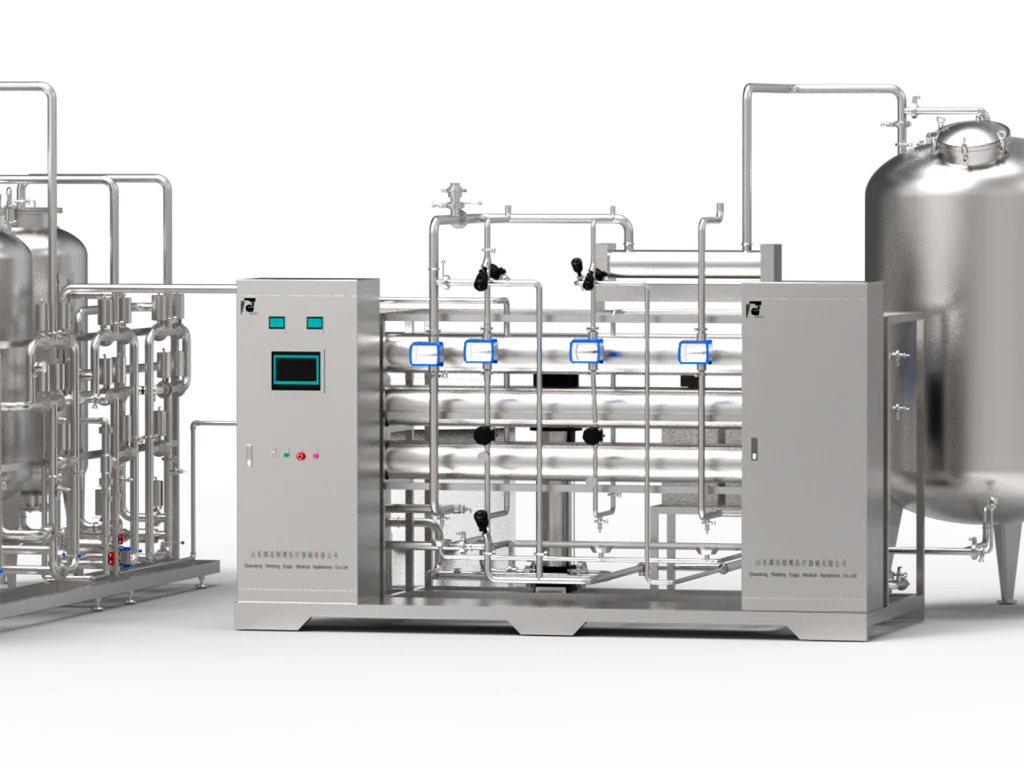
In the pharmaceutical industry, water is more than just a basic ingredient—it is the backbone of safe, effective drug production. Pharmaceutical water, in all its forms, plays a pivotal role in every stage, from raw material cleaning to final product formulation. However, not all water meets the rigorous standards required, and improper handling of purified water for pharmaceutical use can lead to costly compliance violations, product recalls, and even threats to patient safety.
As a leading pharmaceutical equipment manufacturer, SKE&EAGLE understands the critical importance of water treatment in the pharmaceutical industry. We specialize in designing and supplying high-quality equipment that ensures consistent, compliant purified water production. In this article, we break down the key aspects of purified water for pharmaceutical use, common pitfalls to avoid, and how to optimize your water treatment processes to meet global regulatory standards.
What Is Purified Water for Pharmaceutical Use, and Why Does It Matter?
Purified water for pharmaceutical use refers to water that has been treated to remove impurities, contaminants, and microorganisms to meet strict pharmacopeial standards (such as USP, EP, and WHO). Unlike regular drinking water, it contains no added substances and is free from harmful particles, dissolved solids, and pathogens that could compromise drug quality.
Pharmaceutical water is categorized into different grades, with purified water being the most widely used for non-sterile applications. It serves as a solvent for drug formulations, a cleaning agent for equipment, and a raw material for active pharmaceutical ingredients (APIs). Without high-quality purified water, pharmaceutical products may become contaminated, leading to reduced efficacy, adverse patient reactions, and non-compliance with regulatory bodies like the FDA and EMA.

Key Differences Between Pharmaceutical Water Grades
The pharmaceutical industry relies on various grades of water, each tailored to specific applications. Understanding these differences is essential to ensure you use the right type of water for your processes, avoiding unnecessary costs and compliance risks. Below is a detailed table comparing the most common grades, including purified water for pharmaceutical use.
| Water Grade | Key Purification Processes | Main Applications | Regulatory Standards |
| Purified Water for Pharmaceutical Use | Reverse Osmosis (RO), Ion Exchange, Distillation, EDI | Non-sterile drug formulations, equipment cleaning, API processing, laboratory testing | USP <1231>, EP, WHO GMP |
| Water for Injection (WFI) | Double Distillation, RO + EDI + Polishing | Sterile drug formulations, injectable products, sterile equipment rinsing | USP <1231>, EP, FDA cGMP |
| Drinking Water (Potable Water) | Filtration, Chlorination | Initial equipment cleaning, non-critical rinsing, employee use | Local drinking water standards (e.g., EPA) |
| Sterile Purified Water | Purification + Sterilization (Autoclaving, UV) | Sterile non-injectable products, topical formulations | USP <1231>, EP |
Common Challenges in Water Treatment in the Pharmaceutical Industry
Water treatment in the pharmaceutical industry is a complex process that requires precision, consistency, and adherence to strict guidelines. Even minor errors can lead to significant issues, including non-compliance, product contamination, and operational downtime. Below are the most common challenges faced by pharmaceutical manufacturers when producing and using purified water.
One major challenge is maintaining consistent water quality. Raw water sources vary in composition, with fluctuations in dissolved solids, pH levels, and microbial contamination. This variability can strain treatment systems, leading to inconsistent purified water output. Additionally, outdated or poorly maintained equipment can fail to remove contaminants effectively, putting product quality at risk.
Another critical challenge is regulatory compliance. Global regulatory bodies (FDA, EMA, WHO) regularly update their standards for pharmaceutical water, requiring manufacturers to stay current and adjust their processes accordingly. Failure to meet these standards can result in fines, product recalls, and damage to brand reputation.
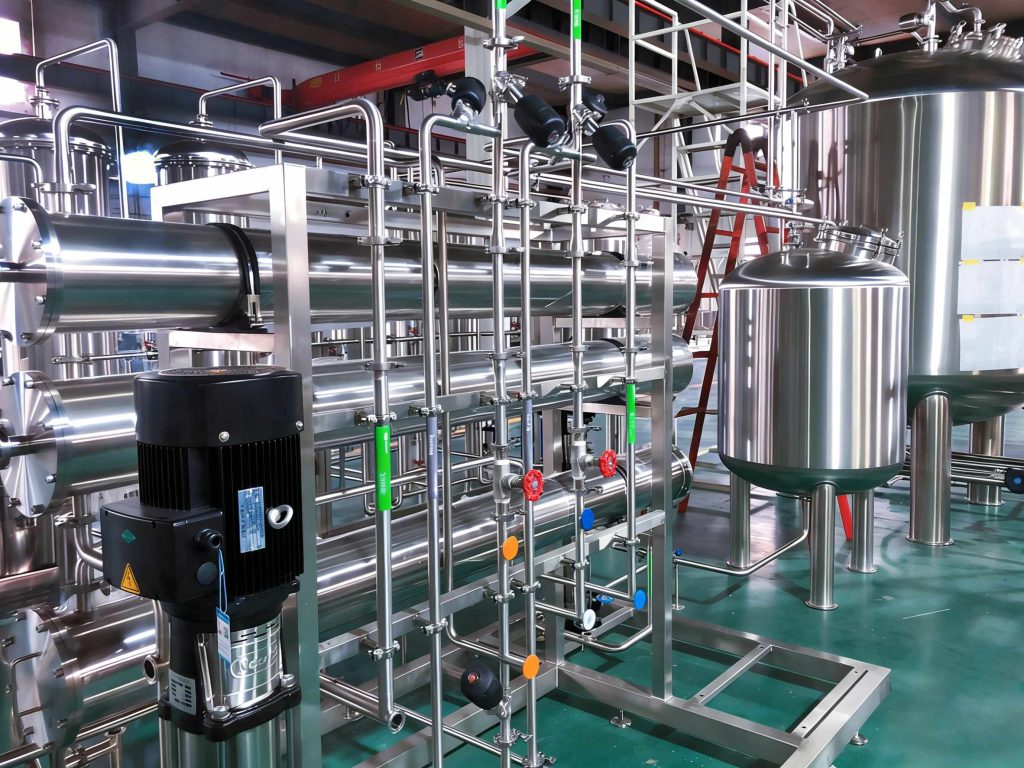
How to Ensure High-Quality Purified Water for Pharmaceutical Use
To avoid the pitfalls associated with poor water quality, pharmaceutical manufacturers must implement a comprehensive approach to water treatment. This includes investing in high-quality equipment, following best practices for operation and maintenance, and conducting regular testing to ensure compliance.
First, choose the right purification technology. The most effective systems for purified water for pharmaceutical use combine reverse osmosis (RO) with ion exchange or EDI (Electrodeionization) to remove dissolved solids, microorganisms, and organic contaminants. SKE&EAGLE’s advanced RO systems are designed to deliver consistent, high-purity water, with built-in monitoring tools to track key parameters like conductivity and TOC (Total Organic Carbon).
Second, implement a strict maintenance schedule. Regular cleaning and sanitization of treatment equipment prevent biofilm formation, which can harbor microorganisms and contaminate purified water. SKE&EAGLE provides comprehensive maintenance support, including training for your team and on-site service to ensure your equipment operates at peak performance.
Finally, conduct regular testing and monitoring. Purified water for pharmaceutical use must be tested daily for key parameters (conductivity, pH, microbial count) and periodically for more comprehensive analyses (heavy metals, TOC). This ensures that any deviations from standards are detected early, preventing costly issues down the line.
7 Critical Mistakes to Avoid with Purified Water for Pharmaceutical Use
Even with the right equipment and processes, manufacturers often make avoidable mistakes that compromise the quality of purified water. Below are the seven most critical mistakes to watch out for, along with guidance on how to prevent them.
- Using Outdated Purification Equipment: Old or inefficient equipment may not remove contaminants effectively, leading to non-compliant water. Invest in modern, certified equipment like SKE&EAGLE’s purified water systems, which are designed to meet the latest regulatory standards.
- Neglecting Raw Water Quality: Failing to test and treat raw water before purification can overload your system and lead to contamination. Implement pre-treatment processes (filtration, softening) to remove suspended solids and other impurities.
- Inadequate Sanitization: Biofilm and microbial growth in pipes and storage tanks are common causes of contamination. Establish a regular sanitization schedule using FDA-approved chemicals or thermal methods.
- Poor Storage and Distribution: Purified water can become contaminated if stored in unsterilized tanks or distributed through dirty pipes. Use closed-loop distribution systems and sterile storage tanks with nitrogen blanketing to prevent contamination.
- Skipping Regular Testing: Testing is critical to ensuring water quality. Skipping daily or periodic tests can lead to undetected contamination, resulting in product recalls.
- Improper Staff Training: Untrained staff may operate equipment incorrectly, leading to inconsistent water quality. Provide comprehensive training on equipment operation, maintenance, and testing protocols.
- Ignoring Regulatory Updates: Regulatory standards for pharmaceutical water are constantly evolving. Failing to update your processes to meet new requirements can result in non-compliance and fines.
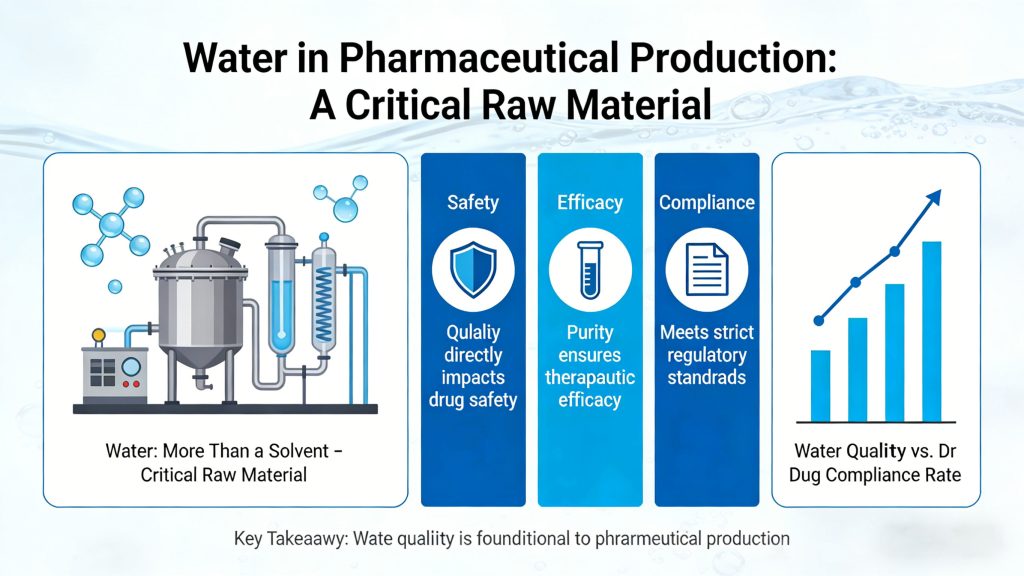
FAQ: Purified Water for Pharmaceutical Use & Water Treatment
Below are answers to the most frequently asked questions about purified water for pharmaceutical use, water treatment in the pharmaceutical industry, and how SKE&EAGLE can support your operations.
Q1: What is the minimum quality standard for purified water for pharmaceutical use?
A1: The minimum standards are defined by global pharmacopeias, including USP <1231>, EP, and WHO GMP. Key parameters include conductivity ≤2 μS/cm (25°C), TOC ≤500 μg/L, and microbial count ≤100 CFU/mL. These standards ensure the water is free from contaminants that could affect drug quality or patient safety.
Q2: How often should we test purified water for pharmaceutical use?
A2: Daily testing is required for critical parameters like conductivity, pH, and microbial count. Comprehensive testing (heavy metals, organic contaminants, endotoxins) should be conducted monthly or quarterly, depending on regulatory requirements and your specific processes. SKE&EAGLE’s systems include built-in monitoring tools to simplify testing and ensure compliance.
Q3: What is the difference between purified water and water for injection (WFI)?
A3: Purified water is used for non-sterile applications (e.g., oral formulations, equipment cleaning) and does not require sterility. WFI is a higher grade of pharmaceutical water, treated to be sterile and free from endotoxins, used for injectable products and sterile equipment rinsing. WFI requires more advanced purification processes, such as double distillation or RO + EDI + polishing.
Q4: How can SKE&EAGLE help with water treatment in the pharmaceutical industry?
A4: SKE&EAGLE designs and supplies custom water treatment equipment tailored to the pharmaceutical industry. Our products include RO systems, EDI units, pre-treatment equipment, and storage/distribution systems—all certified to meet USP, EP, and FDA standards. We also provide installation, maintenance, and training services to ensure your system operates efficiently and compliantly.
Q5: Can we reuse purified water in our pharmaceutical processes?
A5: Yes, purified water can be reused in certain processes, provided it meets the required quality standards. However, reuse must be carefully managed to prevent cross-contamination. SKE&EAGLE can design closed-loop systems that allow for safe reuse, reducing water waste and operational costs.
Q6: What are the most common causes of purified water contamination?
A6: The most common causes include biofilm formation in pipes/tanks, inadequate sanitization, poor raw water quality, and human error (e.g., improper equipment operation). Implementing regular maintenance, sanitization, and testing can significantly reduce contamination risks.
Choose SKE&EAGLE for Reliable Purified Water Solutions
At SKE&EAGLE, we understand that high-quality purified water for pharmaceutical use is non-negotiable for your business. Our decades of experience in the pharmaceutical equipment industry have allowed us to develop solutions that meet the most rigorous regulatory standards, ensuring compliance, safety, and operational efficiency.
Whether you need a custom purification system, maintenance support, or training for your team, SKE&EAGLE is your trusted partner. We are committed to helping pharmaceutical manufacturers around the world optimize their water treatment processes, avoid costly mistakes, and deliver safe, effective products to patients.
Contact SKE&EAGLE today to learn more about our purified water solutions and how we can support your pharmaceutical operations. Let us help you elevate your water treatment processes and achieve long-term compliance and success.