

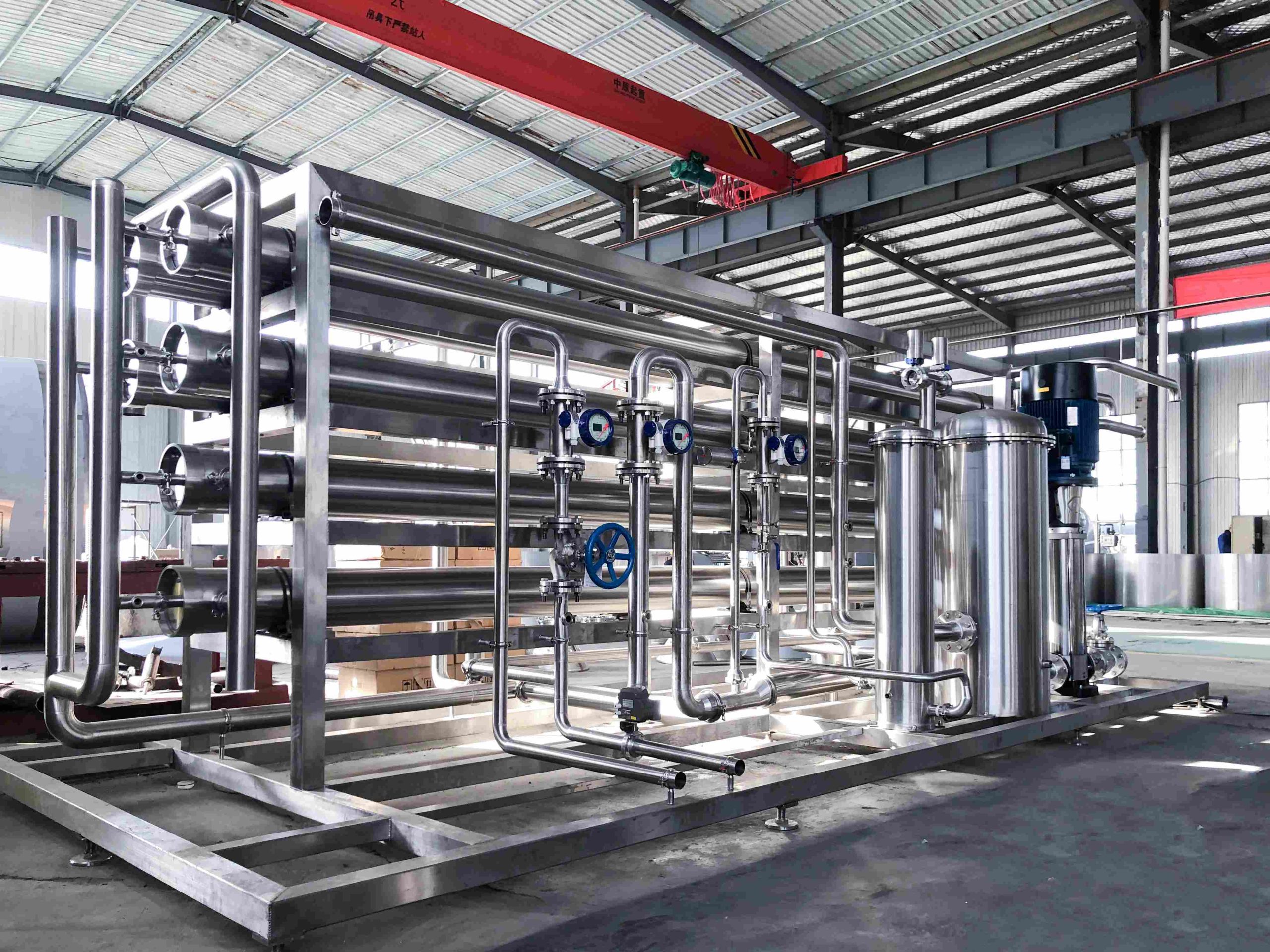
- 68% of pharmaceutical manufacturers relying on preventive maintenance alone still reported at least one unplanned equipment failure per production cycle in 2024 (Oxmaint, 2025).
- Predictive maintenance programs cut unplanned downtime by up to 45% and emergency repair costs by 40-50% compared to preventive-only approaches (Oxmaint, 2025).
- A single unplanned shutdown on GMP-controlled equipment costs a mid-size pharma producer roughly $420,000 in lost production plus re-qualification and FDA documentation liability (Oxmaint, 2025).
Why Does Pharmaceutical Equipment Maintenance Matter?
Poor pharmaceutical equipment maintenance carries a real price tag: a single unplanned shutdown on GMP-controlled equipment costs a mid-size producer roughly $420,000 in lost production alone, before counting re-qualification and FDA documentation costs (Oxmaint, 2025). Beyond the financial hit, equipment failure in drug production creates direct patient safety and compliance exposure that other industries don’t face at the same intensity.
Maintenance here isn’t just repair work. It’s a systematic program of preventive, predictive, and corrective activity designed to hold calibration accuracy, hygiene standards, and process capability inside the “state of control” that regulators expect during every audit.
Preventive vs. Predictive Maintenance: Which Does Pharma Manufacturing Need?
Most pharmaceutical facilities need both, run together, not one instead of the other. Preventive maintenance (PM) still catches the routine wear that predictive tools don’t flag early enough, while predictive maintenance (PdM) catches the failures PM schedules miss entirely.
Preventive maintenance means scheduled inspection and servicing at fixed intervals, based on manufacturer specs or historical failure data, for pumps, valves, sterilizers, and other core production-line components. It’s straightforward to plan and audit, but purely calendar-based PM alone left 68% of surveyed manufacturers with at least one unplanned failure per cycle in 2024.
Predictive maintenance uses condition-monitoring, vibration analysis, infrared thermography, ultrasonic testing, to assess equipment health in real time. Predictive monitoring typically catches degradation signatures 20 to 40 days before failure, giving teams enough lead time to schedule the fix during planned downtime instead of an emergency stop (Oxmaint, 2025).
A Computerized Maintenance Management System (CMMS) ties both approaches together: asset registers, scheduling, and documentation in one audit-ready trail. The facilities that struggle most usually aren’t missing the technology, they’re missing the discipline to log every intervention consistently enough for the CMMS data to actually mean something six months later.
What Compliance Standards Apply to Pharmaceutical Equipment Maintenance?
Maintenance activity has to satisfy GMP, FDA 21 CFR Part 11, and applicable pharmacopoeial standards simultaneously, not sequentially. Every maintenance event, calibration result, and deviation report needs documentation that survives an unannounced audit.
Critical process components, steam generators, autoclaves, WFI systems, carry tighter verification schedules than general equipment because a maintenance-related contamination event on any of them puts product safety directly at risk. Maintenance staff need ongoing cGMP and SOP training; a technically correct repair that isn’t documented to spec is, from a regulatory standpoint, functionally the same as no repair at all.
What Are the Maintenance Needs for Key Pharmaceutical Equipment Components?
Different component classes fail differently, so a one-size maintenance schedule doesn’t work. Here’s what actually needs attention on the most common systems:
- Process pumps: Regular inspection of seals, bearings, and impellers to catch leakage and capacity loss before it affects batch consistency.
- Valves and actuators: Actuator calibration, leak testing, and lubrication, since a failed valve can compromise sterile conditions immediately.
- Heat exchangers and boilers: Descaling, pressure testing, and instrumentation calibration to hold the precise thermal conditions sterilization and reaction stages need.
- Water treatment units: RO and ultrafiltration membranes need strict cleaning and replacement schedules; skip these and water purity drifts out of USP/EP spec fast.
- CIP/SIP systems: Regular validation of spray nozzles, piping, and control parameters to confirm sanitary performance without adding unnecessary downtime.

How Do Water Treatment Systems Affect Equipment Longevity?
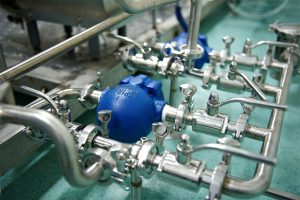
Water purity affects more than the batch, it affects every downstream component the water touches. Poorly maintained RO and ultrafiltration systems accelerate fouling, corrosion, and scale formation on pumps, valves, and piping well beyond the water system itself.
Preventive maintenance on water treatment, membrane cleaning, filter replacement, periodic sanitization, keeps water quality inside USP/EP limits and protects the equipment downstream from it. Continuous monitoring of conductivity, TOC, and microbial counts catches system deterioration early, before it shows up as an unplanned failure somewhere else in the line.
What Are the Most Common Pharmaceutical Equipment Maintenance Challenges?
- Equipment obsolescence: Aging machinery loses spare-parts availability and falls out of step with current process standards. Planning for modular, forward-compatible upgrades reduces this exposure.
- Cleanroom and sterile constraints: Maintenance access itself can threaten aseptic conditions. Remote condition monitoring reduces how often technicians need to physically enter controlled spaces.
- Documentation rigor: Every maintenance action needs audit-ready logging, which is why digitized record-keeping consistently outperforms paper SOPs at scale.
- Staff expertise gaps: Technical troubleshooting skill specific to pharmaceutical-grade equipment isn’t generic maintenance training; it needs to be built deliberately.
Frequently Asked Questions
What is the primary goal of pharmaceutical equipment maintenance?
The primary goal is reliable, safe, and compliant equipment operation that protects product quality and avoids the production downtime and re-qualification costs that come with unplanned failure.
How often should pharmaceutical equipment be maintained?
Frequency depends on equipment type, usage intensity, and regulatory guidance, but most programs combine scheduled preventive maintenance at manufacturer-recommended intervals with ongoing condition-based checks for critical components.
What is the difference between preventive and predictive maintenance in pharma?
Preventive maintenance follows a fixed schedule regardless of actual equipment condition. Predictive maintenance uses condition-monitoring data to catch degradation 20 to 40 days before failure, which is why combining both cuts unplanned downtime by up to 45% versus preventive-only programs.
What role does water treatment play in equipment maintenance?
Water treatment systems keep process water within USP/EP purity limits, which directly reduces corrosion, scaling, and contamination risk on every downstream component the water contacts.
SKE & Eagle Equipment and Water Treatment Systems
SKE & Eagle manufactures pharmaceutical water treatment and processing equipment, including purified water systems and CIP/SIP cleaning systems, engineered for hygienic design and validation support that simplifies the maintenance and compliance work covered above.