
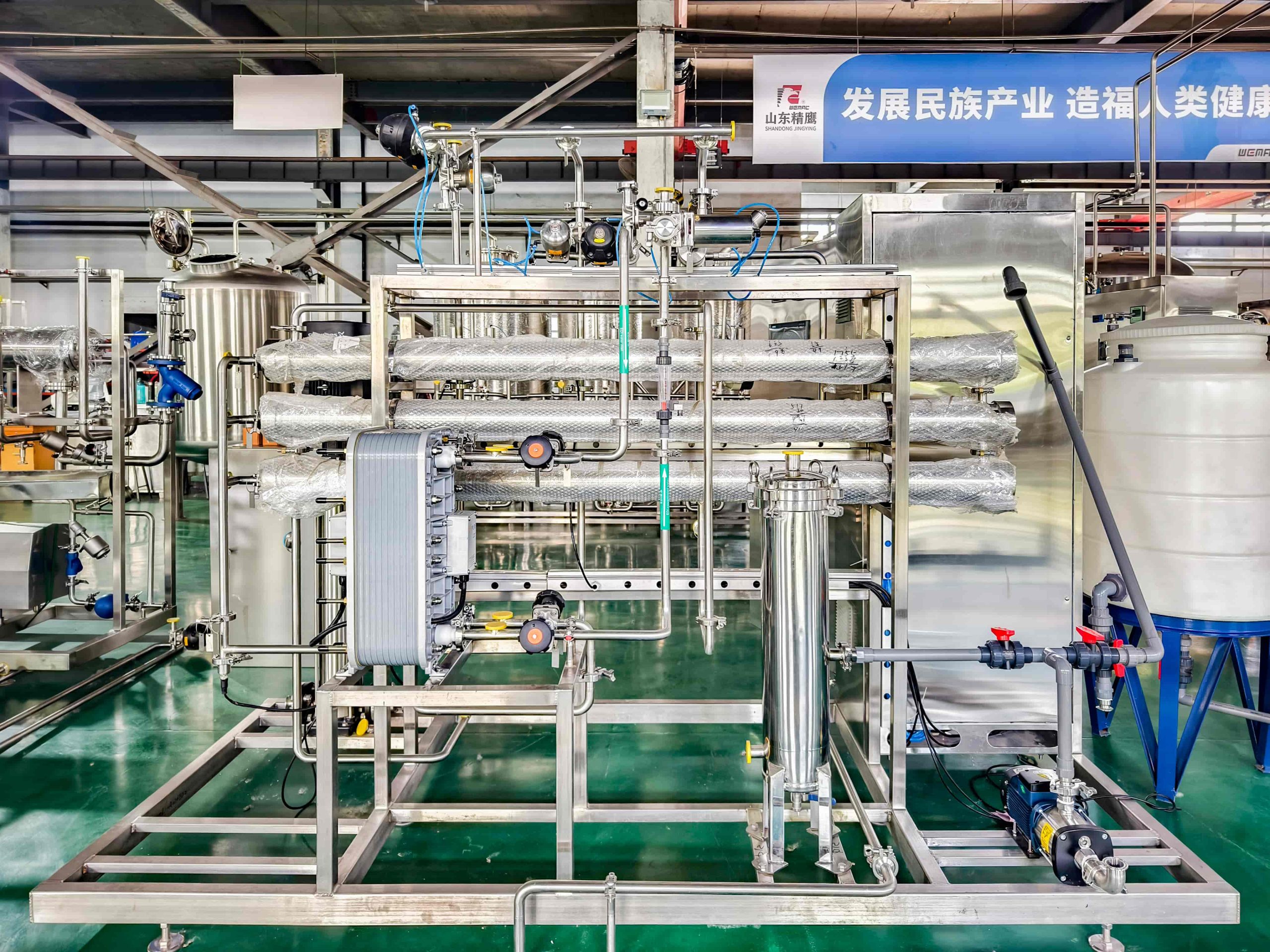
...

SKE & EAGLE

Purified water system

Pharmaceutical Equipment Installation: Best Practices & Engineering Standards

Introduction to Pharmaceutical Equipment Installation

Introduction to Pharmaceutical Equipment Installation

Pharmaceutical equipment installation is a critical phase in the lifecycle of manufacturing infrastructure that directly impacts product quality, compliance, and operational efficiency. In the pharmaceutical industry, installation involves not only the physical setup of complex machinery but also the alignment with stringent Good Manufacturing Practices (GMP) and regulatory mandates. From high-precision water treatment systems to advanced mixing reactors, each piece of equipment must be accurately installed to maintain the integrity of drug manufacturing processes.

This comprehensive guide delves into the technical, regulatory, and practical elements of pharmaceutical equipment installation. Drawing on the experience of industry leaders like SKE & Eagle’s water treatment expertise, the article highlights engineering best practices, compliance requirements, and the strategic role installation plays in ensuring system reliability and consistent product quality.

The focus begins with an overview of key installation principles tailored for pharmaceutical contexts, spanning mechanical, electrical, and process instrumentation aspects. Whether for clean steam generation units, filtration modules, or sterile filling lines, the installation process demands precise coordination among engineering disciplines to adhere to design intentions and operational standards.

double tube sheet heat exchangers 1double tube sheet heat exchangers

Engineering Principles & Design Considerations

Installing pharmaceutical equipment requires meticulous planning based on foundational engineering principles, focusing on mechanical alignment, material selection, and process flow optimization. Early-stage design considerations profoundly influence the success of installation and long-term operational stability.

One core engineering tenet is ensuring mechanical integrity: precision in mounting, leveling, and anchoring equipment prevents vibrational stresses and misalignment that could compromise equipment lifespan or process consistency. For example, centrifugal pumps used in processes such as sterile filtration require carefully engineered bases and coupling alignments to avoid premature wear and ensure sustained performance.

Material compatibility is another vital factor. Pharmaceutical equipment typically incorporates stainless steel with specific surface finishes (e.g., 316L stainless steel with electro-polished surfaces) to withstand corrosive cleaning agents and comply with hygiene standards. Installation teams need to implement connectors, gaskets, and seals with compatible materials to avoid contamination risks or equipment degradation.

Compliance with GMP & Regulatory Standards

Compliance during pharmaceutical equipment installation is non-negotiable and governed by multiple regulatory frameworks including FDA’s 21 CFR Part 11, EU Annex 1, and international ISO standards. Adhering to Good Manufacturing Practices (GMP) ensures that installations do not introduce contamination, compromise product sterility, or undermine process reproducibility.

A key GMP installation requirement is traceability through detailed documentation. Installation Qualification (IQ) protocols outline all steps performed, materials used, and deviations encountered. These documents become core components of the regulatory submission and audit trail.

Construction and installation materials must meet pharmacopeia-grade certifications where applicable, especially for pharmaceutical water systems which require compliance with USP Purified Water and Water for Injection standards. For example, welds must be smooth and hygienic, created by certified welders following validated procedures.

Sterility assurance levels define environmental conditions during installation — installation in classified cleanrooms must honor particle and microbial control guidelines. Personnel involved may be required to wear sterile garments and observe gowning procedures.

Electrical and automation components need validation for compliance with electronic record regulations such as FDA 21 CFR Part 11. Software integration and hardware configuration must undergo strict validation protocols including Factory Acceptance Testing (FAT) and Site Acceptance Testing (SAT).

ske-eagle certificateske-eagle certificateske-eagle certificate

Installation Techniques & System Integration

The execution phase of pharmaceutical equipment installation integrates technical skillsets and engineering coordination to assemble, interconnect, and commission equipment within complex production environments.

Installation techniques vary according to equipment type, scale, and processing requirements but generally include:

  • Modular and skid-mounted system integration: Prefabricated modules from suppliers such as SKE & Eagle are installed with minimal on-site assembly to reduce contamination risks and speed project timelines.
  • Precision rigging and hoisting: Ensuring equipment is safely transferred and mounted using calibrated lifting gear aligned with structural load evaluations.
  • Clean utilities tie-in: Connecting purified water loops, steam, compressed air, and HVAC systems implemented with hygienic piping using Tri-Clamp fittings or welded joints to prevent cross-contamination.
  • Instrumentation and control wiring: Cable routing according to electrical schematics with proper shielding, segregation of power and control circuits, and labeling for traceability.

Pharmaceutical manufacturers often rely on SKE & Eagle’s system design services to tailor installation approaches that maximize space efficiency and allow for rapid changeover and scale-up capabilities. Integration also requires comprehensive piping and instrumentation diagrams (P&IDs) to ensure all components and subsystems interoperate efficiently.

Environmental considerations during installation often necessitate temporary clean barriers or isolators to protect critical zones from dust and microbial contamination. This approach is standard when installing sterile filling lines or aseptic processing systems.

ske-eagle batching systemske-eagle pharmaceutical equipment

Testing, Validation, and Qualification

Validating pharmaceutical equipment installation ensures the installed system functions as intended within specified parameters and maintains an audit-ready compliance status. The Validation lifecycle includes IQ, Operational Qualification (OQ), and Performance Qualification (PQ).

Installation Qualification verifies that equipment is installed according to design specifications and manufacturer instructions. This involves checking mechanical alignments, material certifications, electrical connections, and structural stability. Documentation at this stage confirms that the system’s physical configuration matches its planned design.

Operational Qualification tests equipment to confirm all controls, safety features, alarms, and performance attributes respond correctly under simulated operational conditions. It includes calibrating sensors, verifying control software, and executing fail-safe scenarios.

Performance Qualification evaluates equipment under real production conditions over an extended period, ensuring consistent output quality. For equipment like water purification units or sterile filtration systems, this includes microbiological assessments and physicochemical testing of product water to ensure compliance with pharmacopeial standards.

SKE & Eagle’s quality-driven design philosophy facilitates seamless validation through robust engineering tolerances and comprehensive documentation support, enabling faster validation cycles and regulatory approval.

ske-eagle machine display screenske-eagle pharmaceutical equipment

Maintenance Strategies & Reliability Engineering

Pharmaceutical equipment installation is foundational to reliable operation but must be complemented by strategic maintenance and reliability engineering programs. Well-installed equipment experiences fewer failures and supports continuous manufacturing goals.

Maintenance approaches range from corrective to preventive, predictive, and condition-based strategies. Preventive maintenance schedules are crafted based on manufacturer recommendations and regulatory requirements, focusing on lubrication, gasket replacements, and calibration checks.

Predictive maintenance leverages instrumentation data and process analytics to detect anomalies before breakdowns occur, thus minimizing unplanned downtime. Examples include vibration analysis on rotating equipment or trend analysis of purified water quality metrics.

Installation quality directly impacts maintenance effectiveness; poor piping slope or weld quality, for example, leads to residue buildup necessitating more frequent cleaning. This underscores the need for adherence to installation best practices.

Reliability engineering principles, such as FMEA (Failure Mode and Effects Analysis), are applied starting with installation planning to anticipate and mitigate risks. SKE & Eagle’s engineering teams provide consultation to optimize system architecture for maintainability and longevity.

Frequently Asked Questions (FAQ)

What are the key considerations during pharmaceutical equipment installation?

Key considerations include mechanical integrity, material compatibility, compliance with GMP regulations, environmental controls, precise system integration, and comprehensive documentation for traceability and validation purposes.

How does proper installation affect pharmaceutical product quality?

Proper installation ensures equipment operates within design specifications, minimizing contamination risks and process variability, which bolsters product efficacy, consistency, and regulatory compliance.

Why is validation critical post-installation?

Validation demonstrates that the installed equipment performs reliably under operational conditions, meeting quality and safety standards, and providing confidence in ongoing manufacturing processes.

What role does engineering expertise play in pharmaceutical equipment installation?

Engineering expertise ensures that installation adheres to design intent, regulatory mandates, and operational efficiency goals, reducing risks of failure and supporting scalable, compliant production systems.

Connect with SKE & Eagle for Expert Pharmaceutical Equipment Solutions

For detailed guidance on pharmaceutical equipment installation and integrated system solutions, we invite you to reach out to SKE & Eagle’s engineering experts. Enhance your manufacturing infrastructure with our proven technologies and industry expertise.

Contact us via email at info@ske-eagle.com or follow us on Facebook at SKE & Eagle Facebook page. Visit our website’s contact form to start the conversation today.

Please enable JavaScript in your browser to complete this form.
Your contact info
Please enable JavaScript in your browser to complete this form.
Your contact info