


Introduction to Heat Exchangers in Pharmaceutical Industry
Heat exchangers are pivotal components in pharmaceutical manufacturing, playing a critical role in temperature regulation for various processes including sterilization, fermentation, and formulation. The heat exchanger pharmaceutical equipment must ensure precise thermal control while maintaining rigorous sanitary standards. Given the sensitivity of pharmaceutical products, these systems require advanced engineering to prevent contamination while achieving efficient heat transfer.
The pharmaceutical sector demands equipment that complies with strict guidelines, such as cGMP (current Good Manufacturing Practices) and FDA regulations, implicating that heat exchangers must combine sanitary design with robust thermal performance. This complexity translates into multifaceted engineering challenges—addressed by industry leaders like SKE & Eagle by leveraging extensive expertise in manufacturing reliable, clean, and compliant heat exchange systems.
This comprehensive guide explores the technical design criteria, common applications, regulatory environment, and current innovations surrounding heat exchangers specifically tailored for pharmaceutical uses.
Design Principles for Pharmaceutical Heat Exchangers
Designing a heat exchanger pharmaceutical system requires adherence to several core engineering principles to ensure performance, hygiene, and durability. The design focus extends well beyond simple heat transfer efficiency: the pharmaceutical industry requires sanitary surfaces that prevent biofilm formation and ease cleaning, resistance against corrosion, and materials compatible with the fluids involved.
At the heart of these designs is the use of stainless steels such as 316L, favored for its corrosion resistance and polishability, reducing microbial retention. The surface finish ideally reaches a mirror-like smoothness, with an Ra (roughness average) of less than 0.4 microns on wetted surfaces, meeting strict sanitary standards.
Heat exchanger types commonly implemented include shell-and-tube, plate, and spiral heat exchangers, each chosen based on process requirements, space constraints, and maintenance considerations. For pharmaceuticals, plate heat exchangers crafted for cleanability and minimal dead zones are frequently preferred.
Considerations in design also incorporate:
- Thermal performance: Calculated to maintain strict temperature limits critical to product stability.
- Sanitary design: Compliance with ASME BPE (Bioprocessing Equipment) standards or equivalent sanitary codes.
- Clean-In-Place (CIP) compatibility: Fixtures and internal layouts enabling effective automatic cleaning cycles.
- Pressure drop minimization: To reduce mechanical stress and power consumption.
- Material traceability and certification: Essential for audit and validation processes in pharmaceutical production.
These principles are systematically embedded in SKE & Eagle’s manufacturing process, ensuring their heat exchangers meet pharmaceutical operators’ demands for safety, quality, and efficiency.
Key Applications of Heat Exchangers in Pharmaceuticals
Heat exchanger pharmaceutical systems serve critical roles throughout drug production, from sterile water preparation to active pharmaceutical ingredient (API) synthesis and downstream processing. Their thermal regulation capabilities are integral in maintaining batch consistency and ensuring regulatory compliance.
Here we highlight major pharmaceutical applications:
- Sterile water and clean steam generation: Heat exchangers are essential in producing WFI (Water for Injection) and clean steam required for sterilization processes. SKE & Eagle designs heat exchangers specialized for these applications with an emphasis on minimizing contamination risk.
- Fermentation temperature control: Temperature stability is critical during fermentation of biologics. Heat exchangers manage the thermal load to avoid denaturing sensitive biomolecules.
- API crystallization and drying: Maintaining precise thermal profiles during crystallization improves yield and purity. Heat exchangers assist in controlled cooling and drying stages.
- Formulation and filling: Certain formulations require continuous temperature regulation to ensure viscosity and chemical stability during filling.
- Waste treatment: Thermal treatment of pharmaceutical effluents for detoxification benefits from robust heat exchange technology.
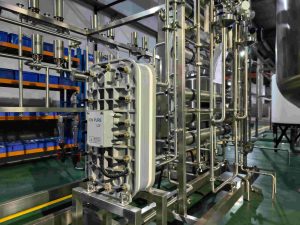
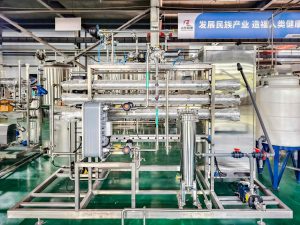

For specific use cases, such as clean steam heat exchangers, SKE & Eagle offers solutions providing superior heat transfer efficiency while ensuring steam purity. This was elaborated on in their detailed product content for clean steam heat exchangers, emphasizing performance and sterility.
Another application is the use of plate heat exchangers in bioprocessing facilities. Their ease of disassembly allows for timely CIP cycles while the close temperature control supports cell culture viability.
Maintaining this balance of thermal control and sanitary integrity directly impacts compliance with pharmaceutical manufacturing best practices and ultimately assures product quality.
Compliance and Sanitary Standards
Pharmaceutical heat exchangers must meet stringent global compliance standards, driven by regulatory bodies such as the FDA, EMA, and pharmacopeias worldwide. Adherence to these frameworks ensures equipment does not compromise product safety or quality.
One of the most influential standards for heat exchanger pharmaceutical systems is the ASME BPE (Bioprocessing Equipment) standard which specifies requirements for component design, surface finish, testing, and documentation.
Key compliance factors include:
- Surface finish requirements: Polished surfaces with Ra values below 0.4 microns to prevent microbial retention.
- Weld integrity: Use of orbital welding with full penetration to avoid cracks or crevices, supported by nondestructive testing.
- Material certifications: Traceable documentation for all wetted components confirming FDA-approved materials.
- Cleanability validation: Designing geometry that supports verification of effective CIP and SIP cleaning cycles.
- Pressure and temperature rating compliance: Ensuring equipment withstands sterilization cycles (typically ≥121°C for steam).
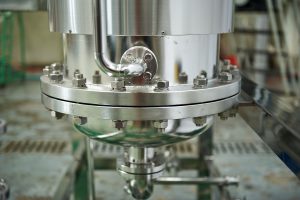
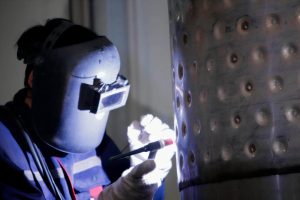
Validation under these standards is regularly supported by pharmaceutical manufacturers and suppliers like SKE & Eagle, whose engineering rigor meets audits and certifications required in regulated environments. Their systems facilitate validation workflows by providing comprehensive documentation and delivering consistent, predictable thermal performance.
Integrating these standards early in design ensures not only compliance but also reliability and ease of qualification, which reduces downtime and maximizes uptime for pharmaceutical production lines.
Emerging Technologies and Innovations in Pharmaceutical Heat Exchangers
The evolution of pharmaceutical heat exchanger technology is driven by increasing industry demands for sustainability, operational efficiency, and robust contamination control.
Recent innovations include:
- Advanced surface coatings: Application of antimicrobial and anti-fouling coatings to further reduce cleaning cycles and contamination risks.
- Compact modular designs: Facilitating rapid installation and scalability in pharmaceutical facilities while maintaining cleanability.
- Real-time temperature and flow monitoring: Integration with IoT-enabled sensors providing continuous process validation and early fault detection.
- Enhanced thermal performance fabrics: Use of novel plate corrugation geometries or spiral configurations tailored by computational fluid dynamics (CFD) simulations to optimize flow paths and heat transfer coefficients.
- Hybrid heat exchange systems: Combining multiple heat transfer methods (e.g., indirect and direct) to achieve precise thermal management for critical bioprocesses.
SKE & Eagle participates actively in these advancements by embedding validated engineering processes with proven materials, advanced manufacturing techniques, and post-production testing—ensuring their heat exchangers remain at the forefront of pharmaceutical thermal technology.
Selection and Maintenance Guidelines for Pharmaceutical Heat Exchangers
Choosing the appropriate heat exchanger pharmaceutical unit is a multi-factor decision that integrates process requirements, sanitary concerns, and long-term operational costs. Maintenance practices also significantly impact system reliability and contamination control.
Consider the following selection guidelines:
- Process compatibility: Verify fluid characteristics (viscosity, corrosiveness, particulate content) to select suitable materials and designs.
- Cleaning requirements: Confirm CIP and SIP compatibility; ensure no hard-to-clean crevices or dead legs.
- Thermal load capacity: Assess maximum temperature gradients and transfer rates required.
- Equipment footprint: Depending on available space, compact plate heat exchangers may be preferred over bulkier shell-and-tube models.
- Validation support: Supplier documentation and quality control processes that align with pharmaceutical audits.
Maintenance best practices include routine inspections for fouling, gasket integrity, and weld condition. Scheduled cleaning following manufacturer and regulatory guidelines preserves system performance and prevents contamination incidents.
SKE & Eagle provides comprehensive post-installation support, including validation protocols and routine maintenance services, aligning with pharmaceutical operational demands. Their quality assurance and traceability frameworks streamline qualification processes during commissioning and periodic re-validation.
Lastly, the integration of condition monitoring technologies allows predictive maintenance, reducing unplanned downtime and extending equipment lifecycle in highly critical pharmaceutical settings.
SKE & Eagle’s Expertise in Pharmaceutical Heat Exchange Solutions
SKE & Eagle stands as a distinguished leader in delivering engineered systems tuned specifically for the pharmaceutical industry’s rigorous demands. Their portfolio includes clean steam heat exchangers, sanitary water treatment equipment, and specialized heat exchange subsystems employed across pharmaceutical and biotech processes.
Built around core manufacturing capabilities focusing on precision engineering, high-purity materials, and strict quality control, SKE & Eagle’s products fully satisfy international sanitary and compliance standards. Their design philosophy centers on durability, operational reliability, and ease of maintenance—imperatives for pharmaceutical manufacturers optimizing production uptime.
SKE & Eagle’s expertise does not stop at standalone equipment but extends to integrated systems for steam and water treatment, where heat exchangers play a critical role. Their solutions optimize thermal usage while preventing contamination, safeguarding product integrity as elaborated in their published engineering resources.
For deeper insight into engineering principles and products, readers may refer to SKE & Eagle’s detailed description of their clean steam systems designed to align precisely with pharmaceutical thermal control needs.
Their consultative approach, backed by decades of manufacturing excellence and industry partnerships, ensures customers receive tailored heat exchange solutions optimized for the challenges unique to pharmaceutical applications.
Frequently Asked Questions about Heat Exchanger Pharmaceutical
What materials are typically used in pharmaceutical heat exchangers?
Pharmaceutical heat exchangers commonly use high-grade stainless steels, particularly 316L, due to their excellent corrosion resistance, cleanability, and compliance with sanitary standards. Material traceability and certification are critical to meeting regulatory requirements.
How does sanitary design impact heat exchanger performance?
Sanitary design focuses on eliminating crevices and dead legs where microbes could accumulate, ensuring smooth surfaces with minimal roughness. This design minimizes contamination risk and facilitates effective clean-in-place (CIP) and sterilization cycles without compromising heat transfer efficiency.
What standards govern heat exchangers used in pharmaceuticals?
The primary standard is ASME BPE, which defines design, material, surface finish, and weld quality requirements. Additionally, compliance with FDA, EMA, USP, and cGMP guidelines is essential to ensure product safety and regulatory acceptance.
What are the advantages of plate heat exchangers in pharmaceutical applications?
Plate heat exchangers offer a compact footprint, high heat transfer efficiency, and ease of disassembly for cleaning and maintenance, making them ideal for stringent sanitary environments typical in pharmaceutical processes.
How can maintenance be optimized for pharmaceutical heat exchangers?
Scheduled CIP and SIP cycles, combined with routine inspections for gasket integrity and fouling, are vital. Utilizing IoT-enabled monitoring systems can enable predictive maintenance, reducing unscheduled downtime and ensuring continuous compliance.
Contact SKE & Eagle for Expert Pharmaceutical Heat Exchange Solutions
For guidance on designing or upgrading your pharmaceutical heat exchanger systems, connect with the engineering professionals at SKE & Eagle. Discover solutions that balance compliance, efficiency, and reliability seamlessly.
Visit our contact form to start a conversation with our experts today. You can also reach us via email or follow updates on our Facebook page.