


In the pharmaceutical industry, the margin for error is zero. Contamination is not merely a quality issue; it is a patient safety issue. Among the critical utilities that ensure product safety, pure steam stands out as the gold standard for sterilization. Unlike industrial steam used for heating, pharmaceutical-grade pure steam—often referred to as “clean steam”—is produced by a specialized piece of equipment known as a Pure Steam Generator (PSG) .
At SKE&EAGLE, we specialize in the engineering and manufacturing of high-performance pharmaceutical water systems. With decades of experience in the field of aseptic processing, we understand that a PSG is not just a piece of machinery; it is the heart of the sterilization process for autoclaves, bioreactors, and clean-in-place (CIP) systems. This article aims to provide a deep dive into the technical intricacies of PSG technology, focusing on the pure steam generator design and pure steam generator working principles that ensure compliance with stringent global pharmacopoeias such as USP (United States Pharmacopeia) and EP (European Pharmacopoeia).
What is a Pure Steam Generator?
A pure steam generator pharmaceutical system is a specialized distillation unit designed to produce steam that meets the rigorous quality standards required for direct contact with pharmaceutical products or process equipment. Unlike standard industrial steam, which often contains volatile corrosion inhibitors (like amines or hydrazine), boiler treatment chemicals, and metallic particulates, pure steam is chemically and microbiologically pure.
The function of a PSG is to take treated water—typically Purified Water (PW) or Water for Injection (WFI)—and convert it into steam through a phase change process. During this phase change, non-volatile impurities and endotoxins are left behind, resulting in steam that is pyrogen-free and chemically inert.
For pharmaceutical manufacturers, the PSG is the cornerstone of sterile manufacturing. It is used to sterilize:
-
Autoclaves: For sterilizing equipment, glassware, and materials.
-
Bioreactors and Fermenters: For maintaining sterile environments during cell culture.
-
CIP Systems: For the final rinse and sanitization of storage tanks and distribution loops.
-
HVAC Systems: For humidification in sterile manufacturing suites (using clean steam humidifiers to prevent microbial growth).
Understanding the specific requirements of your facility is crucial before selecting a PSG. Factors such as load demand, utility availability (industrial steam or electric heating), and validation requirements all influence the final configuration.
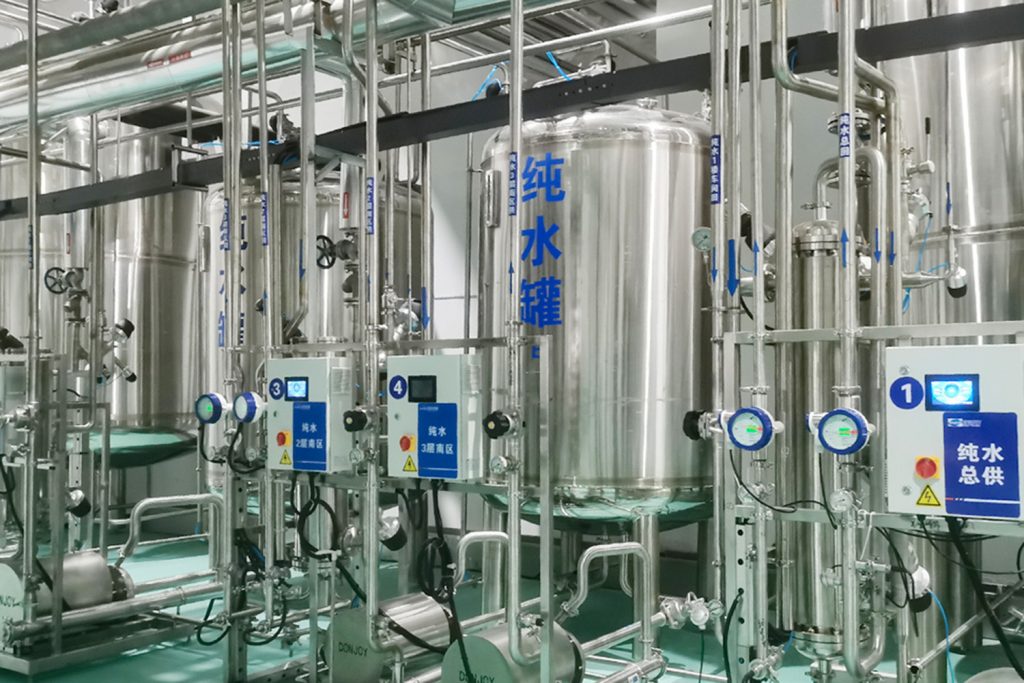
The Fundamentals of Pure Steam Generator Design
When we discuss pure steam generator design, we are focusing on the engineering architecture that ensures consistent, high-quality output while maximizing energy efficiency and operational safety. At SKE&EAGLE, our design philosophy revolves around three pillars: thermodynamic efficiency, material purity, and hygienic engineering.
Materials of Construction
The most critical aspect of PSG design is the selection of materials. To prevent corrosion and contamination, the wetted parts of a PSG are constructed exclusively from high-grade stainless steel, typically 316L (low carbon). The use of 316L ensures resistance to the corrosive nature of high-purity water and steam. Furthermore, internal surfaces are subjected to electropolishing. This electrochemical process removes surface imperfections, creating a smooth, passivated surface that is less prone to bacterial adhesion and biofilm formation.
Heat Exchanger Configuration
The heart of the PSG lies in its heat exchanger configuration. The two most common design architectures are the thermosyphon (reboiler) type and the falling film (multi-effect) type.
-
Thermosyphon Design: This is the traditional design where pure water enters a vertical shell-and-tube heat exchanger. Industrial steam (or electric heaters) heats the tubes, causing the water inside to boil and generate steam. This design is robust and simple but tends to have higher energy consumption.
-
Multi-Effect Design: For large-scale pharmaceutical facilities, the falling film multi-effect design is preferred. In this configuration, the pure steam generated in the first effect is used as the heating medium for the second effect, and so on. This cascading design recovers latent heat, significantly reducing energy consumption by up to 30-40% compared to single-effect systems.
Separation Technology
To ensure that the generated steam is free from water droplets (which can carry impurities) and pyrogens, advanced separation technology is integrated into the design. Modern PSGs utilize cyclonic separators or demister pads. These components use centrifugal force to remove entrained moisture, ensuring that the steam dryness fraction is optimal (typically between 95% and 99.5%). A dry steam is essential for effective sterilization, as wet steam carries less enthalpy and can cause uneven heating.
Control Systems
Modern pure steam generator design incorporates advanced automation. Programmable Logic Controllers (PLCs) with Human-Machine Interfaces (HMIs) allow for precise control of conductivity, temperature, pressure, and flow rates. Validation features such as automatic self-drainability, sanitization cycles, and data logging are standard to comply with 21 CFR Part 11 (electronic records).
Understanding Pure Steam Generator Working Principles
To truly appreciate the reliability of a PSG, one must understand the pure steam generator working mechanism. While designs vary, the core thermodynamic process remains consistent: the evaporation of purified water to produce saturated steam of the highest quality.
Step 1: Feed Water Inlet
The process begins with the introduction of feed water—either Purified Water (PW) or Water for Injection (WFI)—into the system. The feed water is pre-heated through a heat exchanger using incoming industrial steam or waste heat from the process. Pre-heating serves two purposes: it degasses the water (removing dissolved oxygen and carbon dioxide) to reduce corrosion, and it improves the thermal efficiency of the boiling process.
Step 2: Evaporation and Phase Separation
The pre-heated water enters the evaporator section (the reboiler). Here, the heating medium (either plant steam or electrical elements) transfers heat to the water. As the water reaches its boiling point, it undergoes a phase change from liquid to vapor.
This is where the separation process begins. As the water boils vigorously, a mixture of steam and water droplets rises. The mixture passes through the cyclonic separator. Due to the high velocity and rotational flow, heavier water droplets (which may contain trace amounts of non-volatile residues and endotoxins) are flung toward the walls of the separator and drained back to the bottom of the evaporator for re-boiling. The purified vapor—now dry, saturated steam—exits the separator.
Step 3: Condensation (for Sampling and Quality Control)
While the primary goal is to produce steam, a small portion of the generated steam is immediately condensed to provide a sample for quality assurance. This condensate is continuously monitored for conductivity and total organic carbon (TOC) . If the conductivity or TOC exceeds the pharmacopoeia limits (typically <1.0 µS/cm at 25°C for USP Purified Water standards, though steam condensate must meet WFI standards), the system automatically diverts the steam to a drain, ensuring that only compliant steam reaches the point of use.
Step 4: Distribution and Pressure Maintenance
The final step involves delivering the pure steam to the user points (autoclaves, bioreactors) under controlled pressure. The PSG maintains a constant pressure head (usually between 3 and 8 bar, depending on the application) to ensure that the steam temperature remains consistent. Saturated steam temperature is directly related to pressure; maintaining stable pressure ensures that the sterilization temperature (e.g., 121°C) is reliably achieved at the point of use.

Technical Specifications and Performance Metrics
When selecting a pure steam generator pharmaceutical system, it is essential to review the technical specifications to ensure they align with production demands. The table below outlines the typical specifications and performance metrics for SKE&EAGLE’s range of PSG systems.
| Specification Parameter | Standard Performance Data |
|---|---|
| Material of Construction | 316L Stainless Steel (Electropolished Ra < 0.4 µm) |
| Flow Rate Capacity | 50 kg/h to 8,000 kg/h (Custom skid-mounted units available) |
| Steam Purity | Meets USP <1231> and EP Monograph for Pure Steam (WFI quality condensate) |
| Operating Pressure | 3 – 8 bar (adjustable based on sterilization load requirements) |
| Heating Medium | Industrial Steam (6–10 bar) or Electrical Heating Elements |
| Control System | Siemens/Allen-Bradley PLC with HMI touchscreen interface; 21 CFR Part 11 compliant data logging |
| Conductivity (Condensate) | ≤ 1.0 µS/cm at 25°C (Real-time monitoring with auto-dump) |
| TOC (Condensate) | ≤ 0.5 mg/L (Real-time monitoring optional) |
| Dryness Fraction | ≥ 97% (Cyclonic separator ensures high dryness for sterilization efficiency) |
| Non-Condensable Gases | ≤ 3.5% (Effective degassing system) |
Validation and Regulatory Compliance
For pharmaceutical manufacturers, validation is not an afterthought; it is a prerequisite. A pure steam generator pharmaceutical system must undergo a rigorous validation lifecycle, often summarized by the acronym DQ/IQ/OQ/PQ.
-
Design Qualification (DQ): At SKE&EAGLE, we begin with a detailed DQ. This phase ensures that the pure steam generator design aligns with the user’s requirements specification (URS). We review material certifications, welding logs, and component specifications to ensure the system is built for compliance.
-
Installation Qualification (IQ): Once manufactured, the IQ verifies that the equipment is installed correctly according to the engineering drawings and manufacturer’s recommendations. This includes verifying that all instruments are calibrated and that the installation meets sanitary standards (proper slope for drainage, absence of dead legs).
-
Operational Qualification (OQ): The OQ tests the
-
generator working functions. We test alarm sequences, interlock systems, and normal operating ranges. We verify that the control system maintains pressure and temperature within specified limits and that the auto-dump mechanism functions when conductivity thresholds are breached.
-
Performance Qualification (PQ): The final phase confirms that the PSG consistently produces pure steam of the required quality under actual operating conditions. Typically, a three-day (or longer) sampling campaign is conducted where condensate is tested for conductivity, TOC, endotoxins, and microbial limits. Only after successful PQ can the system be released for routine production.
Frequently Asked Questions (FAQ)
Q1: What is the difference between industrial steam and pharmaceutical pure steam?
Industrial steam often contains chemical additives such as amines, hydrazine, and phosphates to protect boiler pipes from corrosion. These additives are toxic or harmful to pharmaceutical products. Pure steam is generated from purified water and contains no added chemicals. It is non-toxic, pyrogen-free, and suitable for direct contact with product contact surfaces and sterilization processes.
Q2: How does a multi-effect pure steam generator save energy?
A multi-effect PSG utilizes the latent heat of the steam produced in the first effect to boil the water in the second effect. By reusing the thermal energy across multiple stages (effects), the system dramatically reduces the consumption of industrial steam or electricity. For large-volume applications, this can result in energy savings of up to 40% compared to a traditional single-effect thermosyphon generator.
Q3: Why is 316L stainless steel used in PSG construction?
316L stainless steel contains molybdenum, which provides superior resistance to chlorides and pitting corrosion compared to 304 stainless steel. The “L” denotes low carbon content, which minimizes the risk of carbide precipitation during welding. This ensures the integrity of the welds and maintains the passive layer that prevents rust and contamination.
Q4: What maintenance is required for a pure steam generator?
Maintenance typically includes periodic calibration of instruments (pressure sensors, conductivity meters), inspection of gaskets and valves, and cleaning of the heat exchanger surfaces. Depending on the feed water quality, chemical descaling may be required annually. SKE&EAGLE systems are designed with easy-access ports to facilitate routine maintenance without compromising hygienic integrity.
Q5: Can a pure steam generator be used for WFI production?
Yes, in certain configurations. While the primary function is to produce steam, a pure steam generator can be paired with a condenser to produce pyrogen-free Water for Injection (WFI). This is known as “distillation” and is one of the pharmacopoeia-approved methods for producing WFI. This dual-purpose capability makes PSG a versatile asset for pharmaceutical water rooms.
Contact SKE & Eagle for Advanced Solutions
For customized system engineering solutions or integration of high-performance water treatment technologies, please contact SKE & Eagle. Our professional team collaborates closely with industrial partners to design, implement, and maintain solutions tailored to your operational needs.
Official Website: https://www.ske-eagle.com/
Contact Email: info@ske-eagle.com
Follow us on Facebook for the latest industry insights: SKE & Eagle Facebook
Business Inquiries: Visit our official website and submit the contact form at the bottom.